





Cost & Estimation
13 min read•Ajay Chaudhary
AI Development Cost in 2026: A Practical Pricing Guide
Read Architecture Blueprint
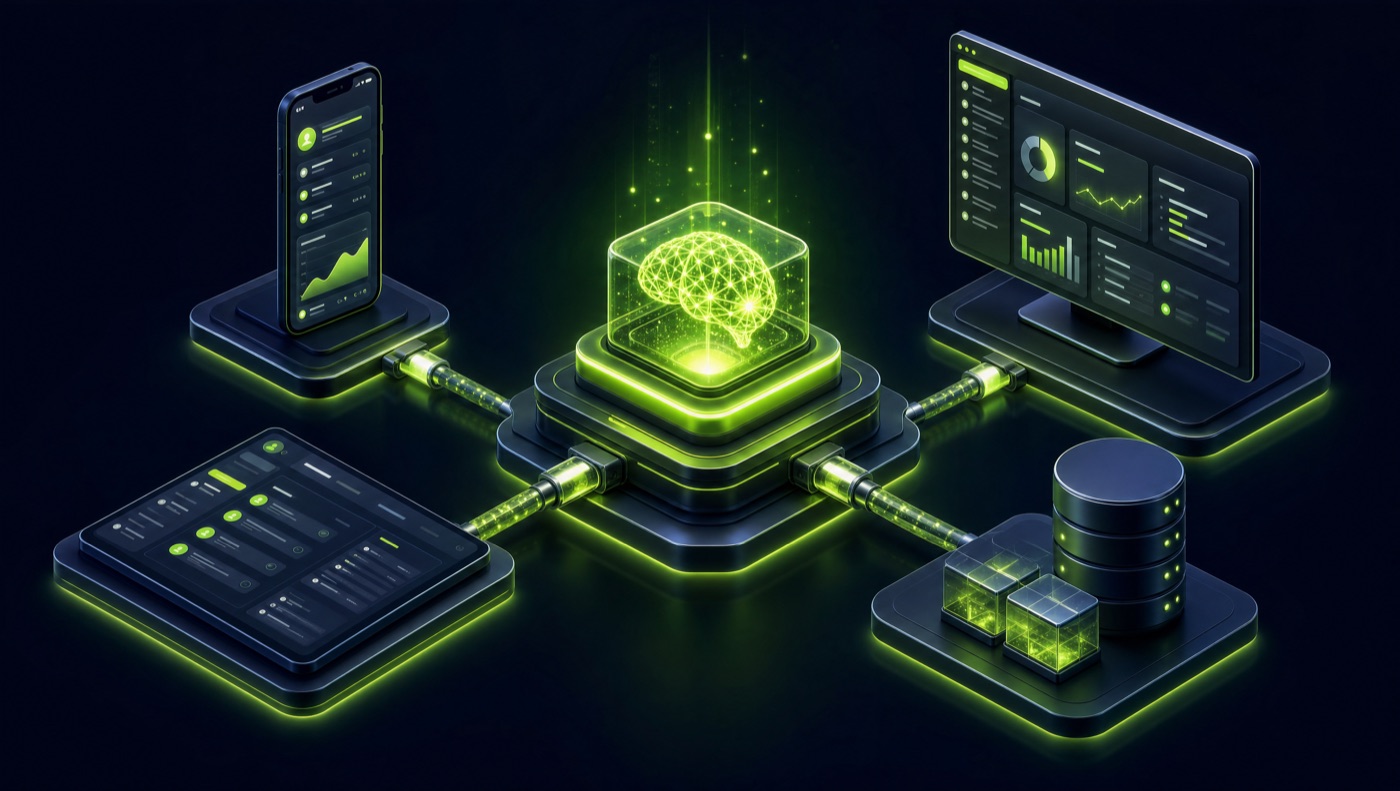
We embed AI capabilities directly into your existing CRM, ERP, and internal systems, connecting models to real workflows through clean, documented APIs, without a rip-and-replace.








Quick answer: AI integration means connecting a model to the systems your team already runs, your CRM, your ERP, your support tools, so its output shows up inside the workflow people actually use, rather than in a separate app nobody opens. Most AI initiatives fail not because the model is wrong, but because it never gets embedded into how people actually work. We solve the integration problem, not just the model problem, for clients across United States, United Kingdom, Australia, United Arab Emirates, Canada, and India, including AI development services in Illinois and AI development services in the UK.
AI embedded directly into your CRM, ERP, and internal tools, not a bolt-on widget your team has to context-switch to.
Real-time and batch pipelines that keep AI models fed with fresh, accurate data from every source system.
Every integration is architected with GDPR and sector-specific regulations in mind from day one, reviewed against your industry's specific compliance requirements.
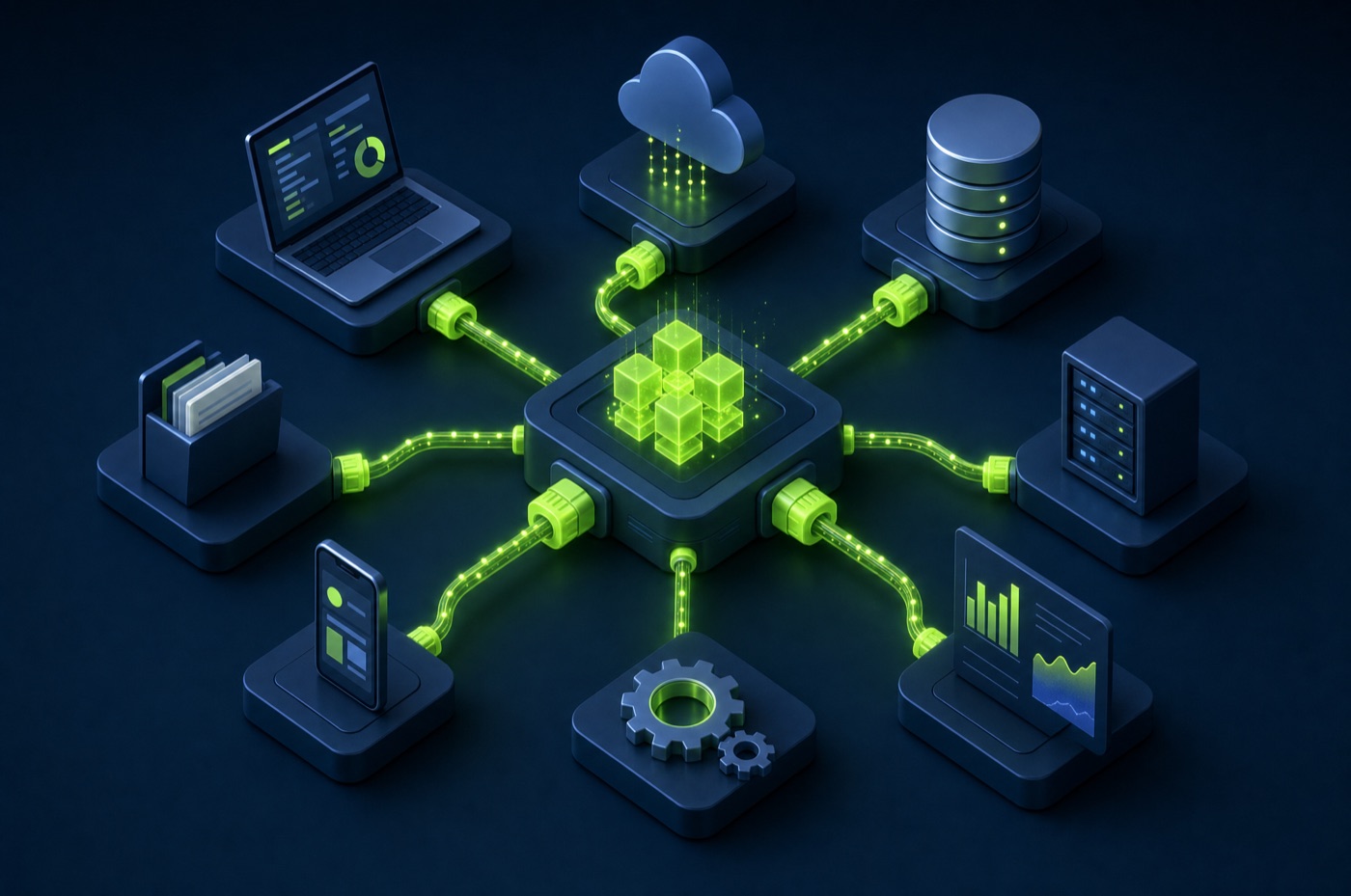
Clean, documented API layers that let AI capabilities plug into any system with an accessible interface.
Production-grade serving infrastructure that keeps AI models available, fast, and cost-efficient at scale, built by our machine learning development services team.
Ongoing monitoring and tuning that keeps integrated AI systems accurate and cost-efficient over time.
Integrated With These Standards in Mind
Recognised by the best






Real products where our integration work connects new capability to systems that were already live.
Enterprise Platform Integration
Ongoing engineering support for the widely used link-management platform, integrating branded short links, QR code generation, and click analytics across web, iOS, and Android.
Logistics Platform Integration
Connected real-time crew tracking, address management, and booking into a single on-demand moving platform, replacing scattered manual coordination.
Omnichannel Ordering Integration
Connected menu discovery, restaurant locator, combo promotions, and loyalty campaigns into one ordering experience across Nando's UAE and Qatar locations.
Cross-App Content Integration
Built the AI-powered keyboard that surfaces a creator's saved content library and generates on-the-fly copy from inside any app they already use.
A structured evaluation of your systems, data, and processes to determine exactly where and how AI integration will deliver value.

"They cleared all my doubts and turned my idea into a powerful app."
We integrate AI into what you already have: your CRM, ERP, and internal tools stay in place while AI capability is added on top.
Every integration is built on clean, documented APIs with no lock-in to a single AI vendor or model provider.
Integrations are engineered with monitoring, fallback logic, and cost governance built in, not bolted on after launch.
Prediction and classification models, built by our machine learning development services team, integrated directly into your existing decision workflows.
LLM-powered copilots and content generation, built by our generative AI development services team, embedded into your existing tools.
Autonomous agents that connect to your systems to execute multi-step workflows.
Text understanding integrated into your support, search, and document workflows.
Visual AI, built by our computer vision development services team, connected to your existing camera and imaging infrastructure.
Neural network capabilities integrated for complex pattern recognition tasks.
Rule-based automation combined with AI for end-to-end workflow integration.
AI capability embedded across your ERP, CRM, and core business systems.
Transparency tooling integrated so stakeholders can trust every AI-driven decision.
“Movesy has completely transformed the moving and delivery industry thanks to Apptechies. The GPS tracking, dynamic pricing, and route optimisation they built has made our operations incredibly efficient.”
“Apptechies has been a reliable engineering partner on our link-management platform, working across web, iOS, and Android with a level of scalability and reliability that’s simply phenomenal. They are world-class engineers.”
“The MSK performance platform Apptechies built has changed how our clinicians track patient outcomes. The data-driven insights have significantly improved rehabilitation decisions, and the team understood our clinical domain deeply from day one.”


Engineering blueprints on zero-downtime microservices, event queues, and real-world vector caching architectures.
Discover our full spectrum of specialized AI service lines — from foundational strategy and custom model training to intelligent autonomous agents.
Common questions about working with our AI integration team. Can't find yours? Ask us directly.
A typical project includes a system and API audit, integration architecture design, data pipeline engineering, and phased rollout with monitoring, usually 8-16 weeks depending on the number of systems involved.
The main cost drivers are how many systems need connecting, whether those systems expose modern APIs or need middleware built for them, and how much data cleanup is required before a model can use it reliably. We size this after an audit of your actual systems rather than quoting a number blind.
No. We design every integration to embed AI capability into your existing tools without requiring a rip-and-replace, with rollback plans in place before any production deployment.
We start with a system and API audit, then integration architecture design, then data flow and security mapping, then phased development, then testing against your real workflows, and finally a monitored production rollout. Each stage is a real deliverable you review before the next one starts.
Yes. We regularly build API middleware layers that bridge legacy systems lacking modern interfaces, allowing AI capabilities to connect without a full system rebuild.
A pre-built connector is usually faster when you're integrating a common tool like a mainstream CRM. Custom middleware earns its cost once your systems are proprietary, heavily customised, or lack a documented API at all. We'll tell you honestly which situation you're in after the audit.
We stay vendor-neutral and pick the model that fits your data and use case, whether that's OpenAI, Anthropic, Google, or an open-source alternative, rather than defaulting to whichever vendor we have a relationship with.
Every integration is architected with encrypted data handling, access controls, and audit trails from the start, mapped against GDPR, HIPAA, and sector-specific requirements.
Yes. This is our core work: connecting AI capability to CRMs, ERPs, HRIS, customer platforms, and any system with an accessible API or data layer, without disrupting the tools your team already relies on.
Yes. We regularly review in-flight integration projects, identifying architecture risks and gaps before continuing the build, rather than starting over from scratch.
No, we are vendor-neutral. We select the AI models and platforms best suited to your requirements, whether that's OpenAI, Anthropic, Google, or open-source alternatives.
Yes. If you would rather embed engineers into your own team than commission a fixed-scope build, you can hire dedicated AI developers who work under your direction on your existing systems and roadmap.
Absolutely. Full IP assignment is standard on every engagement. You own the code, integration middleware, data pipelines, and all associated documentation outright.
We provide monitoring, performance optimisation, and ongoing support retainers to keep the integrated AI system accurate and cost-efficient as your data and usage evolve.
We work with clients across United States, United Kingdom, Australia, United Arab Emirates, Canada, and India, from early-stage startups through enterprise teams. Engagement scope is shaped by the project itself, not by where you are based.
Book a free consultation with our senior integration engineers.