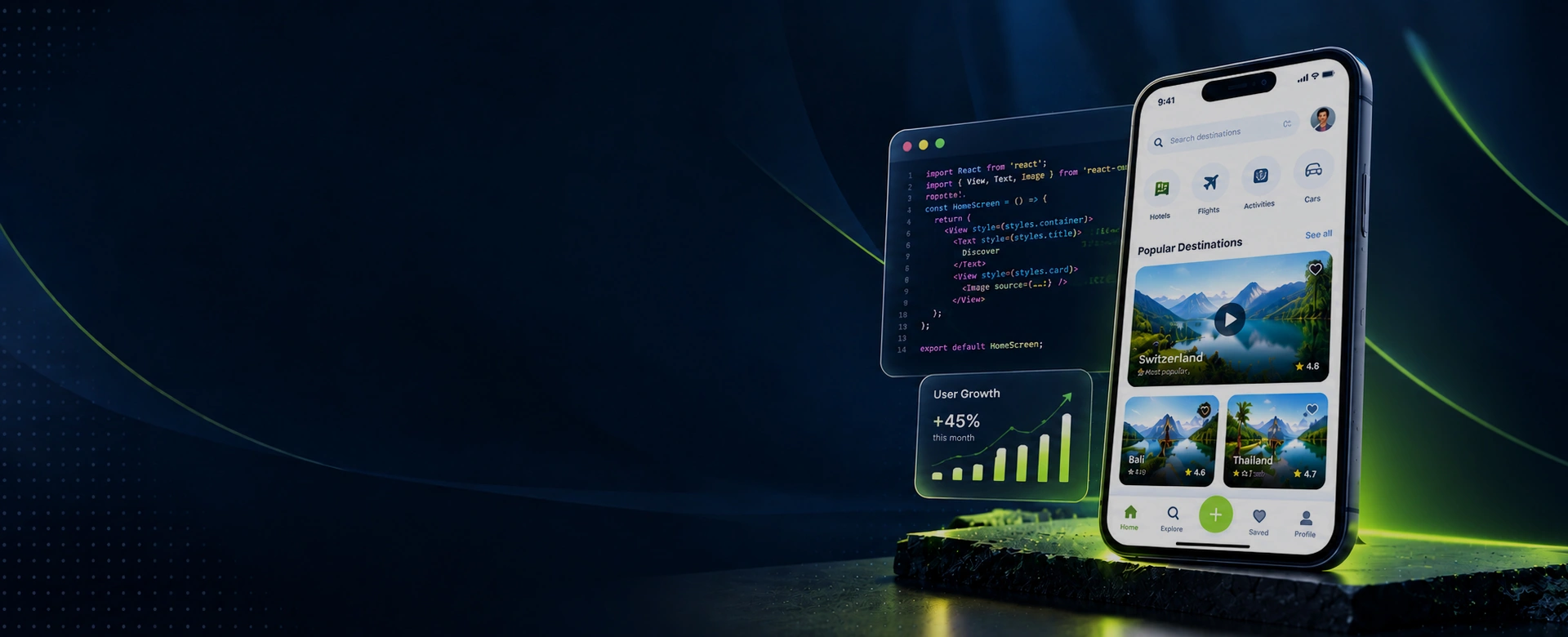
We design and engineer native and cross-platform iOS and Android apps that hold up under real usage, from first download through the metrics that actually matter: retention, conversion, and revenue.



Tell us where your app idea stands today, whether that's a napkin sketch or an app already live, and a senior mobile strategist will get back to you within one business day.
Quick answer: Mobile app development services cover the full lifecycle: product strategy, UX design, native or cross-platform engineering, QA, App Store and Play Store launch, and post-launch iteration. At Apptechies, that means senior engineers who stay accountable for your app in production, not a hand-off to whoever's free next sprint, with UI/UX design handled by the same team rather than a separate agency. Over eight years we've built mobile products across healthcare, fintech, retail, and logistics, with a 99% average client satisfaction rate.
OWASP MASVS-aligned architecture with secure-by-design infrastructure from day one, not retrofitted before launch.
Architectures built to hold up under millions of concurrent sessions, not just pass a load test.
On-device inference, recommendation engines, and generative features built into the app through our own AI development services, not bolted on after.
CRM, ERP, payment gateways, and legacy APIs connected cleanly through the same software integration services we run as a standalone engagement, with no brittle middleware hacks.
GDPR, HIPAA, and PCI DSS considerations baked into data architecture from the first sprint.

Recognised by the Best

Clutch

GoodFirms
DesignRush
Manifest

UpCity
Compare how AI-native development drastically reduces QA cycles, eliminates platform divergence, and injects real-time on-device intelligence.
Separate native codebases with manual synchronization and duplicate bug matrices.
Cognitive single-source declarative architecture with native-grade Swift & Kotlin compilation.
Manual regression passes across fragmented physical handsets taking 4–6 days.
Autonomous cloud device swarms running continuous visual and latency anomaly detection.
Basic relational cache with brittle manual conflict-resolution logic.
Quantized CoreML/ONNX neural inference with self-healing vector state reconciliation.
Surprise submission rejections and multi-week review turnaround delays.
Automated pre-flight heuristic checks against latest App Store and Google Play policy standards.
Full-cycle app engineering from product discovery through post-launch iteration, built around your users, not a generic template.
What We Offer
Swift on iOS, Kotlin on Android, built for restaurant ordering, locator and loyalty across the UAE and Qatar.
Read the Nando's UAE Case StudySwift on iOS, Kotlin on Android, built for an AI portrait and avatar generation app used at consumer scale.
Read the MyMood AI Case StudySwift on iOS, Kotlin on Android, built for a personalized wellness and biometric-tracking platform.
Read the Soaak Case Study
Generic app builders can't handle regulated data, complex workflows, or the integrations your business actually runs on.
The engineers who scope your architecture are the ones who build and support it, with no rotating cast of junior developers learning on your budget.
A structured discovery-to-launch process and reusable, audited component libraries mean your app ships faster without cutting corners on quality.
We treat compliance as core architecture, not a pre-launch checklist, which matters most for healthcare, fintech, and enterprise clients.
Every engagement is measured against business outcomes, such as retention, conversion, and revenue, not just sprint velocity and story points.
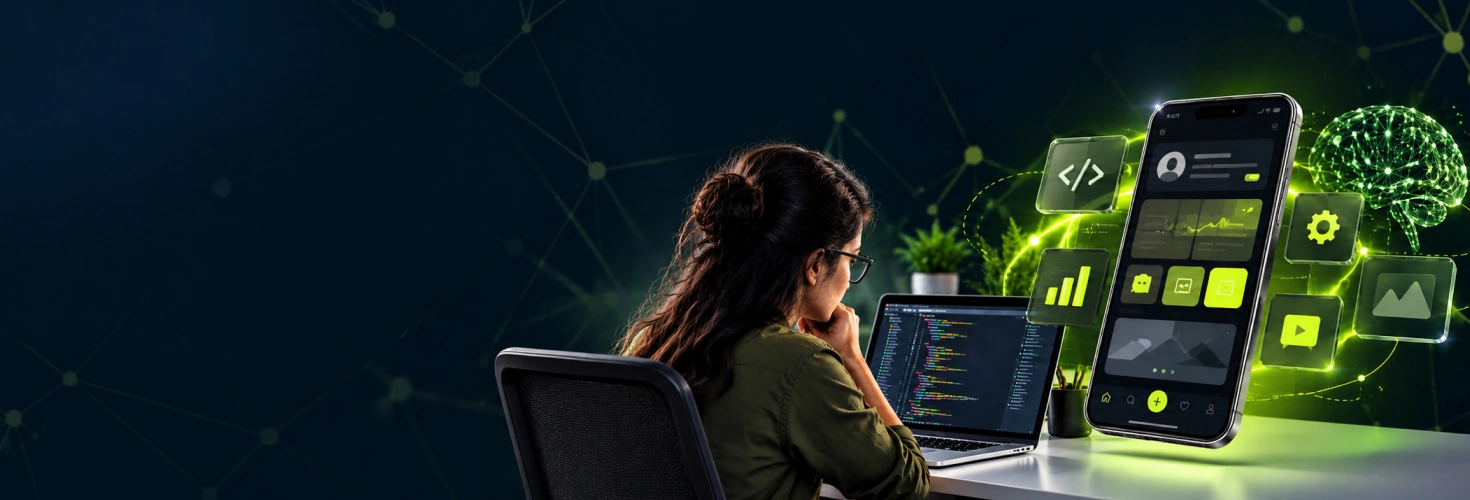
Generative AI, on-device inference, and predictive personalisation aren't optional extras anymore. They're what separates an app users tolerate from one they depend on.
Explore Our AI ServicesOur Strategic Technology Partnerships


Lightweight on-device models for offline-capable AI features that don't leak latency or user data to a server round-trip.
ARKit and ARCore experiences for try-before-you-buy, wayfinding, and spatial product visualisation.
Apple Watch, Wear OS, and connected-device data pipelines built as first-class citizens, not afterthoughts.
Local-first data sync so your app stays fully functional on flights, in basements, and on patchy mobile networks.
Streaming, AR, and real-time features engineered to actually take advantage of 5G bandwidth where it's available.
Face ID, fingerprint, and passkey authentication implemented with proper fallback and anti-spoofing safeguards.
Common questions about mobile app development services. Can't find yours? Ask us directly on the right.
It covers product strategy, UI/UX design, native or cross-platform engineering, backend and API work, QA, App Store and Play Store submission, and post-launch support. Smaller engagements can focus on one platform or a defined feature set rather than a full build.
A focused MVP typically runs $30,000 to $70,000, while a full-featured enterprise app with AI features and complex integrations can run $150,000 or more. The real driver is scope, meaning the number of user roles, integrations, and platforms, which is why we scope against your actual requirements before quoting rather than giving a generic range upfront.
The number of platforms, integrations, user roles, and how much original design work is needed all affect the schedule, along with App Store and Play Store review time once you submit.
Ask to see apps they have actually shipped and how those apps perform in the App Store or Play Store today, not just a portfolio screenshot. Compare how each proposal handles architecture decisions, security, and post-launch support. Our guide to choosing a software development company covers the same evaluation criteria in more depth.
We start with product strategy and discovery, then move through UI/UX design, native or cross-platform engineering, QA, and App Store and Play Store submission, followed by post-launch iteration. Each phase produces something you can review before the next one starts.
Native, meaning Swift for iOS and Kotlin for Android, makes sense when performance, camera or AR features, or platform-specific UX are critical, such as in fintech or AR-heavy apps. Cross-platform, meaning React Native or Flutter, is usually the right call for content-driven or workflow apps where one codebase and faster iteration matter more than squeezing out the last few percent of native performance.
Yes. Most enterprise apps need to connect to a CRM, ERP, payment gateway, or internal API, which runs through the same software integration services we offer as a standalone engagement.
A no-code or low-code app builder can work for a simple, low-volume internal tool. Custom development earns its cost once you need real performance, specific integrations, complex user roles, or a user experience that a template cannot express.
Yes. App Store and Play Store submission, review handling, and app store optimisation are included as a standard part of every mobile engagement, not billed as a separate afterthought.
Yes. We regularly take over ageing apps, migrating outdated frameworks, re-architecting for performance, and modernising the UI/UX, usually without a ground-up rewrite that would put your roadmap on hold.
Security is architected in from the start rather than retrofitted before launch, following OWASP MASVS-aligned practices, with GDPR, HIPAA, and PCI DSS considerations built into the data architecture where relevant to your industry.
Yes, you can bring on dedicated software developers, whether iOS, Android, or cross-platform, to work inside your existing team and codebase, or we can run the full project as a dedicated team.
We build for businesses across the United States, United Kingdom, India, Australia, and the UAE, including our mobile app development company in the UK, alongside international clients outside those markets.
You own the source code, designs, and App Store or Play Store listing delivered under the engagement. We're happy to sign an NDA before any detailed discussion of your app concept or business logic; just mention it when you reach out and we'll send one over immediately.
Every engagement includes a post-launch support window, and most clients continue with an ongoing maintenance and iteration retainer. We stay accountable for the app in production, not just at the moment it ships.
Yes, on-device inference, generative AI features, and personalisation engines can typically be added to an existing app without a full rebuild, provided the underlying architecture supports it, using the same AI development services we offer separately. We'll audit your current app first to confirm the cleanest integration path.
Book a free consultation with our senior mobile engineers.