Native iOS and Android apps that turn selfies into professional-quality AI-generated portraits and avatars, across thousands of styles.
What we can verify about this engagement — no estimated or invented figures.
MyMood AI needed a style library large enough to feel endless, to keep a casual, entertainment-first audience coming back — without the app itself becoming bloated or slow to update.
Turning a selfie into a professional-quality AI-generated portrait.
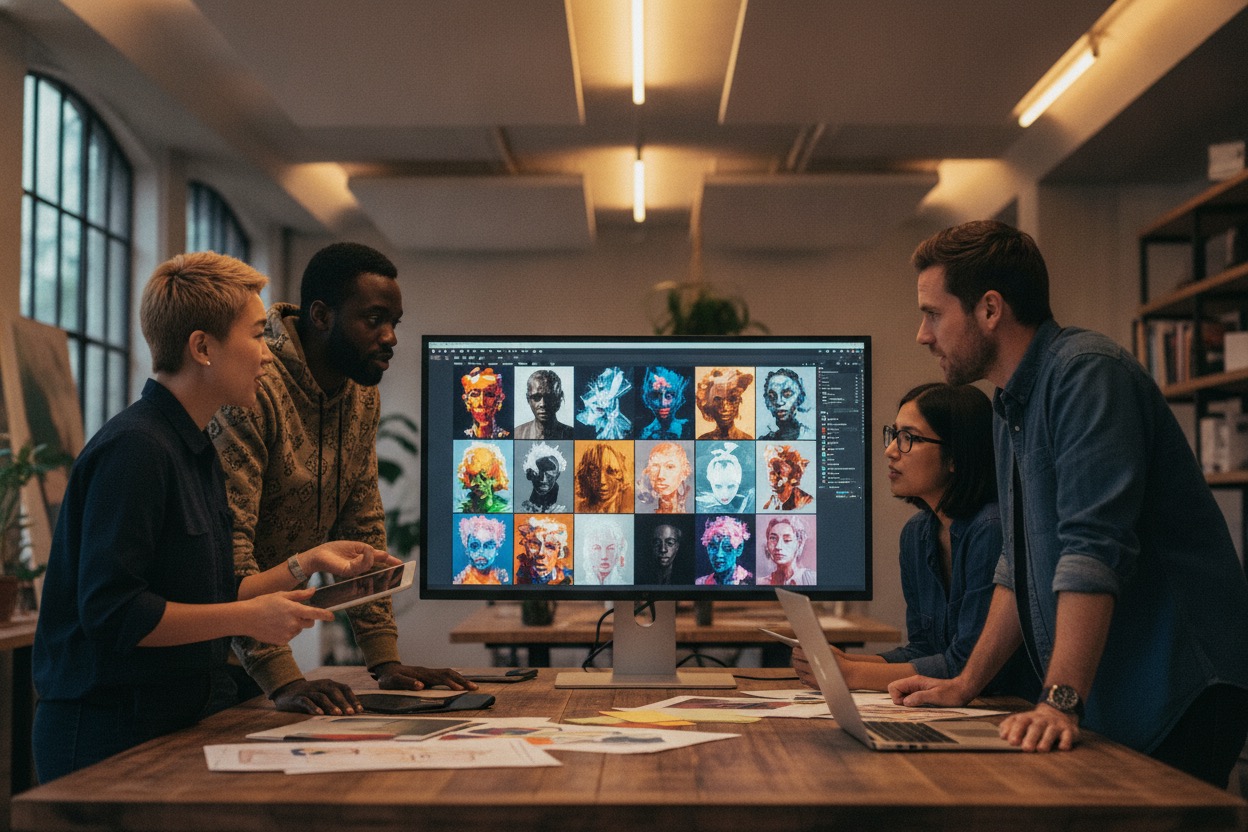
Thousands of style options, served from the backend and always growing.
Saving and revisiting generated portraits in a personal gallery.
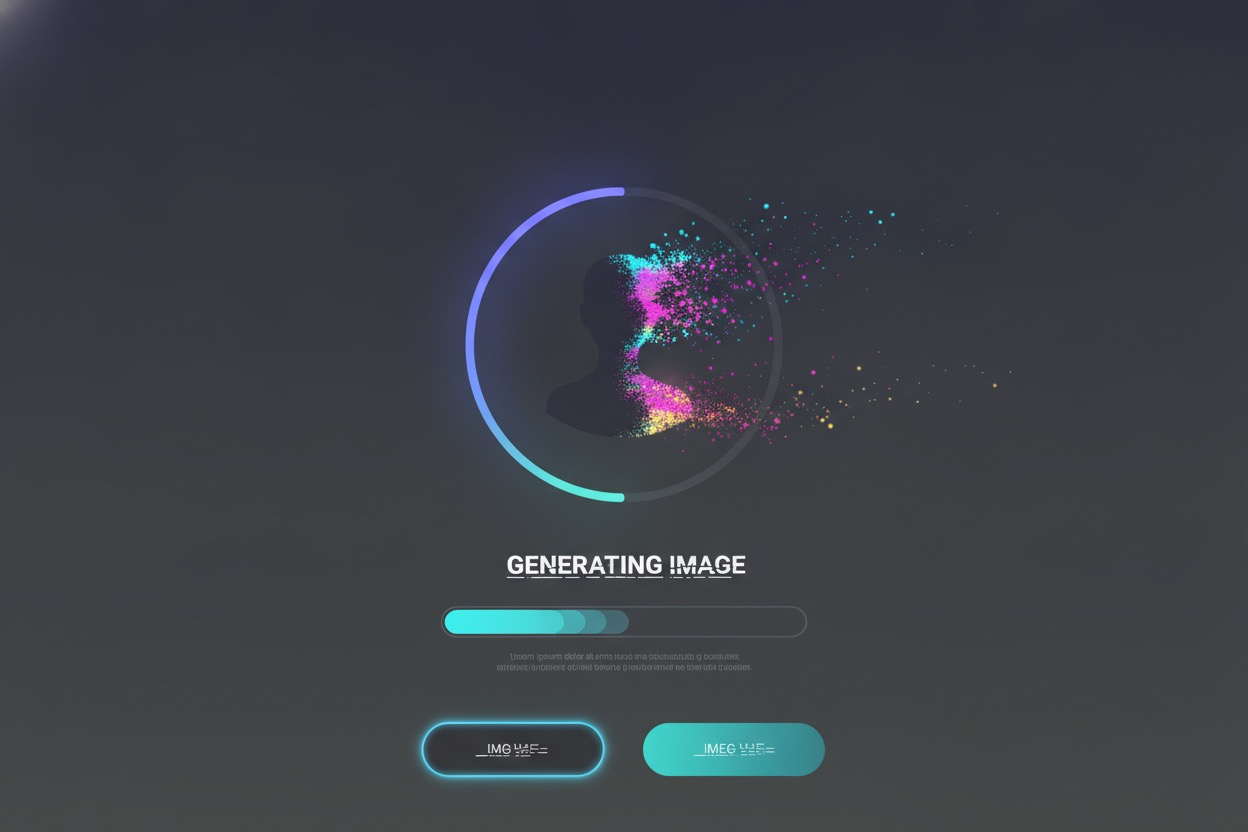
A selfie is transformed into a professional-quality portrait through an AI generation pipeline coordinated by the Node.js backend, keeping the native apps themselves light and fast.
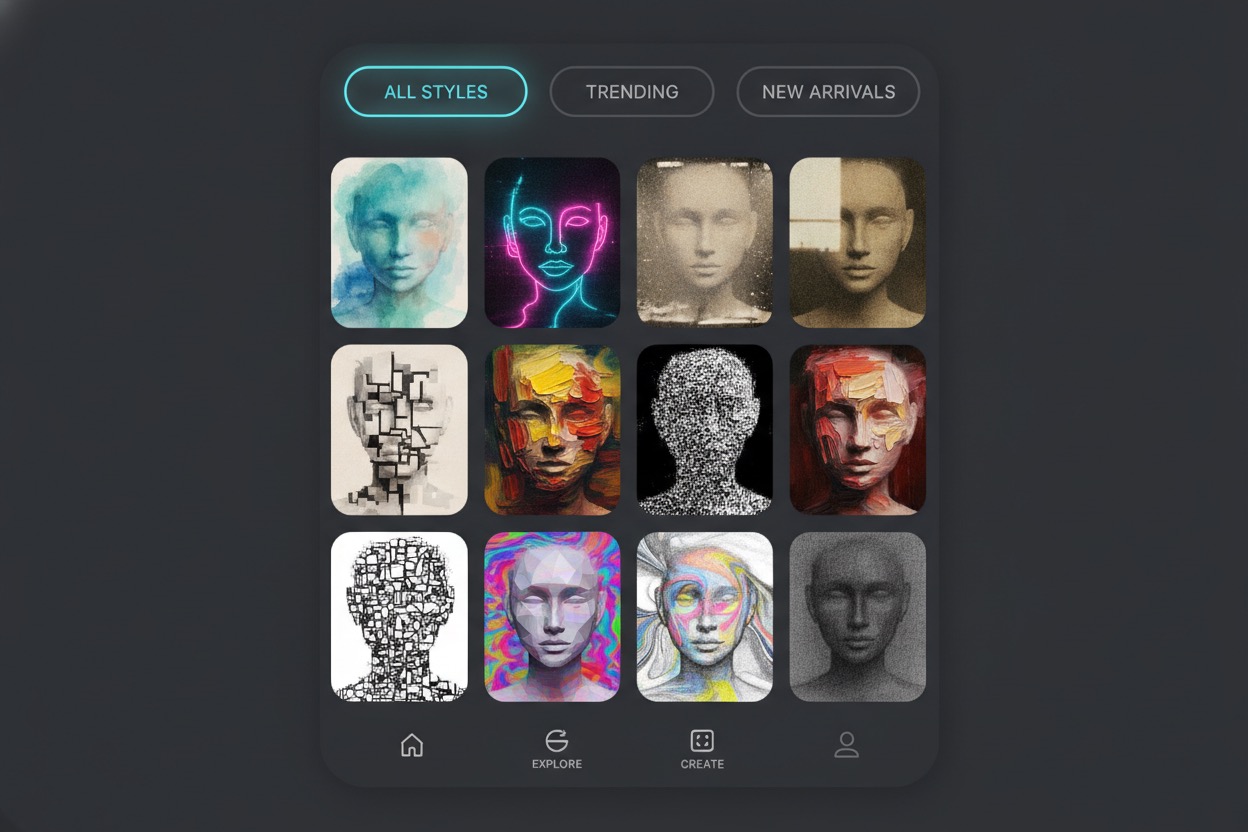
Thousands of style options are served from the backend rather than bundled into the app, so the library can keep growing without an app-store update.
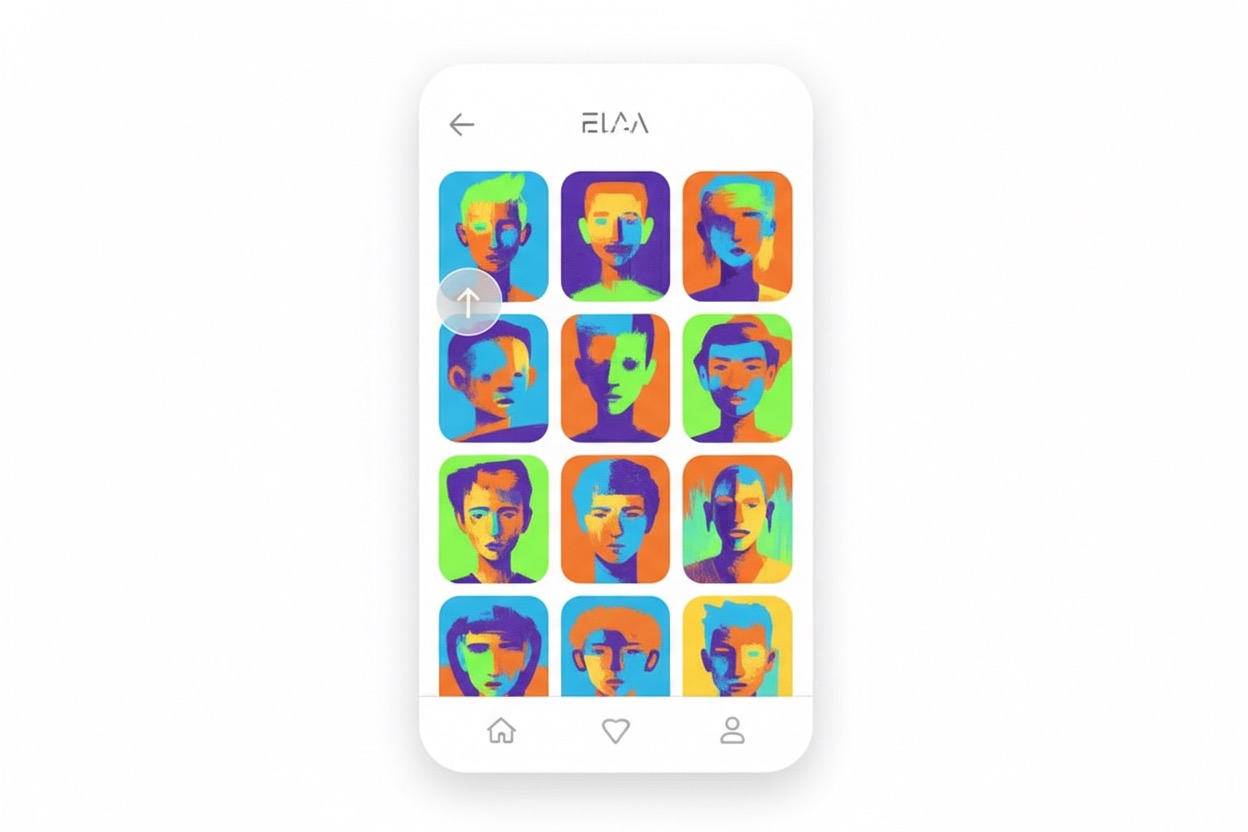
Generated portraits are saved to a personal gallery, backed by MongoDB and Firebase, ready to revisit or share.
A closer look at what each part of the app actually does.
A selfie is transformed into a professional-quality portrait through an AI generation pipeline coordinated by the Node.js backend, keeping the native apps themselves light and fast.
Thousands of style options are served from the backend rather than bundled into the app, so the library can keep growing without an app-store update.
Generated portraits are saved to a personal gallery, backed by MongoDB and Firebase, ready to revisit or share.
Fully native Swift and Kotlin apps, so the camera, photo picker and generation flow feel native on each device rather than a cross-platform compromise.
Firebase-backed real-time state keeps the app responsive while generation happens in the background, so it never feels like you're waiting on a spinner.
The entire flow is built around one simple loop: take or choose a selfie, pick a style, get a portrait.
Swift and Kotlin were used so the camera, photo picker and generation flow feel native on each device.
Firebase-backed real-time state keeps the UI responsive while generation happens in the background.
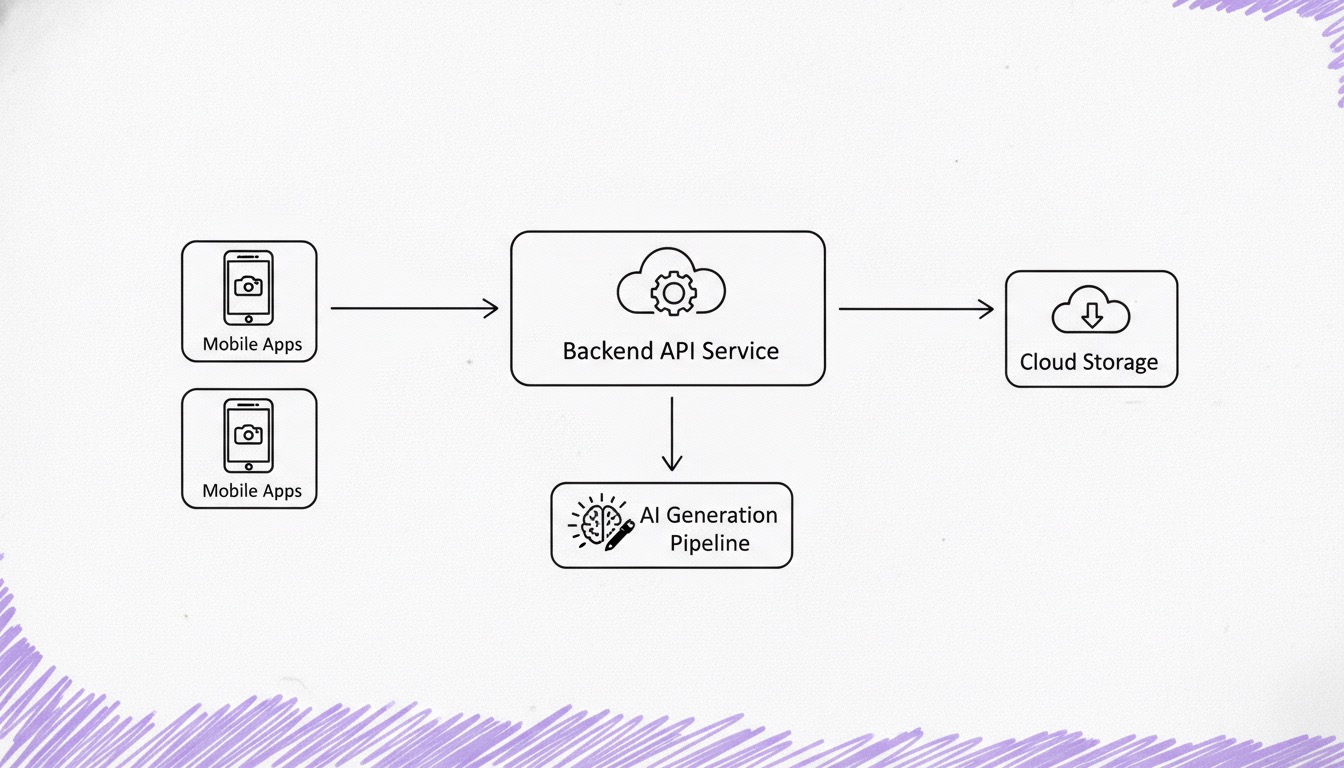
A representative view of how the pieces fit together — illustrative, not a literal infrastructure diagram.
Native iOS (Swift) and Android (Kotlin) apps — no web client.
Node.js backend coordinating AI generation requests, with Firebase handling auth and real-time state.
MongoDB storing user, style and generation-history data, with AWS hosting infrastructure and storage.
Hover or tap a card to see why each technology was chosen.
Native iOS development for a fast, camera-integrated experience on iPhone.
Native Android development mirroring the same core flows.
Backend service coordinating selfie uploads and AI-generation requests.
Flexible storage for user accounts, style metadata and generation history.
Authentication, push notifications and real-time app state.
Cloud infrastructure and storage sized for image-heavy, consumer-scale traffic.
The generation pipeline was built to handle the usage spikes typical of a casual, shareable entertainment app.
iOS and Android both draw from the same Node.js and Firebase backend, so behavior never drifts between them.
Encryption in transit, scoped access control and independent code review are baseline practice on every engagement — no specific third-party compliance certification for this engagement is publicly documented, so we're not claiming one.
Our standard 7-phase delivery framework, applied to this engagement.
Mapping the core loop — selfie in, style chosen, portrait out — and what "instant-feeling" needed to mean.
Designing a backend that could serve a growing style library without bloating the native apps.
Keeping the generation and gallery flows simple enough for a casual, entertainment-first audience.
Building the native iOS and Android apps in parallel against shared Node.js and Firebase contracts.
Testing generation and style-browsing flows across both platforms and a growing style library.
Shipping to both app stores with a backend already sized for consumer-scale traffic.
Ongoing engineering support as the style library and platform continue to grow.
Shipping thousands of style options natively inside the app would make it slow to update and heavy to install.
Style data and assets are served from the backend and MongoDB rather than bundled into the app, so new styles can ship without an app-store update.
AI portrait generation is computationally heavy, and a slow result breaks the casual, fun feel of an entertainment app.
Generation requests are coordinated through a dedicated Node.js layer, with Firebase keeping the UI responsive while the heavier work happens server-side.
A consumer entertainment app lives or dies on both app stores offering the same experience at the same time.
Swift and Kotlin were built against the same Node.js and Firebase contracts, so both platforms ship the same style library and generation flow.
What this platform means for the business, in plain terms.
One backend serving both platforms, so every new style ships to iOS and Android at once.
A style library that can grow into the thousands without requiring an app-store update.
Selfie-to-portrait generation handled off-device, keeping the native apps light and responsive.
A public testimonial for this engagement hasn't been published yet. In the meantime, you can read verified feedback from other Apptechies clients.
Read Verified TestimonialsIf your product needs generative AI at consumer scale — photos, video, or something new entirely — we'd like to talk about it.
Start Your ProjectWhat people usually ask about the MyMood AI engagement. Have one we haven't covered? Ask us directly on the right.
MyMood AI is a consumer entertainment app that turns selfies into professional-quality AI-generated portraits and avatars across thousands of styles. Apptechies built its native iOS and Android apps and the backend that powers style generation.
Native iOS and Android apps, sharing one backend — there is no web platform.
Swift for iOS, Kotlin for Android, a Node.js backend, MongoDB for data, Firebase for authentication and real-time features, and AWS for infrastructure.
Style data and assets are served from the backend rather than bundled into the app itself, so the style library can grow without requiring an app-store update.
Not yet publicly published. Verified testimonials from other Apptechies engagements are available on our testimonials page.
Yes — AI-driven mobile experiences at consumer scale are exactly what we specialize in.
Tell us what you're building — a real engineer or strategist replies within one business day.