Hire Mobile App Developers
Work with dedicated mobile app developers, native or cross-platform, who ship apps that perform well and hold strong App Store and Google Play ratings, wherever in the world your team is based.
The first real decision in hiring a mobile app developer is native versus cross-platform: Swift or Kotlin for platform-specific performance and polish, or Flutter or React Native for one codebase across both iOS and Android. Beyond that choice, a strong mobile developer designs for the offline states, background processes, and permission flows that make an app feel reliable rather than fragile, and understands what it actually takes to pass App Store and Google Play review cleanly. At Apptechies, we work with clients across the US, UK, Europe, and beyond, matching each project to the platform approach that actually fits its requirements and budget.

AI coding assistants speed up boilerplate, test scaffolding, and repetitive UI work, and our engineers use them daily, but every architecture decision and pull request is still reviewed by a person before it merges. On the product side, on-device models such as Apple's Core ML and Google's ML Kit, and calls to a hosted AI API, both need real engineering: memory limits, offline fallback, and battery impact don't disappear because a feature is "AI-powered."
If your roadmap includes model evaluation or AI system design beyond wiring a mobile UI to an API, hire AI developers alongside your mobile team rather than expecting one generalist to cover both.
Trusted by teams shipping real mobile products






These aren't self-issued badges. Each one comes from a third-party review platform that verifies client feedback and delivery history before publishing a ranking.






Compliance & Platform Certifications
We guide you on the technical tradeoffs based on your target users, device integrations, and product roadmap.
When to choose this: High-performance 3D graphics, Bluetooth/BLE peripheral communication, deep OS background audio/location services, or platform-first UX.
A global team, matched to your platform and timezone needs.
Engineers across multiple timezones, so meaningful working-hours overlap is available wherever your team is based.
We recommend the approach that fits your actual requirements and budget, not whichever we happen to prefer building.
Submission and review handled properly, so launches don’t stall on avoidable guideline issues.
A senior mobile engineer and dedicated PM oversee every engagement from architecture through store launch.
Native and cross-platform, matched to your project.
SwiftUI-based apps with deep platform integration, built for teams that need iOS-specific performance and polish.
Jetpack Compose-based apps with modern Android architecture, tested across a range of real devices.
Flutter or React Native builds that ship to both iOS and Android from one codebase, cutting cost and time to market.
Clean integration with REST, GraphQL, or Firebase backends, including offline support and background sync.
Provisioning, compliance, and submission handled correctly for both platforms as part of standard delivery.
Ongoing feature development, OS-update compatibility, and performance monitoring after your app goes live.
This is the typical composition of a Dedicated Team engagement, not a fixed headcount promise or a currently available named roster. Every role below is added when the engagement scope actually calls for it. See the cost breakdown further down for how that changes your budget.

Candidates build a small real mobile feature against a representative spec, not a generic quiz.
We ask about a real App Store or Google Play rejection they’ve handled and how they resolved it.
Senior candidates walk us through a native-vs-cross-platform decision they made on a past project and why.
Our mobile engineers handle provisioning profiles, permissions, and compliance guidelines from day one, which avoids the most common causes of an avoidable rejection. This applies whether the work is iOS app development, Android app development, or both. If you need full delivery of a mobile product rather than adding one engineer to your own team, our mobile app development services cover that end to end.
Full compliance with Apple and Google data collection disclosures to prevent instant review rejection.
Graceful offline caching and background synchronization for intermittent network connectivity.
Face ID, Touch ID, GPS geofencing, camera pipelines, and push notifications implemented securely.
Zero-touch beta distribution and automated release pipelines configured from day one.
Keyword-relevant titles, screenshots, and descriptions that meet both stores’ current listing guidelines.
Crash reporting wired in before launch so regressions are caught before users report them.
Native and cross-platform mobile frameworks, state management, and backend sync tools, matched to what your app actually needs, not a one-size-fits-all stack.
Swift and SwiftUI for apps that need platform-first performance, deep hardware access, and the polish App Store reviewers expect from a genuinely native build.
Kotlin with Jetpack Compose for modern, testable Android architecture that holds up across the fragmented range of real Android devices.
Flutter or React Native when one codebase needs to reach both iOS and Android without duplicating engineering effort.
Firebase, Node.js, and REST/GraphQL APIs for the sync, auth, and data layer every mobile app depends on behind the scenes.
Useful seniority distinctions come from autonomy and responsibility, not just years of experience.
| Level | Ownership | Autonomy | Best For |
|---|---|---|---|
| Junior | Implements defined UI screens and API calls from a clear spec | Works under review; not yet trusted with architecture calls | Well-scoped feature work inside an existing codebase |
| Mid-Level | Builds full features end-to-end, including edge cases and error states | Makes local implementation decisions independently | Most day-to-day feature development |
| Senior | Owns architecture, native-vs-cross-platform tradeoffs, and release risk | Trusted with ambiguous problems and cross-team decisions | New builds, platform migrations, and performance-critical work |
A developer's hourly or monthly rate is one input. Total project budget depends on the factors below, so we quote against your actual scope on a discovery call rather than a fixed price list. Regulated categories add real scope too. A fintech app handling transactions needs different security review than a healthcare app handling patient data, and that difference shows up in the estimate.
An individual engineer’s rate is one input. Total budget also depends on committed hours, duration, and whether a PM or QA is included.
Two native codebases (Swift and Kotlin) generally take longer to build than one Flutter or React Native codebase covering both platforms.
Payments, maps, push notifications, camera, and biometric integrations add defined, scopeable work.
Complex permission or data-handling requirements add review time, not an open-ended cost.
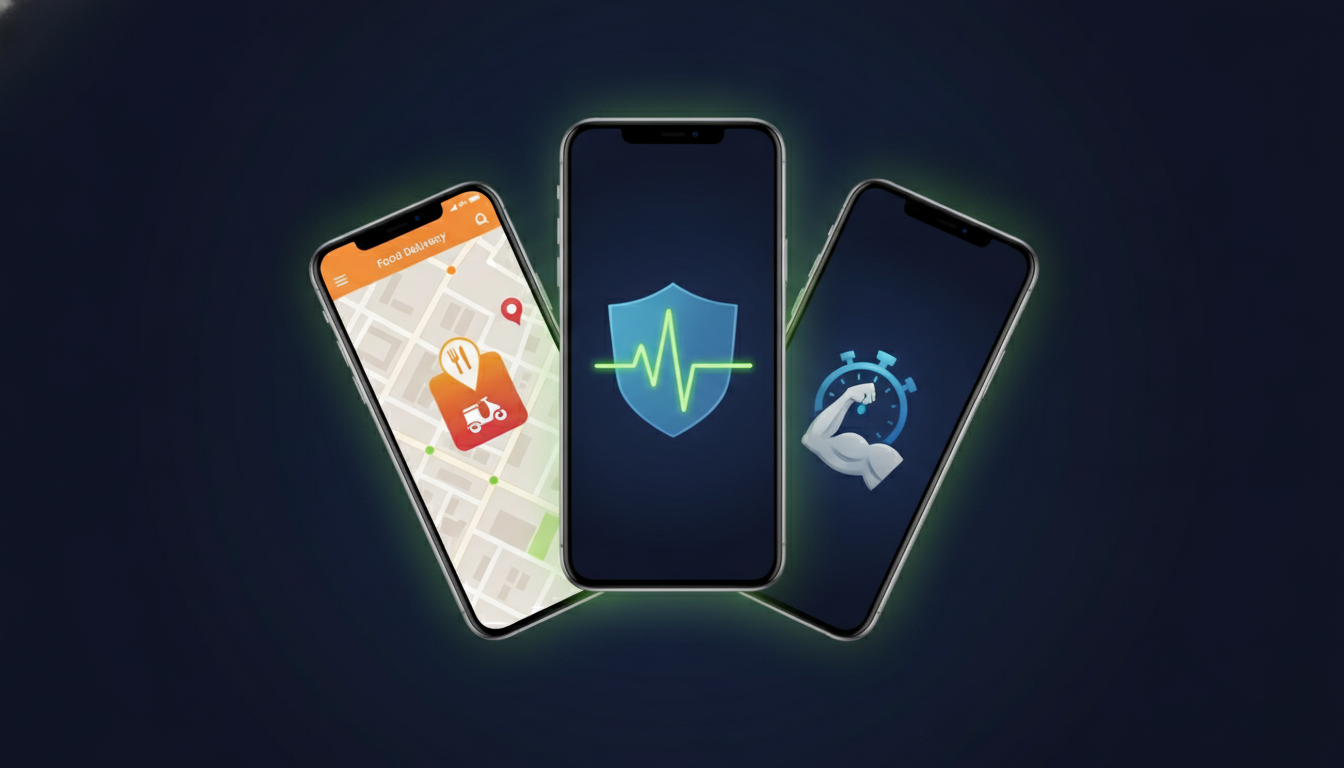
HIPAA-aware data handling, secure messaging, and device/wearable integrations.
Bank-grade authentication, encrypted transactions, and compliance-aware architecture.
Real-time location tracking, live order status, and payment orchestration.
Wearable and HealthKit/Google Fit integrations with offline workout tracking.
Booking flows, live itinerary sync, and multi-currency payment support.
Real-time feeds, media upload pipelines, and push-notification-driven engagement.
No black-box handoffs. You see the same tools, reviews, and reports we use internally.
Slack, Jira, Linear, or whatever your team already runs on.
Every change is reviewed before merging, whether by your team, ours, or both.
Weekly status against the agreed scope, plus a dedicated PM for escalation.
Engineers scheduled for meaningful working-hours overlap with your team.
We scope your target platforms, integrations, and timeline against your actual product.
A shortlist matched to your requirements, typically within 3 to 5 business days.
You interview the candidate(s) directly and choose who joins.
Access provisioned, codebase walkthrough complete, and a first real piece of work shipped and reviewed within one to two weeks.
From a single embedded specialist to a fully managed app build, anywhere in the world.
One mobile engineer joins your existing team, repos, and standups. You keep prioritizing the work; the engineer executes inside your process.
A senior engineer, a second engineer, and a PM work to an agreed capacity, suited to a build that needs more than one pair of hands.
We take ownership of an agreed outcome, not just headcount, closer to a full app development engagement than staff augmentation.
Bounded work such as a native integration, a performance investigation, or fixing a specific store rejection, without a long-term commitment.
Working with clients across the US, including teams in Austin, the UK, Europe, and Asia-Pacific.

Live daily syncs plus async PR reviews cover your full engineering cycle.
Near-total workday overlap with our senior mobile engineering squad.
Every mobile screen, native module, and release config file belongs 100% to your company.
Signed before technical discovery touches your product repository or app designs.

“Flawless execution, smooth communication, and on-time delivery.”

“The AI-powered fitness platform Apptechies developed integrates personalized workout plans, nutrition tracking, and real-time progress monitoring in one beautiful app. Their technical execution has been exceptional.”

“They cleared all my doubts and turned my idea into a powerful app.”
Get matched with vetted mobile engineers ready to join your build in 3 to 5 business days.
Scale your development capacity across frontend, backend, mobile, cloud infrastructure, and AI engineering.
Zero recruiting overhead, no long agency retainers, and transparent communication from day one.
We evaluate your codebase, architectural requirements, and delivery milestones during a focused technical session with senior engineers.
You receive profiles of pre-screened Mobile App Developer developers who have built and shipped identical architectures in production.
Conduct a technical interview, evaluate live problem-solving, and verify cultural alignment with your core engineering team.
Your developer integrates into your Slack, Jira, and GitHub repositories within 3 to 5 business days with signed mutual NDA and full IP transfer.
The questions we hear most from teams hiring a mobile app developer. Don't see yours? Ask us directly on the right.
Native (Swift or Kotlin) makes sense when performance, camera and AR features, or platform-specific UX are critical. Cross-platform (Flutter or React Native) is usually right for content-driven or workflow apps where one codebase and faster iteration matter more. We will scope this honestly against your actual requirements. If the decision is already made, hire Swift developers or Kotlin developers for native work, or Flutter developers and React Native developers for cross-platform.
Yes, we work with clients across every major timezone, and structure engagements with enough working-hours overlap for real-time collaboration regardless of where your team is based.
It depends mainly on scope. A focused MVP typically runs from a modest fixed budget up to significantly more for a full-featured app with complex integrations, which is why we quote against your actual requirements rather than a generic price list.
Yes, our extended team model is built for exactly this: a developer who works inside your existing repos, tools, and standups, alongside your in-house engineers.
Typically a shortlist within 3 to 5 business days and full onboarding within one to two weeks, depending on your systems and any procurement requirements.
Yes, provisioning, store listing assets, and guideline compliance for both platforms are part of our standard delivery process.
Yes, full IP ownership transfers to you, backed by an NDA signed before development begins.
Yes, we offer ongoing support retainers for feature development, OS-update compatibility, and performance monitoring once your app is live.
Yes. You review the shortlist and speak with the engineer directly before agreeing to the engagement, so you are not assigned a developer sight unseen.
A mid-level engineer can implement well-defined features from a clear specification. A senior engineer should own architecture decisions and native-versus-cross-platform tradeoffs. A lead is worth adding once you are coordinating release strategy across more than one mobile engineer. We help you match seniority to the actual decisions your project needs made, not just the budget.
You get direct access to the engineer through your existing tools (Slack, Jira, or your preference), with regular check-ins and a dedicated PM for status and escalation. Code is reviewed through pull requests before merging, the same discipline we use on our own delivery work.
Raise a fit concern early and we will address it directly, which can include a replacement. Continuity is protected by documentation and code review practiced from day one, not by depending on a single person’s memory of the codebase.
Yes. Beyond one embedded developer, we offer a dedicated team (typically a senior engineer, a second engineer, and a PM) working to an agreed capacity, or a fully managed build where we own the outcome rather than just the headcount. If the build also needs backend or API work beyond the mobile client, hire full-stack developers alongside the mobile team, or see hire software developers for broader capacity across mobile, web, and backend work.
Also Exploring?
Tell us what you're building, and a senior engineer or solutions architect will reply within 24 hours.