Category: Tech Stack | Apptechies

  • How Much Does it Cost to Build an App in 2026: A Detailed Guide

    How Much Does it Cost to Build an App in 2026: A Detailed Guide

    How Much Does it Cost to Build an App-Apptechies

    “How much does it cost to build an app in 2026?” is one of the most popular questions for every business owner. However, there are no fixed app development costs, because a simple app with basic functionality costs you around $30,000 to $50,000. A mid-level app costs you $80,000 to $200,000. And if you want an advanced app with AI integration, then it will cost you around $200,000 to $500,000 or more. In short, building an app cost depends on multiple factors; the more you want advancement, the more you pay for app development.

    Why so much variation? Because mobile app development is not just coding, it’s a combination of designing, backend, features and business goals. Every extra feature, like AI-powered recommendations or push notifications, increases mobile app development costs. Choosing a platform like Android, iOS or both also affects the budget.

    Partnering with a trusted mobile app development company can make a major difference. They not only provide accurate app development cost estimation but also assist you throughout the app development journey. With their expertise, they suggest the best that aligns with your business goal.

    In 2026, every business owner is going digital with mobile apps; therefore, it is important to understand the cost to develop an app. In the blog, we will break down the process step by step, hidden mobile app development costs, tips to plan your budget and everything you know before building an application.

    App Development Cost: A Simple Breakdown

    Understanding the cost of developing an app starts with knowing each step involved in the development lifecycle. Each step requires time, skills and resources, all of which directly affect your overall mobile app development costs. Below is a detailed, easy-to-follow analysis that explains what happens at each step, what results you can expect, and how much does it cost to build an app in 2026.

    Conduct Market Research:

    Action: This includes competitive analysis, understanding target users, identifying market gaps and verifying whether there is real demand for your idea.

    Result: You start with a clear direction, a refined app idea and confidence that you are building something that users really need. This early research prevents costly mistakes later.

    Estimated Cost: USD 1,500 to USD 10,000

    Market research is often underestimated, but it can save thousands by eliminating unnecessary features or risky ideas early in the process.

    Mobile App Features & Functionality:

    Action: Define the app’s features, login system, AI models, dashboard, payments, geolocation, social features, real-time chat, etc.

    Result: A list of final features helps you estimate the budget accurately and keeps development efficient.

    Estimated Cost:

    • Simple Apps: USD 20,000 to USD 40,000
    • Medium Complexity: USD 50,000 to USD 150,000
    • Advanced Apps (AI, ML, Real-time Features): USD 150,000 to USD 500,000+

    Features are the biggest cost driver. The more complex the functionality, the higher the cost to develop an app.

    You Can Read Also: What is the Role of  AI in Mobile App Development?

    Create a Business Plan:

    Action: Describe your app’s vision growth strategy, revenue generation strategy and business objectives.

    Result: Because everything has a roadmap, you can avoid unexpected expenses and feature creep.

    Estimated Cost: USD 1000 to USD 5000

    A strong plan keeps your project in line with long-term goals and the market demand.

    Choose the Right Platform:

    Action: Decide whether you want to create an Android app or iOS app or both. Before choosing, learn the difference between iOS and Android. Also, choose between native development and cross-platform frameworks.

    Result: Ensures that the app works successfully for your target audience while also helping you optimize your budget.

    Estimated Cost:

    • Simple Platform: 30-40% less expensive than building both
    • Cross-platform (Flutter/React Native): 25-35% cost savings

    When choosing the right platform, decide wisely. Because development time and complexity depend on this decision.

    Choose the Right Tech Stack:

    Action: Choose backend frameworks, databases, cloud services, AI infrastructure and architecture.

    Result: A scalable and secure foundation that reduces future maintenance costs.

    Estimated Cost: USD 5,000 to USD 50,000+

    Your tech stack affects performance, security, and even the mobile app development cost.

    Secure Data and Compliance:

    Action: Set up encryption, secure authentication, role-based access, GDPR compliance, HIPAA guidelines for health apps, and PCI DSS for payment apps.

    Result: Protects users and keeps your company secure from legal issues.

    Estimated Cost: USD 5,000 to USD 60,000

    Security is unavoidable in 2026 due to increasing cyberthreats. This is necessary and this also affects the cost to develop an app.

    Design UI/UX:

    Action: Create wireframes, prototypes, user flows and high-fidelity app screens.

    Result: Attractive and intuitive design that improves user engagement and retention.

    Estimated Cost:

    • Basic UI/UX: USD 5,000 to USD 15,000
    • Advanced UI/UX: USD 20,000 to USD 50,000
    • Exclusive Custom Design: USD 50,000+

    Good UI/UX design increases conversions and reduces support issues.

    Mobile App Development:

    Action: Developing an app includes frontend (app interface) and backend (API, database, server logic) development. The final budget for creating an app is determined by team size, hourly rates, and complexity.

    Result: A fully functional, stable mobile application.

    Estimated Cost:

    • Simple Apps: USD 30,000 to USD 60,000
    • Medium Apps: USD 70,000 to USD 200,000
    • Advanced/AI Apps: USD 200,000 to USD 600,000+

    The process of mobile app development is a phase where the majority of your expenses go because coding requires many experts.

    Test & Launch:

    Action: Test usability, security, integration, performance and device compatibility both manually and automatically.

    Result: A smooth, flawless app experience.

    Estimated Cost: USD 5,000 to USD 30,000

    Quality assurance prevents costly mistakes after launch.

    App Maintenance (Annually):

    Actions: Continuous updates, bug fixes, new features, OS updates and server maintenance.

    Result: This ensures that the app runs smoothly, remains secure and competitive.

    Estimated Cost: 15-25% of the initial mobile application development cost per year

    Example: A USD 100,000 mobile app development costs USD 15,000 to USD 25,000 per year to maintain.

    Key Factors That Change the Cost of Building an App

    Key Factors That Change the Cost of Building an App

    Mobile app development costs in 2026 may vary significantly, from $30,000 for a basic MVP to more than $600,000+ for a feature-rich, AI-powered solution. What is the reason for such a big difference? The scope, timeframe and resources needed to develop an app. There are several factors that affect the cost of building an app.

    Let’s analyze these aspects so you can estimate your budget more accurately. This helps avoid unexpected expenses during developing an app.

    Mobile App Features & Functionality

    The biggest impact on mobile application development costs is the number and complexity of features. Each feature requires time to plan, design, develop and test.

    Why it’s Important:

    A basic login system might take a few hours, but advanced features such as real-time GPS tracking, video calls, AI predictive models or multilingual support can take several weeks.

    Example:

    • Adding a payment gateway requires API integration and security checks.
    • Adding an AI chatbot requires model integration and training data.

    Cost Impact: More Features = More Development Hours = More App Development Costs.

    Mobile App Complexity

    Complexity refers to how advanced the internal logic of the app is. While others process millions of transactions or have real-time interaction. But some apps handle simple information,

    Why it’s Important:

    Apps with advanced logic need complex backend structures, caching, security layers and real-time updates.

    Examples:

    • A simple meditation app is low complexity.
    • A stock trading app with live market updates is very complex.
    • A marketplace with buyers, vendors, and administration is multi-complex.

    Cost Impact: Higher Complexity = Specialized Developers = Higher Expense.

    Mobile App Category & Industry

    Each industry has different requirements, regulations and user expectations. This is one of the reasons which directly affects the cost of app development.

    Why it’s Important:

    Some categories require more security, integration and compliance measures.

    Example:

    • Education App Development: It often requires video lessons, interactive quizzes, and student analytics. And the features that require both robust backend systems and smooth user interfaces.
    • Fintech Apps: Need KYC, encryption and fraud prevention.
    • Health Apps: Requires HIPAA compliance, safe data storage and patient record protection.
    • E-commerce Apps: Demand a product catalog, cart, payment processing, and customer support features.
    • Social Networking Apps: Need a lot more resources, such as real-time chat, content feed, notification and media sharing. Because they mostly rely on these features.
    • Taxi App Development: They require safe payment, Live GPS tracking, driver-user matching & route optimisation.

    Cost Impact: Industry-specific apps often cost 30-50% more due to their greater complexity.

    App Platform Choice (iOS, Android, or Cross-Platform)

    The choice of platform is crucial because it significantly affects your app’s performance, user reach, development timeline and overall mobile app development cost. Each platform requires different app development efforts. Whether you want to build an iOS app or Android app choose wisely.

    Why it’s Important:

    • Native App, is built for iOS or Android separately which offers best performance and full device access. iOS app development cost is higher due to App Store guidelines. And with multiple devices testing the cost of an android app increases. 
    • Web App, runs on browsers, it is faster and less expensive but limited device accessibility.
    • Cross-platform apps (Flutter/React Native) let you create a single codebase for both platforms, saving time and app development cost.
    • Hybrid App combines native and web features. The process of mobile app development is faster but you might compromise on performance.

    Cost Impact: Building separate iOS and Android apps can cost you twice. Cross-platform development can reduce costs by 25-35%.

    App Design & Animation (UI/UX Design)

    The app design cost depends on the level of depth, graphic complexity and animation of your application.

    Why it’s Important:

    A well-designed app improves user experience, increases conversions and reduces bounce rates. Custom designs, micro-animations, advanced transitions and interactive elements add development time.

    Example:

    • Designing a basic user interface is less expensive.
    • The cost of app making increased due to the complex dashboard and 3D animations.

    Cost Impact: Higher visual complexity = More design hours, which raises the cost to develop an app.

    Backend Development

    Backend is the server-side brain of your application. It manages authentication, user data, payments, real-time data and requests.

    Why it’s Important:

    Even if your app looks simple, it may need a powerful backend depending on the data it handles.

    Example:

    • A static app may not need a backend.
    • Real-time geolocation, ride matching, and notifications are necessary for a ride-hailing service.
    • A social media app needs media storage, post feeds, and user activity logs.

    Cost Impact: Backend development costs more, because it needs servers, databases, architecture planning and APIs.

    Trends & Tech Stack

    The technologies you select, framework, database, libraries and cloud solutions. It has a major impact on the mobile app development cost, performance, and long-term scalability. Modern tech stacks are faster and more secure.

    Why it’s Important:

    The use of modern technology ensures that your app remains future-proof and compatible with new devices. But some technologies demand highly skilled developers, which increases costs.

    Example:

    • Real-time chat requires WebSockets.
    • TensorFlow or the OpenAI APIs can be used in AI features.
    • AWS, Google Cloud or Azure may be used in cloud architecture.

    Cost Impact: Modern stacks can increase the initial cost of building a mobile app but reduce long-term maintenance costs.

    AI & Automation Features

    AI is one of the most in-demand features in 2026, it has become a major cost factor because it requires advanced engineering, model training and testing.

    Why it’s Important:

    Although AI in app development improves the user experience, engagement, and automates workflows. It requires special expertise and large datasets which offer long-term ROI.

    Example:

    • AI Chatbots
    • Recommendation engine (similar to Netflix or Amazon)
    • Image Recognition
    • Analytical Prediction
    • Voice Assistant
    • Generative AI Tools

    Cost Impact: AI app development cost depending on the complexity of the model, AI features can add between $50,000 and $200,000+

    Read More: AI in the Automotive Industry

    Location of App Development Team

    The geographic location of your app development team determines the hourly rate you pay.

    Why it’s Important:

    Prices vary significantly in different areas.

    Example of hourly rates in 2026:

    • USA/Canada: $90 to $180 per hour
    • UK/Europe: $40 to $90 per hour
    • India/Southeast Asia: $20 to $50 per hour

    Cost Impact: Same app, different team locations = Big difference in cost.

    Size of App Development Team

    The more people working on your app development, the faster it is delivered. But the cost of building an app will rise proportionally.

    Why it’s Important:

    • For larger apps required:
    • Project Manager
    • Business Analyst
    • UI/UX Designer
    • Frontend and Backend developers
    • QA Testing
    • DevOps Engineers

    Cost Impact: Larger teams are more expensive, but they do excellent work more quickly.

    Third-Party Integrations

    Most of the apps rely on external services for payments, maps, notifications or analytics.

    Why it’s Important:

    These integrations speed up development, but take time to set up and sometimes require recurring monthly fees.

    Example:

    • Stripe, Paypal
    • Firebase
    • Google Maps
    • OneSignal
    • Twilio

    Cost Impact: More integration = More complex configuration = Higher cost.

    Compliance & Security Requirements

    Security cannot be compromised, especially in business, finance, and health apps.

    Why it’s Important:

    Apps must guarantee safe data management and adhere to international regulations.

    Example:

    • GDPR (Europe)
    • HIPAA (US Healthcare System)
    • PCI DSS (Compensation)
    • Cybersecurity encryption

    Cost Impact: Compliance raises overall costs by requiring more testing, documentation and development.

    You Can Read Also: What is Startup Accelerator Program

    Hidden Costs in Mobile App Development

    Hidden Costs to Build an App Development-Apptechies

    Most companies only consider visible costs such as UI/UX design and development, when planning your budget. There are several hidden costs of mobile app development that can significantly increase your expenses. If you ignore these expenses you might overspend or compromise with quality. Understanding these costs upfront will help you plan strategically and launch a successful app.

    Project Management:

    Managing app development involves coordinating designers, developers, QA testers, and other team members. Effective project management ensures timelines, budget control and smooth communication, but it has its costs.

    Quality Assurance:

    Quality Assurance is essential to ensure a flawless, smooth and professional app experience. Functional testing, usability testing, performance optimization and device and operating system compatibility checks are all part of it. Skipping QA may save money initially, but it often leads to crashes, negative reviews, and costly post-launch fixes. A well-tested application improves user retention, builds trust and reduces long-term expenses.

    Backend Development & Infrastructure:

    The backend is the engine that powers your app, including servers, databases, APIs, and cloud services like AWS, Firebase, or Azure. High-performance servers, scalable infrastructure and real-time monitoring tools are necessary. As the number of users increases, the cost of app making increases. For the app’s stability, performance and scalability, a proper backend setup is important. In most cases, it is often ignored during initial budgeting. 

    App Maintenance & Post-Launch Support:

    After an app launch, development doesn’t end. Regular maintenance of your app keeps it functional and competitive. Main elements include:

    • App Bug Fixes: Resolving system bugs or user-reported issues.
    • Design & Feature Updates: Improve UI/UX and add new features to satisfy user needs.
    • OS & Devices Compatibility: Updating the application for new OS versions and devices.
    • Server & Database Costs: Ensures consistent performance and uptime.
    • Security Patches: Protecting user information from new threats.

    App Hosting & Listing Costs:

    Hosting and publishing your application adds recurring expenses:

    • iOS App Store: $99/year
    • Google Play Store: $25 one-time
    • Hosting and cloud storage: Monthly fee based on user traffic, database size and storage requirements. 

    These costs keep your app available, scalable and reliable for users around the world.

    App Marketing & User Acquisition:

    Marketing is key to the success of your application, but it is often underestimated. Expenses consist of:

    • Pre-launch Marketing: Raising Awareness and Encouraging Early Registration.
    • App Store Optimization: Improve your App’s Visibility in Search Results.
    • Paid User Acquisition: Advertising on Social Media, Search Engines and Influencer Campaigns. 
    • Content Marketing & Public Relations: Blogs, Press Release and Video Campaigns.
    • Social Media Management: Interacting with your Audience and Building a Loyal Community. 

    App Security:

    User data security cannot be compromised. Security-related costs cover:

    • Encrypted Data Storage.
    • Secure Authentication.
    • Fraud Detection and Prevention.
    • Adherence to laws such as PCI-DSS, GDPR and HIPAA.

    Investing in security not only protects your users and protects against legal penalties. But also protects your brand’s reputation.

    SaaS and SDK Fees:

    Many apps use third-party services such as payment gateways, chat SDKs, analytics platforms or AI APIs. While these speed up development, they come with subscription or license fees, adding both upfront and ongoing costs

    Legal and Licensing Fees:

    Legal considerations include:

    • Terms of service, privacy policies and NDAs.
    • Protection of intellectual property and trademarks.
    • Licensing libraries, SDKs, or APIs from third parties.

    Failure to comply with legal and licensing requirements may result in fines, lawsuits, or even removal of the app from the store. Proper legal planning ensures your app is secure, compliant and scalable.

    How you can Optimize Your App Development Costs

    Creating an app doesn’t have to cost your entire budget. With proper planning and smart decisions, you can significantly reduce app development costs while still delivering a high-quality product. Here are some practical strategies every founder should follow:

    Examine Product-Market Fit

    First, validate your idea before writing a single line of code. Analyze competitors, conduct research, and understand user needs. Strong product-market fit guarantees that you are creating something users will genuinely pay for. Avoid investing in those features that people don’t want.

    Prioritize Important Features

    Start with the core features that deliver actual value. Adding too many features to your MVP increases development time and costs. Concentrate on what solves the biggest problem; you can always add advanced features later based on user feedback.

    Plan for the Future

    Consider the long term. You can avoid costly rebuilding in the future with a scalable architecture. Early planning for future upgrades, APIs and integrations. It keeps your app flexible and reduces future redevelopment costs.

    Use Cross-Platform Development

    With a single codebase for both iOS and Android using cross-platform frameworks like Flutter or React Native. This can lower your overall mobile app development costs by 25 to 40%. It also reduces development efforts and accelerates delivery.

    Create a Prototype First

    Before starting the full development, a clickable prototype helps visualize the user flow. This minimizes misunderstandings, shortens revisions and avoids expensive rework by quickly adjusting the product view.

    Use Agile to Streamline Project Management

    The Agile model breaks development into small, manageable sprints. This gives you better control over your budget, faster iterations and immediate feedback. This also helps to catch problems early, before they become expensive to fix.

    Stick to the Scope

    Scope creep, constantly adding new ideas during app development is one of the biggest reasons apps go over budget. Clearly define your MVP and stick to the plan until launch. New ideas may be added in future editions.

    Outsource Cost-Effective Areas

    Hiring developers in regions like India, Southeast Asia, or Eastern Europe can significantly reduce the cost of developing an app without compromising on quality. You get access to talented talent at affordable prices, making it easy to stay within your budget.

    Multiple Ways to Reduce App Development Cost-Apptechies

    Financial Planning Tips for Building Your App

    Building a mobile application is a financial journey; it’s not just a technical journey. Those founders who plan well, know their budget, and are prepared for uncertainty are the ones who succeed. While thinking “how much does it cost to build an app,” the practical financial strategies listed below will help you build sustainability with confidence.

    Funding Options for App Development

    Millions of funds are not necessary for every application. The right financing model depends on the stage, goals and risk tolerance. Here’s how founders typically fund their first version:

    • Bootstrapping / Internal Budget: Best for beginner MVPs. You manage complete ownership, maintain control, and freely verify your idea.
    • Friends &Family / Angels: Excellent sources of seed funding to faster development. Angels are those who provide initial capital and come with advice and networks.
    • Early-stage VC / Accelerators: It is suitable for startups with traction, prototypes or strong market potential. Startup Accelerator Programs provide funding as well as mentorship, strategy and technical assistance.
    • Strategic Partner / Customers: Some entrepreneurs directly secure funding from early customers or partners who profit from the product.
    • Non-dilutive Options: You can raise money without giving up equity via grants, government programs and revenue-based financing.

    ROI Calculation Framework

    Before you invest thousands in an app, you should be aware of the revenue potential of an app. A simple ROI framework helps you determine whether the idea makes business sense.

    • Estimate Annual Growth: The expected revenue (subscriptions, ads, in-app purchases) or cost savings that your app will generate from the project. 
    • Calculate Payback Period: Payback (months) = Total building an app cost / (monthly net benefit)
    • Sanity-Check Against Runway: Make sure you have enough money to build, launch and market the app. This helps you to keep your decision based on real figures, not just assumptions.

    Break-Even Analysis

    Break-even analysis helps you understand when your app starts making money instead of costing you money. This gives you a clear, measurable goal to plan your marketing and growth strategy.

    • Pick your Unit of Value: These can be paid users, subscriptions, orders, transactions or potential customers.
    • Set a Target Horizon: Do you aim to break even in 12, 18 or 24 months?
    • Solve for Users or Volume: Determine the number of users or revenues required to break even by working backward. 

    Investment Risk Assessment

    Every app investment has risks, but recognizing them early helps you avoid expensive mistakes.

    • Technical Risk: Your app may not scale as planned, some features may be challenging to build, and APIs or AI tools integration might fail. Planning for these minimizes expensive rework later.
    • Market Risk: Even a technically flawless app can fail if demand is low, competition is strong or users are unwilling to pay. Market research and early validation help reduce this risk.
    • Regulatory/Operational Risk: Healthcare, finance or mobility mobile apps face strict compliance requirements (such as GDPR, HIPAA or PCI-DSS). Ignoring these may result in legal penalties or removal of the app.
    • Funding/Runway Risk: If you run out of money before reaching your goal, then the project may stop. Estimating your runway to make sure you have enough capital to complete development & launch successfully.

    Budget Contingency Planning:

    Even the best financial plans can face unexpected obstacles. A contingency plan acts as a safety net:

    • Set Aside a Buffer: Set aside 10-20% of your total app budget to cover unexpected costs such as software updates, additional testing or development hours.
    • Plan for Delays and Scope Changes: Plan for delays and scope changes: Unexpected changes in project scope or timelines can increase the cost to create an app. Having financial support ensures that these changes will not delay your project.
    • Review Regularly: Monitor expenses during mobile app development to identify overspending early. With that, you can modify resources or timelines accordingly.

    Expected App Development Costs for 2026 to 2027

    Understanding where mobile app development costs go helps entrepreneurs plan better and avoid budget surprises. As technology advances, so does the cost of developing an app. What to expect in 2026-2027:

    AI Impact on Development Costs: 

    AI is quickly becoming a standard feature in mobile and web apps. Personalized recommendations to chatbots and predictive analysis are a few examples. At the same time, AI may increase initial development costs due to advanced algorithms, training data, and cloud computing. By automating tasks, reducing manual operations, and improving user retention, AI reduces long-term costs.

    By 2026-2027, AI-powered features are expected to account for 20-35% of total app budgets. Especially for apps that require NLP, image processing or custom ML models. However, the return on investment will be much higher due to better user experience and automation efficiency.

    No-Code/ Low-Code Cost Implementation: 

    The cost structure of app development is changing due to low-code and no-code platforms. These tools dramatically reduce engineering hours and accelerate MVP creation. By 2026, companies that rely on no-code/low-code can expect 30-50% lower development costs than traditional methods.

    However, there are drawbacks, such as limited customization, scalability issues, and potential platform dependency. This is a big advantage for startups that want to test ideas quickly. No code may only be suitable for internal tools or an early-stage large-scale prototype.

    Market Rate Predictions: 

    Global developer rates will continue to increase due to growing demand for specialized talent in AI, cybersecurity, real-time applications and cross-platform development.

    Here are the projected cost trends for 2026-2027:

    • North America and Europe: Prices may increase by 10-18% due to rising labor and technology costs.
    • Asia and Eastern Europe: Still the most cost-effective regions with moderate price increases of 5-10%.
    • Specific skills (AI, Blockchain, AR/VR): Expected to grow significantly by 20-25%.

    Overall, the global average mobile app development cost can increase by 8-15%. Therefore, making strategic outsourcing and cost planning are essential.

    Technology Cost Evolution:

    As technology stacks advance, some costs rise while others fall.

    The biggest changes for 2026-2027 are as follows:

    • Cloud Hosting Costs: The cost of cloud hosting is expected to increase slightly. Apps rely more on data-intensive operations, real-time analytics and AI models.
    • APIs, SaaS and Third-party Integrations: More apps will rely on paid APIs (maps, payments, AI models), increasing monthly operating costs.
    • Cross-platform Tools (Flutter, React Native): Continuous improvement will make development faster and cheaper, and reduce maintenance costs by up to 30%.
    • Security and Compliance: With increasing cyber threats, investing in app security, audits and compliance is essential. It will become a non-negotiable cost factor.

    Overall, the technology evolution will shift the budget from development hours to the cloud, AI capabilities, integration and security infrastructure.

    Why Apptechies is the Affordable Company for Building Your Mobile App in 2026

    It is not easy to find a development company that balances quality, affordability and speed. But Apptechies constantly meet all these requirements. With a strong reputation in the global IT industry and a team of 250+ skilled developers. They offer a smart, cost-effective approach to building custom mobile apps that are built to scale.

    Apptechies is recognized as a top mobile app development company by industry leaders such as Clutch, DesignRush and TopDevelopers. This makes them a trusted partner for businesses that want high-quality results without stretching their budget.

    Understanding Your Requirements: 

    Every project starts with a thorough analysis of your idea, user needs and business goals. Apptechies offers customized cost estimates as per your app’s complexity, expected features and long-term direction. This makes you sure that you only invest where it matters.

    Choosing the Right Technology:

    The wrong technology stack can lead to high maintenance costs and long-term performance issues. Apptechies avoid this by choosing efficient, scalable tools. Their highly skilled development team assesses if native, hybrid, cross-platform, or AI-powered solutions are the best fit for your project. This saves time and optimizes your overall app development budget.

    Providing a Detailed Proposal:

    You get a clear, well-structured project plan that covers design, development phases, backend work, testing, integration and estimated delivery timelines. This transparency helps you plan better and eliminates mid-project cost surprises.

    Offering Cost-Effective Solutions:

    With years of experience in providing world-class mobile app development services. Apptechies uses cross-platform strategies, efficient workflows and reusable modules to reduce development time. When compared to other agencies, this method usually saves clients between 30 to 40%.

    Providing Regular Updates:

    You get weekly updates, milestone reports and demo sessions so you can track your progress in real time. Transparent communication prevents costly rework, scope creep and unnecessary modifications.

    Testing and Quality Assurance:

    Our continuous QA testing ensures that bugs are caught early. This minimizes unexpected post-launch fixes, saves significant time and costs. And make sure your app remains reliable and high-performing.

    Post-Development Support:

    Apptechies offers affordable long-term support, from updates to performance optimizations and security patches. This ensures that your app remains scalable, competitive and compatible with new platforms and devices without incurring large maintenance fees.

    You can read also: Top Trending App Ideas for Startups in 2026

    Top Examples of Famous App types & their Cost

    Netflix (Video Streaming App)

    Netflix is a global video streaming platform that allows users to watch movies, TV shows and original content anytime. Key features include user profiles, subscription management, content recommendations and high-quality video streaming. Depending on the platform and quality of the backend. Developing a similar app with a scalable streaming infrastructure and personalized recommendations can cost $150,000 to $500,000+.

    WhatsApp (Messaging App)

    WhatsApp is a popular messaging app that enables real-time text, media sharing, and voice/video calling. Key features include end-to-end encryption, group chat, multimedia messaging and push notifications. The cost to make an app like WhatsApp typically costs $30,000 to $150,000+, with advanced calling features and robust servers costing more.

    Tinder (Famous Dating App)

    Tinder is one of the most popular dating apps. It allows users to swipe, match and chat with potential partners. Key features include a swipe interface, geolocation matching, in-app chat, push notifications, and premium subscription options. Developing a similar app typically costs $80,000 to $250,000+, depending on the AI ​​matching algorithm and real-time functionality.

    Amazon (Best Ecommerce App)

    Amazon is a leading online marketplace that offers millions of products in various categories. Key features include product catalog, shopping cart, secure payments, order tracking and admin dashboard. Building a similar e-commerce app can cost $100,000 to $250,000+, affected by catalog size, payment integration, and backend complexity.

    Udemy (Best E-learning App)

    Udemy is an online learning platform where users can take courses from expert instructors. Key features include a course catalog, video streaming, quizzes, a user dashboard, and membership/payment management. Developing a similar e-learning app costs $80,000 to $200,000+. It depends on the delivery of multimedia content and interactive features.

    Uber (Ride-Hailing App)

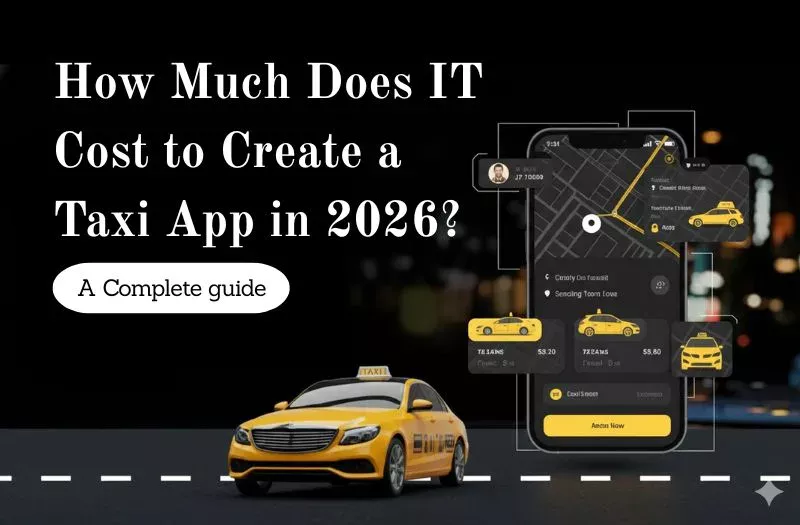
    Uber, a well-known ride-hailing app, connects drivers and passengers in real time. Key features of the taxi booking app include GPS tracking, ride matching, payment gateway, real-time updates and dual apps for drivers and passengers. The average cost to build a taxi app like Uber can be $120,000 to $300,000+. Depending on geolocation complexity, map integration and backend scalability.

    Spotify (Most Favorite Music Streaming App)

    Spotify is one of the most famous online and offline free music apps in the world. It allows users to stream music, create playlists and follow artists. Key features include music catalog, playlist creation, recommendations and streaming infrastructure. Cost of app making typically costs $150,000 to $400,000+, primarily due to backend and audio streaming requirements.

    Airbnb (Popular Travel App)

    Airbnb is a marketplace that connects travelers with hosts who offer accommodation. Key features include listings, search filters, booking, payment integration, user reviews and host/guest dashboards. Building a similar app can cost $180,000 to $400,000+, depending on ordering logic, calendar integration, and geolocation services.

    TikTok (Short-Form Video Social App)

    TikTok is a social media app for sharing short videos with AI-based recommendations. Key features include video recording/editing, content feed, AI-powered suggestions, social sharing and real-time streaming. If you want to know how much does it cost to build an app like TikTok. Therefore, the mobile app development cost will be $200,000 to $500,000+ due to advanced video processing and recommendation algorithms.

    Zoom (Popular Business App)

    Zoom is a video conferencing platform for businesses and individuals. Key features include real-time video/audio, scheduling, screen sharing, chat and cross-platform support. Building a similar app typically costs $300,000+, especially if high-quality video, security, and scalability are included.

    KFC/DoorDash (Food Ordering App)

    Apps like KFC or DoorDash allow users to browse menus, place orders and track deliveries. Key features include menu browsing, payment integration, order tracking, push notifications and delivery management. The cost to develop an app like KFC typically $40,000 to $250,000+, depending on multi-location support and real-time delivery tracking.

    Snapchat (Social and Messaging App)

    Snapchat is a social media app that allows users to share photos, videos and AR filters with friends. Key features include messaging, stories, AR filters, media sharing and volatile content. Building a similar app typically costs $70,000 to $200,000+, depending on AR and media functionality.

    Adidas (E-commerce/Retail App)

    Branded shopping apps such as Adidas allow customers to browse products, purchase items and manage orders. Key features include product catalog, payments, wish lists and personalized recommendations. The cost to make an app like Adidas typically costs $80,000 to $180,000+, affected by backend integration and design complexity.

    PayPal (Best Finance App)

    PayPal is a digital payment platform and instant check cashing app that enables secure transactions globally. Key features include wallet management, secure payments, transaction history, encryption and compliance. Due to strict security and regulatory requirements, developing a similar app typically costs $150,000 to $300,000+.

    ZocDoc (Best Healthcare App)

    ZocDoc allows patients to book appointments with doctors and manage healthcare services. Key features include physician profiles, scheduling, alerts, patient dashboards and secure data management. Building a similar app costs $120,000 to $300,000+, depending on HIPAA compliance and backend complexity.

    Walmart (Affordable Shopping App)

    Walmart’s shopping app offers a complete retail experience with product browsing, order tracking, loyalty programs and payments. The cost to build an app like Walmart will be $120,000 to $250,000+, which is affected by multi-store integration, user traffic, and storage systems.

    Conclusion

    The question “How much does it cost to build an app?” This blog provides you with a solution. Additionally, you can get an estimated budget and save unexpected costs by planning and communicating clearly. In 2026, the cost of building a functional, high-quality mobile app ranges from $10,000 to $100,000+, depending on various factors.

    The main thing is to clearly define what you need now, what can wait and how you envision development. With smart planning and a trusted partner like Apptechies, you can build an app that meets your business goals. And delivers value to users and scales without spending a lot of money.

    Frequently Asked Questions

    Q. How Much Does it Cost to Develop an App in 2026?

    The cost of developing an app in 2026 depends on many factors. Those factors are features, platform, design complexity and backend infrastructure. On average, a basic app can cost $30,000-$50,000. A medium complexity app can cost $80,000-$200,000, and a highly complex app can cost up to $200,000-$500,000+. Starting with an MVP and using cross-platform development can drastically lower the initial investment. 

    Q. What is the Cost of Maintaining an App?

    The annual cost of app maintenance often amounts to 15% to 20% of the initial mobile app development cost. Server hosting, bug fixes, updates for new OS versions, performance optimization and security updates are all included in maintenance. Maintaining your app on a regular basis guarantees that it stays secure, reliable and compatible with evolving devices and technologies.

    Q. How Long Does it Take to Build an App?

    The timeline varies depending on complexity. A basic app can take 2 to 3 months. A medium complexity app can take 4-6 months. And advanced apps with real-time features or AI integration can take 6-12 months or more. Effective planning, prototyping and an experienced development team like Apptechies can reduce delays and speed up delivery.

    Q. What are the Best Ways to Optimize My App Development Budget?

    You can optimize costs by:

    • Prioritize the features needed for your MVP.
    • Using cross-platform frameworks such as Flutter or React Native.
    • Create a prototype before full-scale development.
    • Streamlining project management using Agile methodology.
    • Outsourcing to experienced but cost-effective development teams.

    These strategies help reduce unnecessary development cycles and keep the project on budget.

    Q. How Mobile App Complexity Affects Development Cost?

    App complexity is one of the biggest cost drivers. Factors include:

    • Number and type of features (real-time updates, AI, social sharing).
    • Backend infrastructure and integration needs.
    • Platform options (iOS, Android or cross-platform).
    • Design complexity, animations and UI/UX requirements.
    • Regulatory compliance or security requirements.

    The more complex the app, the higher the development costs for the mobile app, both initially and for ongoing maintenance.

  • Top 10 Best Startup Accelerator Programs in 2026

    Top 10 Best Startup Accelerator Programs in 2026

    Startup Accelerator Programs-Apptechies

    Want to launch your startup in 2026 and need funds, but you have no clarity. Don’t worry! We are here to help you. All you need is a Startup Accelerator Program. For Entrepreneurs or Startups, this program gives you a competitive edge. The process of finding and choosing the right accelerator program for startups or entrepreneurs can be difficult. There are multiple factors you should consider before joining an entrepreneur accelerator program. Here are some famous successful startups like Airbnb, Reddit, Coinbase, Dropbox, Instacart, and DoorDash that started with startup accelerator programs.

    One thing that matters the most in today’s fast-paced world is speed, driven by AI-powered tools and rapidly shifting market expectations. Accelerators are no longer just about mentorship, capital and resources. Today, they function as global innovation hubs, equity accelerators and technology accelerators. They provide initial funding, product support, market access and high-impact networks in exchange for equity.

    In this blog, we’ll explain what is startup accelerator program, what they actually do, what are startup accelerators, and why they are important. Also, we have carefully curated the list of the top 10 best startup accelerator programs in 2026, from which you can choose according to your preference.

    What is a Startup Accelerator Program?

    The accelerator program is specifically designed for entrepreneurs or startups to provide initial or seed funding, expert mentorship, networking, tools and resources in return for equity. The Startup Accelerator Program helps to scale early-stage startups to grow faster from development to deployment. Behind most successful startups, an accelerator program played a major role. Educational institutions, venture capital, or companies that funded the Accelerator Program. For entrepreneurs with an amazing startup idea, joining an accelerator program is the best choice.

    Why Founders Are Choosing Accelerators in 2026

    The startup landscape is highly competitive right now. An accelerator program is crucial for startups seeking investors to grow quickly and build credibility in a competitive market.

    Only having an excellent idea is not sufficient. Being an early-stage founder is not easy; there are so many risks you have to face. The accelerator program for startups provides the most important elements that are speed, network, funding and execution, which reduce your stress. Here are the following reasons why the founders are prioritizing the entrepreneur accelerator program; 

    Access to Investors:

    Accelerators open doors that most early-stage founders don’t have access to. Startups can meet angels, VCs and corporate investors who are actively looking for new opportunities through investor meetings, pitch sessions and demo days. This makes accelerators one of the most reliable ways to get ready for funding quickly.

    Initial Funding:

    Many technology accelerators provide seed funding. Entrepreneurs can focus on building rather than worrying about immediate expenses. For many founders, this early support, often provided through equity accelerators. It helps them stay focused on their idea full-time rather than managing multiple responsibilities.

    Mentorship and Expertise:

    One of the major reasons to choose a tech accelerator program for startups is that in-depth guidance is available. Founders, engineers, marketers and domain experts who understand the real startup challenges. These insights assist entrepreneurs in avoiding costly mistakes. By this, they can refine their product and improve decision-making from day one.

    Network Expansion:

    For networking, accelerators are quite effective. Founders meet potential customers, business associates, beta users and other entrepreneurs. In the future, they might become advisors, investors or even collaborators. This type of network can significantly accelerate market entry and partnerships, but it is challenging to build on your own. 

    Credibility and Validation:

    Startups get instant boosts when they are accepted by a prestigious accelerator. Investors are aware of this. And even customers trust products backed by established entrepreneurship programs. This validation helps entrepreneurs gain popularity quickly.

    Operational Support & Resources:

    Accelerators provide resources that help startups run smoothly. From workspace to technical tools, brand support, legal guidance and GTM planning. With these benefits, entrepreneurs can focus on actual product development rather than managing operational difficulties.

    You Can Read Also: Top Trending App Ideas for Startups

    Top 10 Startup Accelerator Programs in 2026

    1. Apptechies Startup Accelerator Program

    For many founders, the biggest challenge is executing an app idea without a roadmap. Especially without proper design, development, marketing and funding support. Apptechies is a trusted mobile app development company. They offer a Startup Accelerator program, which is specifically designed to address these same issues. It is one of the few innovation tech accelerator programs that offers end-to-end product development, AI-driven execution and direct investor pitching under a structured system.

    When you join the Apptechies Entrepreneurs Accelerator Program, you get:

    UI/UX Design (User-first Digital Experience):

    Apptechies design team focuses on intuitive, user-centric interfaces that meet market expectations. Their approach guarantees that your app is not only visually appealing but is built to retain users.

    Process: From Concept to Investor-ready Execution

    Each app starts with a proof of concept (POC) to make sure your idea is solid before presenting it to the private investor network. The streamlined process reduces development time and ensures fast, high-quality launches on the App Store or Play Store.

    Wireframing (Blueprint of Your App):

    A well-defined wireframe acts as a structural map of your app. Apptechies use AI-powered wireframing to enhance clarity, reduce revisions and accelerate development. This accelerated development program is ideal for entrepreneurs seeking early validation or seed funding.

    Narrator (Technical and Functional Guidance for Your App):

    A strong technical narrative ensures that everyone understands the flow. From developers to investors, everyone can easily interact and learn about the functionality of your app. Apptechies created an easy-to-read guide for investors and prepared a clear, investor-friendly manual. They even pitch directly to investors on your behalf.

    Prototype (Before Your App is Built):

    Apptechies prototypes help you test concepts, improve UX and win over investors by simulating actual user interactions. A well-polished prototype increases investor confidence and reduces costly development errors.

    One Page Website (For Visibility and Investor Attraction):

    To help startups get found, Apptechies creates a clean, SEO-optimized one-page website. It represents your app’s purpose, features, and value. It is ideal for pitching to angel investors, starting early access, or running pre-launch campaigns.

    Marketing Strategy (Data-driven, User-centric Growth Planning):

    Apptechies creates a comprehensive digital marketing strategy tailored to your target audience. These include: SEO, Social Media Marketing, Content Marketing, Performance tracking, and User acquisition strategy. This guarantees that your app reaches the right users at the right time.

    Planning for Revenue (Monetization & Growth):

    Whether it’s in-app purchases, subscriptions, advertising, affiliate revenue or a freemium model. In this tech accelerator program, Apptechies assists in defining a revenue strategy that increases conversions and long-term retention.

    Social Media Profile Setup:

    Founders receive social media, Facebook and Instagram profiles that are optimized, including: Professional bios, Brand consistency, Keyword integration, Content strategy, plans for audience engagement. This enhances trust early and improves discovery.

    Branding (Strong Identity for Your App):

    Apptechies creates a unique brand identity with the following: Logo and icon design, color palettes, taglines, brand messages. This ensures that your app stands out in a crowded market.

    Pitch Preparation (Investors Love Clarity):

    In this tech accelerator program, Apptechies creates a compelling investor pitch deck that highlights: Market potential, product price, revenue model, go-to-market strategy, and competitive advantage. One-on-one coaching helps entrepreneurs present with confidence.

    Investor Pitch (direct access to private investors):

    The Apptechies team introduces you to four private investors and makes an offer on your behalf. This maximizes your chances of securing seed capital.

    Funding Cap (Up to $100,000):

    Startups in this accelerator can secure funding of up to $100,000. It all depends on the idea, prototype and traction.

    2. Y Combinator

    One of the most reputable brands in the startup community is still Y Combinator. With a large alumni group, ongoing mentorship and strong investor relationships. YC continues to assist early-stage entrepreneurs worldwide. Startups that join YC get structured mentoring, weekly office hours and an exceptional founder community that lasts long after the program ends.

    3. 500 Global

    500 Global is renowned for its global reach and data-driven mentoring approach. It places a strong emphasis on assisting entrepreneurs in developing a scalable solution, understanding customer behavior and accelerating revenue growth. Founders from various industries, including fintech, consumer tech and digital marketplaces, are pulled to its programs.

    4. MassChallenge

    MassChallenge operates a zero-equity accelerator. It is a top choice for entrepreneurs who want support without giving up ownership. It focuses on helping startups improve their business models, connect with mentors and gain initial momentum. MassChallenge continues to have a significant global presence with programs in the USA, Mexico, Europe and Israel.

    5. Techstars

    Techstars offers highly exclusive programs in cities such as New York, London, Toronto, Berlin and Bangalore. Techstars’ mentor-driven approach, which gives each startup access to 100+ experienced operators, entrepreneurs and investors. This is what makes Techstars apart. Who needs clarity on customer discovery, business model and fundraising? Their structured learning model makes it ideal for entrepreneurs.

    6. Plug and Play Tech Center

    Plug & Play is known for its strong corporate partnerships. Startups that are approved into its tech accelerator programs gain direct access to corporate customers in various industries such as mobility, fintech, sustainability, healthcare and retail. This is particularly beneficial for B2B and enterprise-focused entrepreneurs who need business exposure, pilot programs or technological validation.

    7. AngelPad

    For SaaS, B2B and IT entrepreneurs, AngelPad is a selective mentorship-focused accelerator. Personalized consultation from seasoned entrepreneurs is guaranteed due to small batches. AngelPad is known for deep help with positioning, product clarity and investor introductions.

    8. SOSV

    SOSV makes investments via specialized accelerators like: HAX (Hardware and Robotics), IndiBio (biotechnology), and Orbit Startups (Emerging Markets Tech). SOSV is known for its technical facilities, laboratories and global support network. It is ideal for deep technology, biotechnology, hardware and frontier technology startups.

    9. Startupbootcamp

    With programs across Europe, Asia and the Middle East, Startupbootcamp offers theme-based accelerators (fintech, commerce, mobility, sustainability). Expert advice, focused mentoring and chances to network with business partners for pilots and collaborations. are all advantageous to founders.

    10. Alchemist Accelerator

    Alchemist is a B2B-focused accelerator program built specifically for startup companies. The curriculum is designed to help founders build initial sales systems, find product-market fit, and pitch to venture-focused investors.

    How Apptechies Stands Out Among Top Accelerator Program for Startups

    In a landscape dominated by well-established accelerators such as Y Combinator, Techstars and Plug & Play, Apptechies Accelerator Program for startups sets a new standard by addressing the gap that most founders still struggle with: “I have a great idea, but I don’t have the right team, technical expertise or investor access to bring it to life.” Mostly traditional accelerators focus primarily on mentorship and networking. But Apptechies Startup Accelerator Program adopts a fully product-first, execution-first approach. This guarantees that founders get more than advice. They actually build, launch and grow their application with a dedicated team of experts.

    Here’s what really makes Apptechies Startup Accelerator Program unique in 2026:

    1. A Hybrid Model: Accelerator + App Development Partner

    Most accelerators give founders advice on what to build. Apptechies help entrepreneurs in building it. From UI/UX design to wireframes, prototyping, marketing, branding and investor pitch preparation. The program provides hands-on execution support that reduces founder workload and eliminates guesswork. This is the only tech accelerator program for startups that offers technology development and business acceleration under one roof.

    2. Investor-Ready Product Strategy: 

    Startups often join accelerators but still struggle to attract investors because their product is not polished or validated.

    Apptechies solves this by offering:

    • Market Research
    • Product Verification
    • Investor-oriented Prototype
    • Pitch polishing and presentation Support
    • Direct Exposure to Private Investor Groups

    This ensures that founders present a strong product story backed by real execution. This increases their chances of securing pre-seed or seed funding.

    3. AI-Powered Design and Development:

    Apptechies uses AI-driven optimization at every stage of the app-building process, such as:

    • Smart Wireframing
    • Predictable UX Improvements
    • Rapid Iterations of the Prototype
    • AI-based Performance Analysis

    This accelerated development program reduces development time, eliminates unnecessary modifications, and increases app launch speed while maintaining quality.

    4. End-to-End Brand, Marketing and Revenue Planning:

    Unlike other accelerators that only focus on business mentors. Apptechies entrepreneur accelerator program supports startups throughout the digital journey:

    • Creation of a One-Page Website
    • Conversion-focused Branding
    • Setting up a Profile on Social Media
    • Revenue Model Planning
    • Market Launch Strategy

    This provides founders with a development roadmap ready to deploy, rather than leaving them to figure out marketing after the program ends.

    5. Access to Private Investors + Funding up to $100,000:

    One of the strongest advantages of Apptechies is its direct link to the private investor network.

    Founders receive:

    • Four Investors Introduction
    • Personal Pitch Support
    • Financing Options up to $100,000
    • Guidance on Equity, Valuation and Negotiations

    This is especially valuable for early-stage entrepreneurs who need capital to expand quickly.

    6. Faster Launch Cycle with a Structured, Proven Process:

    Each startup in the accelerator follows a carefully optimized process:

    • Visual Clarity
    • Wireframe
    • UI/UX Design
    • Prototype
    • Brand Layout
    • Prepare a Pitch
    • Investor Introduction
    • Launch and Marketing

    This creates momentum and ensures that startups get to market faster with fewer mistakes and a much stronger foundation.

    7. A Real Partner, Not Just a Mentor:

    Where traditional accelerators provide guidance, Apptechies becomes the long-term execution partner.

    Founders get:

    • Committed Design and Development Teams
    • Weekly Strategy Meeting
    • Direct Communication with Experts
    • Guidance even after the launch of a product.

    It is convenient, useful and convenient for entrepreneurs who want to accelerate both product and business development.

    You can read also: How to Write an Effective Business Plan for Your Mobile Apps?

    Who Should Apply for the Apptechies Startup Accelerator Program

    Apptechies Accelerator Program is designed for startups that seek a complete execution partner. They assist you in quickly and precisely designing, developing, validating and launching a high-quality digital product. If you are an early-stage entrepreneur looking to transform a concept into a market-ready app, this accelerator is exactly for you. You’ll get a full implementation partner. They help you design, build, validate and launch a high-quality digital product with speed and accuracy. 

    Here’s who should consider applying:

    First-Time Founders Who Need Strong Technical Support

    Not all entrepreneurs have an in-house software development team or CTO. If you have a powerful idea but lack the engineering, UI/UX or product skills to bring it to life. Apptechies gives you access to expert designers, developers and strategists to execute it right.

    Startups Building Mobile Apps, SaaS Products, AI Tools or Digital Platforms

    Apptechies accelerator program is specially developed for technology-driven products. Whether it’s an Artificial Intelligence app, marketplace, delivery service, productivity tool or industry-specific software. Apptechies helps you create a polished MVP in line with market expectations and investor criteria.

    Entrepreneurs Seeking Investor-Ready Prototypes and Funding Support

    This accelerator is perfect if you want to raise pre-seed or initial funding. Apptechies prepare wireframes, prototypes, pitch decks and one-page websites. And then introduce you to a private network of investors who actively support early-stage innovations.

    Founders Who Want to Validate Their Idea Quickly

    If you want to avoid months (or years) of uncertainty, Apptechies is perfect for you. Through structured market validation and UX testing, you will know if there is real demand for your idea before investing heavily in full-scale mobile app development.

    Bootstrapped Founders Who Need Cost-Effective, Fast Execution

    It might be difficult and costly to hire separate teams for design, development, branding, and marketing. Apptechies brings all of this together in one streamlined accelerator program for startups. This helps you reduce expenses, prevent errors and accelerate time-to-market.

    Startups Preparing for Product Launch

    If you aim to launch your app in the next 6-12 months, the program will assist you:

    • Create a strong MVP
    • Prepare marketing materials
    • Make a revenue model
    • Increase brand awareness
    • Get user engagement fast

    Everything is optimized to help you live faster and stronger.

    Ambitious Founders Looking for Long-Term Guidance

    The accelerator is more than simply a 12-week experience. Apptechies help founders even after the program ends. This accelerator guarantees you’re never creating alone. You get long-term assistance, growth mentorship, and strategic direction.

    Inside the Apptechies Accelerator Program Structure

    The Apptechies Startup Accelerator program is designed to support founders at every stage of their journey. They ensure that your app idea doesn’t just stay on paper. They help you transform your idea into a fully functional, market-ready product that attracts investors. This is how our program works:

    Idea Validation

    Before development starts, it’s important to make sure your app idea has real market potential and that it solves real problems.

    In this phase, they help startups:

    • Conduct thorough market research
    • Gather feedback from potential users
    • Refine and optimize the app concept

    Validating your idea early reduces risk, saves time and creates a strong foundation for growth.

    Guidance & Mentorship

    Every startup benefits from experienced guidance. At Apptechies accelerator program, entrepreneurs gain access to a network of industry experts and advisors who provide:

    • Strategic guidance for developing a scalable business model
    • Insight into market trends and user behaviour
    • Tailored assistance to overcome challenges during the startup journey

    This mentorship ensures you make better decisions and avoid common pitfalls in the early stages of your startup.

    One-Page Design & Development Support

    Once the app idea is validated, we provide practical design and development support.

    Startups receive:

    • One-page app design showing core functionality
    • A clickable prototype to demonstrate your vision to potential investors

    This stage enables you to evaluate user interactions and effectively convey your idea. Prepared you for real-world development without delays.

    Investor Pitch Support

    A convincing pitch is necessary to secure funds and the Apptechies accelerator program for startups offers:

    • Professional guidance for creating a compelling pitch deck
    • Tools and techniques for successfully communicating your startup vision
    • Coaching to improve investor engagement and presentation skills

    With the right preparation, your startup is in a position to make a strong impression on investors.

    Startup Funding

    In the Accelerator program, startups can secure early-stage investment from our investor network in exchange for equity after a strong pitch.

    This funding allows you to:

    • Build and scale your mobile application efficiently
    • Launch a product more quickly without limiting resources
    • Concentrate on expansion and confidently enter new markets.

    Our structured approach minimizes delays and maximizes success. They ensure that entrepreneurs proceed smoothly from idea to funding.

    Key Benefits and Opportunities for Founders

    Faster MVP Launch

    Bring your product to life in record time. With dedicated engineering support, you can reduce development timelines from months to just a few weeks. This helps entrepreneurs test ideas faster. Collect real user feedback and reach the market ahead of the competition.

    Access to Funding & Investor Networks

    Connect with the right people at the right time. Angel investors, venture capital firms, and international finance partners extend a cordial introduction to founders. This significantly increases your chances of securing seed, pre-seed or Series A investment.

    Continuous Mentorship

    Never build alone. You get weekly 1:1 and group coaching sessions with product experts, business strategists, technology leaders and marketing experts. Every decision, from product roadmap to growth strategy, is guided by seasoned mentors with prior expertise.

    Marketing & Branding Support

    Start with confidence. Accelerator offers practical support in developing your marketing plan, content and brand strategy. This ensures that your product not only works well, but also looks good and reaches the right audience from day one.

    Alumni Network & Long-Term Guidance

    Your journey does not end after the launch. You will have lifelong access to a strong alumni network, ongoing mentoring, special events and long-term advisory support. Stay connected to an ecosystem that constantly opens new doors, opportunities and collaborations.

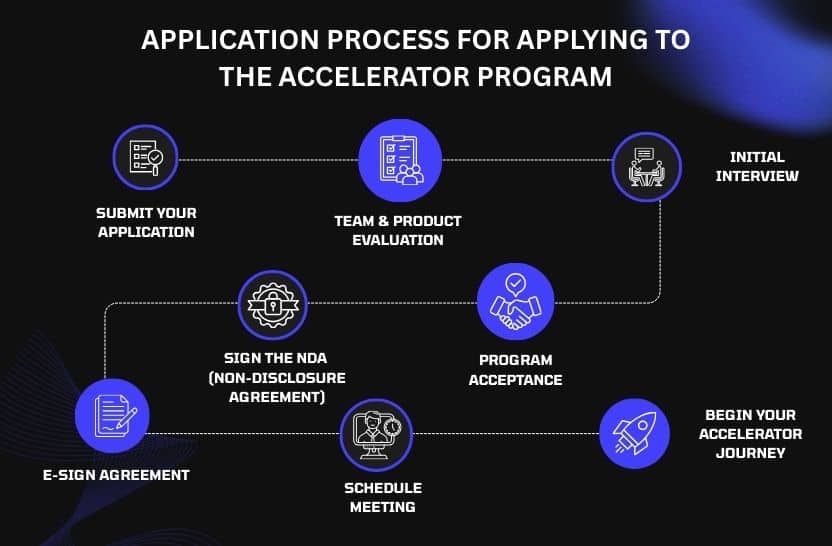
    Application Process For Applying to the Accelerator Program

    Application Process For Applying to the Accelerator Program-Apptechies

    Submit Your Application

    Start by filling out an application form with your startup details, product vision and founder information. This helps our team understand your idea and the problem you are solving.

    Team & Product Evaluation

    Our professionals assess the background, market potential, viability of the product, and general preparedness of your team. We evaluate how well your startup aligns with the accelerator’s goals.

    Initial Interview

    Shortlisted founders are invited to a one-to-one interview. This conversation helps them to understand your motivation, long-term vision and the challenges you are trying to solve.

    Program Acceptance

    If your startup meets the selection criteria, you will receive an official acceptance letter with the next steps, timelines and onboarding guidelines.

    Sign the NDA (Non-Disclosure Agreement)

    Before sharing any sensitive information, both parties sign an NDA. This guarantees trust and confidentiality. It protects your idea, product details and business plans.

    E-Sign Agreement

    Founders complete the formal onboarding process by e-signing the Accelerator Agreement. This specifies program parameters, mentorship engagement and expectations.

    Schedule Meeting

    Once the paperwork is complete, schedule an introductory call with the accelerator team to align goals, timelines, and your customized program roadmap.

    Begin Your Accelerator Journey

    Now that everything is in place, you’re officially ready to get started! Engage in growth activities, product development, workshops, and mentoring sessions to help your startup succeed.

    Final Thoughts

    For startups, 2026 is a crucial year; the market will be dominated by those who act quickly, build efficiently and make use of expert networks. A startup accelerator program can be the difference between struggling for years and scaling in months. Now you know what are startup accelerators, we curated a list of top 10 best startup accelerator programs, so you can choose according to your needs.

    While global giants like Y Combinator, Techstars, and 500 Global remain strong contenders, Apptechies stands out as the most practical, execution-focused accelerator program for startups or entrepreneurs who want real product results, not just advice. If you’re ready to build, launch and scale your startup faster than ever, an accelerator like Apptechies could be your starting place.

  • AI in the Automotive Industry | Benefits & Top Use Cases

    AI in the Automotive Industry | Benefits & Top Use Cases

    AI in Automotive industry

    The automotive industry is undergoing a massive transformation, and AI in automotive industry is at the forefront of this revolution. AI is transforming how cars are made, built, and used, from self-driving vehicles to smart manufacturing systems. For companies and startups looking for mobility solutions, understanding automotive AI is no longer optional; it’s essential.

    According to Grand View Research, the size of the global artificial intelligence market is expected to reach a remarkable CAGR of 23.4% from 2025 to 2030. By 2030, it is projected to reach USD 14.92 billion. This rapid growth highlights how important AI technology has become for businesses. If you want to integrate AI into your business then consider the best AI development company like Apptechies and stand out among your competitors.

    Whether it’s optimizing supply chains, safety enhancement, or improving customer experiences, the benefits of Artificial Intelligence in the automotive industry are numerous and demanding. In this blog, we will explore how AI is changing the automotive sector, highlight the most popular use cases, discuss future trends, and address key challenges.

    What is AI in Automotive Industry?

    When we talk about AI in the automotive industry, we are referring to the integration of machine learning, computer vision, data analysis, and decision automation technologies into vehicles, manufacturing processes, supply chains and mobility services. In practice, this means systems such as: When we talk about AI in automotive industry, we are referring to the integration of machine learning, computer vision, data analysis, and decision automation technologies into vehicles, manufacturing processes, supply chains and mobility services. In practice, this means systems such as:

      • Understand and interpret the environment (e.g., cameras in vehicles, lidar, radar).

      • Learn from large amounts of operating or usage data.

      • Make predictions (e.g., when a part will fail, which route is optimal), and

      • Perform or assist tasks (eg, smart maintenance scheduling, automatic braking).

    For example, according to Intel, Artificial Intelligence in automotive industry can “generate insights about vehicles, their drivers and road conditions. It also assists in educating near-real-time decision-making,” whether human or automated.

    Another perspective is that AI is the brain and nervous system overlay on top of the traditional mechanical and electronic vehicle/platform architecture.

    From an ecosystem perspective, this also means that if you work with or are part of an AI app development company. The role of AI in mobile app development is growing rapidly, you are not just building a mobile app, you are pushing the potential of intelligence, connectivity, UX, and service platform layers of the vehicle.

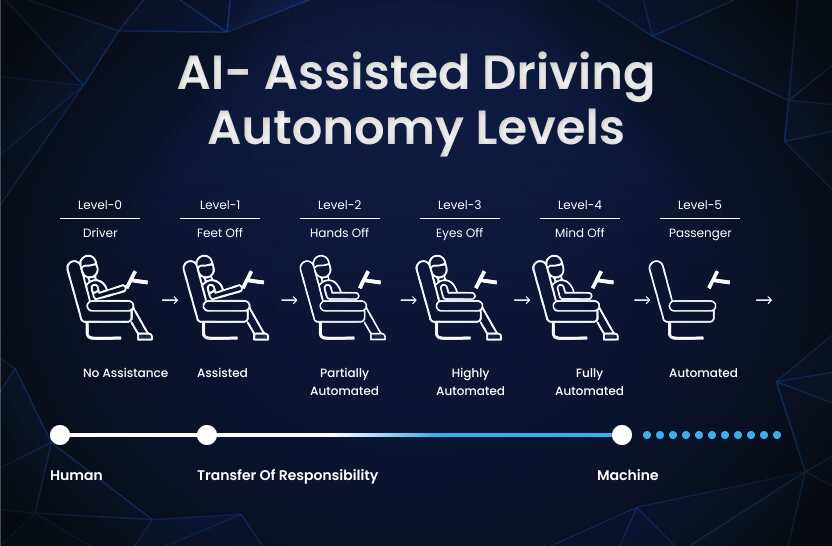
    ai assisted driving autonomy levels

    Impact of Artificial Intelligence in Automotive Industry

    The use of artificial intelligence in the automotive industry is changing all aspects of automobile operations. From production to customer interaction. The impact is not limited to traditional car manufacturers. AI is also shaping mobility services and taxi businesses. It provides opportunities for startups looking for ways to start a taxi business.

    AI in Manufacturing Processes

    AI-powered manufacturing optimizes production lines, reduces downtime and improves quality control. Smart robotics, predictive maintenance and data-driven analytics. Automakers can build vehicles more efficiently and cost-effectively. This ensures that both traditional cars and fleet vehicles for taxi services are built to high safety and performance standards.

    AI in Dealership Services

    AI is used by dealers to offer personalized experiences, predictive maintenance alerts and real-time customer support. For entrepreneurs planning to start a taxi business. These AI insights can inform better vehicle selection, fleet management and service offerings. Similar AI-powered solutions can be integrated into your own mobility platform by partnering with a taxi app development company.

    AI in Dealership Marketing

    AI-powered marketing helps retailers target the right customers with personalized campaigns and promotions. By analyzing customer behavior and preferences, companies can increase conversions and improve ROI. Startups considering the cost of building a taxi app like Uber can use AI marketing tools. It helps to attract riders, optimize campaigns and effectively grow their taxi business.

    Benefits of AI in Automobile Industry

    The benefits of AI in automotive industry are diverse. Impacting operations, production, safety, customer experience, and business models. Here are few of the key advantages:

    Better Safety and Driver Experience

    AI-driven solutions that reduce accident rates such as advanced driver assistance systems (ADAS). By identifying risks, detecting road conditions, and reacting faster than human drivers. Voice, gestures, and adaptive interfaces are examples of personalized in-car. It improves comfort and engagement.

    Efficiency in Manufacturing and Operations

    AI makes it possible for smarter production lines, automated robotics, and predictive maintenance for machinery and quality control. It reduces costs, minimizes downtime and accelerates time to market. It is one of the major benefits of AI in automotive industry.

    Supply-chain Optimization and Logistics

    AI in the automotive sector helps cut waste, decrease lead times. It better matches production with market demand. AI improves the responsiveness and efficiency of supply chains from demand forecasting to inventory optimization.

    Data-driven Design and Innovation

    AI enables digital twins of vehicles, simulation of crash/structural behaviour, rapid prototyping of new functions and insight-driven function development. This helps manufacturers react to change faster and speeds up innovation.

    Cost Savings and Profitability

    AI Adoption leads to measurable cost savings in operations, maintenance and production. The worldwide automotive AI market is projected to grow $21 billion by 2030. It highlights the potential for producers and service providers.

    Improved Customer Experience

    AI provides more intelligent after-sales services, predictive maintenance alerts and customized in-car experiences. In addition to creating chances for new revenue streams like subscription-based features and mobility platforms as a service, this increases brand loyalty.

    You Can Also Read: Must have AI Features in Your Uber Like Taxi Booking App

    Top Use Cases Of AI in Automotive

    Advanced Driver Assistance System (ADAS)

    AI ha a bug impact on driving. Adaptive speed control, lane assistance, collision avoidance and automated emergency braking are among the features of ADAS. Real-time data from sensors, cameras and radars is analyzed by these systems. It improves driving comfort and reduces collisions. As the technology advances, ADAS keeps opening the door to fully driverless cars.

    Autonomous Vehicles

    Self-driving cars are one of the most revolutionary use cases of AI in automotive industry. AI enables automobiles to access their surroundings, make quick decisions and drive safely without human help. The ability of autonomous cars to understand traffic conditions has increased safety and efficiency.

    Driver Monitoring

    AI-powered driver monitoring systems identify fatigue, distraction or drowsiness using behavioral analysis, facial recognition, and eye tracking. To ensure safe driving conditions, the system issues a warning or takes corrective action. If a driver shows symptoms of inattention. Many car manufacturers are integrating these features to meet global safety regulations and reduce the risk of accidents.

    Artificial Intelligence in Manufacturing

    In modern car factories, AI is transforming production through automation, robotics and predictive maintenance. AI-powered smart robots increase production accuracy. It reduces human errors and performs quality checks in real time. Additionally, its predictive analytics assist in identifying any equipment failures before they occur. It improves operations and lowers downtime.

    Personal Assistant

    AI-powered in-car personal assistants, such as voice or gesture-controlled systems. Drivers may control music, climate, navigation, and other features without using their hands. Over time, these assistants learn driver preferences, making the experience intuitive and personalized. This use case is a key differentiator for premium and next-generation connected vehicles.

    Passenger Experience

    AI enhances the whole passenger experience. It offers customized lighting, temperature, entertainment and seat position. It also supports an infotainment system that adjusts to individual mood and schedule. Every trip should be safer, smarter, safer and more pleasurable.

    Supply Chain Management

    AI helps automotive companies optimize their supply chain operations. It includes demand forecasting, logistics and inventory management. With predictive analytics, manufacturers can predict material shortages, shorten lead times. It assures on-time production and delivery. This results in reduced costs and improved efficiency in the supply chain.

    Automotive

    Insurance AI is transforming automotive insurance by using predictive modeling and telematics data to assess driving behavior and risk profiles. Insurance companies can provide customized premiums. It also detects false claims and improves the speed of the settlement of claims. AI ensures transparency and fairness for both drivers and insurance companies.

    Quality Control

    AI-powered quality control systems utilize computer vision to inspect every part of the vehicle during production. These systems can detect even small imperfections that the human eye might not notice. As a result, manufacturers achieve higher accuracy, lower recalls and improved customer satisfaction.

    Connected Cars

    The concept of connected cars depends mainly on AI and data analysis. Vehicles communicate with each other and the infrastructure (V2X – Vehicle-to-Everything). It allows real-time data sharing for safety alerts, navigation updates and traffic management. This interconnected ecosystem increases road safety, reduces congestion and improves mobility in cities.

    AI in Designing

    AI uses generative design, simulation and digital twins to speed up the vehicle design process. Before building real prototypes, engineers can test new ideas virtually and optimize performance. This allows more innovative and sustainable vehicle designs to reduce development cycles.

    You can also read: Benefits of AI in Education

    Top 4 Leading Car Companies Using AI Solutions

    BMW

    BMW uses advanced AI solutions in production which control quality and predictive maintenance. Their smart factories utilize AI-powered robots to increase productivity. This reduces errors and improves safety. BMW is also integrating AI into connected car experiences and driver assistance functions.

    Tesla

    Tesla is one of the most well-known innovators in the use of AI in the automotive sector. From autonomous driving to real-time decision-making using neural networks. Tesla’s vehicles continuously learn from millions of miles of road data. Their AI-powered autopilot system sets a global benchmark for self-driving technologies.

    Waymo

    Waymo, a subsidiary of Alphabet, is focusing heavily on completely autonomous vehicles. Perception, prediction and planning algorithms are all parts of the AI stack. It helps vehicles in navigating complex situations. Waymo is also a leader in robot taxi services. Many entrepreneurs have been motivated by this model to learn how to start a taxi business using modern technology.

    Nvidia

    Nvidia’s AI chips and systems, such as Derive AGX, powers the automobile industry. This makes it possible for automakers to create vehicles smarter, safer and more autonomous. Their hardware and software ecosystem enhances machine learning, real-time analytics and vehicle simulation. It is crucial for any taxi app development company who wants to build a future-ready mobility app.

    Future of AI in Automotive Industry

    The future of AI in automotive industry is moving fast and based on real, measurable speed. According to a recent study by McKinsey & Company, AI-enabled opportunities throughout the vehicle value chain could produce approximately USD 215 billion in value by 2025. Meanwhile, the global automotive AI market is estimated to grow between USD 21 billion to USD 24 billion by 2030.

    These numbers show how artificial intelligence in the automotive industry will move. From autopilot projects to business operations. It is anticipated that cars and mobility services will become more autonomous. Connected and software-defined, enabled by AI plus edge/cloud computing, 5G, advanced sensors, and IoT in the automotive industry.

    For businesses integrating AI with a trusted mobile app development company. This shows how Artificial Intelligence revolutionizes the industries. It makes new business models such as predictive maintenance, voice/gesture interfaces and smart car features. It also provides adaptive user experiences and mobility as a service. It’s about intelligent ecosystems. Brands that use Artificial Intelligence now will lead the future of the mobility industry.

    Challenges & Risks of Adopting AI in the Automotive Sector

    key chanllenges & how to solve them

    You Can Also Read: How AI is Revolutionizing the Future of Social Media

    Final Thought

    The use of AI in automotive industry is revolutionizing, driving innovation, efficiency and personalized experiences. From factories to vehicles to mobility services. The benefits of artificial intelligence in automotive industry are clear. Businesses that adopt AI via can unlock new revenue streams. Although challenges exist, careful planning and strong infrastructure are needed. Also, strategic partnerships make Artificial Intelligence adoption possible and highly beneficial.

    The use of AI in automotive industry is revolutionizing by driving innovation, efficiency, and personalized experiences. From automobiles to factories to transportation services. The benefits of artificial intelligence in automotive industry are clear. Businesses that adopt AI via mobile app development companies can unlock new revenue streams. Although challenges exist but careful planning and robust infrastructure are required. Adoption of AI is also possible and very beneficial through strategic partnerships.

    Frequently Asked Questions

    Q. How Much Does it Cost to Integrate AI in Mobile App Development?

    Ans: There are a number of elements that affect the cost of integrating AI into mobile app development. Size, features, platform and computing requirements and complexity. A simple AI integration can start from $10,000 to $30,000. A completely AI-enabled app, such as a ride-hailing platform, can cost over $100,000. If you want to build an app partnering with a trusted taxi app development company like Apptechies is the best choice.

    Q. What is the Role of AI in Automotive Industry?

    Ans: The role of AI in the automotive industry is transformative.Better passenger experiences, autonomous driving, predictive maintenance, and production are all made possible by AI. It also powers intelligent fleet management and connected cars. Entrepreneurs who want to launch a taxi business can use AI to monitor driver behavior and optimize routes. They can also offer personalized services to ensure safer and more efficient operations.

    Q. What are Examples of AI in Automotive Industry?

    Some practical examples of artificial intelligence in the automotive industry include:

      • To prevent crashes and lane changes, use advanced driver assistance systems (ADAS).

      • Predictive maintenance with data from vehicle sensors

      • Autonomous and semi-autonomous vehicles

      • Telematics and fleet management driven by AI

      • Infotainment systems and personal assistants in automobiles

    These examples show how the use of artificial intelligence in the automotive industry can improve safety, efficiency, and customer satisfaction in both traditional vehicles and mobility services.

  • 10 Best Taxi Business Ideas for Startups to Launch a Profitable Ride Service in 2026

    10 Best Taxi Business Ideas for Startups to Launch a Profitable Ride Service in 2026

    10 best taxi app ideas

    Are you going to start a taxi business, and you are looking for the best taxi business ideas? And want to launch a profitable ride service? But you don’t know where to start. Before starting, there are a few things you should know. The taxi industry is one of the most dynamic and essential industries of the transportation sector. Starting a taxi business in 2026 offers an excellent opportunity. Due to the growing demand for eco-friendly transportation and the development of ride-hailing apps. If you want to dive into the mobility space, there are several taxi business models you can choose from and make your taxi business profitable.

    If you are a taxi business owner and want to build your own taxi app, then partnering with a trusted taxi app development company is an ideal choice. A well-designed taxi business app helps your business attract more customers and derive long-term growth. This is the right time to dive into this industry. You can choose from eco-friendly rides to luxury chauffeur services. There are countless taxi business opportunities that combine innovation and profitability.

    In this blog, we will discover the top taxi business ideas that Startups can use in 2026 to start a successful and profitable ride service. These innovative business ideas will help you create a profitable business model.

    Why Start a Taxi Business?

    The future of the taxi business is brighter than ever. According to recent reports, the global taxi market size is estimated to reach $347.86 billion by 2030. It increases at a significant rate due to the rise of ride-sharing platforms. The growing dependency on technology and shifting customer priorities towards on-demand mobility options. In addition, due to the need for advanced technology of ride-hailing systems, the market size of taxi apps is predicted to grow from $56.16 billion in 2021 to $180.53 billion by 2026. This rapid growth is driven by the rising demand for online taxi booking apps.

    why start a taxi business?

    Starting a cab business in 2026 helps startups to leverage this rising demand and capitalize on the ease people now expect. There are multiple benefits of taxi app development that help businesses grow and be visible. It improves operational productivity, increases business revenue, and reduces expenses. Several cities use app-based driving solutions. Startups need to integrate Artificial Intelligence in their taxi business services. With this, your taxi business gets excellent market positioning and long-term scalability.

    10 Best Taxi Business Ideas for Startups in 2026

    The taxi sector provides a variety of opportunities for entrepreneurs. Here are 10 innovative taxi business ideas, each thoroughly described, along with growth strategies to maximize success:

    Airport Transfer Taxi Services

    Airport transfers are reliable and in high demand. Travelers want comfortable, trusted, and on-time transportation. VIP pickups, luggage assistance, and pre-booking are a few examples of this service. Airports are crowded places where travelers need to get transport reliably and quickly. This makes airport taxi services one of the most profitable cab business ideas.

    How It Works

    Customers choose the type of vehicle when booking rides through a taxi business app. The drivers keep track of flight schedules and modify the pickup time accordingly. Driver allocation, schedules, and payments are automatically managed by taxi service software.

    Growth Tips

    Partner with airlines, hotels, and travel agencies. Introduce loyalty programs for frequent passengers and provide premium services such as Wi-Fi and refreshment. To optimize revenue during periods of high demand, implement surge pricing.

    Corporate Taxi Solutions

    Companies need well-planned, reliable transport for employees and clients. A corporate taxi service is an important business opportunity and scalable cab business idea because it offers digital management, convenience, and safety.

    How It Works

    Businesses use taxi service software to subscribe to a package. Employees book rides through an app, while the software manages scheduling, invoicing, and analytics.

    Growth Tips

    Provide specialized packages for different company sizes, give priority to executive,s and emphasize professionalism and time punctuality. Operational planning can be enhanced by analytical reporting.

    Women-Only Taxi Services

    Women-only taxis are a profitable niche and highly in demand due to safety concerns. These businesses provide safe travelling options for female passengers by hiring female drivers and integrating safety features.

    How It Works

    Women travelers book rides through a ride-hailing app with SOS Alert, GPS tracking, and secure messaging. Only verified female drivers are assigned.

    Growth Tips

    Target university students, corporate offices, and urban ladies. Emphasize safety certifications, provide referral incentives, and collect user feedback to improve the quality of the service.

    Electric Vehicle (EV) & Eco-Friendly Taxi Service

    Eco-friendly transport is a growing trend, and sustainability is no longer a choice. This is one of the most demanding cab business ideas for startups or entrepreneurs. An EV taxi service appeals to environmentally conscious commuters and reduces operational costs over time.

    EV taxi services

    How It Works

    Use a fleet of electric or hybrid or electric cars that are managed by taxi business software. The software can assist with tracking environmentally friendly incentives, scheduling charging, and battery level monitoring. Customers can choose electric vehicle (EV) rides in-app.

    Growth Tips

    Collaborate with EV charging networks for discounts. Promote your business as “green transport” to attract conscious consumers. Explore state incentives and grants for environmentally friendly projects.

    Rural and Intercity Taxi Business

    Urban markets may look saturated, but there is often a lack of reliable taxi services in rural and intercity sectors. Making them one of the top taxi business ideas, your startup can stand out by serving these areas.

    How It Works

    Drivers provide on-demand or scheduled transportation between urban and rural areas. Booking can be done via a taxi business app, with customized fares for longer trips.

    Growth Tips

    Participated with bus stations, train stations, and local businesses. Provide ride packages for frequent passengers. Prioritize safety, punctuality, and vehicle comfort, which are often lacking in rural transport.

    Luxury Taxi or Chauffeur Services

    Luxury taxi services are perfect for high-net-worth individuals, corporate professionals, and tourists who appreciate comfort, style, and exclusivity.

    How It Works

    Using a taxi business app, customers reserve long limousines, SUVs, or luxury sedans. Chauffeurs receive customer service and polite behavior training. The services may include airport pickup, city tours, or event transportation.

    Growth Tips

    Work together with hotels, event planners, and travel agencies. Provide hourly rentals for weddings, parties, and business events. Invest in luxury vehicles and maintain exceptional cleanliness and service.

    Ride-Sharing and Carpooling App

    Urban passengers want cost-effective, environmentally friendly solutions. Ride sharing reduces traffic and provides a reasonable travel option.

    How It Works

    Users can share rides with others traveling to the same route by using the taxi business app. Automatic payment, route optimization, and GPS tracking in real time improve efficiency.

    Growth Tips

    Introduce referral programs to promote the adoption of apps. Collaborate with companies to encourage carpooling among employees. Highlighting benefits for the environment to attract eco-conscious users.

    Senior Citizen Taxi Services

    Elderly people often face mobility challenges. Taxi services dedicated to the elderly prioritize comfort, safety and assistance. This niche is profitable and the smartest taxi business idea for startups and entrepreneurs.

    How It Works

    Drivers receive special training to help the senior passengers. Wheelchair accessibility, medical appointment scheduling, and notifications about caregivers in real time are the features that the taxi business app can offer.

    Growth Tips

    Collaborate with clinics, hospitals, and pension communities. Provide packages based on subscriptions for regular visits. Highlighting credibility, safety, and personal service.

    Bike Taxi Service

    In crowded cities, bike taxis are perfect for short trips. They provide fast, affordable trips and are especially popular with students and daily travelers.

    How It Works

    Passengers book or schedule rides through an app. Taxi service software manages GPS tracking, riding and fare calculation.

    Growth Tips

    Focus on busy areas such as the marketplace, colleges, and business districts. Make sure drivers follow safety rules and provide subscription packages or discounts during peak hours.

    On-Demand App-Based Taxi Business

    The market for ride-hailing services is still dominated by on-demand taxi services. Convenience, speed and reliability make it a profitable model and one of the most popular taxi business ideas.

    on-demand taxi app development

    How It Works

    Users book a trip through a taxi business app. The app connects them to drivers nearby in real time, provides fare estimates and offers cashless payment options. Service quality is ensured by rating.

    Growth Tips

    Offer easy-to-use app features such as live tracking, estimated fares, and loyalty rewards. Expand to niche markets such as luxurious rides, only taxis for women, or EV options. Invest in marketing campaigns that emphasize security, convenience, and reliability.

    Key Features Every Taxi Business Should Have

    Whether you are planning to launch a local taxi service or a large-scale ride-hailing platform. The key to success for every taxi business app is having the right features that deliver convenience, safety, and efficiency. These features not only increase customer satisfaction but also streamline the operations, which helps startups to run a profitable cab service.

    Here is the list of key features every taxi business should have:

    Real-Time GPS Tracking

    Real-time tracking is the most important feature in every taxi business app. This feature provides details about the live location of the driver, estimated arrival time and route to the passengers. On the business level, GPS tracking helps operators monitor the movements of the fleet and optimize routes that improve the overall ride experience. It also increases transparency and trust with customers.

    Multiple and Secure Payment Options

    Today’s riders want to experience uninterrupted digital payment like credit/debit cards, mobile wallet, UPI and cash. It improves convenience and ensures that you never lose customers due to limited payment options. Keeps the transaction safe and flawless by integrating safe payment gateways with your taxi software.

    In-App Booking and Scheduling

    An easy-to-use booking system is the foundation of your taxi business software. It should allow users to book immediate trips, schedule future trips, or make bookings for special events. This flexibility also appeals to those who like to plan in advance.

    Real-Time Notifications and Ride Alerts

    Push notifications keep passengers informed throughout their trip, from driver appointment to arrival, ongoing ride status and the confirmation of the payment. Drivers receive information about route changes and new ride requests. These features reduce misunderstandings and ensure clear communication.

    Driver and Passenger Rating Reviews

    Rating from customers is essential to maintain the quality of service. An integrated rating system promotes responsibility among drivers and builds trust for new riders. By monitoring feedback by using taxi business apps, Startups can quickly spot problems early and reward top-performing drivers.

    SOS and Safety Features

    Safety is the topmost priority for the passengers, especially for women, elderly people, and late-night travelers. By implementing an SOS button, real-time live ride sharing with contacts and driver verification, which provides a crucial layer of trust. These security measures make your taxi business services more credible and attractive.

    Automated Fare Calculation

    Eliminates the need for manual negotiating by integrating an automated fare system. Taxi business apps should calculate fares based on factors such as distance, time, and surge prices. Before and after every ride, transparent fare details which minimize conflicts and build customer trust.

    Advanced Admin Dashboard

    Your taxi business software must have a powerful admin panel to manage rides, drivers, customers and transactions. A centralized dashboard enables real-time data tracking, performance analysis and business forecasting. This helps you make informed decisions and maximize profitability.

    Referral Rewards and Loyalty Programs

    Keeping customers is just as important as attracting new customers. Rewarding frequent riders with discounts, referral bonuses or loyalty points keeps them engaged. Including reward features in a taxi business app can greatly increase user retention and generate referral marketing.

    24/7 Customer Support Integration

    Customers’ satisfaction increases due to providing reliable 24/7 support. Whether via call assistance, in-app chat, or AI-powered chatbots, a quick solution to problems helps create credibility and enduring confidence.

    Multi-Language and Multi-Currency Support

    If your goal is to expand globally or serve diverse demographics, this feature becomes necessary. Multilingual and currency options ensure that your taxi application is available for the wider user base. It improves usability and customer experience.

    multi language & currency support in taxi app

    Analytics and Reporting Tools

    Modern taxi service software should provide detailed information about the frequency of the ride, performance of the driver, revenue and behavior of the customer. These analytics let you spot trends to make smart decisions and optimize operations for better performance.

    Things to Know Before Starting a Taxi Business

    Starting a cab business in 2026 is one of the most profitable taxi business ideas, but success does not come by chance. It comes with proper planning, strategy and wise use of technology. Whether you want to build a small local taxi service or one of the best taxi business ideas like EV taxis, women-only rides or business solutions. There are some essential things you should know before deciding how to start a taxi business. Understanding these key factors will help you minimize the risk, attract more customers, and run your business more effectively.

    Research Your Target Market

    Before investing in the start of the taxi, Analyze your local market and audience behavior before investing in your cab business. Find out who needs your taxi service most: senior citizens, daily commuters, airport travelers, or corporate employees. Identifying your target audience helps you choose the best niche from the top taxi business ideas and design features to satisfy your users. For example, if there is heavy airport traffic in your area, a taxi service for airport transfer can provide a profitable business.

    Choose the Right Taxi Business Model

    Your business model defines how you will generate revenue. You can run your own fleet, collaborate with independent drivers, or create a commission-based ride-hailing platform.

    • The fleet ownership model gives you authority over vehicles and drivers, but it requires a higher investment.
    • The aggregator model (like Uber) connects riders and drivers, and offers high scalability with low costs.
    • Hybrid models are excellent for long-term growth as they combine both strategies.

    Choosing the right model ensures that your cab business idea fits in the budget and future expansion.

    Get Proper Licensing and Legal Approvals

    Each city or country has specific laws for taxi operations. Before launching your cab services, collect all the required licenses, background checks on drivers, inspection of vehicles, permits, and insurance coverage. If these are neglected, it can lead to fines or shut down your business. Before launching, make sure your taxi business app operates within legal boundaries and that all drivers meet licensing standards. Adherence not only builds credibility but also increases the customer’s trust.

    Invest in a Reliable Taxi Business App

    Technology drives success in the modern ride-hailing industry. A well-designed taxi app lets users easily book rides, track drivers in real-time and make payments safely. Using taxi business software transforms your idea from a traditional cab setup into a scalable, modern and customer-centric taxi service.

    Build a Strong Driver Network

    Your drivers are the foundation of your taxi business. The primary goal is to hire experienced, polite and skilled drivers. Provide incentives, rewards and flexible schedules to maintain the driver’s loyalty and consistency in their work.

    Prioritize Vehicle Maintenance and Safety

    A clean, well-maintained and comfortable vehicle which quickly wins customer trust. Routine inspections, maintenance plans and cleanliness checks are necessary. Every vehicle should be equipped with emergency features and a GPS tracker. In the competitive taxi industry, reliability and security are what make one-time travelers to loyal users.

    Plan Your Pricing Strategy Wisely

    Prices can create or break your cab business. Maintain a balance between customers’ affordability by setting competitive rates. To maximize the highest revenue, many successful taxi business ideas use dynamic pricing models that charge slightly higher prices during peak hours or high-demand periods. Makes it easy and transparent if your taxi service software has automated fare calculating.

    Focus on Branding and Marketing

    Strong branding helps your service stand out. Design a professional logo, color scheme and tagline that reflects your business values. Market your taxi business app through social media, SEO and Google Ads. Referring bonuses, loyalty points and discounts on the first ride help your best taxi booking app increase user engagement and ride bookings.

    Use Data and Analytics to Improve Operations

    The key to growing any successful taxi service is data. Your taxi app can provide real-time insights on bookings, popular routes and client ratings. Use this data to refine prices, optimize the routes and identify areas with high demand. Making decisions based on data helps you stay ahead of the competition and lets you provide more personalized customer service.

    Prioritize Customer Experience

    Customer satisfaction is a must in every business, it drives repeat bookings and referrals. Focus on comfort, punctuality and offer polite service. Prompt driver communication and transparent pricing and a seamless in-app booking experience are all very important. Encourage feedback through your taxi business app and respond to it immediately. Excellent service makes first-time users loyal riders and builds the long-term reputation of your taxi business.

    How Does a Taxi App Support Your Business Ideas?

    A taxi business app is crucial to making your cab business ideas into a profitable taxi service. A well-designed app allows users to schedule trips, book rides immediately, track drivers’ live location and make payment safely. These features improve customer satisfaction and encourage repeated use.

    On the management side, startups can monitor fleets, assign rides effectively, analyze riding data and optimize operations. Features such as automatic price calculation, driver verification and security alerts build trust between riders and drivers.

    Startups can reduce operating costs, improve productivity and expand their services by combining a user-friendly taxi business app for customers with strong backend software for operations. This approach ensures that your service is up to date, reliable and listed among the best taxi business ideas of the year.

    How to Build a Taxi Booking App?

    In today’s fast-paced world, a taxi booking app is no longer optional. It is important. If you want to transform your taxi business ideas into a modern, scalable and profitable taxi service app. Whether you are planning airport transfers, women-only rides or environmentally friendly taxis, a well-designed app can make your cab business successful. Here is the step-by-step guide to build a taxi booking app.

    How to Build a Taxi Booking App?

    Define Your Concept and Features

    Start by identifying your target audience and niche. Choose the essential features such as easy ride booking, live GPS tracking, price calculation, secure payments, driver assessments and notifications. Clear planning at this stage ensures that your app meets the expectations of both rider and driver.

    Choose the Right Platform

    Before choosing the platform, first know the difference between Android and iOS apps. You can build a native app for iOS (Swift) and Android (Kotlin/Java) for the best performance. You can also use cross-platforms frameworks such as Flutter or React Native to save time and reach more users.

    Design a User-friendly Interface

    Your app should be simple and easy to use. For riders and drivers. Intuitive navigation, clear buttons, the booking process is easy with smooth navigation, live updates and easy payment options.

    Choose the Right Tech Stack

    Choosing the right tech stack is important for developing a scalable, high-performing and secure taxi app. It ensures that your app is able to handle each process without any delay.

    Testing & QA

    Before launch, test the app for ease of use, performance and security. Resolve the errors to deliver a smooth and reliable experience from day one.

    Launch, Promote and Maintain

    After your app launches, market your app through social media, app stores and referral campaigns. Regular updates, performance monitoring and new features help your taxi business app to remain competitive and user-friendly.

    Why to Choose Apptechies for Taxi App Development Services?

    When planning to build a taxi booking app, the most crucial step is choosing the right taxi app development partner, which makes a lot of difference, and Apptechies is the right choice because they have expertise in this industry.

    Apptechies is a leading web and mobile app development company in the USA. They offer feature-rich, AI-powered iOS, Android and cross-platform app development services for startups, businesses and enterprises across multiple industries. With a deep knowledge of digital transformation and mobility solutions, they help multiple companies transform their taxi business ideas into high-performing, scalable and profitable on-demand taxi applications.

    Here is the reason why businesses all over the world trust Apptechies for taxi app development services:

    Expertise in Taxi App Development

    With highly skilled taxi app developers and designers who have 10+ years of experience in building fully functional taxi booking apps according to different business models. Whether it’s airport transfers and corporate rides to environmentally friendly and luxurious taxi services, they are all set.

    Custom-Built Solutions for Every Business Model They understand that every business is unique and so are their requirements. That’s why they offer custom taxi app development solutions that match the brand, goals and their targeted audience.

    AI-Powered Features for Smart Operations

    Apptechies integrate advanced AI-powered features such as smart route optimization, dynamic prices, predictive demand forecasts and intelligent driver allocation. These features help businesses reduce their operating costs, improve productivity and boost user experience for both drivers and passengers.

    Scalable and Future-Ready Technology

    They use the advanced technology stack and cloud-based architecture to build your taxi applications. They make sure if you expand your business, then your app performs fast, safe, and reliable.

    Exceptional User Experience

    Their experienced designer team focuses on creating a user-friendly interface that allows users to book rides easily, quickly and safely. Each feature is designed to provide maximum convenience, from live tracking to in-app payment.

    End-to-End Development Services

    Apptechies provide full support from idea validation and UI/UX design to development, deployment and maintenance. For your taxi business app, you get a reliable partner who drives growth and success.

    Ongoing Support and Upgrades

    They believe that long-term success depends on continued care. They provide support after your app launch, which ensures that your app stays up to date with the latest trends and performs flawlessly

    Proven Industry Expertise

    With a strong portfolio of successful on-demand taxi booking apps and mobility solutions, Apptechies has gained confidence in customers across the world. When choosing Apptechies, you choose innovation, reliability and technology that is suitable for the future of mobility. Their AI-driven taxi app development services help transform your cab business ideas into a profitable and scalable app.

    Final Thought

    The taxi industry offers various opportunities for startups and entrepreneurs in 2026. From airport transfers to bike taxis and Electric Vehicle services, each sector has its own potential and challenges. If your business utilizes taxi business software and a well-designed taxi business app, it improves customer satisfaction and accelerates growth. To excel in this competitive market, you should prioritize client happiness, technology integration and reliability while exploring taxi business ideas for your startups.

    Frequently asked questions​

    1. What is the Future of Taxi Businesses?

    The future of the taxi business looks incredibly promising, driven by technology, automation and sustainability. The industry is moving toward more intelligent and environmentally friendly models as a result of the growth of AI-powered taxi apps, electric cars and on-demand mobility platforms. Data-driven decision-making and a taxi business app can help startups develop more quickly and increase client satisfaction.

    2. What is the Cost to Build a Taxi booking App?

    The cost of building a taxi booking app depends on various factors such as the complexity of the app, platform (iOS, Android or cross-platform), designs and features. On average, a basic taxi app can cost between $20,000 – $40,000, while advanced apps with AI-powered features, real-time analyses and tracking can cost $50,000 – $100,000+. Collaborating with a professional taxi app development company, such as Apptechies, ensures that you get the best value and scalability of your investment.

    3. Is the Taxi Business Profitable?

    Yes, with careful management, the cab business can be very profitable. Commission-based rides, subscriptions and surge pricing are some of the ways that entrepreneurs can make steady money with the increasing demand for on-demand taxi booking apps. Features such as effective route management and AI-driven demand prediction can be integrated into your taxi business app to achieve long-term, sustainable profitability.

    4.What are the Challenges and Risks in the Taxi Industry?

    The taxi industry faces multiple challenges, including increasing competition, fluctuating fuel prices, a shortage of drivers, and changing rules. However, with technology-driven taxi service software, these problems can be effectively addressed. Data insights in real-time, automation, and AI can help optimize operations, reduce costs, and improve customer satisfaction, keeping your business ahead.

    technologies, ensuring high-quality, tailored solutions for your business needs.

    Flexibility and Scalability: We provide adaptable services that can scale with your project’s requirements, allowing
    for efficient resource management and timely delivery.

    Cost Efficiency: By hiring our dedicated team, you can achieve significant cost savings compared to maintaining an
    in-house team, without compromising on quality.

    Comprehensive Services: Beyond development, we offer quality assurance, user experience design, and project
    management, providing a holistic approach to your project.

    5. What are the Benefits of Taxi Booking App Development?

    There are multiple advantages to creating a taxi booking app, like automated ride handling, real-time tracking, secure payments and efficient process. This improves the user’s convenience, improves driver efficiency and reduces manual errors. Furthermore, AI-powered taxi business apps allow data-driven decision-making, predictive maintenance and smart sending systems for maximum revenue.

    6. How to run a Profitable Taxi Business?

    To run a profitable taxi business, you should focus on providing security, reliability and convenience to your users. Invest in a custom taxi app that provides real-time data, an effective user panel, a driver panel, admin management, and user-friendly features. Integrating Artificial Intelligence technologies for route optimization, dynamic prices and customer insights. Regular maintenance, digital marketing and feedback loops from customers are also keys to long-term success.
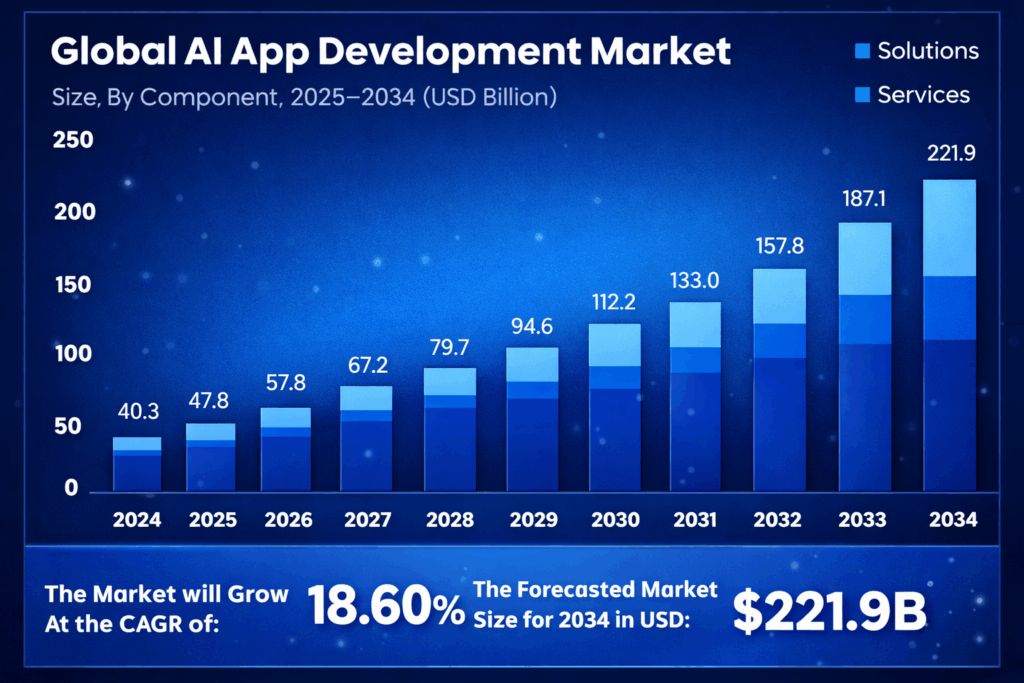
  • Benefits of AI in Education: How AI is Transforming Learning

    The benefits of AI in education are revolutionizing the way knowledge is delivered and received all over the world. From the experiences of personalized study to digital classrooms, Artificial Intelligence in education is changing how students learn, teachers teach, and run institutions. With the integration of AI education software development, learning is more adaptable, data-driven and open to all. If you want to build an AI-powered feature-rich elearning app partnering with a trusted education app development company is the best choice.

    According to Grand View Research, the market of AI in education is expected to reach $25.7 billion by 2030, increasing at a CAGR of more than 36%. This growth will be driven by the increasing use of AI solutions for education, e-learning platforms and digital changes in schools and universities. This global expansion reflects the growing importance of Artificial Intelligence in education by providing teachers with intelligent analytics, automation tools and AI chatbots that improve engagement and simplify communication.

    AI in the education sector continues to unlock new opportunities as we move toward a more technologically advanced and connected future. It makes the future of learning more inclusive, quicker and smarter. Personalized tutoring, automatic grading systems and generative AI in education are just a few examples of how AI is changing education in the digital age. It is setting the foundation for a future-ready learning ecosystem. In this blog, you will find out the benefits of AI in education, how AI changes learning, and what is the future of AI in education.

    Why AI is Becoming Essential in Modern Learning Apps?

    AI is becoming a crucial element of modern learning applications in today’s rapidly changing digital age. Because it makes education more personalized, effective and accessible. The use of AI in education helps create learning experiences that are compatible with the needs of each student. AI technology analyzes how students learn, their speed, strength and weaknesses, before tailoring content to them. This not only improves engagement but also ensures better learning outcomes.

    This is the future of AI in education, learning applications driven by AI solutions for education are assisting teachers in focusing on creativity and mentorship. While AI handles repetitive tasks as the use of AI technology in education expands globally. Here is why using AI in education apps is a necessity, not an option.

    Adaptive Learning at scale

    AI algorithms enable applications to dynamically modify content according to individual student learning styles, ensuring that the lessons are still challenging but accessible. This scalability means that thousands of students can gain personalized experiences together.

    Predictive Analytics and Insight

    AI analyzes user behavior to predict potential learning challenges. Teachers and developers can use this data to improve the content, maximize engagement, and provide quick responses.

    Automatic Administrative Assistance

    By eliminating administrative duties, features like performance reporting and automated grading free up monitoring and automated grading. It allows teachers to focus on mentorship and interactive teaching.

    Enhanced Student Engagement

    As compared to traditional static apps, AI-driven simulation, quiz and interactive activities keep students motivated and make learning more interesting.

    Global Adoption and Market Growth

    AI-powered education apps are being quickly adopted in regions such as North America, Europe and Asia. AI EDTech investment exceeded $1 billion in 2024, according to HoloniIQ, showing its necessary role in the industry.

    Competition Advantages for Developers

    By using AI solutions for education, app developers can create smart, flexible platforms that differentiate themselves in a crowded market. It provides better learning opportunities and increases operational effectiveness.

    Generative AI-Driven Adaptive Learning

    Generative AI makes it possible to create learning exercises, simulations, and quizzes that match each student’s progress and needs. This ensures a more personal approach to education and improves important thinking and problem-solving skills.

    Top Pros & Cons of AI in Education

    The way EdTech platforms, schools, and colleges are transformed by Artificial Intelligence. While the benefits of using AI in education are unquestionable, it is equally important to consider challenges. Below are the pros and cons of AI in education that highlight both advantages and disadvantages.

    Top Pros & Cons of AI in Education-min

    Pros of AI in Education

    Personalized Education

    AI optimizes lessons and study material based on the preferences and progress of each learner, which is one of the key advantages of AI in education.

    24/7 Learning Assistance

    Through AI chatbots for education, students can get immediate help at any time and from anywhere.

    Enhanced Teaching Efficiency

    AI improves retention by recommending the right videos, tests or lessons at the right time, aligning education with the future of AI in education and workforce demands.

    Improved Accessibility

    The use of Artificial Intelligence in education helps students with unique needs and removes language barriers.

    Data-Driven Insight

    One of the major benefits of using AI in education is accuracy and speed are increased for tasks like feedback and grading.

    Cons of AI in Education

    High Implementation Costs

    To build and maintain AI-powered platforms, large investments are required in technology, software and training, which can be difficult for small institutions.

    Data Privacy and Security Risk

    A massive amount of student data are collected and examined, increasing concerns for privacy, compliance and ethical use.

    Algorithm Bias

    AI systems trained on biased data may accidentally give preference to some groups, which may affect learning and evaluation quality.

    Over-Dependence on Technology

    Relying too much on AI tools might affect the development of critical thinking abilities, creativity and interactions between teachers and students.

    Digital Divide

    Students in some areas with limited internet access or devices might not be able to take full use of AI-powered educational solutions.

    Limited Human Judgment

    Although AI can provide insight and automation, it cannot take the place of human empathy, smart decision-making or mentorship, which are crucial in education.

    pros of ai in education

    Real-World Examples of AI in Education

    Artificial intelligence has completely changed the global education sector, making learning more accessible, personalized and entertaining than ever before. The importance of artificial intelligence in education allows both teachers and students in the education sector, from virtual teachers to smart classrooms. Here are 10 globally popular examples of AI in education that demonstrate how technology is changing learning experiences worldwide.

    Duolingo – Personalized Language Learning

    Duolingo is the most popular language learning app with more than 500 million users. Duolingo uses AI Technology in education to tailor lessons for each student. By offering immediate feedback and interactive challenges, the platform optimizes the user’s learning speed, strengths and weaknesses. It makes language learning more effective and entertaining.

    Coursera – AI-based Course Recommendations

    Coursera is one of the largest e-learning platforms. Uses AI for education to recommend courses based on students’ learning preferences and learning history. Millions of students who received help in finding the right educational paths through its recommendation system, which increases user engagement.

    Squirrel AI Learning – Adaptive Learning in China

    Squirrel AI Learning is an expert in AI education software development, providing millions of students in China with personalized tutoring through advanced algorithms. The platform continuously adjusts lesson difficulty based on real-time performance data, and greatly enhances academic results.

    Carnegie Learning – Intelligent Math Tutoring

    Carnegie Learning offers customized mathematics training by fusing cognitive science and Artificial Intelligence. Its intelligent teaching system tracks the process of solving the problem of each student and provides tailored feedback, which helps teachers focus on the areas in which students most require assistance.

    Brainly – AI Chatbots for Homework Assistance

    AI Chatbots are used in education by Brainly, a global learning community, to help students with homework and study-related inquiries. The AI evaluates millions of questions to deliver accurate, clear answers that encourage collaboration and online education.

    Microsoft Immersive Reader – Accessibility to All

    As an aspect of its AI solutions, Microsoft’s Immersive Reader supports students’ problems with learning, like dyslexia or ADHD, by using text-to-speech and translation tools. It promotes equality by making educational resources accessible to students all over the world.

    Content Technologies, Inc.

    Content Technologies, Inc. (CTI) uses generative AI in education to create customized digital textbooks and assessments. The platform can automatically design learning content based on a student’s curriculum, the platform can save teachers a great deal of time.

    Century Tech- AI-Powered Personalized Learning

    Century Tech is an AI education company in the UK that provides customized learning experiences by fusing artificial intelligence and neuroscience. By detecting knowledge gaps and modifying the way content is delivered. The technology assists both students and teachers in making data-driven decisions.

    Quizlet – Smart Learning Through AI

    With over 60 million monthly users, Quizlet uses an AI algorithm to generate customized study sets, monitor user progress, and suggest educational resources. The AI-powered “Learn Mode” helps students memorize quickly and maintain longer knowledge.

    Konitan

    Konitan is now a part of Wiley, which uses AI analytics to track student progress and predict learning results. One great example of how AI technology in education improves the efficiency of the class to each student’s needs by gaining insights about individual performance.

    uses of ai in education

    You can read also: How AI is Revolutionizing the Future of Social Media

    Why Choose Apptechies As your Education App Development Company for AI Integration

    Artificial Intelligence (AI) has become an important force behind the transformation of how teachers and students learn and teach. The success of any AI-driven solution depends on choosing the best elearning app development company is essential. Whether it involves creating smart teaching systems or personalized learning platforms. Apptechies, a trusted mobile app development company, with its cutting-edge, scalable and AI-powered app designed to transform learning experiences worldwide.

    Here’s why Apptechies is an ideal partner for an education app development company for AI integration.

    Specialization in AI and Mobile Application Development

    We at Apptechies are experts in creating AI-powered mobile apps. Our skilled mobile app developers use modern technologies such as machine learning, NLP and generative AI to design applications that provide smart, data-driven and interactive learning environments.

    Experience Across Various Industries

    Apptechies have provided powerful web and mobile solutions for various industries, including healthcare, logistics, e-commerce and even taxi app development services.

    Custom Educational Application Solution

    We understand that each learning platform is unique. From AI-Chatbots for education to an intelligent content delivery system, Apptechies creates a customized solution that increases engagement, streamlines administrative work and boosts learning results.

    Affordable and Transparent Prices

    Understanding the cost to build a mobile app is an important factor for any business or institution. Apptechies provide transparent pricing, guaranteeing high-quality education app development within your budget, without compromising features or creativity.

    Cross-Platform Expertise: iOS and Android

    Our app development team specializes in both platforms, understands the difference between iOS and Android app performance, design standards and user behavior. This assures that your AI-powered educational software runs smoothly, efficiently and consistently on all devices.

    Data Security and Scalability

    One of the main concerns with AI in education is data privacy. We create scalable, safe and legal applications that protect students’ information while serving 1000 users at once. Ensuring the reliability of schools, universities and global EDTech startups.

    Traditional Classroom Vs AI Powered Classroom

    traditional classroom vs ai powered classroom

    Challenges and Considerations of AI in Education App 

    While the benefits of using AI in education change the field of learning. There are some key challenges to its successful adoption that educators and developers should consider. Understanding these challenges helps to ensure that the advantages of AI in education are implemented ethically and sustainably.

    Data Privacy and Security Risk

    Student data is crucial to the tailored learning that AI-powered educational apps provide. But, this raises serious concerns about how this data is collected, stored and protected. Schools and EDTech companies should implement strong cyber security measures, follow data protection laws such as GDPR and CCPA, and maintain transparency to retain trust between students and parents.

    Limited AI Knowledge Among Educators

    The use of artificial intelligence in education is expanding faster than most teachers can keep up with. Many teachers lack the technical knowledge to effectively use or manage AI-based platforms. Ongoing professional training, awareness campaigns and assistance from AI experts are required to eliminate this difference in knowledge and help educators maximize the potential of AI in education.

    Ethical and Fair Use Challenges

    The AI systems may unknowingly reflect the biases that are present in their training data, which may affect grading, admission or recommendations. In order to ensure justice and equality, schools must use transparent and impartial AI systems that promote moral guidelines for the use of AI.

    Integration with Current Leaching Systems

    It is often complicated to merge AI tools with traditional school systems. Adoption may be slow due to the problems of compatibility, limited budget and lack of technical assistance. The transition will go smoothly and successfully if reputable tech companies are partnered with and integration-friendly platforms are used.

    Human Resistance to Change

    Even with clear advantages of AI in education, resistance from teachers, students or parents is common. There are some fears that AI may replace teachers or reduce human contact. In fact, AI acts as a helpful tool, so that teachers can focus on creativity, mentorship and emotional learning.

    By dealing with these challenges carefully, institutions can actually capitalize on the importance of artificial intelligence in education. With ethical methods, data protection and proper training, the future of AI in education promises smarter, more inclusive and more interesting learning experiences for everyone.

    You Can Also Read: Top Trending App Ideas for Startups

    Future Trends of AI in Education App Development

    The Future of AI in education is having a significant impact on the education app development. These developments are making the benefits of AI in education more efficient, personalized and accessible while also improving the educational experiences and simplifying administrative processes.

    future trend of ai in education

    AI-Enhanced Personalized Learning

    AI is making it possible for educational apps to provide a tailored learning experience by examining student data. This personalization authorizes adaptive learning paths and ensures that the content is appropriate for each student’s speed and understanding. Such customization improves commitment and better learning results.

    AI on-device for performance and privacy

    An emerging trend is the direct integration of AI features into devices to improve app performance and address data privacy concerns. AI processing on devices reduces the delay and ensures that sensitive student data remains safe and provides all a spontaneous user experience.

    AI-driven material production

    AI is being used more and more in Elearning apps to create dynamic content such as quiz, flashcards and interactive simulations. This automation not only saves time for teachers but also ensures that learning materials are constantly updated and correspond to the current educational standards.

    Voice and Natural Language Processing (NLP) Integration

    Integrating voice recognition and NLP in educational apps provides more interactive and intuitive user interfaces. Students can get involved with content through voice commands, which can make learning more accessible, especially for people with disabilities or language barriers.

    AI-Driven Analytics for Educators

    Advanced Analytics run by AI provides deep insight into student performance and behavior. This insight allows teachers to identify learning gaps and modify their teaching strategies accordingly, and promote a more responsible educational environment.

    Seamless Integration with Learning Management Systems (LMS)

    Modern educational apps are designed to be seamlessly integrated with existing LMS platforms. This interoperability ensures that the AI tool can be used without disturbing the installed workflows, providing a smoother learning experience.

    AI-Powered Gamification

    ELearning apps are using AI-driven gamification elements to increase the connection. These functions are compatible with personal learning styles and progress by offering personal challenges and rewards that motivate students to participate actively in the learning journey.

    Conclusion

    AI is already changing learning apps around the world, and the benefits of AI in education include personalization, efficiency, increased engagement, accessibility, cost-effectiveness and data-driven insights. But the advantages of AI in education will be maximized when combined with thoughtful policies, strong morality, human monitoring and legitimate access. The role of Artificial Intelligence in mobile app development is very crucial. When we look at the future of AI in education, it is clear that this change is not about changing teachers or old teaching methods, but about increasing and expanding education. If you develop or deploy elearning apps, the importance of artificial intelligence in education is something you cannot ignore. 
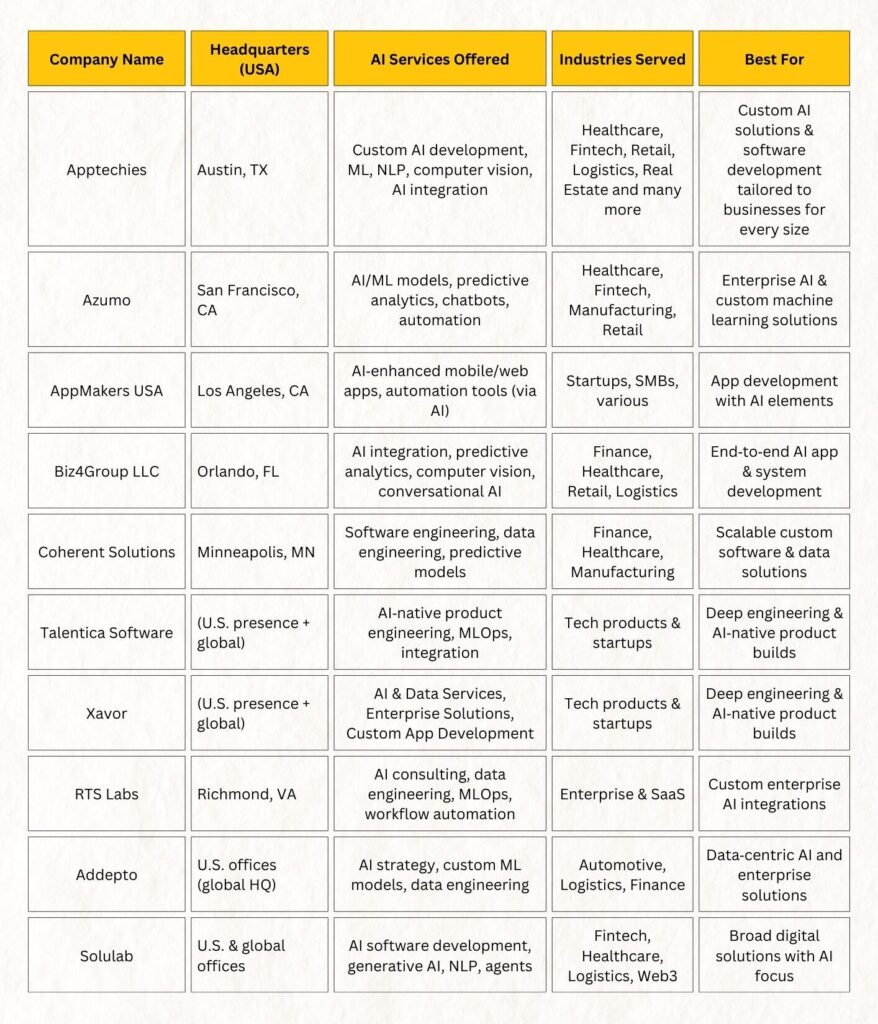
    Frequently Asked Questions

    Q. What is the future of AI in Education?

    Ans: The future of AI in education seems very promising. AI is predicted to improve learning for students at all levels by making it more personalized, efficient and accessible. From smart teaching systems and virtual classrooms to data-driven insights for educators, AI will play an important role in improving learner performance and engagement. Over the coming years, AI-powered apps are likely to be an essential part of the digital ecosystem of each school and university.

    Q. Is AI in Education Safe for Young Children?

    Ans: Yes, AI in education can be safe for young students when implemented with responsibility. Developers and teachers should ensure compliance with privacy laws such as GDPR and COPPA to protect children’s personal information. Using safe platforms, parental controls and ethical AI systems to make learning safe and more beneficial for children.

    Q. How is Artificial Intelligence Used in Education?

    Ans: The use of artificial intelligence in education spreads in many areas. AI is used to customize lessons, automate administrative tasks, provide real-time responses and help students learn at their own pace. Making classrooms more effective and inclusive also helps teachers monitor student progress and identify where further support is required.

    Q. How is AI Currently Being Used in Higher Education?

    In higher education, AI changes how institutions work. Universities use AI for automated grading, research support, educational counseling, plagiarism detection and future analysis to improve the success rate of the student. AI-powered learning management systems and virtual assistants also help to make higher education more adaptable and data-driven.

    Q. What is the Cost of AI Education App Development?

    Ans: The cost of AI Education App development varies depending on the complexity, features, design and platform for the app. On average, the cost of a basic AI-powered e-learning app can cost between $25,000 – $60,000, while advanced, feature-rich solutions with analytics, AR/VR integration or multilingual support can range from $80,000 – $200,000 or more. Better quality, scalability and long-term value are guaranteed when working with an experienced educational app development company like Apptechies.

    Q. What is the Role of Generative AI in Higher Education?

    Ans: Generative AI in higher education helps create personalized learning experiences, create lecture notes, quizzes, research summaries and provide 24/7 educational help through AI tutors. Additionally, it helps to automate administrative duties such as grading and scheduling. Generative AI helps educators and students by increasing creativity, efficiency and student engagement. This highlights the benefits of AI in education and helps to shape its future.

    Frequently Asked Questions

    What is the future of AI in Education?

    The future of AI in education seems very promising. AI is predicted to improve learning for students at all levels by making it more personalized, efficient and accessible. From smart teaching systems and virtual classrooms to data-driven insights for educators, AI will play an important role in improving learner performance and engagement. Over the coming years, AI-powered apps are likely to be an essential part of the digital ecosystem of each school and university.

    Is AI in Education Safe for Young Children?

    Yes, AI in education can be safe for young students when implemented with responsibility. Developers and teachers should ensure compliance with privacy laws such as GDPR and COPPA to protect children’s personal information. Using safe platforms, parental controls and ethical AI systems to make learning safe and more beneficial for children.

    How is Artificial Intelligence used in Education?

    The use of artificial intelligence in education spreads in many areas. AI is used to customize lessons, automate administrative tasks, provide real-time responses and help students learn at their own pace. Making classrooms more effective and inclusive also helps teachers monitor student progress and identify where further support is required.

    How is AI currently being used in higher education?

    In higher education, AI changes how institutions work. Universities use AI for automated grading, research support, educational counseling, plagiarism detection and future analysis to improve the success rate of the student. AI-powered learning management systems and virtual assistants also help to make higher education more adaptable and data-driven.

    What is the cost of AI Education App Development?

    The cost of AI Education App development varies depending on the complexity, features, design and platform for the app. On average, the cost of a basic AI-powered e-learning app can cost between $25,000 – $60,000, while advanced, feature-rich solutions with analytics, AR/VR integration or multilingual support can range from $80,000 – $200,000 or more. Better quality, scalability and long-term value are guaranteed when working with an experienced educational app development company like Apptechies.

    What is the Role of Generative AI in Higher Education?

    Generative AI in higher education helps create personalized learning experiences, create lecture notes, quizzes, research summaries and provide 24/7 educational help through AI tutors. Additionally, it helps to automate administrative duties such as grading and scheduling. Generative AI helps educators and students by increasing creativity, efficiency and student engagement. This highlights the benefits of AI in education and helps to shape its future.

  • Top 15 Best iOS App Development Software for Startups and Entrepreneurs

    Top 15 Best iOS App Development Software for Startups and Entrepreneurs

    Are you a startup founder or entrepreneur with an innovative iOS app idea and searching for the best software for iOS app development? The journey from the concept to launch can feel stressful, but with the right iOS app development software, it becomes a smoother, easier and even exciting process.

    The crucial step is choosing the best iOS app development platform. The right tool can save a lot of time and money, speed up your time-to-market and ensure that your app performs well. And if you choose the wrong platform? This can lead to delays in development, being highly expensive, and a poor user experience. That is why a lot of startups and businesses are now partnering with the most trusted iOS app development company in USA, like Apptechies, to make sure their iOS apps are secure, scalable and optimized for performance.

    In this guide, we’ll break down the top 10 best iOS app development software for startups and entrepreneurs, and highlight their main benefits. Whether you are a non-technical founder, looking for a non-code solution or iPhone app builder or an experienced iPhone app developer who wants to maximize performance, this guide will help you choose the best software to develop iOS apps and launch your app successfully.

    iOS App Market Insights and Revenue

    The market of iOS apps is fast-growing and quite profitable. According to Apple, in 2024, the App Store ecosystem generated almost $1.3 trillion in billings and sales around the world. This industry offers plenty of opportunities, especially considering iOS users’ high spending behaviours. Statistics show that iOS users are frequently spending more on apps than Android users.

    For example, it was predicted that in 2024, consumer expenses on the App Store would reach $124 billion, compared to the $58 billion on Google Play. This trend is expected to continue and the App Store is predicted to reach $161 billion by 2026.

    The revenue of a successful app depends a lot on its monetization strategy. Even though sports apps are currently dominating overall revenue, non-playing apps, especially those that use subscription models, are growing strongly. Subscription and in-app purchases were the main sources of income for iOS developers in 2024.

    15 Best iOS App Development Software

    Xcode

    xcode logo for blog

    Xcode is one of the best iOS app development software and it is developed by Apple. It is the officially Integrated Development Environment (IDE) for creating native iOS, iPadOS, macOS and watchOS apps using Swift or Objective-C. It provides smooth integration with Apple’s frameworks like Core ML (AI), ARKit and RealityKit. For coding, troubleshooting and testing, it is a complete integrated suite.

    Key Features

    It includes a strong troubleshooter, an interface builder for a visual user interface, and a smooth connection with the Apple ecosystem, which includes TestFlight for beta testing. The new Xcode Cloud provides a continuous integration and delivery service for automated testing and builds in the cloud. This is the standard procedure for developing a deep native iOS app.

    Advantages

    Unmatched performance, consistent workflow, and access to the latest Apple hardware features and APIs (such as ARKit and Core ML), and an integrated workflow. You can download and use it for free.

    Disadvantages

    Mac is required, and the codebase is specific to the Apple platforms. The learning process for Swift and SwiftUI can be lengthy for beginners.

    Cost

    Free to download and use. A paid Apple Developer program ($ 99/year) is required to publish apps in the App Store.

    Best For

    Startups and solo entrepreneurs who prefer a high-performance, simple native user experience and are dedicated to the Apple ecosystem.

    Flutter

    flutter logo

    Flutter is an open source UI software development kit developed by Google that lets you create native apps from a single codebase for mobile, web and desktop. It is the most popular software for iOS app development.

    Key Features

    Its “hot reload” feature allows iOS app developers to see the code changes immediately without restarting the app. Widgets enable highly customized and visually pleasing user interfaces that keep a native look on both iOS and Android. Its architecture is perfect for integrating AI features.

    Advantages

    Having a single codebase for both iOS and Android drastically reduces the time and cost of mobile app development as compared to the native app development. Outstanding performance competing with native apps. A huge and expanding community with extensive documentation.

    Disadvantages

    Framework uses Dart, a language that isn’t as popular as JavaScript, despite being easy to learn. Custom implementation may be required for niche native features.

    Cost

    Free and open source.

    Best For

    Startups and small groups looking for an affordable method to simultaneously launch their app on iOS and Android.

    React Native

    react native logo

    React Native is the most popular framework for creating JavaScript cross-platform apps, offered by Meta (formerly Facebook). This benefits from the skills of a large community of web app developers.

    Key Features

    It uses the same basic UI building blocks as standard iOS and Android apps, which gives it a native like appearance. The wide number of libraries and accessible components can speed up the mobile app development process.

    Advantages

    A language familiar to millions of developers, uses JavaScript, making it easier to find talent. Massive and active support of the community.

    Disadvantage

    Performance can sometimes be a question for very complex animations or graphical applications. There are instances when the “bridge” to native components becomes an obstacle.

    Cost

    Free and Open source.

    Best For

    Startups with experience in web app development or those looking to use a single codebase for both web and mobile applications.

    Adalo

    react native logo

    Adalo is an iOS app development platform and iPhone developer software. Users can create an iOS app without writing a single code. It lets you design, develop and publish a fully functional mobile application with a single drag-and-drop interface.

    Key Features

    Non-technical founders can create beautiful user interfaces using the visual component-based builders. It has an integrated database and supports integration with third-party services through APIs.

    Advantages

    It is perfect for non-technical founders because no coding is needed. MVP development and fast prototyping. Inexpensive for small projects.

    Disadvantages

    Not recommended for applications with complex or advanced AI integration. Neither scalable nor customizable as code-based solutions.

    Cost

    Free plan for testing, and paid plans starting from $45/month to publish.

    Best For

    Entrepreneurs and non-technical founders to build and test their startup app development idea quickly and affordably.

    You can also read: How to build iOS app for MacOS

    Swift

    swift logo

    Swift is a powerful and modern programming language of Apple for all Apple platforms. It is the primary language used in native iOS app development with Xcode.

    Key Features

    Swift is well-known for its clear syntax and strong error handling. It was created with safety and speed in mind. It provides an extensive set of libraries and excellent integration with Apple’s frameworks.

    Advantages

    Top-level performance, easy access to every iOS feature, and a modern, interesting coding experience.

    Disadvantages

    Dependent on the Apple ecosystem. A dedicated developer is required who has experience with Swift.

    Cost: Free and open source.

    Best For

    Startups seeking the best native user experience and maximum performance

    CodeRunner

    CodeRunner logo

    CodeRunner is a lightweight, iOS programming text editor and multipurpose IDE. It’s a flexible tool for writing, running, and troubleshooting code in more than 25 languages, ​​including Swift. Even though it’s not a full-functioning app builder

    Key Features

    Its UI is clear and user-friendly. It is ideal to test the code snippet, algorithms, and small scripts instantly. It provides intelligent code completion and syntax highlighting.

    Advantages

    Incredibly fast and easy to use. Excellent for practicing and learning to code without the stress of a big IDE.

    Disadvantages

    Not appropriate for creating and managing a large-scale app project. It doesn’t have Xcode’s strong project management and troubleshooting features.

    Cost

    One-time purchase, $19.99 for the desktop version.

    Best For

    Students, beginner-level developers or business owners in need of a simple tool for writing and testing code snippets.

    CocoaPods

    CocoaPods logo

    CocoaPods is one of the best iOS app development tools that every iOS app developer uses. It is an application-level dependency manager for Swift and Objective-C projects. This simplifies the process of integrating third-party libraries and frameworks into your app and managing all dependencies for you.

    Key Features

    You can specify all the libraries your app requires with a simple “podfile.” CocoaPods then downloads and configures them automatically, saving an immense amount of manual effort. It is an important iPhone developer software.

    Advantage

    Simplifies the use of open-source libraries. Streamlines project setup and avoids version conflicts.

    Disadvantage

    If not carefully controlled, the project becomes more complex. An app size and development time may rise with a large number of dependencies.

    Cost

    Free and open source.

    Best For

    All app developers and teams creating native iOS apps that rely on external libraries for functionality (which are almost all apps).

    SwiftUI

    SwiftUI logople has developed a modern, declarative framework for creating user interfaces for all of its platforms. The Swift programming language and SwiftUI are integrated to make the UI development process more efficient and user-friendly.

    Key Features

    Its declarative syntax means you can specify how you want the user interface to look, and the framework will handle the rest. This makes UI development quicker and easier to understand. It has a live preview showing real-time changes while you code.

    Advantage

    Fast UI development, modern approach, and a common framework across all Apple platforms. Live preview accelerates the design process.

    Disadvantage

    It is not suitable for apps that need to support older devices because it requires iOS 13 or later. Compared to the old UIkit, the community and resources are still expanding.

    Prices

    Free with Xcode.

    Best For

    Startups and developers who create new, native iOS apps that want to use the most modern and effective iPhone app development tools available from Apple.

    Jenkins

    Jenkins logo

    Jenkins is an open source automation server. It is an essential part of Continuous Integration (CI) and Continuous Delivery (CD). This iOS app development software automates the process of developing, testing and deploying your iOS app each time a developer submit a code.

    Key Features

    It can compile your app automatically, run your test suites, and alert you if the development process fails. This helps to capture the errors quickly and ensure a high quality of code.

    Advantages

    Enhance the quality and stability of the code. Allows developers to focus on new features by automating repetitive tasks.

    Disadvantages

    Extra setup and maintenance is required. For people who are not familiar with CI/CD can have a difficult learning state.

    Cost

    Free and open source.

    Best For

    Startups who want to use a professional, scalable development pipeline.

    AppyPie

    appypie logo

    AppyPie is an AI-powered, no code app builder that streamlines the process of creating iOS and Android apps. It offers a wide range of tools to create different kinds of mobile apps and easy to use drag-and-drop interface.

    Key Features

    It uses AI to create app layouts and features with only a text or a voice command. It is an effective tool for non-developers, because it provides analytics, push notifications and a lot of integrations.

    Advantages

    Anyone with an app idea can use it because no coding is needed. It is very fast for creating MVP and simple apps.

    Disadvantages

    Compared to a coded solution, the platform offers less flexibility and customization due to its pre-built features.

    Cost

    AppyPie provides a free test and paid plans starting from $18/app/month.

    Best For

    Non-technical entrepreneurs and small businesses require a simple, functional app without hiring a developer.

    BuildFire

    buildfire logo

    BuildFire is a platform that provides no code app for builders and an SDK for custom development. It is a hybrid solution to create a fast, convenient app.

    Key features

    It has a large library of pre-built features and plugins for everything from e-commerce to social media. The SDK of the platform allows developers to add custom features to the no-code base, making it extremely adaptable.

    Advantages

    Flexibility to create both simple or complex apps. Fast development time by using pre-made plugins.

    Disadvantages

    Compared to other no-code platforms, it may be more costly. The “no-code” section may be limited to unique UI designs.

    Cost

    They also provide a free 14-day trial. Paid plans begin at $ 165/month.

    Best For

    Business and Startups that require a fast, convenient app, but want the option to add custom functionalities.

    Firebase

    firbase logo

    Firebase is a web and mobile iOS app development platform powered by Google that provides a suite of backend services. It is a backend-as-a-service (BAAS) that handles the essential app feature.

    Key Features

    It offers cloud storage, push notifications, real-time database user authentication and a strong analytics unit. The cloud features allow you to run the backend code without handling the server.

    Advantages

    Significantly lower the time and cost of backend development. Incredibly scalable and provides a substantial free tier.

    Disadvantages

    May result in seller lock-in to the Google ecosystem. Not every data model can be accommodated by the NoSQL database structure.

    Cost

    Offers free “Spark plan” and a pay-as-you-go “Blaze plan”.

    Best For

    Practically any startup or an entrepreneur who is looking to create a scalable app without managing their own backend infrastructure.

    You can also read: Difference between iOS & Android

    TestFlight

    TestFlight logo

    TestFlight is Apple’s official beta testing service and it is one of the best iOS app development tools. It is the easiest way to distribute the beta versions of your iOS app to internal and external testers and receive valuable feedback.

    Key Features

    Easily connects to App Store Connect and Xcode. It lets you invite as many as 10,000 external testers. It collects crash reports and provides detailed information about how testers are using your app.

    Advantages

    Free, user-friendly and an essential component of the Apple ecosystem. Vital for collecting users’ input before launch and testing for bugs.

    Disadvantages

    Only works for iOS apps.

    Cost

    Free.

    Best For

    All startups for iOS app development projects. Beta testing is a mandatory step before launching in the App Store.

    Adobe XD

    adobe XD logo

    Adobe XD is a vector-based tool for designing and prototyping user experiences for web and mobile apps. It is the most popular cross-platform UI/UX designing tool for both Android and iOS apps. It provides smooth integration with the wider ecosystem of Adobe Creative Cloud.

    Key Features

    With one tool, users can design, prototype and share. Auto-animate for advanced transitions. Integrates with Photoshop and Illustrator. Team collaboration for team coediting.

    Advantages

    Modern interface for Adobe Creative Cloud users. Strong animation and prototyping skills. Free starter plan.

    Disadvantages

    Less support from the community than Figma. Recent focus changes have created uncertainty about long-term developments.

    Cost

    Adobe Creative Cloud is available as a subscription cost ($57.99/month for all apps), or single app subscription.

    Best For

    Designers who need to quickly generate and animate prototypes are already integrated into the Adobe Creative Cloud Workflow (Photoshop, Illustrator).

    Figma

    Figma logo

    Figma is the industry-leading, cloud-based design and prototyping tool, enabling real-time collaboration on interactive prototypes, design systems, and user interfaces.

    Key Features

    Real-time collaboration. Design system-based components (variants). Modern prototyping and animation. To simplify the transfer of CSS/Swift code snippets, use Dev mode.

    Advantages

    Works in a browser and is platform-neutral. Excellent for team collaboration. Deep connection with numerous developer tools.

    Disadvantages

    It can be difficult for an absolute fresher. It requires an internet connection to function optimally.

    Cost

    The Starter plan is free of charge. Paid plans are $15/editor/month (professional) and $ 45/editor/month (organization).

    Best For

    Creating extensive design systems and developing developer-ready specifications for iOS and other platforms.

    What Are The Key Factors To Choose The Right Ios App Development Tools?

    If you are a startup founder or entrepreneur who is thinking about how to build your first iOS app. The important step is to choose the right iOS app development tools. The quality, speed, scalability, and even iOS app development costs are all strongly impacted by the tools you use. Here’s a simple guide to help you make the right choice.

    Understand Your Project Requirements

    • Begin by defining the complexity of your iOS app. Is it a high-performing app with AR or advanced animations, a feature-rich app, or a simple MVP?
    • Simple apps can be developed without code or low-code platforms, whereas native tools like Xcode and Swift are better for complex apps.

    Consider your Budget and Resources

    • The tools and complexity have an impact on development costs. Free iPhone app development tools such as Xcode and Flutter save money, while subscription-based platforms can increase your costs.
    • No-code platforms can limit customization but reduce the cost of an iOS application.

    Time to Market is Important

    • Startups require speed. Fast prototypes and deployment are made possible by tools such as AppyPie or Adobe XD.
    • You can save time by simultaneously launching on iOS and Android with a cross-platform framework, such as React Native or Flutter.

    Scalability and Flexibility

    • Make sure your iOS development tools allow future expansion.
    • Native and cross-platform tools provide flexibility for advanced functionality, while some iPhone app builders may have limits.

    User Experience and Performance

    • Native tools such as Xcode provide the best performance and seamless user experience.
    • Performance should be a key factor for apps that have animations, high processing speeds or real-time features.

    Backend integration and features

    • Seek simple connectivity with payment gateways, database, push notification and APIs.
    • Backend services are handled effectively by tools such as Firebase, which reduces the time and costs of development.

    Ability to Design and Prototype

    • Good design tools make it easy to imagine and test your app interface.
    • Sketch or Adobe XD helps you create platform prototypes, test user flows, and collaborate with developers.

    Community and documentation Support

    • A strong developer community helps you solve problems quickly and get plugins or templates.
    • Tools with vibrant communities and a wealth of resources include Flutter, React Native and Xcode.

    Testing and Deployment

    • Before launching, beta testing makes sure that your app works smoothly.
    • App store deployment, crash reporting and testing are made easier by platforms such as TestFlight and Codemagic.

    Make Your App Future-Proof

    • Select tools that stay updated with the latest iOS versions and new technologies.
    • Avoid old platforms that can cause compatibility problems in the long run.

    What is the Role of AI and Automation in iOS App Development

    Artificial Intelligence (AI) influences the way mobile apps are developed, experienced and optimized. AI-powered iOS app development is transforming multiple industries like education app development, logistics, ecommerce, grocery or taxi booking app development. As an advancement in technology for startups and business owners looking to create intelligent, personalized and effective mobile experiences.

    Let’s explore how AI ​​is influencing the future of iOS app development and the possibilities for businesses.

    Personalized User Experiences

    AI enables apps to evaluate user behavior and provide tailored notifications, suggestions and personalized content. From Fitness apps that customize workouts to shopping apps that make product recommendations. AI-driven personalization increases engagement and retention.

    Advanced Predictive Analytics

    AI can help predict the user’s needs, preferences and trends using a machine learning algorithm. Better insights for decision-making and more data-driven growth-enhancing tactics are what this means for businesses.

    Voice and Conversational interface

    With AI-powered voice assistants and chatbots, iOS apps become more interactive. Now the Apps can understand natural language, answer questions and offer real-time assistance, which increases user satisfaction.

    Automated App Development and Testing

    AI can help you write code, create the user interface and automate the test. It reduces development time, errors and the iOS app development costs.

    Improved Security and Fraud Detection

    AI can detect abnormal behavior or real-time security threats, making apps safe for users. IOS apps that integrate AI for security can automatically prevent scam transactions and protect sensitive user data.

    Smarter AR & VR Experience

    With the use of AI, ARKit and Core ML, developers can produce immersive iOS app experiences. AI is improving interaction and realism in everything from virtual shopping to gaming.

    Continuous Learning and Improvement

    AI-powered apps continuously learn from user behavior to improve performance and make suggestions. This ensures that the apps stay useful, user-friendly, and very effective over time.

    Conclusion

    As a startup, creating an iOS app is an exciting process. The key to success lies in choosing the right iOS app development software that fits the team’s skills, budget and business goals. By taking advantage of the right iPhone app development tools, you can reduce costs, accelerate the timeline and create a product that your users will like.

    Whether you want to create an education, logistics, ecommerce, grocery or taxi booking app, take time for research, experiment with different platforms and learn from the community. Your big idea is just a few clicks away from becoming a reality.

    Are you ready to convert your idea into a market-leading app? Contact a reliable mobile app development company like Apptechies for expert guidance and development services.

    Frequently Asked Questions (FAQ’s)

    Q. Which is the best free iPhone app development software for Windows?

    Ans: If you use Windows but want to create iOS apps, Flutter and React Native are the best free iPhone app development software. Both allow you to design and test iOS apps without the need for a Mac. Later on, you can use a cloud-based service or macOS to compile your app. But if you are a beginner searching for flexible software to develop iOS apps then Flutter is an ideal choice.

    Q. Which is the best iPhone app development software that is free?

    Ans: The best free iPhone app development software is Xcode, Apple’s official iPhone developer software. This includes everything from design tools to testing and publishing features. Flutter and React Native are also good free iOS app development tools to create apps on both iOS and Android, if you prefer cross-platform.

    Q. How to choose the right iOS app development software?

    Ans: Choosing the right iOS app development platform depends on your goals, skills and budget.

    • For native apps, go with Xcode, it is ideal for performance and Apple integration.
    • For a cross-platform app, choose React Native or Flutter for quicker development.
    • Start using Xcode or Swift Playgrounds if you are learning how to build your first iOS application.

    Always consider, when choosing the software to develop iOS apps, the desired features, time to market and the complexity of your app.

    Q. What is the cost of iOS app development?

    Ans: The iOS app development costs typically range from $20,000 to $300,000+ based on the complexity, designs and features of the app.

    • Simple apps (MVP): $20,000 to $50,000
    • Mid-Level apps: $50,000 to $150,000
    • Advanced apps (AI, AR, or customized backend): $100,000 to $300,000+

    Developer cost, UI/UX design and other factors such as maintenance also affect the total cost.

  • Top 20 Best Instant Check Cashing Apps That Don’t Use Ingo

    Top 20 Best Instant Check Cashing Apps That Don’t Use Ingo

    instant check cashing apps blog featured image

    If you are seeking for an instant check cashing apps that don’t use Ingo, you are probably tired of managing multiple apps. Now you no longer need to use the Ingo Money app for cashing checks. Many mobile banking applications and cash apps that let you deposit checks, take a picture, and access the funds quickly with low fees and low hurdles.

    In this guide, you will find the top 20 best check cashing apps without Ingo, how they work, specific fees, timeframes, and smart ways to check cashing online. Whether you are a small business or a financial institution, and want to build a check-cashing app like Ingo. In that case, partnering with a trusted mobile app development company like Apptechies is the decision you need to take.

    Growing Demand for Ingo-free Check Cashing Apps

    The digital payment sector is growing. According to Statista’s 2024 report, the mobile payment market is expected to reach 12 trillion dollars globally by 2027. With mobile banking and instant deposit services playing a huge role.

    Why is Demand for Ingo-free Check Cashing Apps Increasing?

    High Ingo Fees: Ingo charges up to 5% per check, which can add up quickly for frequent users.

    Fast Payment Requires: Small businesses, contract workers, and freelancers all seek same-day deposits.

    Bank Access Gaps: Alternative financial apps are important because 5.9 million households in the US do not have access to banking (FDIC, 2023).

    It is obvious that consumers are moving towards instant, affordable mobile-first solutions from costly and slow systems. This is the reason why more people are now looking for “apps for cash checks without Ingo.”

    Old-School Banking VS. Digital Check Cashing: A Smarter Alternative

    Lately, cashing a check used to require going to the bank or a local check-cashing location. It was an inconvenient process for customers who frequently face high fees, long queues, and limited banking hours. In today’s fast-moving world, according to the Federal Reserve, about 30% of the check deposits in traditional banks still take 2-3 days to be cleared.

    These days, modern online check-cashing apps have changed the game. With a mobile-first solution, users can quickly click a picture with their phone and submit the check immediately. Nowadays, customers may deposit money instantly using apps like Cash App, Venmo and Chime by giving people quick access to their money without waiting.

    List of 20 Best Mobile Check Cashing Apps Without Ingo

    Wells Fargo App

    The Wells Fargo app is a top option for those who immediately want a reliable and safe way to cash checks. Its mobile deposit feature allows users to access their money by taking a picture of the check. In addition to check cashing, the app offers bill payment, account management tools, and customized alerts. The strong assessment reflects the strong digital infrastructure of the customer’s trust and the bank, making it an alternative for check-cashing apps that don’t use Ingo.

    Wells Fargo logo


    Play Store Icon


    Apple Store

    PNC Bank

    Another great solution for instant check without Ingo is the PNC Bank mobile app. The app enables customers to submit checks with just one image and access funds in real time. It also provides budgeting tools, savings facilities and integrated financial insight. Users appreciate simple navigation and security facilities in the app and ensuring safe and fast transactions. PNC Bank offers a broad digital experience for people looking for a combination of check cashing and general money management. If anyone wants to build check cashing apps like ingo for both platforms, before choosing the right platform, you should know the difference between iOS & Android and then start to create your app according to your preference.

    pnc logo


    Play Store Icon


    Apple Store

    US Bank App

    The US bank mobile app baking makes checks stress-free with its simple mobile deposit feature. Funds are usually available instantly or within the same day, giving users quicker access to their money. In addition to the check deposit, the app includes bill payment, transfer and financial planning features. With high rankings in both app stores, it is a reliable option for customers who want fast and safe financial transactions without relying on third-party services like Ingo.

    Us bank logo


    Play Store Icon


    Apple Store

    Chase Mobile App

    One of the most popular apps in the US banking industry is Chase Mobile. The check deposit feature is comfortable and extremely safe, so users can submit checks to their accounts at any time, anywhere. The app also offers credit monitoring, investment tracking and fraud protection warnings. Chase Mobile is a reliable alternative option for anyone who wants speed and convenience in managing personal or corporate finance because of its high rating and extensive characteristics.

    Chase logo


    Play Store Icon


    Apple Store

    TD Bank (US)

    The TD Bank app offers a smooth digital banking experience, with its mobile check deposit feature as a standout. With a few clicks, users can deposit checks without visiting a branch. To improve financial management, TD Bank integrates bill pay, money transfer options, and spending insight. The consistently high ratings on all platforms show customer satisfaction. This app is one of the best alternative options for check cashing apps like Ingo.

    TD Bank logo


    Play Store Icon


    Apple Store

    Cash App

    Cash App has become a household name for digital payments. This is one of the best online check cashing apps that let you deposit checks instantly. With its user-friendly interface, users may deposit checks straight into their Cash App balance and use the money immediately for transfer, payment or investment.

    Cash logo


    Play Store Icon


    Apple Store

    EarnIn

    EarnIn is a financial wellness tool that provides quick access to the earned pay, including check deposits, rather than a traditional bank app. By giving users access to money when they need it most, the app aims to protect users from overdraft fees, payday loans and financial stress. Customers like their transparency because there are no compulsory fees. With a high assessment and a unique approach, EarnIn is a great alternative for workers who want to control their finances.

    Earn in logo


    Play Store Icon


    Apple Store

    Chime Mobile Banking App

    The Chime mobile banking app is a digital-first bank that provides easy deposit and check cashing options. Users can access funds and deposit checks instantly through its mobile app. Chime is well-known for its fee-free overdrafts, automated savings tools and real-time transactions notifications. With its growing user base and excellent reviews, Chime is one of the most reputable digital banking platforms formed in the US.

    Chime logo


    Play Store Icon


    Apple Store

    NetSpend Mobile App

    The Netspend mobile app is popular among prepaid card users and allows cashing checks on mobile devices. For easy access, money can be put straight into the Netspend prepaid card when it has been deposited. The app also supports bill pay, transaction monitoring and budget management. While the Android rating is modest, the high iOS ranking indicates strong reliability for Apple users. Netspend is especially useful for those who prefer prepaid choices over traditional bank accounts.

    Net Spend logo


    Play Store Icon


    Apple Store

    PayPal App

    PayPal is a pioneer in digital payment and also provides immediate check collection without Ingo. It is one of the widely used check cashing apps without Ingo. By taking a picture of the check, users can have money transferred into their PayPal balance for immediate use in online shopping, transfer or withdrawal. Although the Android assessment is low, the strong iOS performance of PayPal makes it a reliable global platform. Compared to most other apps, it offers customers greater flexibility due to its global acceptability and other features such as PayPal.

    PayPal logo


    Play Store Icon


    Apple Store

    Santander Banking App

    Santander’s app offers a direct mobile deposit system that allows users to cash checks immediately. Along with check deposits, the app provides account management, transfers and individual usage insights. While its Android ranking is low, iOS users give excellent ratings for reliability and convenience. Santander is a reputable bank, and its online app ensures that users can access their money without the need for a third-party solution.

    Santander logo


    Play Store Icon


    Apple Store

    GTE Financial

    Quick fund availability and check cashing services are provided by GTE Financial’s mobile banking app. The app also has options for financial planning, savings goals and budget tracking. Customer faith in its usage is demonstrated by Apple’s excellent rating, even though its Android rating isn’t as high. For people seeking a combination of traditional banking and modern mobile features, GTE Financial is a strong alternative.

    GTE logo


    Play Store Icon


    Apple Store

    Ace Flare Account by MetaBank

    The Ace Flare by Metabank account app is designed for prepaid bank users who want quick access to the deposited check. This app allows checks to be deposited straight into a prepaid account for instant access. It also offers choices for managing balances, bill payment, and direct deposits. The ease of the app is frequently praised by Apple users, making it a reliable option for prepaid cardholders, although Android users report inconsistent experiences.


    Flare Account logo


    Play Store Icon


    Apple Store

    Stash

    Although Stash is primarily an app for investing, users who want to combine banking and investment can also use its check deposit features. The deposited checks can be used to buy shares within the platform, Fund ETFs or savings accounts. This unique combination of banking and investment tool appeals to young generations in search of growing their money.
    Stash logo


    Play Store Icon


    Apple Store

    Lili Banking

    Lili Banking is designed for gig workers and independent contractors who require immediate access to their money. Its mobile check deposit feature simplifies the process for cash checks without the delays of traditional banks. In addition to the deposits, Lili provides self-employed individuals with automatic tax savings, spending monitoring, and financial analytics. Although the Android rating is average, Apple users find the app intuitive and a very favorable app for managing irregular income streams.

    PayPal logo


    Play Store Icon


    Apple Store

    Brinks Money Prepaid App

    Brink Money Prepaid makes it convenient for users who do not maintain a standard bank account by offering check cashing directly into a prepaid card. The app also enables fund transfer, ATM access and account monitoring. For those looking for prepaid flexibility, it remains a useful solution, even though the rating is not as much as competitors’. The fact that Brinks is still a well-known brand in safety, which provides an extra layer of assurance in financial services.

    Brinks logo


    Play Store Icon


    Apple Store

    Axos Bank

    Axos Bank’s mobile app is one of the highest-rated and best mobile check cashing apps, offering the proper credibility. Its check cashing service is easy to use and offers 24/7 account access and immediate deposit. Axos also includes advanced features such as budgeting, spending analysis and safe money transfer. With a fantastic rating, it is one of the best check cashing apps for Android and iOS. This app is a modern, customer-friendly digital bank on the market.

    Axos logo


    Play Store Icon


    Apple Store

    Porte App

    A digital banking app called Porte supports fast processing times for mobile check cashing. Along with financial wellness tools, it offers community donations, cashback offers, and savings goals. iOS users give it a high rating for its clean design and ease of use, despite its average Android rating. Users who are socially concerned and seek more than just a bank account will find Porte appealing because it provides modern financial empowerment.

    porte logo


    Play Store Icon


    Apple Store

    Dave App

    Dave is best known as the paycheck advance app and one of the most popular online check cashing apps that let you deposit checks quickly, receive earned money early and even create credit. With a perfect rating on Google Play and an impressive score on the app store, Dave is loved by customers for its speed, transparency and innovative approach. Young professionals and gig workers looking for financial freedom may find it very helpful.

    Dave App logo


    Play Store Icon


    Apple Store

    Walmart MoneyCard

    Walmart MoneyCard is a prepaid card featuring check cashing capabilities built right in. The deposited check is added directly to the card, which gives users quick access to shopping, bills or cash withdrawals. Benefits like cashback credits at Walmart stores. Its flawless Google Play rating highlights its popularity among Android users, despite its quiet Apple store rating. This is one of the most practical all-in-one financial solutions that Walmart customers may use.

    Walmart Money Card logo


    Play Store Icon


    Apple Store

    Why You Need Check Cashing Apps without Ingo

    Traditional Ingo-based services often have high fees, slow deposits and limited flexibility. That’s why more individuals are using Ingo-free check cashing apps such as Chime, Cash App, Dave and Wells Fargo.

    Main Benefits:

    • Low Fees: Many apps provide free or low-cost instant deposits.
    • Quick Access: Receive your money in minutes instead of days.
    • Better Experience: User-friendly apps with 24/7 access.
    • Inclusion: Great for remote job workers, freelancers and the unemployed.
    • Reliable platform: Bank-backed apps provide strong security.

    By choosing an Ingo-free app, you can manage your accounts on your own terms, experience immediate deposits and keep more of your money.

    Ingo vs. Non-Ingo Check Cashing Apps: A Quick Comparison

    Ingo vs. Non-Ingo Check Cashing App Comparison

    Tips For Successfully Cashing Your Check Online

    Online check cashing is fast and practical, but processing goes more smoothly if you follow the right steps. Here are some useful tips:

    • Use a Clear Background: To avoid rejection, take a clear picture of the front and back of the check.
    • Sign your Check Correctly: Always endorse the back before uploading.
    • Double Check Details: Make sure that the payee name, date and check amount are correct and visible.
    • Update Your App: For better performance and security, use the latest version of your check cashing or banking app.
    • Avoid Multiple Submissions: If you upload the same check to more than one app, it can be flagged as fake.
    • Deposit Within the Limit: Pay attention to the daily and monthly deposit limits of your app.
    • Keep the Check: Just in case there are any issues, keep the check until it is completely cleared.

    By following these tips, the chances of your immediate approval will increase and will reduce the delay.

    How to Choose a Check Cashing App?

    With so many available options, choosing the right instant online check cashing app can be confusing. Here are important factors to consider:

    • Security Features: Seek out applications with two-factor authentication, fraud protection and bank-level encryption.
    • Processing Speed: Some apps provide immediate deposits, while others can take 1-3 business days.
    • Fees and Limits: Verify whether the app offers free cashing options, transaction fees and deposit limits.
    • User Experience: Choose an app with high rankings, intuitive navigation and reliable customer help.
    • Compatibility: Make sure the app works with your bank account, prepaid card or digital wallet.
    • Further Benefits: Few apps provide reward schemes, early access to paychecks, and budgeting tools.

    A successful app should balance speed, security and affordability, while meeting your personal financial needs.

    Partner with Apptechies to build Online Check Chasing Apps

    Demand for digital payment and fintech solutions is increasing rapidly, and online check cashing apps are the perfect example of this shift. At Apptechies, we are not only a specialist in Fintech, we are also a reliable partner for taxi app development, educational app development and other mobile solutions that support modern businesses.

    If you are wondering how to create a mobile application that not only looks good but also works flawlessly, our team specializes in developing AI-powered, feature-rich apps. We combine modern design, advanced security and the latest technology to stand out in crowded markets.

    Why work with us?

    • Fintech-Ready Expertise: We can help you with anything from fraud protection to compliance.
    • Wide Range of Industry Experience: Whether it’s an education app, a taxi booking platform or a check cashing app, we ensure scalability.
    • Smooth User Experience: Simple, easy-to-use designs that keep users engaged.
    • Quicker Launch Time: Use agile approaches to bring your idea to the market immediately.

    Whether you are in finance, transport, education or a startup, Apptechies can help you convert your idea into a successful mobile application that gives real results.

    Frequently asked questions​

    Q. What app cashes checks instantly without Ingo?

    Instant check cashing without Ingo is made possible by apps like Dave, Cash App, and Chime. They provide mobile deposit facilities with a quick process based on eligibility and account type.

    need.

    Get a Tailored Proposal – Based on your requirements, we’ll suggest the best-fit developers and provide a hiring
    model that suits your needs.

    Interview & Selection – You can evaluate and interview our developers to ensure they align with your project vision
    and technical expectations.

    Onboarding & Development – Once selected, your dedicated developers will seamlessly integrate into your team and
    start working on your project.

    Ongoing Support & Collaboration – We ensure continuous support, communication, and project updates to keep everything
    on track.

    Q. Can I cash a check instantly on Cash App?

    Yes, the Cash App lets you deposit checks, and in some cases, money is available immediately. However, the type of check, your account history, and the verification process affect availability.

    Q. Are instant check cashing apps safe?

    Most top-rated check cashing applications, such as Wells Fargo, Chase, Chime and Dave, use bank-level data encryption, fraud monitoring and secure authentication. As long as you use these verified and trusted applications, immediate check cashing is safe.

    Q. Do I need a bank account for these apps?

    Not all the time, some applications such as Netspend, Brinks Money and Chime, work with prepaid cards or digital wallets, which means you can cash your checks without a traditional bank account.

    technologies, ensuring high-quality, tailored solutions for your business needs.

    Flexibility and Scalability: We provide adaptable services that can scale with your project’s requirements, allowing
    for efficient resource management and timely delivery.

    Cost Efficiency: By hiring our dedicated team, you can achieve significant cost savings compared to maintaining an
    in-house team, without compromising on quality.

    Comprehensive Services: Beyond development, we offer quality assurance, user experience design, and project
    management, providing a holistic approach to your project.

    Q. What’s the fastest app to cash a check without Ingo?

    The fastest check cashing apps without Ingo are Dave, Chime and Cash App. If you are eligible, traditional banking applications (such as Wells Fargo or Chase) can also provide instant deposits.

    technologies, ensuring high-quality, tailored solutions for your business needs.

    Flexibility and Scalability: We provide adaptable services that can scale with your project’s requirements, allowing
    for efficient resource management and timely delivery.

    Cost Efficiency: By hiring our dedicated team, you can achieve significant cost savings compared to maintaining an
    in-house team, without compromising on quality.

    Comprehensive Services: Beyond development, we offer quality assurance, user experience design, and project
    management, providing a holistic approach to your project.

    Q. What app will instantly cash a check?

    The most popular instant online check cashing apps are Dave App, Chime and PayPal, providing immediate check cashing features, giving you quick access to funds without waiting days.

    technologies, ensuring high-quality, tailored solutions for your business needs.

    Flexibility and Scalability: We provide adaptable services that can scale with your project’s requirements, allowing
    for efficient resource management and timely delivery.

    Cost Efficiency: By hiring our dedicated team, you can achieve significant cost savings compared to maintaining an
    in-house team, without compromising on quality.

    Comprehensive Services: Beyond development, we offer quality assurance, user experience design, and project
    management, providing a holistic approach to your project.

  • Top 15 Best Anonymous Messaging Apps for Android & iOS

    Top 15 Best Anonymous Messaging Apps for Android & iOS

    Anonymous Messaging Apps blog featured image

    In this blog, we’ll discover the top 15 best anonymous messaging apps for Android and iOS as well as their major features, pros, and why you want to use them. In today’s digital world, privacy is more valuable than ever. Social media and messaging platforms are constantly asking for personal details. Many users are now looking for safe ways of connecting without revealing their identity. Anonymous text messaging apps can help with this. If you want to build a similar app, then partnering with the best mobile app development company is the best decision.

    Suppose you want to send private texts, share your opinions without fear of repercussions, or just chat with strangers for fun. In that case, these anonymous messaging apps hide your identity. Both Android and iOS users have access to several apps. These apps are designed for anonymous texting, secret chat, and disappearing messages.

    What is an Anonymous Messaging App?

    An anonymous messaging app is a mobile application that allows users to send and receive messages without revealing their real identity. These apps prioritize freedom of expression, secrecy and privacy when compared to traditional messengers such as WhatsApp or iMessage. Users can chat without disclosing personal details like social media profiles, phone numbers, and email addresses.

    Most of the mobile app development companies have integrated multiple privacy features into anonymous text messaging apps, such as disappearing messages, encrypted chat, no-login options, and hiding identity. Whether it is for fun, personal conversation or to avoid spam, these apps give people the opportunity to communicate freely while under control of their identity.

    Why Use an Anonymous Messaging App?

    In today’s digital world, privacy has become a top concern. People want ways to interact with others without sharing too much personal information. Here are some common reasons why users prefer anonymous text messaging apps:

    Privacy Protection

    Many people do not want their phone numbers or personal information to be connected to each chat.

    Freedom of Expression

    These apps allow users to share opinions or feedback without fear of judgment.

    Avoid Spam or Tracking

    If your phone number is not linked, you’re less likely to be targeted by spam or marketing messages.

    Secure Communication

    Some apps provide end-to-end encryption, disappearing messages, and screenshot notifications for additional security.

    Fun and Random Conversation

    People often use anonymous apps for community debates, random chatting, and secrets without revealing who they are.

    In short, anonymous text messaging apps are designed for safe, private, and stress-free communication. These reasons make them popular with Android and iOS users around the world. When it comes to developing apps, choosing the right platform matters the most, so knowing the difference between iOS and Android is crucial before creating your app.

    List of Top Anonymous Messaging Apps for Your Android and iOS Devices

    Signal – Private Messenger

    Signal Private Messenger App has become a global leader in privacy-first messaging. It uses open source end-to-end encryption and ensures that no one can read your messages, not even Signal itself. Unlike other apps, Signal does not store metadata, making it one of the safest and best anonymous messaging apps for iPhone in 2026.

    Signal app logo for blog

    Signal Key Features

    Encrypted calls & texts, disappearing messages, no ads, minimal data collection

    Pros

    Free anonymous messaging app, Open-source, End-to-End Encryption by default, Support disappearing messages, and ad-free

    Cons

    Phone number is needed for registration, Limited features as compared to social apps like Telegram

    Best For

    Privacy-focused users, Journalists, Activists

    Available On

    Android and iOS

    Rating

    4.8/5

    Snapchat

    Snapchat is well-known for its fun, entertaining filters and stories. It also supports anonymous, disappearing chat. Users prefer it because the messages and snaps vanish after being seen, giving a layer of privacy.
    Snapchat Key Features: Vanishing messages, Screenshot alerts, Private stories

    Snapchat app logo for blog

    Pros

    Fun filters, Stories, Disappearing chats, Screenshot notifications for privacy, Large global base

    Cons

    Data collection for ads, Not fully anonymous, Linked phone/email

    Best For

    Casual chatting, Fun & anonymous snaps

    Available On

    Android & iOS

    Rating: 4.7/5

    Confide – Your Confidential Messenger

    Confide is a business-friendly, anonymous text messaging app with self-destructing communications and screenshot-proof technology. When read, the message disappears permanently.

    Confide logo for blog

    Features

    Incognito mode, Screenshot blocking, Disappearing messages, Encrypted texts

    Pros

    Multi-language support, Encrypted messages, Screenshot prevention

    Cons

    Limited free version

    Best For

    Business professionals and secure corporate chats

    Available On

    Android & iOS

    Rating: 4.7/5

    Viber

    Viber combines traditional messaging with strong encryption. The “Hidden Chat” feature makes it possible to protect private calls, allows users to communicate anonymously with a username instead of a phone number, while also maintaining privacy.

    Viber app logo for blog

    Viber Key Features

    Hidden chats, Vanishing messages, End-to-end encryption

    Pros

    Allow anonymous usernames, Hidden chat feature, Encrypted call and chats from begin to end

    Cons

    App size heavier, Ask for phone number

    Best For

    Global Communication with encryption

    Available On

    Android & iOS

    Rating: 4.6/5

    Facebook Messenger

    Facebook Messenger is one of the most popular free anonymous messaging apps. Its “Secret Conversations” feature enables end-to-end encrypted, private chat. Messages can also be set to disappear after a timer, giving users more control over privacy.

    facbook Messanger logo for blog

    Facebook Messenger Key Features

    Secret Conversation, Disappearing texts, Encryption

    Pros

    Global reach, Free, End-to-end encryption, User-friendly interface, Enhanced privacy features

    Cons

    Intrusive ads, required Facebook account

    Best For

    Any group of people with optional privacy

    Available On

    Android & iOS

    Rating: 4.5/5

    Tellonym

    Tellonym is a unique anonymous messaging app that allows users to receive honest messages and feedback from others without knowing who sent them. It is popular with students and young adults, and is often used to achieve anonymous compliments, opinions or confessions.

    Tellonym app logo for blog

    Features

    Anonymous tells, Safety features, Control over inbox, Public Q/A, Custom word filters

    Pros

    Great for getting feedback, Fun and interactive way to communicate anonymously

    Cons

    Technical issues, Limited moderation effectiveness

    Best For

    Students, Teenagers, Creators who want feedback anonymously and fun interaction

    Available On

    Android & iOS

    Rating: 4.5/5

    Connected2.me

    If you are looking for a fun way to meet new people anonymously, then Connected2.me is a great option. It is a free anonymous messaging app. Unlike strict privacy apps such as Olvid or Zangi, it is more than a social anonymous text messaging app. Whether you are an Android or iPhone user, in this app you can chat without revealing your identity. And if you want an app like Connected2.me and do not know how to build a mobile application then you consider Apptechies, your reliable and trusted partners.

    Connected2.me logo for blog

    Connected2.me Key Features

    Business account, Global community, Anonymous chat, Shuffle option, Private and Group chats

    Pros

    Free, Easy to use interface, Great for socializing, Doesn’t require revealing your identity

    Cons

    Risk of encountering fake profiles or inappropriate behavior

    Best For

    Teenagers, Young adults, Who wants to meet new friends anonymously

    Available On

    Android & iOS

    Rating: 4.4/5

    Threema

    Threema does not require a phone number or email to use it, which makes it one of the best anonymous messaging apps for iPhone and Android. Because of its strong privacy standards, it is trusted and widely used in Europe.
    Threema Key Features: Anonymous Poll, No email/phone number required, End-to-end encryption

    Threema app logo for blog

    Pros

    One-time purchase, No ads, No trackers, Fully encrypted

    Cons

    Paid app, Smaller user base as compared to WhatsApp/Telegram

    Best For

    Users wanting anonymity without linking personal information

    Available On

    Android & iOS

    Rating: 4.3/5

    Telegram

    Telegram is the most popular and widely used free anonymous messaging app globally. Although it isn’t completely anonymous, it provides “Secret Chat” mode end-to-end encryption, self-destruct timers, and screenshot protection. It makes this app a strong competitor for anonymous messaging.

    Telegram app logo for blog

    Telegram Key Features

    Self-destructed texts, Cloud sync, Private chats

    Pros

    Secret chats with end-to-end encryption, Large group chats, Cloud sync, Cross-platform availability

    Cons

    Normal chats are not end-to-end encryption by default, Need a phone number for signup

    Best For

    Large groups, File sharing, Private chats

    Available On

    Android & iOS

    Rating: 4.0/5

    Session

    The Session is a next-gen free anonymous messaging app. Users can create an account without a phone number or email. It uses a decentralized network for safe and inaccessible communication, making it a strong alternative for privacy enthusiasts.

    SESSION app logo for blog

    Session Key Features

    Open source, cross-platform availability, end-to-end encryption, Decentralized servers, Communities, and Anonymous account creation.

    Pros

    Free, Strong end-to-end encryption, Decentralized servers, No phone number/email required

    Cons

    Occasional delays due to decentralized routing

    Best For

    Users seeking maximum anonymity

    Available On

    Android & iOS

    Rating: 4.0/5

    Yik Yak

    In 2021, Yik Yak returned and performed well. Users can communicate with nearby people and publish anonymously. This is one of the well-known anonymous messaging apps for iPhone users. Perfect for students and communities, it lets you speak freely without revealing your true identity. This app is only available for iOS devices, and if you are someone who wants to build an app like Yik Yak, then hire skilled iPhone app developers who are specialized in creating user-friendly, fast, and secure feature-rich apps.

    Yik Yak app logo for blog

    Yik Yak Key Features

    Location-based posts, Anonymity, Community voting system

    Pros

    No phone number/email required, 100% anonymous posting and messaging, Great for local communities and colleges

    Cons

    Location-based, Limited to nearby users

    Best For

    Local communities, Student chats

    Available On

    iOS Only

    Rating: 3.8/5

    Briar

    Briar is a unique app designed for workers and users in limited areas. It also works without the Internet by connecting through Bluetooth or Wi-Fi, ensuring anonymous communication. If you are considering creating your own anonymous text messaging app for Android users, investing in professional Android app development services is essential.

    Briar logo for blog

    Briar Key Features

    Secure groups, Encrypted chats, Offline messaging

    Pros

    No need internet connection, Ad-free

    Cons

    Limited features, No multimedia sharing

    Best For

    Activists in restricted areas,

    Available On

    Android Only

    Rating: 3.8/5

    CoverMe

    CoverMe is a trusted free anonymous messaging app with limited features which combines anonymous messages with private vault functions to secure texts, calls and even individual files. This is great for users who want extra privacy beyond the message. For startups or businesses planning to build similar privacy-focused apps for Android devices, understanding the Android app development cost is important.

    CoverMe logo for blog

    CoverMe Key Features

    Private vault, End-to-end encryption, Disappearing messages

    Pros

    Hide apps and files securely, Encrypted text, calls

    Cons

    Paid, Smaller user base as compared to Signal, Need phone number/email for registration

    Best For

    Personal & Business privacy

    Available On

    Android Only

    Rating: 3.4/5

    Wire

    Wire is more than an anonymous message app, it is a reliable communication and collaboration tool for organizations and teams. It is a user-friendly platform that integrates safe messaging, voice/video calls and file sharing. This application is free and paid, users can choose according to their requirements.

    Wire app logo for blog

    Features

    End-to-end encryption, Ephemeral messages, Guest Room, Secure Messaging, File sharing, Open-source and auditable

    Pros

    Multi-device support, Enterprise-grade encryption

    Cons

    Free with limited features

    Best For

    Businesses, Remote teams, Professionals

    Available On

    Android & iOS

    Rating: 3.2/5

    Silent Phone

    Silent Phone app is developed by Silent Circle, who provides privacy solutions. It is a Premium app designed for companies that require anonymous, encrypted communication. If you are willing to create your own Android app or an iOS app, first learn the fundamentals of Android app development and iOS app development.
    Features: Secure messaging, Encrypted file transfer, End-to-end encryption

    silent phone app logo for blog

    Pros

    Business-friendly features, Data encryption, Enterprise-grade security

    Cons

    Paid app, focused on corporate users than casual chats

    Best For

    Enterprise & Professional

    Available On

    Android & iOS

    Rating: 3.2/5

    How to Choose the Best Anonymous Messaging Apps for iPhone or Android?

    With so many anonymous messaging applications available, the best option depends on your personal needs and preferences. Instead of downloading the first app you see, consider these major points:

    Clarify Your Purpose

    Are you seeking safe private communication, emotional support groups or interesting chats? These kinds of apps are designed for casual conversations, often focus on social interaction, while privacy-first applications prioritize anonymity and specialized encryption.

    Check Device Support

    Always make sure the app works on both Android and iOS. If you ever switch between devices or want to contact friends on platforms. Some apps also provide web versions for extra flexibility.

    Focus on Ease to Use

    A seamless, user-friendly design means something. Look for easy navigation, fast privacy settings and minimal disruptive apps, so you can focus on chatting safely.

    Verify the App’s Credibility

    Not all Anonymous messaging apps are made similarly. Before installing, check the security history and community feedback. An app with transparent guidelines and positive reviews is safer to use than one with complicated privacy practices.

    Prioritize Security Features

    If privacy is your first concern, then just go beyond “anonymous”. Look for features such as end-to-end encryption, no metadata tracking, disappearing messages, and secure login options to protect your identity.

    Prioritize Security Features in anonymous app

    3 Tips to Use Anonymous Messaging Platforms Safely

    Anonymous messaging applications give you the freedom to communicate without revealing your identity. But this freedom comes with responsibility. If you ever wonder how to stay safe while using anonymous platforms, the key lies in being cautious and informed. Here are some practical suggestions to keep the conversation personal and safe.

    Choose Apps with Strong Security

    Go for platforms that prefer user safety with end-to-end encryption and minimal data storage. Apps with self-destructing texts or disappearing chats provide you extra security, making sure your personal interactions stay private.

    Protect Your Personal Information

    The golden rule of safe anonymous message tips is simple: do not share too much. Avoid exposing personal details such as name, address or phone number. Be careful to click on unknown links or download files, these actions may risk your privacy or device.

    Use Responsibly and Ethically

    Anonymity should be strengthened, not put in danger. Legal issues may arise from using these applications for threats, bullying, dangers, or sharing offensive materials. Instead, concentrate on positive and respectful communication that preserves your identity and develops trust.

    By following these guidelines and sticking to reliable platforms, you can enjoy the benefits from anonymous texting platforms without risking your safety. Remember that anonymity works best when used with care.

    Why Trust Apptechies for Anonymous Messaging App Development?

    At Apptechies, we are more than just a mobile app development company. We are a trusted partner for businesses that want to create safe, scalable, and user-friendly apps across multiple industries. With 10+ years of experience, we have successfully delivered 1500+ projects across multiple industries. Whether you are looking for an anonymous message app development, custom taxi app development services, or an education app development, you can hire our highly skilled industry experts. Our expertise guarantees that your app idea becomes a successful product.

    Built on Privacy First Approach

    At Apptechies, security and privacy are the heart of everything we create. Our anonymous messaging apps are designed with advanced encryption, self-destructing messages, and strong data protection practices. These features help users stay stress-free while using our app.

    Cross-Platform Expertise

    We develop smooth apps that work efficiently on all platforms, including iOS, Android or Web. We ensure a seamless and uninterrupted user experience regardless of the platform by addressing the issues of compatibility.

    Customized Solutions

    Each business has unique requirements. This is why we tailor our anonymous message app development process to match our specific goals, from UI/UX design to advanced features. Our approach ensures that you get a solution that exactly meets your brand identity.

    Scalable and Future-Proof

    We create apps for the future that grow with time. Whether you are creating an app for a small user base or targeting millions of users, our app ensures high performance and security at all stages. Our forward-thinking approach helps your app remain competitive in the fast-changing industry.

    Cost-Effective Development

    One of the biggest concerns for startups and businesses is understanding the Android and iOS app development cost. We provide transparent cost insight and help you choose the right approach that balances the budget with quality, so you can invest smartly in your app.

    Conclusion

    Anonymous message apps are a great way to express yourself independently. Users get in touch with strangers while protecting their privacy. Whether you want a playful app or a safe option, such as Signal, that meets your needs. And if you want to build an app but don’t know where to start or how to find the right mobile app development company, before proceeding, choose a platform. If your preference is iOS apps, then the criteria for choosing the top iOS app development company are different from choosing an Android app development company, as each platform has its own tools and technologies and user expectations.

    Since privacy in 2026 is a major concern, these apps ensure that you can communicate while you are safe and anonymous. Choose with care, be safe, and enjoy the freedom of anonymous conversation!

    Frequently Asked Questions

    Q. What is the Cost of an Anonymous Messaging App?

    The cost of developing an anonymous message app varies depending on features, design and security levels. A simple version of the app with chat and privacy features can cost around $15,000 to $25,000. A middle level app with encryption, media sharing and anonymity can be from $30,000 to $ 60,000. For a high-end, completely secure solution with advanced functionalities such as self-destructive messages, support and scalability across platforms, costs can reach up to $80,000 to $150,000 or more.

    Q. How to build an Anonymous Messaging App?

    You can build anonymous messaging apps by defining core functions such as privacy, encryption and message control. Choose the right tech stack like Swift for iOS, Kotlin for Android, or cross-platform tools such as Flutter. Before launching your app, testing is a must, or you can partner with an experienced app development company like Apptechies, who are specializing in creating fast, reliable and safe anonymous messaging app solutions.

    Q. What are the features of Anonymous Messaging App?

    The most important features of anonymous messaging app include end-to-end encryption, anonymous login, self-destructive communications, private chat and reporting tools. Advanced apps can also support privacy settings and sharing media.

    Q. Which app is best for Anonymous Text Messaging?

    Anonymous text messaging apps such as Signal and Telegram are one of the best options, offering safe, private and user-friendly anonymous message experiences.

    Q. Which is the most Secure Anonymous Messaging App?

    The Signal is considered to be the most secure due to its advanced encryption and minimum data collection policy.

  • How To Create A Taxi App Like Uber & Lyft?

    The ridesharing industry is growing over the years. In 2024, Uber generated $40+ billion in revenue with 149 million active users per month and Lyft generated $5.786 billion. This number shows the growth and the massive potential for businesses that want to develop an Uber-like app.

    However, building a competitive taxi app comes with challenges like ensuring real-time GPS tracking, managing thousands of drivers, handling safe payments, and prioritizing customer safety. There are multiple taxi app development companies who offer Uber-like taxi app development services to solve these issues with customized solutions from AI-powered route optimization to secure payment integration and scalable architecture. They create apps that not only match user convenience, but also give you a market advantage, supported by the real industry’s insight.

    If you are planning to create a ridesharing app like Lyft or an Uber-like taxi booking app, it’s a competitive but rewarding market. In this guide, we will discuss features, costs, tech stacks, and general challenges so you can build an app that not only runs but generates profits to your taxi business.

    What are Ride Sharing Apps and How does it work?

    Ride-sharing apps such as Uber or Lyft connect passengers to nearby drivers through an easy-to-use mobile application. Instead of waiting for a traditional taxi, users can immediately book a trip with only a few taps, track their driver in real time, and safely pay an in-app payment gateway, which speeds up, increases the credibility and frequently lowers the cost of the urban trip. If you’re creating your taxi app and you want to know about the cost of Uber-like taxi app development, there are various factors that affect the cost. It can be features, app size, business model or many more factors.

    Here’s the process of how ride sharing apps works:

    Smooth Ride Request

    A passenger opens the app, enters their address and confirms pickup.

    Instant Driver Match

    The algorithm of the platform quickly detects the closest available driver based on GPS data.

    Ride Confirmation

    The passenger receives the driver and car details, as well as the arrival time, once the driver accepts the request.

    Live Tracking

    Users can track their driver’s location in real time and get updates at an estimated time of arrival.

    Cashless Payments

    After the trip is completed, the price is automatically calculated, and you can pay through your taxi app, and get digital receipts

    Feedback System

    Both drivers and passengers can rate each other, it maintains the trust and quality of the service.

    Top Trending Location-Based On-Demand Apps & Their Examples

    Location-based on-demand apps change the way people access services, booking a taxi, renting a car, ordering food, or receiving groceries delivered within hours. By combining GPS tracking, real-time data processing, and intuitive mobile interfaces, these apps have transformed speed and convenience into a billion-dollar business model.

    According to Statista, the global on-demand app is estimated to reach $781.70 billion by 2029, with location-based services running a large part of this development. The growth of smartphones, fast mobile internet (5G), and real-time tracking facilities are the main causes behind this bounce.

    Ride-Hailing Apps

    Uber: Serving more than 70 countries, Uber offers everything from a budget trip to a premium alternative, plus safety and tracking features.

    Lyft: Lyft is expanding globally through collaborations with ride-hailing services, bicycles, and scooters.

    InDrive: Over 45 countries are served by InDrive, which offers a unique “name-your price” model, with no surge pricing.

    Bolt: Operating in 45+ countries, Bolt provides a variety of services including food delivery, micromobility, and on-demand carpooling.

    Free Now: Free Now is a multimodal transport app with a growing global reach that covers more than 150 cities in 9 European countries.

    Car Sharing Apps

    Turo: Peer-to-peer rentals in the US, Canada, UK, Australia, and other countries are being offered via Turo.

    Zipcar: Zipcar serves in multiple countries across North America, Europe, and Asia-Pacific.

    Share Now: Active in a number of Europe with cross-border vehicle access is Share Now.

    Sixt Share: Global expansion is in progress, which is offered as part of Sixt Share mobility services in major cities across the globe.

    Europcar Mobility: Provide hourly, daily and long-term rentals in more than 140 countries.

    Key Steps to Create a Taxi Booking App Like Uber or Lyft

    If you want to know how to make an app like Uber, here are the key steps which you need to know before building your next gen ride-hailing app.

    Start with Market Research & Niche Strategy

    Uber-like taxi booking app development is not like creating similar apps like others. You need to understand your target audience before building your ride-hailing app. Is your taxi app providing comfort, convenience and solving real mobility problems? Finding your niche is like finding your expertise, which sets you apart from your competitors like Uber or Lyft. Conduct in-depth research and decide what you can offer and what makes you different from others.

    Ask Yourself

    Who will use your on-demand taxi booking app: corporate travelers, daily commuters, or tourists?

    What issues are they facing with existing ride-hailing apps, safety, availability, and cost?

    Which cities or demographics are underserved?

    Choose Your Business Model

    Every business model is different, so are their needs. Choosing the right business model is crucial. This helps you determine how your business generates revenue, it depends on your Uber-like taxi app business model. The most common models for ride-hailing platforms include commission-based, surge pricing, subscription model, corporate accounts, in-app advertising and partnerships. Make a revenue plan that fits with your market size, pricing strategy and operational costs.

    Choose the Right Tech Stack

    To develop an Uber-like app it’s crucial to choose the right tech stack that determines the performance, scalability and safety of your on-demand taxi booking app.

    Front Development

    • iOS: Swift or SwiftUI
    • Android: Kotlin or Jetpack Compose
    • Crossplatform: Flutter or React Native for faster deployment on both platforms

    Backend Development

    • Node.js, Python, or Ruby on Rails
    • WebSockets or Firebase Realtime Database for live tracking
    • Payment gateways like Stripe, Braintree, Razorpay, or PayPal

    Maps and Location Services

    • Google Maps API for accurate tracking
    • Mapbox for cost-effective mapping solutions

    Cloud Hosting and Infrastructure

    • AWS, Google Cloud, or Microsoft Azure
    • Docker and Kubernetes for scalability
    • GitHub Actions or GitLab CI for continuous integration

    Focus on UI/UX

    Good UI/UX increases high engagement and retention. It should be fast, simple, smooth and easy-to-use for your users. Use design tools like Figma, Adobe XD, or Sketch to prototype and test your UI/UX before development begins. Your taxi app success depends on the smooth user-experience and usability.

    Build an MVP

    When building an Uber like taxi app, it is important to focus on the minimum viable product (MVP). That MVP shall have the must have taxi app features to ensure smooth operations for passengers, drivers and administrators, which allows space for future improvements. After your MVP is live, you can add more advanced features like ride-pooling, loyalty rewards, scheduled rides, and multilingual support.

    Admin App

    • Control Riders, Drivers and Users
    • Fixed Commissions and Fares
    • Monitor Performance and Track Rides
    • Handle Complaints

    Find a Trusted Uber-like Taxi App Development Company

    If you are a startup, want to start a taxi business and upgrade your taxi business into a fully functional mobile app, but do not have proper knowledge of how to make an app like Uber, partnering with the most trusted Uber-like taxi app development company, Apptechies, is your perfect choice. They have an expert team of developers who are always up-to-date with the latest technologies, which guarantees youan  AI-powered, feature-rich, custom on-demand taxi booking app according to your business requirements.

    Legal Compliance and Safety Features

    Register your business, get a local license and follow data protection security laws. To increase trust, add safety features in your ride-sharing app such as an SOS button, driver background check and ride-sharing with trusted contacts.

    Scale with Advance Features

    After gaining popularity, plan the expansion. Target new markets with similar user behavior patterns. Use AI to improve ride matching to reduce the wait time. Implement new services that include premium rides, eco-riding options, and multilingual support. Make sure your taxi app is automatically expandable and flexible. Use analytics to track performance, storage, and customer behavior to run smart updates. Continuous improvement ensures that your riding app remains competitive.

    Develop, Test, and Launch

    Building your MVP begins the development phase, followed by strict internal testing to fix any performance problems or errors. It is recommended to launch a beta version in a single city or area, where you can collect feedback from early users.

    The tests must contain functional checks to ensure they function properly, usability testing to make sure the booking process is seamless, load tests to evaluate performance under high traffic, and safety tests for user data safety. When you are assured stability of your taxi booking app like Uber, you can plan to start a full-scale launch with marketing campaigns aimed at both passengers and drivers.

    Launch and Market

    When your Taxi app is ready, the time has come to go live on platforms like Google Play and Apple App Store. Before publishing, the user conducts a complete security audit and input test to ensure safety. Customize the app to fulfill each match guideline, then kick off a strong marketing campaign both online and offline to create awareness and attract your first wave of passengers.

    Ongoing Development & Support

    Launching an app is not the end of the Uber-like taxi booking app development process. Regular updates keep it compatible with new OS versions, fixes bugs and improves features. Regular security updates protect user data, while a dedicated support team ensures that drivers and passengers get quick support. Continuous maintenance keeps your app safe, reliable and one step ahead from your competitors.

    Apptechies Have Different Strategies to Build Your Taxi App like Uber

    At Apptechies, we believe that creating a taxi app like Uber is not just about adding features, it’s about creating a smart, more trusted platform that makes you different from your competitors and gives competitive advantage in the riding-hailing market. Our strategies are designed to provide smooth operations that draw the user’s attention and ensure long-term development.

    Deliver Word-class Experience

    Whether it’s quick booking, secure payment, personalized route or loyalty rewards. We design each feature with a customer-first approach to increase the user’s satisfaction and address and solve real travel issues. We focus on what will convince riders to choose an Uber-like taxi app over others.

    Enter High Potential Untapped Markets

    We identify geographical regions with high demand, but limited options for ride-hailing. We help you establish a strong position before the arrival of competitors by adapting to these markets quickly and tailoring services to local preferences.

    Create Value for Specific Rider Segment

    Whether it is an environmentally friendly trip, premium luxury cars, or solutions for elderly and disabled passengers, we create features that meet the needs of unique targeted groups. This targeted approach increases loyalty and separates your app in the saturated market.

    Partner for Growth

    From hotels and airports to business offices and organizers, we assist you in connecting your app with companies that can operate a stable stream of customers. These alliances not only extend your accessibility but also strengthen the reliability and operational efficiency of your brand.

    When you work with Apptechies, you not only build another Uber-like taxi booking app, you’re building a tailored, powerful solution that resonates with riders, drivers, and partners alike.

    Final Thought

    In 2026, developing a taxi app like Uber or Lyft is not about copying them. It requires identifying a niche, solving real problems, and executing effectively. How to make an app like Uber is a very common question everyone asks. I hope our blog will guide you to develop an Uber-like app. The market is still expanding, and with the right strategy, technology, and operations, anyone can build a ride-hailing app and compete with competitors and earn huge profits.

    If you want to speed up your journey, our industry experts at Apptechies, a trusted mobile app development company in USA, can help you design, develop, and launch your on-demand taxi booking app successfully with advanced technologies and the right strategies.

    Frequently Asked Questions

    Q: How Much Does it Cost to Build an Uber Like Taxi app?

    Ans: The cost of Uber-like taxi app development can vary widely depending on several factors, including the complexity of features, development methodology, development team location, and the platform (iOS, Android or both).

    • Basic MVP (minimum viable products): $25,000 to $40,000
    • Mid-level app with advanced features: $50,000 to $80,000
    • Fully functional Scalable app: $100,000 and more

    Custom UI/UX design, real-time GPS tracking, payment gateway integration, and backend infrastructure may also increase costs. Partnership with a reliable taxi app development company like Apptechies and starting with MVP is a smart way to gradually manage the budget and scale.

    Q: What Features are Necessary to Develop an Uber-like app?

    To create a successful on-demand taxi booking app like Uber or Lyft, you must include the facilities required for both the rider and the driver, with a strong admin panel. These features ensure a smooth user experience, operational efficiency and scalability. Here are major features included in the ride-hailing app:

    For Riders App

    Easy Registration and Login
    Ride booking and scheduling
    Real-time GPS tracking
    Estimated Fair
    Multiple Payment Options
    Feedback and Rating
    Riding History
    SOS/Emergency Button

    For Driver App

    Driver Profile and Verification
    Ride Request Alerts
    Navigation and Route Optimization
    Earning Dashboard
    Availability Toggle

    Administrator Panel

    User and Driver Management
    Ride Analytics and Reports
    Payment Tracking
    Promotional Code and Discount management
    Dispute Resolution Tools

    Q: How to Find the Best Taxi App Developers?

    Finding the best taxi app developers begins with checking their experiences in mobility and ride-hailing solutions. Look for developers who are up-to-date with technologies. Reviewing portfolios, client testimonials and case study can provide you insight into their technical abilities and design experiences. If you are looking for a team that combines technical expertise with a practical, budget-conscious approach, Apptechies is a name worth considering for your taxi app development.

    Q: How Much Time is Required to Build a Taxi Booking App Like Uber?

    The timeline of the development depends on the difficulty, features, size of the team, and many other factors. Here is a joint breakdown:

    Basic taxi app: 3 to 4 months

    Mid-level taxi app: 5 to 7 months

    Advanced level app: 8 to 12 months

  • Top Trending App Ideas for Startups in 2026

    If you are a startup founder, business owner and want to build an app but are confused about the niche, then this blog is just for you. In this blog, we have curated a list of top-trending app Ideas that will make you rich this year. There are currently 8.93 million mobile applications live in the App Store. 2026 is the golden era for mobile innovation, AI, 5G, personalization, and native generations, driving huge demand, so this is your time to choose an app idea and start your journey. If you’re looking for app development, partnering with the best mobile app development company in USA can be the best choice. 

    List of Top Trending App Ideas That Make You Rich This Year

    Explore the best trending app ideas for startups, to achieve the app ideas, and provide deep market insights, which work for you, what users want, and guide you to achieve success.

    AI Personal Assistant App

    In the most trending app ideas for startups, an AI personal assistant provides tremendous potential. According to projections, the market of global Artificial Intelligence will grow at a CAGR of 38.1% from $2.23 billion in 2024 to $56.3 billion by 2034. The smart, voice-enabled tools are in demand. Powered by Natural Language Processing (NLP), over time, this app can automate planning, reminders, and task management when learning user preferences. For startups, it provides an opportunity for high development to innovate user experience, personalization, and cross-platform integration.

    ai assistant app

    Why It’s Trending

    People want to save time, automate tasks, and make quick decisions. An AI assistant app can manage schedule, email, reminders, voice memos, and even recommendations for health, productivity, and lifestyle.

    AI Personal Assistant App Features

    • Natural language processing for smart conversation (NLP)
    • Voice control and chat interface
    • Integration with calendar, to-do apps, and smart devices

    Target Users

    Busy professionals, students, entrepreneurs

    Virtual Interior Designz App

    If you are searching for the best mobile app ideas for mobile, a virtual interior design app is a creative and high-demand option. This app lets users imagine and optimize their stay in 3D using all real furniture, textures, and layouts from their mobile devices. Using natural language treatment (NLP), AR, and AI, users can describe style preferences or space needs. This mobile app can immediately generate designs and recommendations. This mobile app idea combines convenience, customization, and immersive technology, which is a smart decision to build an android and Iphone app for the future of interior design.

    Why It’s Trending

    Homeowners and real estate buyers want to imagine interiors before buying furniture or decorations. With AR/AI, they can now do it in seconds.

    Top Virtual Interior Design App Features

    • Upload a space photo and automatically generated design ideas
    • AR-based 3D furniture placement
    • Color-matching and layout suggestions through AI

    Target users

    Homeowners, real estate agents, interior architects

    Food Delivery App (Niche Specific)

    As one of the most trending app ideas for startups, the niche-specific food delivery app offers a new option for mainstream platforms. Instead of serving all dishes, this app focuses on a targeted section, such as regional food, local chef food, or vegan food. It is estimated to reach $442 billion by 2032, with the global food delivery market, with niche platforms to offer authenticity, customization, and socially powered experiences. This mobile app idea is ideal for startups to build loyal user bases and stand out in a crowded market.

    food delivery app

    Why It’s Trending

    Instead of generic delivery platforms, niche food delivery (such as home-cooked, vegan-only, or ethnic cuisines) is expanding quickly.

    Food Delivery App Features To Add

    • AI-based taste prediction
    • Local chef marketplace
    • Individual health-based food recommendation

    Target Users

    Health-Conscious, Food lovers, Vegan lovers

    AI Resume & Job Seeker App

    One of the best trending startup app ideas in 2026 is the AI CV and job seeker app, which is a smart platform designed to streamline the job hunt. By using natural language processing (NLP) and machine learning, the app can automatically generate CVs. You can customize them to the search tracking system (ATS) and match users with relevant positions in real time. According to the CNBC studies, this app idea capitalizes on a rapidly growing market, since more than 65% of job seekers use AI tools, while 70% of companies use AI to filter applications.

    job seeker

    Why It’s Trending

    Job seekers require more than a static CV. They require real-time optimization, suggestions for skill matches, and customized coaching.

    AI Resume & Job Seeker App Features

    • AI-generated resume and cover letter
    • Job-match scoring mechanism
    • Interview practice with AI chatbots

    Target Users

    Students, job seekers, freelancers, HR startups

    Fitness & Mental Wellness App

    As health tech continues to progress, a fitness and mental wellness app stands among the most trending app ideas for entrepreneurs. The app offers guided workouts, mindfulness exercises, sleep tracking, and stress relief tools all on one platform. This app combines physical training with mental health care support. In 2025, the Wellness App market is expected to reach $12.78 billion, with an expected to increase $33.78 billion by 2032, growing at a CAGR of 14.9%. Meanwhile, the fitness app market reached $10.59 billion in 2024, and by 2030, it was estimated to climb $23.21 billion with a CAGR of 13.88%.

    Fitness & Mental Wellness App

    Why It’s Trending

    Hybrid apps that blend physical fitness with mental health are becoming more popular. Users want a balanced life and an app that understands them.

    Fitness & Mental Wellness App Must-Have Features

    • Customized training plans + meditation routines
    • Mood tracking + cognitive behavioral therapy (CBT) equipment
    • AI recommendations for fitness + mental balance

    Target Users

    Working adults, Gen Z, Students, Parents

    Smart Investing App

    Smart Investing App strengthens users with AI-supported insights, personal strategies, and real-time market tracking. This is one of the most practical trending app ideas in fintech. According to recent reports, AI-featured investment platforms such as MAXE and Wealthfront have helped users improve portfolio performance up to 74% with over 10,000+ downloads.

    Smart Investing App

    Why It’s Trending

    The investment becomes social, simplified, and beginner-friendly. A smart investment app that uses AI to guide economic development is in great demand.

    Smart Investing App Features

    • Risk analysis AI
    • Combination of Crypto + traditional investment
    • Using social feed for micro-investment

    Target Users

    First-time Investor, student, freelancer 

    AI Content Creator Tool

    This AI content creator tool gives users the right to generate both images and text immediately. It is perfect for students, teachers, and creators who want quick content without compromising quality. From blog posts to infographics, it simplifies content creation with a few clicks. Generative AI in creating content global market size is estimated to increase from $11.6 billion in 2023 to $175.3 billion by 2033, which is a surprising CAGR of 31.2%. This bounce shows the demand for tools that combine automation, creativity, and scalability.

    AI Content Creator Tool

    Why It’s Trending

    From markets to students, everyone creates content. An AI-powered app that assists in creating posts, captions, videos, and designs is a goldmine.

    AI Content Creator Tool App Features

    • AI Copywriting (blog, post, SEO content)
    • Text-to-image and text-to-video generation
    • Customization of the brand voice, caption, and hashtag

    Target Users

    Influencers, Business, Students, Creators

    Smart Language Learning App

    The Smart Language Learning app converts how users learn new languages. AI-featured text, speech recognition, and practice to promote the practice. Whether you are a student, a working professional, or anyone who loves to learn new languages, this app is beneficial for you and your goals. Research shows that apps for language learning have improved grammar and vocabulary up to 60%. According to the Straits research, the global market of smart language learning apps was $3.3 billion in 2023, and by 2033, it is expected to grow to $24.39 billion.

    Smart Language Learning App

    Why It’s Trending:

    Instead of just practicing vocabulary, this app uses AI conversation simulators and real-life scenarios to teach language naturally.

    Smart Language Learning App Features

    • Voice-based accent points
    • Cultural reference lesson (for travelers)
    • AI chat partner for daily practice

    Target Users

    Passengers, students, immigrants, enthusiasts for language

    On-Demand Home Services App

    On-Demand Home Service app combines users with reliable professionals to users from plumbing and cleaning to tool repair and pest control. With real-time booking, transparent prices, and confirmed service providers. It simplifies domestic management for busy individuals and families. At a CAGR of 14.3%, the global market of home service market was projected to reach 2024 valuation of $5.29 billion to $9.03 billion by 2028. This growth is fueled by increasing urbanization, the use of smartphones, and immediate, reliable home solutions.

    Why It’s Trending

    Home service platforms stand between today’s most useful trending app ideas for startups because they provide speed, convenience, and trust that make them essential assets for modern life. People want an affordable cleaner, electrician, plumber, or pet groomer on demand and quickly.

    On-Demand Home Services App

    On-Demand Home Services App Features

    • Real-time service tracking
    • AI-powered cost estimators
    • Ranking and repeat booking system

    Target Users

    Busy Households, Elderly, Working Professionals

    AI-Powered Dating App

    AI featured dating apps revolutionize how people connect by smart algorithm with emotional insight. These platforms provide customized matchmaking according to user compatibility, behavior, and preferences. As digital romance becomes an ideal, the industry is estimated to reach $25.25 billion by 2032, indicating tremendous innovation capacity. Developers can integrate features such as planning of real-time dates or emotion-based recommendations in the most popular dating apps. This is not just about the swipe; it’s about meaningful connections in a digital world. This is one of the best app ideas that can make you a millionaire.

    AI-Powered dating app

    Why It’s Trending

    Swipe fatigue is real. People now want smart matching, not just visual appearance. AI can customize matches according to compatibility analysis and user behavior.

    AI-Powered Dating App Features

    • Personality Quiz + NLP Chat Matching
    • Virtual AI date coach
    • Relationship Journey Tracker

    Target Users

    Millennials, Gen Z, Relationship seekers

    Education App

    Education applications are transforming how we access and connect to learning. With the expanding global edtech market estimated to be over $400 billion by 2026, the opportunity for innovation is great. These apps allow users to learn on their own premises through gamified learning to multilingual content delivery. The key to success lies in choosing top education app development services that create scalable, safe, and attractive platforms for diverse learners. Whether it is formal education or skills building, these apps connect technology and education. It makes learning smarter, faster, and more inclusive, and places them among the most promising best app ideas of our time.

    education app

    Healthcare and Personal Care App

    According to Grand View Research, the mobile health applications market is expected to rise to $1.07 trillion by 2030, which is growing from ~ 45% Cagr, which starts in 2025. Meanwhile, the global market of mHealth apps was around $37.5 million in 2024, projected to exceed $86 million by 2030 (CAGR ~14.8%)

    That means telemedicine, wellness monitoring, appointment booking, and AI-driven diagnostic technologies are rich opportunities. By including features like chat-based health guidance and secure EHR access. It is the most popular app idea for startups; they can start or invest in a healthcare app that is both highly developed and necessary.

    Healthcare and Personal Care App

    Child Care App

    Although accurate global numbers for apps are limited, the price of the childcare market in the United States alone was $60.4 billion in 2022, with a stable approximately CAGR of ~ 4.2%. Platforms such as BUMO, which allow last-minute childcare reservations. By solving the pain points of parents, which increased the initial funding in 2024.

    child care app

    This is one of the best trending app ideas for startups. Parents are looking for digital solutions that simplify planning, track milestones, or provide caretakers’ contacts. Social and community-focused niche apps are quite successful.

    Animal Lovers App

    By 2023, the estimated $320 billion global market of pet care is expected to cross $500 billion by 2030, according to the pet food industry research. As pet ownership stabilized in the post-pandemic, technology became important, for example, monitoring wearable devices or remote veterinary consultations. Businesses such as Rover and BarkBox demonstrate the high level of consumer confidence in pet technology.

    animal lover app

    The potential of this type of trending app idea is very high. Include app features such as veterinary booking online, health reminders, social pet profiles, or AI behavioral tips. Stickiness is increased by monthly membership plans.

    Grocery Delivery App

    Online grocery delivery grew from ~$90 billion in 2018 to $294 billion by 2021, and quick-commerce (rapid grocery & meal delivery) is expected to hit $1 trillion globally in the upcoming years. Demand for diet-specific meal plans and local chef networks continues to grow.

    grocery delivery app

    Diet-based ordering, AR menus preview, or connecting local vendors with customers. When the grocery delivery app is customized to the user’s preferences, it succeeds in urban regions or growing markets.

    Taxi Booking App

    A taxi app is one of the most popular modern innovations and trending app ideas, which transformed urban mobility through instant ride booking, safe digital payments, real-time tracking, and quick ride scheduling. By 2026, the global market of ride-hailing apps is estimated to be more than $185 billion. Startups have a great chance to build a customized solution with expert taxi app development services with AI-powered features that meet modern customer demands.

    taxi booking app

    How to Choose the Right Mobile App Idea?

    To choose a million-dollar mobile app idea for your startup. All you need is a pain-point solving, user-first, and scalable app concept. Let’s discover how to find it:

    • Observe Trends: Use platforms such as Product Hunt, Indie Hackers, and Reddit to identify new ideas.
    • Talk To People: Ask real users, parents, freelancers, agents, and students about their pain points that they face regularly.
    • Explore App Store: Check the top paid and free apps to find what is trending in real time.
    • Follow Industry Blogs: Be informed about the updates of a large mobile phone app development company.

    Final Thought

    In 2026, the startup ecosystem will encourage bold ideas that use technology to solve actual real problems. The moment to innovate is now, whether you are looking for top trending app ideas for beginners or planning an enterprise-level product. Your idea may be the next big success. Don’t wait to convert your vision to reality; take the first step by partnering with a reliable, trusted mobile app development company.