Apptechies designs and builds native iOS, native Android, and cross-platform apps for US businesses, from an early-stage MVP through to an enterprise product with real production traffic.
A mobile app development company in the USA plans, designs, and builds native or cross-platform apps for American businesses, then handles App Store and Play Store release and ongoing support. Apptechies covers the full path: product strategy, UI/UX design, iOS and Android engineering, backend integration, QA, and post-launch maintenance, for startups and established US companies alike.
AI has moved from a novelty feature to a practical part of most new mobile apps we scope. On-device models now handle real-time personalization and offline inference without a network call, while server-side generative AI powers in-app assistants, content generation, and smarter search. Examples we build regularly include:
None of this replaces good product judgment. Every AI feature we add still needs a defined use case, a data source the model can actually access, a human review step for anything consequential, and a plan for what happens when the model gets it wrong. Our AI development services cover exactly that scoping work, and our AI consulting services can assess whether an existing app is ready for an AI feature before we write any code.

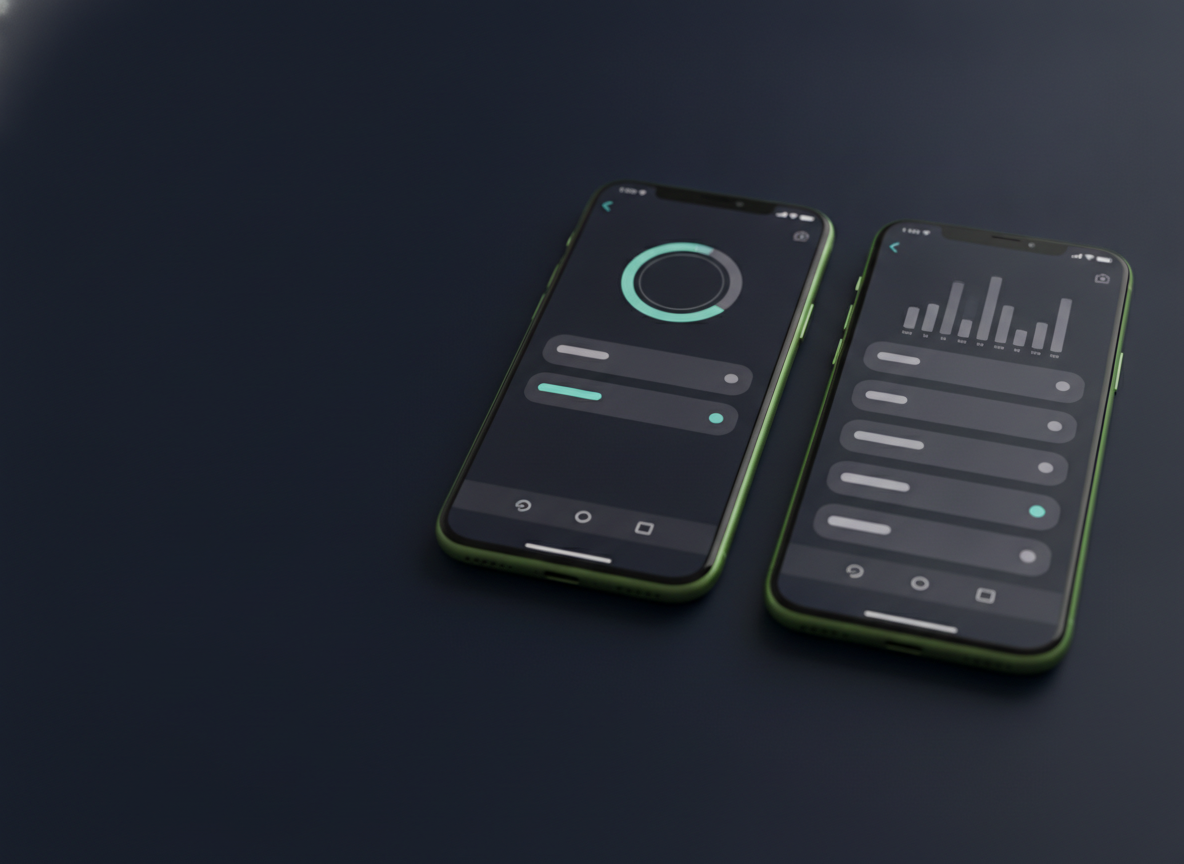
We build native iOS apps in Swift and SwiftUI when performance, camera or AR features, or a true Apple-standard interface matter more than shipping to two platforms from one codebase. Our iOS app development work covers everything from a first App Store release to a long-running enterprise product.
For Android, we write in Kotlin against Google’s Material guidelines, accounting for the device fragmentation, permission models, and Play Store review process that Android application development in the US market has to handle well before launch day.
React Native and Flutter let a single engineering team ship iOS and Android together, which is the right call for most content-driven apps, internal tools, and MVPs where budget and time-to-market outweigh the case for two fully native codebases.
A lot of the work we do in the US is not a greenfield build. It is taking over an aging app, migrating it off an outdated framework, re-architecting for performance, and modernizing the UI without forcing a ground-up rewrite the business cannot afford to pause for.
Most enterprise mobile apps need to talk to a CRM, ERP, payment gateway, or internal API on day one. Our software integration services scope out authentication, data ownership, and failure handling for every system the app has to connect to, before a single screen gets built.
Every build runs through UI/UX design to validate the core user journeys before development, then our quality assurance team tests across a real device matrix, not just simulators, so store rejections and one-star bug reports do not show up after launch.
Recognized for Mobile App Delivery

Larger US organizations bring existing systems, security review, and multiple stakeholders into every mobile build. We plan for that from discovery onward, using DevOps services for repeatable release pipelines and quality assurance to keep regressions out of production releases.
They cleared all my doubts and turned my idea into a powerful app.
They took our idea during a call and came up with an app prototype that was very impressive and accurate.
Task-oriented company, very different from others we worked with.
We build for the compliance, payment, and app-store expectations US businesses and their customers already assume, not a generic global template.
Real Swift and Kotlin engineers alongside React Native and Flutter teams, so the platform decision is made on your product’s needs, not on which stack we happen to staff.
OWASP MASVS-aligned mobile security practices (the Mobile Application Security Verification Standard, a widely used mobile security benchmark), with GDPR, HIPAA, and PCI DSS considerations built into the data architecture for regulated industries.
Every engagement includes a post-launch support window, and most clients continue on a maintenance and iteration retainer once the app is live.
Swift and Kotlin for native builds, React Native and Flutter for cross-platform work, Firebase or a custom Node.js backend depending on scale, and cloud infrastructure on AWS or Google Cloud sized to real expected traffic rather than over-provisioned by default.


Straight answers about cost, timelines, platform choices, and working with a mobile app development company that serves the US market.
It covers product strategy, UI/UX design, native or cross-platform engineering, backend and API work, QA, App Store and Play Store submission, and post-launch support. Most engagements start with mobile app consulting services to agree scope before any code is written.
A focused MVP typically runs $30,000 to $70,000, while a full-featured enterprise app with AI features and complex integrations can run $150,000 or more. We scope against your actual requirements before quoting rather than working off a flat rate card.
The number of platforms, integrations, user roles, and how much original design work is needed all affect the schedule, along with App Store and Play Store review time once the build is ready to submit.
Ask to see apps the team has actually shipped and how those apps perform in the App Store or Play Store today, then compare how each proposal handles architecture, security, and what happens after launch rather than just the headline price.
Native, meaning Swift for iOS and Kotlin for Android, makes sense when performance, camera or AR features, or platform-specific UX are critical. Cross-platform, using React Native or Flutter, usually suits content-driven or workflow apps where one team shipping to both stores matters more.
Yes. Most enterprise apps need to connect to a CRM, ERP, payment gateway, or internal API as part of the build, and we scope that integration work during discovery rather than bolting it on afterward.
A no-code or low-code builder can work for a simple, low-volume internal tool. Custom development earns its cost once you need real performance, specific integrations, or complex user roles that a builder platform cannot flex to support.
Yes. App Store and Play Store submission, review handling, and basic app store optimization are a standard part of every mobile engagement, not a separate add-on.
Yes. We regularly take over aging apps, migrating outdated frameworks, re-architecting for performance, and modernizing the UI, usually without forcing a full ground-up rewrite.
Security is architected in from the start, following OWASP MASVS-aligned practices, with GDPR, HIPAA, and PCI DSS considerations built into the data architecture for apps in healthcare, fintech, or other regulated spaces.
Yes. You can hire mobile app developers to work inside your existing team and codebase on a dedicated basis, or we can run the full project as a self-contained team depending on how you want to staff it.
We work with businesses across the United States, including established client bases with mobile app development in New York and mobile app development in Texas, alongside teams in other states and internationally. Service coverage is nationwide even though our delivery teams are not physically based in every city we serve.
You own the source code, designs, and App Store or Play Store listing delivered under the engagement. We are also happy to sign an NDA before any detailed discussion of your app concept.
Every engagement includes a post-launch support window, and most clients continue with an ongoing maintenance and iteration retainer rather than treating launch as the end of the relationship.
Yes. On-device inference, generative AI features, and personalization engines can typically be added to an existing app without a full rebuild, provided the underlying architecture supports it. Our AI development services scope this against your existing app before any work starts.
Tell us about your app idea, target platforms, and timeline. Let's discuss scope and the next step.