Author: admin

  • How Much Does It Cost to Build an AI App in 2026? Save Money with Smart Planning

    How Much Does It Cost to Build an AI App in 2026? Save Money with Smart Planning

    AI app development cost in 2026 typically ranges from $12,000 to $500,000+. Depending on your app’s complexity, features, team location, and how much custom AI work is involved.

    But that range alone won’t help you plan a budget.

    What actually matters is why the cost lands where it does, which factors move it up or down, and where most businesses quietly waste money without realizing it.

    In 2026, AI isn’t a buzzword, it’s a business standard. The global AI market is valued at over $320 billion this year, and enterprise AI spending is projected to exceed $490 billion globally by year’s end. Competition is heating up fast. Businesses that invest in AI apps intelligently are pulling ahead. Those who rush in without planning are burning budgets.

    AI Development Cost Blog CTA banner

    This guide gives you a complete, transparent breakdown of AI app development costs — from data infrastructure to developer rates, hidden fees to real-world examples. Whether you’re evaluating an AI development company for the first time or comparing quotes from multiple vendors, by the time you finish reading, you’ll know exactly what you’re paying for and how to spend less of it. By the time you finish reading, you’ll know exactly what you’re paying for and how to spend less of it.

    AI App Development Cost: Why It Should Be Your First Priority

    Most businesses think about budget after they’ve already fallen in love with their AI idea. That’s the wrong order.

    Understanding AI app development cost upfront changes everything. Here’s why it has to be your first move.

    Better Budget Planning

    When you know what drives cost, you can make smarter feature decisions early. You won’t overbuild. You won’t run out of funding halfway through development.

    Clear Development Roadmap

    Knowing your budget forces you to prioritize. It helps your team build what matters first — and skip what doesn’t add value yet.

    Higher Return on Investment (ROI)

    A McKinsey survey found that 64% of organizations using AI have already seen increased revenue or significant cost savings. But that only happens when the investment is planned well, not poured in blindly.

    Reduced Risk of AI Project Failure

    Between 70–85% of AI projects fail to reach production. The most common reasons? Poor data quality, undefined goals, and scope creep without budget adjustments. Knowing your numbers from day one protects you from all three.

    What Are the Types of AI Projects?

    Before diving into specific costs, it helps to understand what kind of AI project you’re actually building. The type determines the complexity, and the complexity determines the price.

    Here are the main categories businesses invest in today:

    Rule-Based AI Systems

    These follow predefined logic. Think basic chatbots that answer FAQs. They are the fastest and most economical to construct. Good for low-complexity, predictable tasks.

    Machine Learning (ML) Applications

    ML models learn from data to make predictions or identify patterns — fraud detection, recommendation engines, churn prediction. These sit in the mid-complexity range.

    Natural Language Processing (NLP) Apps

    Apps that understand and generate human language. Customer support bots, sentiment analysis tools, and AI writing assistants fall here.

    Computer Vision Systems

    These process images and video product recognition, facial verification, and medical imaging diagnostics. They require large labeled datasets and GPU-heavy infrastructure.

    Generative AI Applications

    Content generation, code assistants, design tools. These use large language models (LLMs) like GPT or Claude and are increasingly common. They come with ongoing inference costs at scale.

    Agentic AI Systems

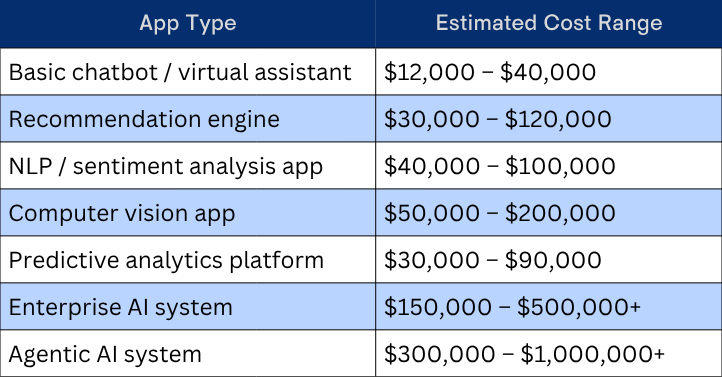
    The newest and most complex tier. These AI agents make autonomous decisions, manage workflows, and integrate with multiple systems. Development budgets can range from $300,000 to over $1,000,000 for advanced builds.

    AI App Development Costs Revealed

    Let’s break down every major cost category. These are the building blocks of your total AI app development budget.

    Data Collection and Management

    Any AI system is built on data. Even the finest model fails in the absence of high-quality data.

    Data costs vary widely:

    • Internal data: Often free if already structured and clean
    • External datasets: Can cost thousands to license (financial data, medical records, satellite imagery)
    • Manual data labeling: Labor-intensive and can exceed $30,000 for complex tasks like annotating medical images
    • Privacy and compliance prep: Anonymization, encryption, and governance add cost — especially in healthcare and finance

    Data preparation typically accounts for 25–40% of total project budgets and is the most commonly underestimated cost category.

    Computational and Infrastructure Costs

    Hardware

    Custom GPU hardware is needed for training large models. While cloud has reduced the need for owned hardware, high-performance computing is still a major line item for complex builds.

    Cloud Services

    Cloud platforms like AWS, Google Cloud, and Azure host your AI workloads. A conversational AI handling one million monthly requests can cost $5,000–$15,000 per month in cloud infrastructure alone.

    Servers and Networking

    Production AI apps need robust server architecture. Latency, uptime, and bandwidth all cost money — and they scale with your user base.

    Security

    AI apps handling sensitive data require encryption, access controls, multi-factor authentication, and real-time monitoring. These aren’t optional add-ons. They’re essential, and they add meaningfully to your build cost.

    Electricity

    For on-premise training infrastructure, electricity and cooling costs are real. Custom AI model training is energy-intensive — Meta’s Llama 2 alone required over 3 million GPU hours.

    Licensing and Software

    Pre-built AI models and APIs come with usage fees. OpenAI, Google Vision AI, and other platforms charge per token or per API call. For example, running a small app that handles 1,000 customer queries per day could cost $200–$300/month in model usage alone.

    Open-source tools like PyTorch and TensorFlow reduce licensing costs but still require skilled engineers to implement.

    Training

    Training a custom AI model is expensive. Costs depend on:

    • Volume and complexity of training data
    • Model architecture (small vs. large)
    • Hardware used (GPU/TPU type and training time)

    Custom model training and tuning can run from $15,000 to $100,000+, depending on your accuracy requirements and data volume.

    Testing and Validation

    AI apps don’t just need QA testing — they need model validation. This includes:

    • Accuracy benchmarking
    • Bias and fairness testing
    • Edge case evaluation
    • Performance testing under load

    Testing adds 10–15% to your overall development cost and should never be skipped.

    How Much Does It Cost to Maintain AI?

    Deployment isn’t the finish line. AI maintenance is a permanent line item.

    Most organizations spend 15–25% of their initial development cost annually on maintenance, retraining, and optimization. Models degrade over time as real-world data patterns shift, a process called model drift. Without regular retraining, your app loses accuracy quietly.

    Budget maintenance from day one or pay significantly more to fix it later.

    AI Application Development Costs

    The core software development work, architecture, coding, UI/UX design, and API integration varies by team and complexity:

    AI Application Development Costs

    Implementation and Change Management

    Rolling out an AI app inside an organization takes more than tech. It requires training employees, updating workflows, and managing the transition. These soft costs are real and often ignored in initial budgets.

    Production and Scaling

    Once live, your infrastructure costs grow with usage. Inference — the cost of running your AI in production — now accounts for roughly two-thirds of all AI compute costs in 2026. A well-optimized prompting strategy can reduce inference costs by 25–35%.

    Artificial Intelligence Developers

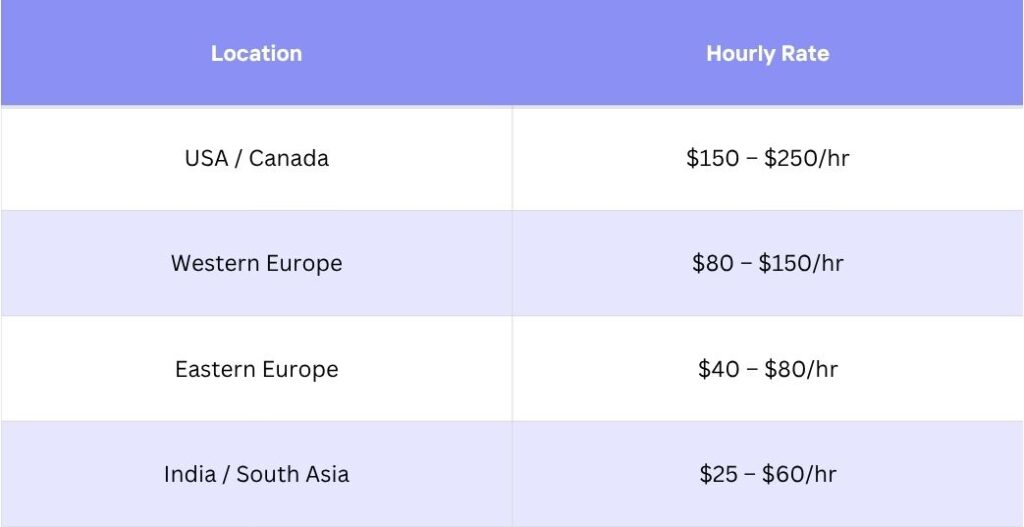
    Developer rates are one of the biggest variables in your budget.

    Artificial Intelligence Developers

    Workers with machine learning skills command a 40% wage premium over comparable software engineering roles. Specialized roles — AI/ML engineers, data scientists, MLOps engineers, often carry six-figure annual salaries in the US market.

    Why 2026 Is the Best Time to Invest in AI Apps & Intelligent Markets

    If you’ve been on the fence, the window for early-mover advantage is still open — but it’s closing.

    Here’s why 2026 is the right moment:

    • AI tools are cheaper than ever. The LLM price war among OpenAI, Google, Anthropic, and others has driven API costs dramatically lower. Smaller, specialized models are now highly capable and far more affordable to run.
    • Infrastructure is more accessible. Managed cloud AI services have reduced the need for expensive on-premise hardware.
    • The competitive gap is widening. With 88% of companies already using AI in at least one business function, businesses that wait are falling further behind.
    • Generative and predictive AI technologies are projected to contribute $2.6 trillion to $4.4 trillion in annual global economic value across industries.
    • Government and regulatory frameworks are maturing, making compliance planning more predictable in most markets.

    The cost of catching up increases with the length of time you wait.

    Which Factors Have the Biggest Impact on AI App Development Cost?

    Now that you understand the cost components, let’s look at which factors move the needle most.

    Scope and Complexity of the App

    More features = higher cost. An AI chatbot that handles basic FAQs is fundamentally different from one that performs sentiment analysis, pulls from a CRM, and speaks multiple languages. Feature creep is the fastest way to blow a budget.

    Start with an MVP (Minimum Viable Product). Build only what’s essential to validate your idea first.

    Development Team and Expertise

    Building with a US-based agency costs 3–5x more than partnering with an equally skilled Eastern European or South Asian team. That said, time zone friction, communication overhead, and domain expertise should all factor into your decision — not just the hourly rate.

    Data Requirements

    If you need custom datasets, external data licenses, or large-scale manual annotation, your data costs will dominate the budget. Projects with clean, existing internal data cost significantly less.

    Technology and Tools

    Building from scratch with a custom model is far more expensive than fine-tuning a pre-trained model via API. Using open-source libraries (PyTorch, Keras, scikit-learn) reduces licensing costs. The technology stack you choose has a direct impact on your total spend.

    Integration with Existing Systems

    Connecting your AI app to legacy systems, CRMs, ERPs, or external databases takes engineering effort. The more integrations required, the more the project costs. Regulated industries face additional overhead for compliance with GDPR, HIPAA, PCI-DSS, and similar frameworks.

    Monitoring & Analytics

    Production AI apps need dashboards to track model performance, accuracy drift, usage patterns, and cost consumption. Building or integrating monitoring infrastructure is a real line item that grows in importance as your app scales.

    Use-Case Based AI App Development

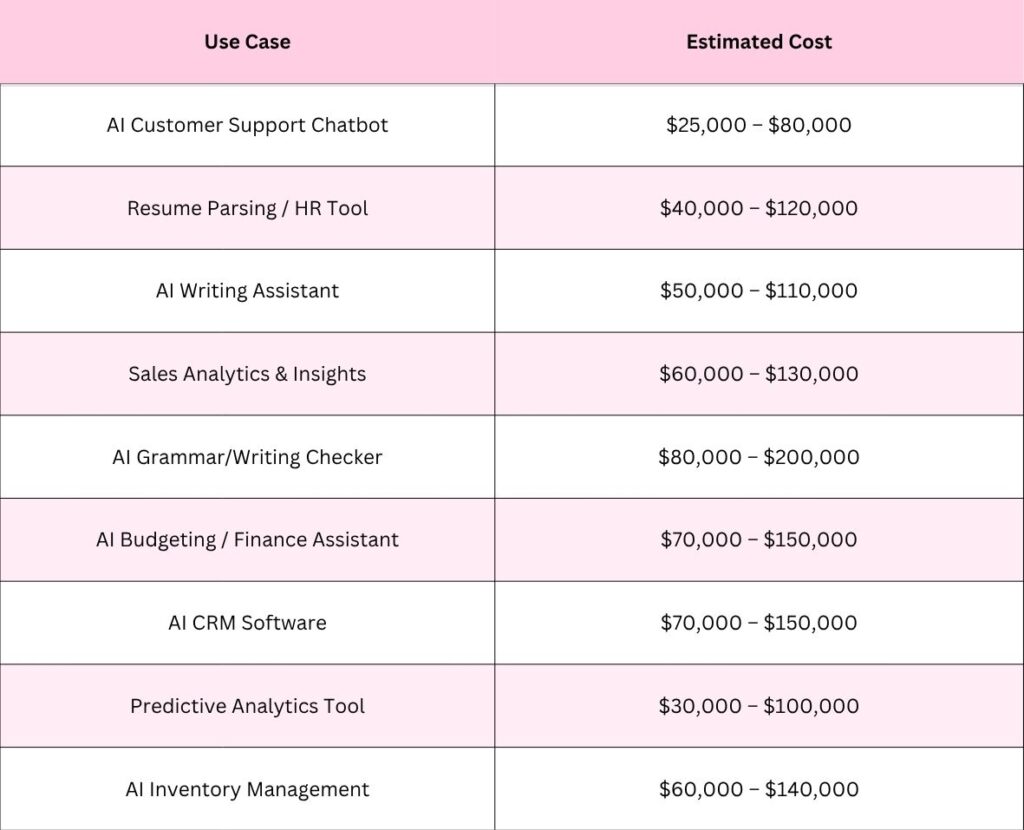
    Costs shift dramatically depending on your specific use case. Here’s a practical reference:

    Use-Case Based AI App Development

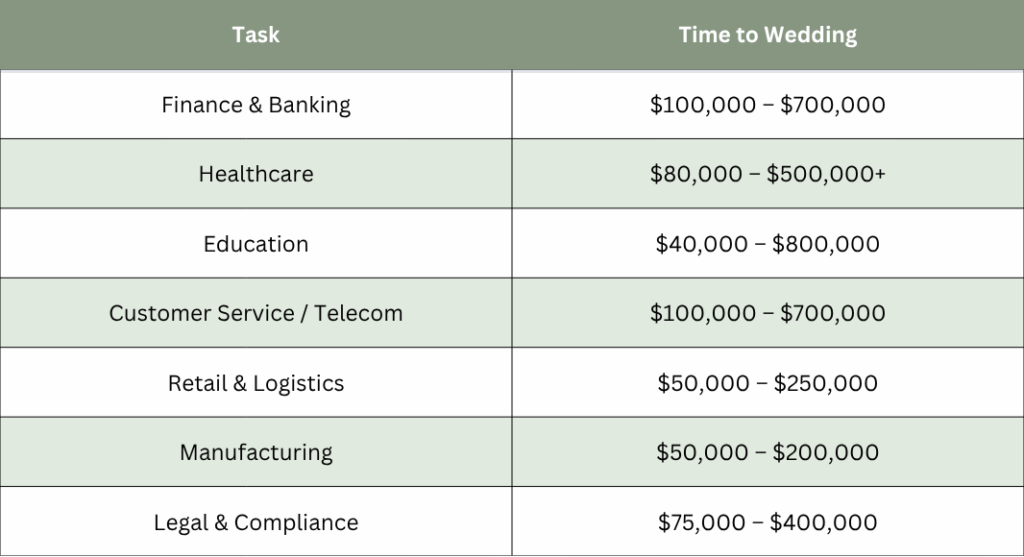
    Which Industry Pays the Most for AI App Development in 2026?

    Industry context changes everything. Compliance, data sensitivity, and technical complexity vary massively by sector.

    Which Industry Pays the Most for AI App Development in 2026

    Finance and healthcare consistently sit at the high end. Fraud detection and risk-scoring models require high accuracy and regulatory compliance under PCI-DSS and MiFID II. Healthcare apps must meet HIPAA standards and often require human-in-the-loop validation infrastructure — which can add 20–30% to base development costs.

    What Are the Hidden Factors That Affect AI App Development Cost?

    These are the costs that most project plans ignore. They’re also the ones that blow budgets.

    Data Privacy and Security

    Apps handling sensitive user data in healthcare, finance, or personal services require advanced security — encryption, audit trails, access controls, and breach response infrastructure. Compliance audits alone can add significant overhead to your build. Regulatory retrofitting after development is even more expensive.

    Licensing Fees for AI Models and APIs

    Third-party AI model fees are usage-based. A sudden spike in user activity can double your monthly bill. Businesses in 2026 are increasingly implementing AI FinOps — actively monitoring API calls, optimizing GPU usage, and setting spending limits to prevent runaway costs.

    Scalability and Infrastructure

    Building for 100 users and building for 100,000 users are different problems. Infrastructure costs don’t scale linearly. Plan for growth from the start. Retrofitting scalability is expensive and disruptive.

    Continuous Iteration and Model Improvement

    AI apps are never truly “done.” User behavior changes. Data patterns shift. New features get requested. Budget for ongoing iteration — not just post-launch maintenance.

    AI Model Training and Computational Resources

    If your model requires retraining as new data comes in, ongoing compute costs are part of your operational budget forever. Production-grade AI systems need retraining schedules, data pipelines, and monitoring workflows built in from the beginning.

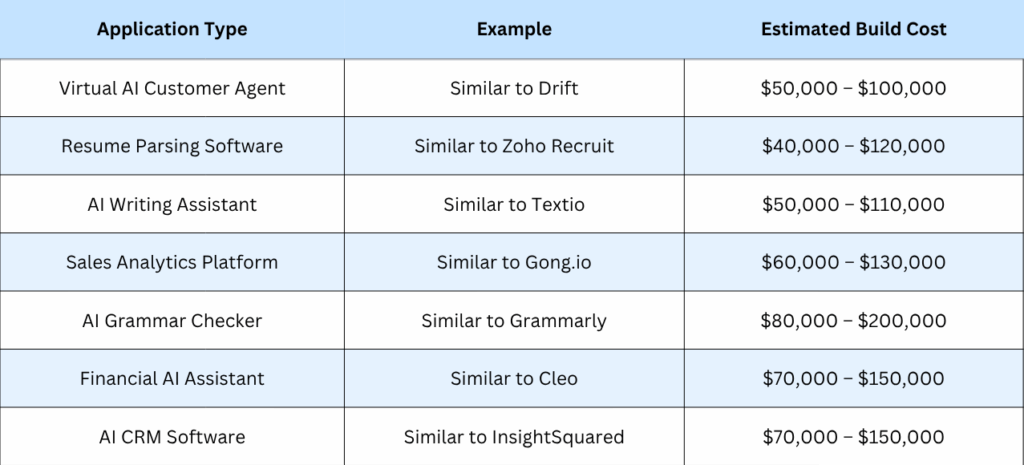
    Development Costs of Top AI Business Applications

    Real-world benchmarks help set expectations. Here’s what building AI-powered equivalents of known platforms actually costs:

    Development Costs of Top AI Business Applications

    These are benchmarks — not quotes. Your specific requirements, data, and team will move the final number.

    How to Optimize AI App Development Cost

    You don’t have to spend more to build better. Smart planning reduces cost without reducing quality.

    Using Pre-built AI Models and APIs

    This is the single most effective cost-reduction strategy for most projects. Instead of training a model from scratch, plug into existing APIs, OpenAI, Google Cloud AI, Anthropic Claude, AWS AI services.

    You pay per token or per request. This keeps upfront costs low and lets you validate product-market fit before investing in custom infrastructure.

    Agile Development Methodology

    Agile enables you to develop in brief, targeted sprints. You test and validate before adding new features. This prevents overbuilding and keeps scope and cost under control.

    Start with an MVP. Launch fast. Learn from real users. Then build what actually drives value.

    Cloud Services and Infrastructure

    Managed cloud AI services (AWS SageMaker, Google Vertex AI, Azure ML) remove the need for expensive on-premise infrastructure. They also offer built-in scaling, so you only pay for what you use.

    Audit cloud usage regularly. Unmonitored cloud bills grow fast, especially with inference-heavy applications.

    Why Choose Apptechies for Your AI App Development?

    At Apptechies, we’ve built AI-powered apps across industries — from lean startup MVPs to enterprise-grade platforms. We understand that every dollar in your AI budget has to work.

    Here’s what sets us apart:

    • Transparent cost planning from day one — no surprise invoices
    • Full-stack AI expertise — ML engineers, data scientists, and DevOps specialists under one roof
    • MVP-first approach — we validate before we scale, protecting your budget at every stage
    • Cross-industry experience — healthcare, fintech, retail, logistics, and more
    • Ongoing support and optimization — because building the app is just the beginning

    Whether you’re exploring your first AI feature or ready to build a production-grade intelligent platform, we help you make the right decisions for your specific goals and budget.

    Final Thoughts

    The AI app development cost in 2026 isn’t a fixed number. It’s a result of your choices — what you build, how you build it, who builds it, and how well you plan before writing a single line of code.

    The good news: smart planning dramatically reduces waste. Start with a clear use case. Validate with an MVP. Use pre-built APIs where possible. Build your data strategy before your model. And always budget for maintenance,  not just launch.

    Businesses that spend the most are not the ones that will benefit from AI in 2026. They’re the ones spending strategically.

    If you’re ready to get a realistic estimate for your AI project, start with your use case and your data — those two factors will tell you more about your budget than anything else.

    Frequently Asked Questions

    Q1: How Much Does It Cost To Build A Basic Ai App In 2026?

    Ans: A basic AI app — such as a simple chatbot or FAQ assistant using pre-built APIs — typically costs between $12,000 and $40,000. Costs rise with custom AI model development, complex integrations, and advanced features like NLP or computer vision.

    Q2: What Is The Biggest Hidden Cost In AI App Development?

    Ans: Data preparation is the most commonly underestimated cost. It accounts for 25–40% of total project budgets. Ongoing model maintenance (15–25% of initial cost annually) and compliance in regulated industries are the next biggest surprises.
    Q3: How Long Does It Take To Build An AI App?

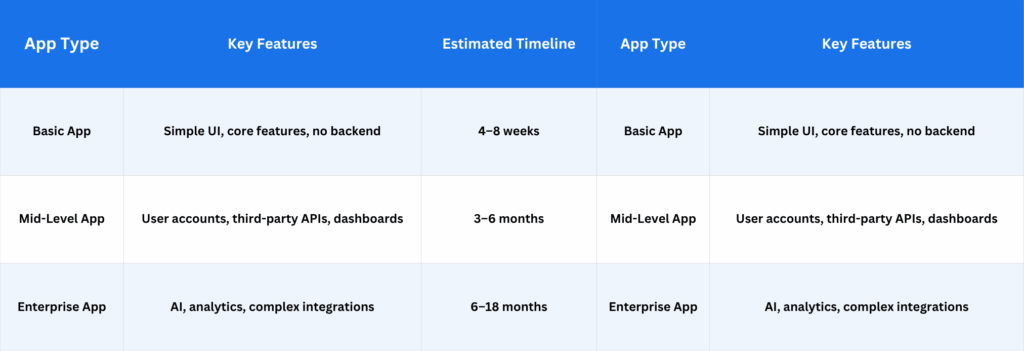
    Ans: A simple MVP can be built in 4–8 weeks. Mid-complexity apps typically take 3–6 months. Enterprise-scale systems with custom model training and deep integrations can take 9–18 months or more.

    Q4: Is It Cheaper To Hire An In-house Team Or Outsource AI Development?

    Ans: Outsourcing — especially to Eastern Europe or South Asia — can reduce development costs by 40–60% compared to US-based in-house teams. However, in-house teams offer more control and faster iteration. The right choice depends on your project complexity, timeline, and long-term roadmap.

    Q5: Do AI Apps Require Ongoing Costs After Launch?

    Ans: Yes, and this is critical to budget for. AI apps require cloud infrastructure, model retraining, performance monitoring, security updates, and iterative improvements. Plan for 15–25% of your initial development cost annually as your ongoing operational budget.

  • Why Should You Choose Offshore Software Development in 2026? A Complete Guide

    Why Should You Choose Offshore Software Development in 2026? A Complete Guide

    Hiring the right software team is one of the biggest decisions a business can make.

    And in 2026, more companies than ever are turning to offshore software development to build faster, spend smarter, and access world-class talent.

    But is it the right & outstanding move for your business in 2026?

    Whether you are a startup looking to launch your first product or an enterprise scaling a complex system, offshore development can be a game-changer if done right.

    In this guide, you will learn everything you need to know:

    • What offshore software development is and how it works
    • How much does it actually cost by region
    • The real benefits and challenges
    • How to hire the right team
    • And which companies are leading the space in 2026

    Let’s dive in.

    Offshore Software Development: What It Is and How It Works

    Offshore software development means hiring a software team located in a different country to build, maintain, or scale your digital products.

    You get access to skilled developers at a lower cost, without compromising on quality.

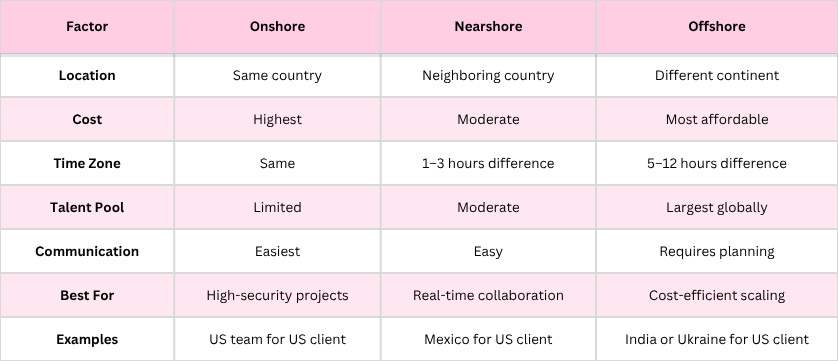
    But offshore is just one model. Here is how it compares to the other two:

    Offshore vs Onshore vs Nearshore A Clear Comparison
    Onshore Offshore

    What Our Offshore Software Development Services Include

    At Apptechies, we offer a full range of offshore development services built around your business goals.

    Web Development

    We build fast, scalable, and modern web apps for your business ROI. From simple business websites to complex enterprise platforms, our offshore web developers deliver clean code and great user experiences.
    Mobile App Development

    Our offshore mobile teams build native and cross-platform apps for iOS and Android. We focus on performance, design, and delivering apps that users actually enjoy.

    Testing and Quality Assurance

    Every product we ship goes through rigorous testing. Our QA engineers catch bugs early, run performance checks, and make sure your software works flawlessly before launch.

    Cloud Solutions and DevOps

    We help businesses move to the cloud, automate deployments, and build reliable infrastructure. Our DevOps engineers reduce downtime and speed up your release cycles.
    Custom Software Development

    Off-the-shelf software does not always fit. We build custom solutions tailored to your exact business needs — from internal tools to full-scale platforms.
    What Does an Offshore Software Development Team Look Like?

    A great offshore team is not just a group of developers. It is a structured, collaborative unit working toward one goal — your success.

    Collaborative Workflow

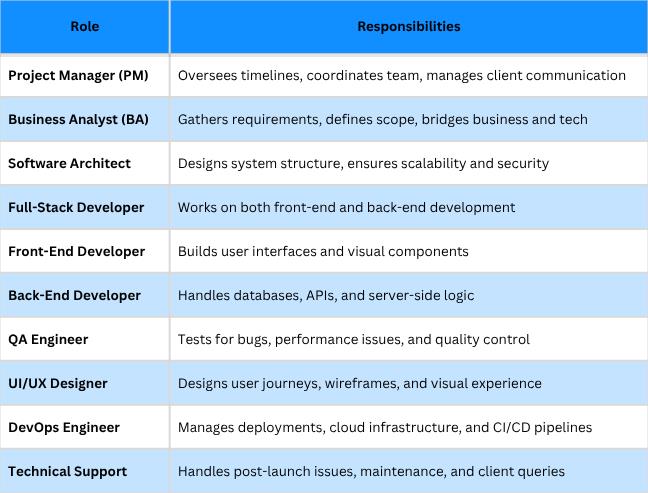
    Each team member plays a specific role. Here is how a typical offshore development team is structured:

    Offshore Software Development Team Look Like?

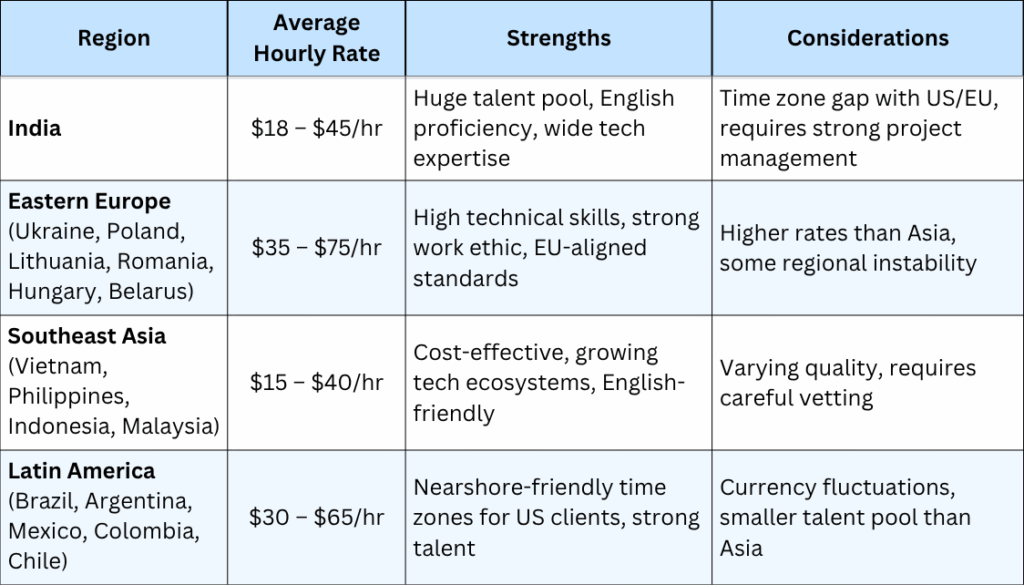
    How Much Does Offshore Software Development Cost? Real Hourly Rates by Region in 2026

    Cost is one of the biggest reasons businesses choose offshore development. But rates vary widely by region.

    Here is a detailed breakdown:

    Offshore Software Development Cost Real Hourly Rates by Region in 2026

    Considering the Offshore Team’s Costs and Value

    A $20/hr developer who misses deadlines costs more than a $45/hr developer who delivers on time. Always weigh hourly rate against quality, communication, and reliability.

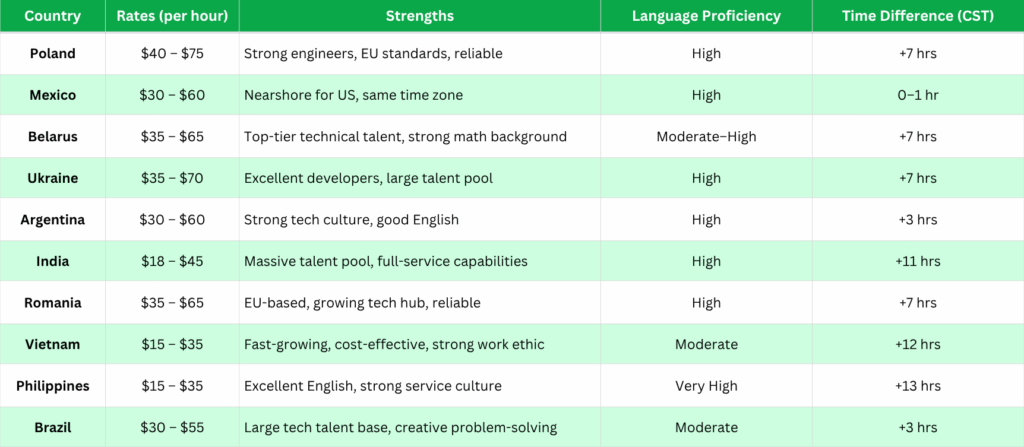
    Best Offshore Software Development Countries

    Here is a quick comparison of the top countries businesses choose for offshore development:

    Best Offshore Software Development Countries

    What Are the Benefits of Offshore Software Development in 2026?

    Access to a Global Talent Pool

    You are no longer limited to hiring locally. Offshore development gives you access to thousands of skilled developers across the world — specialists you might never find in your own city.

    Specialized Technologies and Expertise

    Need an AI engineer, a blockchain developer, or a cloud architect? Offshore teams often have niche specialists ready to go, without the long hiring process.

    Focus on Core Business Activities

    When your development is handled offshore, your in-house team can focus on what they do best, strategy, sales, and growth.

    Business and Project Scalability

    Scaling up or down is made simple by an offshore development team. Adding five developers for a product launch or reducing the team post-release is straightforward with the right partner.

    Team Flexibility and Project Pivoting

    Business needs change. Offshore models offer flexible engagement, you can shift priorities, add new skills, or change direction without the overhead of rehiring.

    Faster Project Timelines

    When teams collaborate across time zones, development can take place continuously. This means faster delivery and shorter time to market.

    Risk Mitigation

    Spreading your development across regions reduces dependency on one local market. It also protects you from local disruptions, talent shortages, or economic changes.

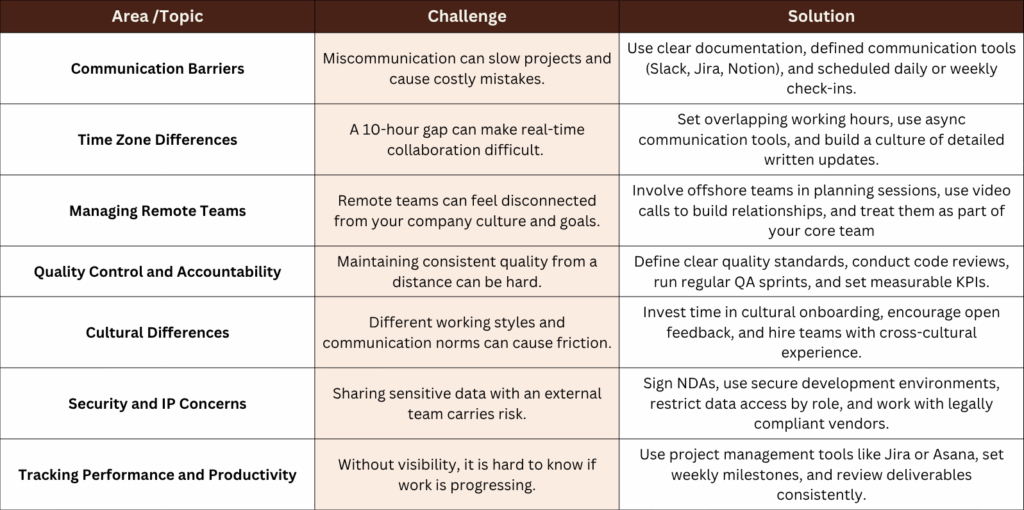
    What Are the Biggest Challenges of Offshore Software Development, And How Do You Overcome Them?

    Offshore development is not without its challenges. But every challenge has a solution.

    Biggest Challenges of Offshore Software Development

    How Much Does Offshore Software Development Cost?

    Beyond hourly rates, here are all the cost factors you need to budget for:

    Developer Hourly Prices

    The core cost. Rates range from $15 to $75/hr depending on region, seniority, and tech stack.

    Cost of Project Management

    A dedicated project manager typically adds 10–15% to your overall project budget — but saves far more in avoided mistakes.

    Quality Assurance (QA) and Testing

    QA engineers and testing tools add to the budget. Expect to allocate 15–20% of your dev budget to testing.

    Infrastructure and Tools Pricing

    Cloud hosting, development tools, and software licenses are real costs. Budget these separately from development hours.

    Communication Overheads

    Tools like Slack, Zoom, and Jira have subscription costs. Small, but worth factoring in.

    Legal and Compliance Costs

    Contracts, NDAs, IP protection, and compliance reviews require legal support. Do not skip this step.

    Delays and Rework

    Poor planning leads to rework. Always add a 10–15% buffer to your timeline and budget.

    Onboarding and Knowledge Transfer

    Getting a new offshore team up to speed takes time. Plan for a structured onboarding period of 1–2 weeks.

    Maintenance and Support Costs

    Post-launch support is ongoing. Budget for regular updates, bug fixes, and technical support after your product goes live.

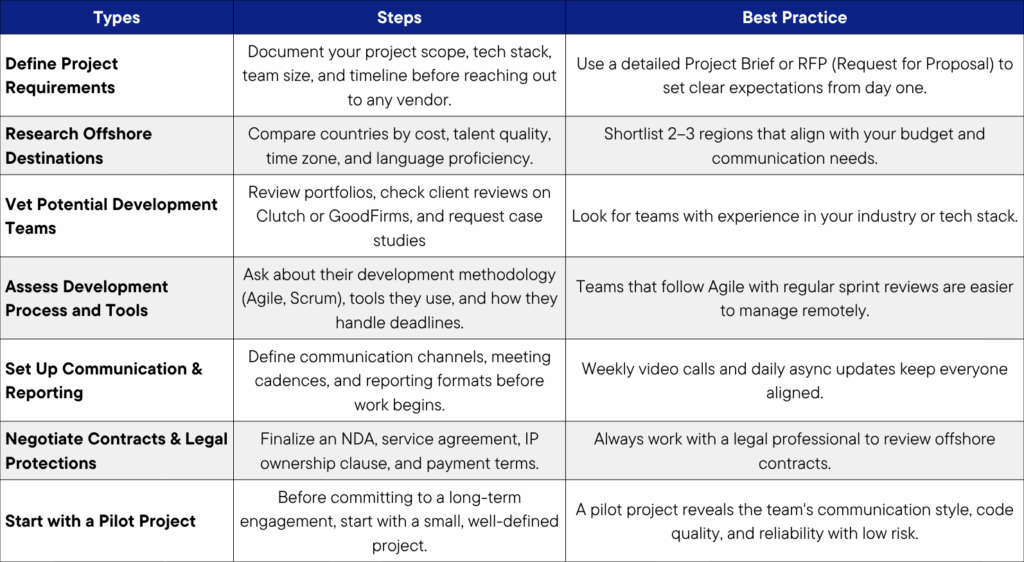
    How to Hire Offshore Software Developers the Right Way

    How to Hire Offshore Software Developers

    The Latest Trends in Offshore Software Development

    The offshore development landscape is evolving fast. Here is what is shaping the industry in 2026:

    AI and Process Automation

    Offshore teams are now integrating AI tools into their workflows — from AI-assisted coding to automated testing. This speeds up development and reduces human error.

    Hybrid Development Models

    Many businesses now combine offshore and in-house teams. This hybrid model gives them cost efficiency while keeping core functions closer to home.

    Enhanced Cybersecurity Protocols

    With rising data privacy regulations, offshore vendors are investing heavily in security, from ISO-certified environments to stricter access controls and compliance frameworks.

    Expanding Outsourcing Market

    The global outsourcing market continues to grow. More businesses — from startups to Fortune 500 companies — are embracing offshore models as a long-term strategy, not just a cost-cutting measure.

    Cloud and IoT Integration

    Offshore teams are increasingly specializing in cloud-native development and IoT solutions. As businesses modernize their infrastructure, demand for these skills offshore is surging.

    A List of the 15 Best Offshore Software Development Companies

    More important than everything else is selecting the correct partner. Here are 15 companies leading the offshore development space in 2026:

    • Apptechies, A trusted offshore software development partner delivering web, mobile, cloud, and custom software solutions with a client-first approach
    • Intellectsoft
    • Infosys
    • Tata Consultancy Services (TCS)
    • Wipro Technologies
    • EPAM Systems
    • Softserve
    • Globallogic
    • Luxoft
    • N-iX
    • Miquido
    • Itransition
    • Netguru
    • Sigma Software
    • DataArt

    FAQs on Offshore Software Development

    Q. What Is Offshore Software Development?

    Ans: Offshore software development is the practice of hiring a software team in another country to design, build, or maintain your digital products — typically at a lower cost than hiring locally.

    Q. Is Offshore Software Development Safe? 

    Ans: Yes, when done right. Use signed NDAs, secure development environments, and work with reputable vendors who follow data protection standards.

    Q. How Do I Communicate With An Offshore Team Effectively?

    Ans: Use tools such as Slack, Zoom, and Jira. Set overlapping working hours, hold weekly check-ins, and document everything clearly.

    Q. Which Country Is The Best Choice For Offshore Software Development?

    Ans: It depends on your budget, time zone preference, and tech requirements. India, Ukraine, Poland, and the Philippines are among the top choices in 2026.

    Q. How much does offshore software development cost? 

    Ans: Hourly rates range from $15 to $75+, depending on the region and developer seniority. Full project costs vary based on scope, team size, and timeline.

    Q. How Long Does An Offshore Development Project Take?

    Ans: A simple app can take 3–6 months. Complex enterprise platforms may take 12–24 months. A well-defined scope and an experienced team shorten timelines significantly.

    Q. Can Offshore Teams Work In My Time Zone?

    Ans: Many offshore vendors offer flexible hours with overlapping windows to match your working hours for real-time collaboration.

    Q. Why Should I Choose Apptechies As My Offshore Development Partner?

    Ans: Apptechies combines technical expertise, transparent communication, and a proven track record to deliver software that drives real business results — on time and within budget.

    Author Name: Ajay Chaudhary

    Author Bio: AJ Chaudhary, CEO of Apptechies. He is a full-stack developer with 10+ years of experience developing web and mobile applications. He has successfully delivered projects for different industries and helped companies turn concepts into scalable solutions. Passionate about technology, he simplifies complicated tech topics for entrepreneurs and startups by sharing insights.


  • How Much Does It Really Cost to Make a Music App Like Spotify in 2026?

    How Much Does It Really Cost to Make a Music App Like Spotify in 2026?

    Key Takeaways Before You Dive In

    Before we get into the full breakdown, here is what you need to know upfront:

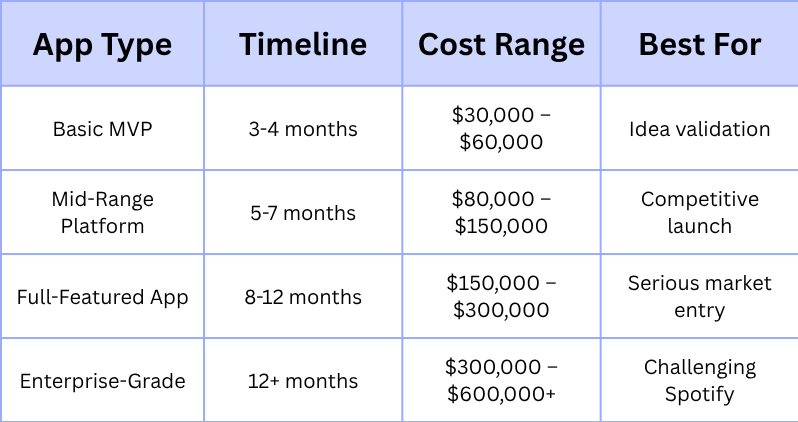
    • Building a music streaming app like Spotify costs anywhere from $30,000 for a basic MVP to $300,000+ for a full-featured platform.
    • Music licensing is one of the most underestimated costs — and it can make or break your launch strategy.
    • AI-powered personalization is no longer optional. It directly influences user retention and market share.
    • The global music streaming market generated $53.7 billion in revenue in 2024 and is still growing fast.
    • Choosing the right development partner and platform scope from Day 1 will save you months of costly rebuilding.
    • 2026 is genuinely a smart time to enter this space — the market is growing but still has room for niche players.

    Spotify changed everything. Before it existed, music was something you downloaded, stored, and owned. Today, over 640 million people stream music directly from their phones. No storage. No waiting. No clutter.

    That shift created a business opportunity that is still wide open. And more founders, startups, and enterprises are now asking the same question: how much does it actually cost to build a music streaming app like Spotify?

    The honest answer is — it depends. But not in the ambiguous, ineffective manner that phrase is typically employed. It depends on very specific choices: what features you build, which platforms you target, how seriously you take audio infrastructure, and whether you invest in personalization from Day 1.

    In this guide, we have done the research so you do not have to. We have broken down every cost driver, every development phase, every hidden expense, and every money-saving strategy. Whether you are a startup founder exploring an MVP or a business leader planning a full-scale platform, this guide gives you a clear picture of what it takes to build a competitive streaming app in 2026.

    Music Streaming App Market Statistics

    Numbers tell a story. And the story of the music streaming market in 2026 is one of consistent, undeniable growth.

    Music streaming platforms generated $53.7 billion in global revenue in 2024, a 12.5% jump from the year before. The global market is projected to reach $46.81 billion by the end of 2026, with steady annual growth of around 5% through 2030. If current trajectories hold, the market could hit $77 billion by 2030.

    Spotify alone crossed 640 million monthly active users in Q3 2024, with over 250 million paying subscribers. That is a platform built on years of refinement, but it proves the model works at scale.

    Today, streaming accounts for roughly 80% of all recorded music revenue. The average listener spends about 104 minutes daily on music streaming apps. Subscriber numbers jumped from 616 million in 2022 to over 818 million by late 2024.

    What does this mean for you? It means the market has momentum. New users are coming in, existing users are spending more time on apps, and businesses that build the right product for the right audience can carve out a profitable space — even against giants like Spotify and Apple Music.

    What Makes a Music App Special?

    Building a music streaming app is not like building an e-commerce platform or a fitness tracker. The technical complexity, the legal landscape, and the infrastructure requirements are in a completely different league.

    The Technical Challenges

    Streaming audio in real time across millions of devices simultaneously is hard. Your backend must handle massive concurrent loads without buffering. Your CDN (Content Delivery Network) needs to serve audio files from locations close to the user. Your app must intelligently switch audio quality based on the listener’s connection speed — a feature called adaptive bitrate streaming.

    Then there is offline mode. Letting users download and play tracks without internet is a premium feature that requires DRM (Digital Rights Management) to ensure downloaded files cannot be shared or used outside your app. You need to implement Apple’s FairPlay for iOS, Google’s Widevine for Android, and PlayReady for web browsers — all separately.

    Cross-platform compatibility adds another layer. iOS, Android, CarPlay, Android Auto, and web each have their own audio handling requirements. What works seamlessly on one platform may break on another.

    Legal and Licensing Complexity

    But not in the ambiguous, ineffective manner that phrase is typically employed. You cannot simply build an app and start streaming music. You need licenses — and securing them involves negotiating with record labels, music publishers, and rights organizations.

    There are two main types of licenses. Public Performance Rights (from organizations like ASCAP, BMI, and SESAC) allow you to stream music to the public. Mechanical Licenses (from publishers or agencies like the Harry Fox Agency) allow you to reproduce compositions digitally.

    The cost and complexity of licensing varies enormously by region. Launching globally means separate negotiations in each market. Getting this wrong does not just cost money — it can shut your platform down entirely.

    top free offline music apps

    Why 2026 Is the Right Year to Build Your Music Streaming App?

    The Market Gap Is Still Realstic

    Spotify and Apple Music dominate the mainstream. But billions of listeners exist outside the mainstream. Regional music markets, niche genres, and underserved communities represent enormous white space. A platform built specifically for Latin indie artists, South Asian pop, or a specific cultural community can gain serious traction without competing head-to-head with the giants.

    The Technology Is Mature

    AI recommendation systems, adaptive streaming, and cloud infrastructure have all reached a level of maturity where you can implement Spotify-grade features at a fraction of what it cost five years ago. Cross-platform frameworks like React Native and Flutter have made it possible to build for iOS and Android simultaneously — cutting development time and cost significantly.

    Independent Artists Are Looking for Better Homes

    Many artists are frustrated with the royalty structures and algorithm opacity of existing platforms. A platform that treats artists as partners — offering real-time analytics, transparent royalty tracking, and direct fan engagement tools — has a genuine acquisition advantage. Independent artists bring their audiences with them.

    AI Has Changed Personalization 

    Research shows that strong personalization can boost market share by nearly 23%. In 2026, AI-powered recommendation engines are accessible to smaller teams and lower budgets than ever before. A startup can now build discovery features that feel genuinely intelligent — not just algorithmic noise.

    Basic & Advanced Features Every Music Streaming App Should Have in 2026

    Features are where budgets balloon fast. Knowing which ones are essential versus which ones are nice-to-have is one of the most valuable decisions you will make in planning your build.

    Basic Features

    User Accounts and Music Discovery

    • User Registration & Login: Sign-up via email, phone number, or social accounts. Profile customization and usage history tracking.
    • Smart Search: Users should find songs by title, artist, album, genre, or mood. Include autocomplete and fuzzy matching for a polished experience.
    • Playlists: Allow users to create, save, edit, and share playlists. This is core engagement. It is how users build habits around your app.
    • Basic Recommendations: Even a simple ‘You May Also Like’ section, built on listening history, dramatically improves session length.
    • Playback Controls: Play, pause, skip, shuffle, repeat, and volume control. These seem obvious but must be rock-solid before anything else.
    • Music Library: A well-organized library where users can save albums, artists, and playlists for quick access.

    Technical Foundations

    • Audio Streaming Engine: The core of your app. Must handle adaptive bitrate switching, low latency, and smooth buffering transitions.
    • Push Notifications: Alert users about new releases, playlist suggestions, or friend activity. Keep them short, relevant, and non-intrusive.
    • Social Sharing: Let users share what they are listening to on WhatsApp, Instagram, or X. This is word-of-mouth marketing built into the product.

    Advanced Features

    Smart Features That Keep Users Coming Back

    • AI-Powered Recommendations: Machine learning models that analyze listening behavior, time of day, and activity context to serve hyper-relevant suggestions. This is the single biggest retention lever after content quality.
    • Contextual & Mood-Based Playlists: Dynamically generated playlists for working out, studying, or relaxing. These recalculate automatically, keeping content fresh without editorial work.
    • Lyrics Display: Real-time synced lyrics turn passive listening into an interactive experience. Users who engage with lyrics stay longer per session.
    • Voice Search & Assistant Integration: Hands-free control via Siri, Google Assistant, or Alexa. Essential for commuter and gym audiences.
    • Podcast Integration: Adding podcasts broadens your content offering and opens additional monetization lanes.

    Premium Features Worth the Investment

    • Offline Mode with DRM: The number one reason users upgrade from free to paid tiers. Requires implementing DRM across platforms — complex but high-value.
    • High-Resolution Audio: Lossless and spatial audio formats for audiophiles. Tidal built an entire brand around this. If your target user cares about sound quality, this matters.
    • Artist Dashboard: Real-time streaming analytics, geographic audience data, and royalty tracking for artists. Attracts independent artists who bring their fanbase.
    • Live Streaming Events: Artists can host live performances, Q&As, or listening parties. Builds community and creates event-driven engagement spikes.
    • Social Features: Follow friends, see what they are listening to, and collaborate on playlists. Turns a solo activity into a shared experience.

    How Much Does Music Streaming App Development Cost?

    Here is the honest breakdown. There is no single number — but there is a clear range based on what you are building.

    cost table of music streaming app development
    note about music app development

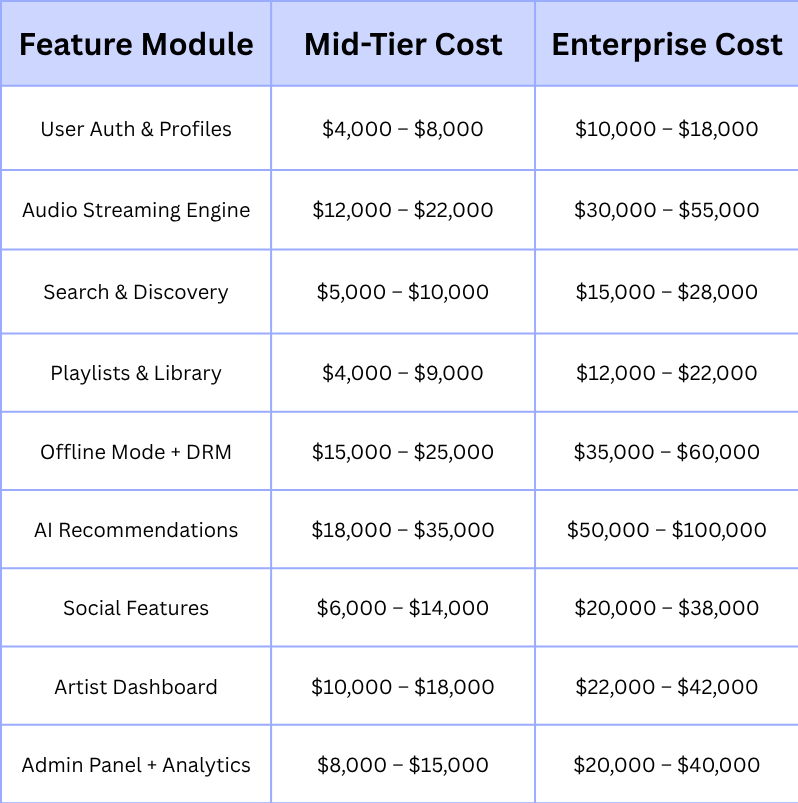
    Cost of Every Feature One by One

    Cost of Every Feature One by One

    How Many Types of Music Apps Can You Build?

    Not every music app is built the same way — and the type you build directly shapes your features, licensing needs, and development cost.

    On-Demand Streaming

    Users pick exactly what they want to play. This is the Spotify model. It requires the most robust licensing and the deepest music catalog. Cost range: $80,000 – $300,000+.

    Internet Radio / Algorithmically Curated

    Continuous streams based on genre, mood, or artist. Think Pandora. Less catalog complexity, but you lose user control. Cost range: $40,000 – $120,000.

    Cloud Music Locker

    Users upload their own music and stream it from the cloud. Fewer licensing headaches since users own the content. Cost range: $30,000 – $80,000.

    Social Music Platforms

    Community-driven apps where users share playlists, follow friends, and discover music through social connections. Cost range: $60,000 – $180,000.

    Hi-Fi / Audiophile Platforms

    Apps focused on lossless, high-resolution, or spatial audio. Premium positioning with a niche audience. Think Tidal HiFi. Cost range: $100,000 – $250,000.

    Podcast + Music Hybrid

    Combines streaming music with exclusive or licensed podcast content. Broader engagement but more content licensing complexity. Cost range: $120,000 – $350,000.

    What Decides the Cost of Building a Music App?

    Music Licensing

    Licensing is the cost most founders underestimate. You are not just paying for development, you are paying for the right to play music. Public performance rights, mechanical licenses, and sync licenses each apply to different use cases.

    In the US alone, you will likely negotiate with ASCAP, BMI, and SESAC for performance rights. Anticipate separate agreements or through sub-licensees for every country you grow into. Smaller platforms often start with aggregator services (like DistroKid or CD Baby) that offer pre-negotiated licensing deals, which reduces upfront cost but limits catalog depth.

    Budget roughly $5,000 – $50,000 for initial licensing setup, depending on your target market and catalog size.

    Audio Quality, Infrastructure & CDN Costs

    Audio quality is not just a listener feature — it is an infrastructure decision. Higher quality audio means larger files, more bandwidth, and higher CDN costs.

    CDN delivery typically costs $0.015 – $0.03 per GB of data transferred. If your platform serves 100 million song plays a month (with an average file size of 4MB per song), you are looking at $6,000 – $12,000 monthly just in CDN costs. Cloud infrastructure on AWS, Google Cloud, or Azure adds another $10,000 – $30,000 monthly for a mid-size platform.

    This is why understanding your expected listener volume matters before you sign infrastructure contracts.

    Platform Scope

    Every platform you add increases cost. An iOS-only MVP is the cheapest starting point. Adding Android adds roughly 30-40% more development cost if building natively. Adding web, CarPlay, Android Auto, or smart TV apps each bring their own requirements.

    Cross-platform frameworks like React Native or Flutter can reduce this cost significantly — often 25-35% cheaper than native development for dual-platform builds, but they come with trade-offs in performance for audio-heavy applications.

    AI & Personalization System Depth

    Basic recommendations (collaborative filtering based on listening history) are achievable at modest cost. Deep personalization — context-aware playlists that shift based on time, activity, location, and mood, requires a proper machine learning infrastructure: data pipelines, model training, real-time inference, and continuous retraining.

    A lightweight recommendation system adds $18,000 – $35,000 to development. A full AI personalization engine that rivals Spotify’s Discover Weekly can push $50,000 – $100,000 — but it pays back in retention and conversion from free to paid.

    How to Build a Music App on a Low Budget?

    Smart Development Choices

    • Start with an MVP. Validate your audience and core experience before building everything. A focused MVP lets you learn from real users before spending on advanced features.
    • Use cross-platform frameworks for the initial build. React Native or Flutter can serve both iOS and Android with one codebase — significantly cutting your first-year development spend.
    • Leverage existing audio APIs. Platforms like Spotify for Developers, Apple MusicKit, or third-party audio SDKs can accelerate certain features without building from scratch.
    • Prioritize backend scalability early. A well-designed backend from Day 1 is cheaper than rebuilding a fragile one after you hit scale problems.
    • Use cloud-native infrastructure. Pay-as-you-go cloud pricing means you only pay for what you actually use during early growth stages.

    Where to Cut Costs Safely

    • Reduce scope on social features in V1. Social tools are nice-to-have, not must-have, for early traction. Add them once core retention is solid.
    • Start with one region. Global licensing is expensive. Launching in one market first reduces legal complexity and lets you perfect the product.
    • Use open-source for back-end services where possible. PostgreSQL, Redis, and Elasticsearch power production-grade apps for free.
    • Hire a development partner in Eastern Europe or South/Southeast Asia. The quality gap versus North American teams has narrowed considerably, and the cost gap is still significant.

    What Affects the Final Price of Your Music App?

    The Biggest Cost Factors

    If you want to know where the money really goes, here are the factors that have the highest impact on your final budget:

    Feature Complexity

    Every advanced feature — offline mode, AI personalization, artist dashboards, multiplies development hours. Choose features based on what your target user actually needs, not what Spotify has.

    Platform Count

    Each additional platform (iOS, Android, web, CarPlay) adds real cost. Start narrow and expand.

    Team Location

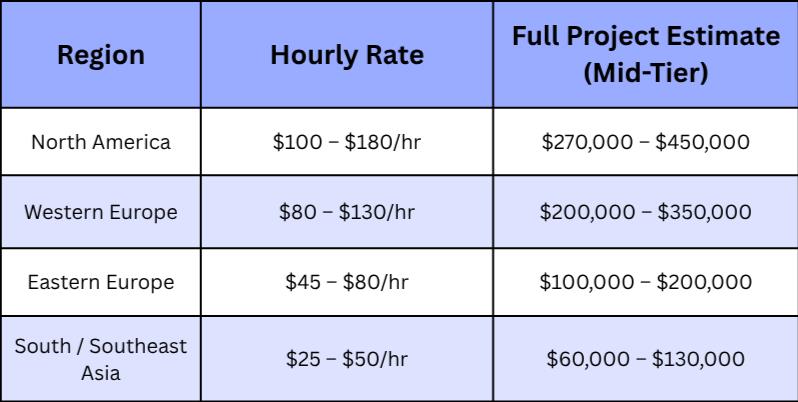
    A full build in North America can cost 2-3x the same build in Eastern Europe, and 4-5x the same build in South Asia. Quality vetting matters more than geography.

    Music Licensing

    Especially for on-demand streaming. This is a recurring cost, not a one-time expense.

    Infrastructure Scale

    Your CDN and cloud costs grow with your user base. Plan this before you launch, not after.

    Post-Launch Maintenance

    Budget 15-20% of your initial build cost annually for updates, security patches, and feature additions.

    What Hidden Costs Come With Building a Music App?

    Most cost guides stop at development. The real cost picture includes several factors that rarely make it into the first budget conversation.

    DRM Implementation

    Digital Rights Management is legally required for any platform offering downloadable or offline content. Implementing Apple FairPlay, Google Widevine, and Microsoft PlayReady across platforms adds significant development time and ongoing licensing fees.

    Content Moderation

    If your platform allows user-generated content (covers, remixes, podcast uploads), you need moderation tools — both automated and human-reviewed. This is both a cost and a legal necessity.

    GDPR and Privacy Compliance

    If you launch in Europe or handle EU users’ data, GDPR compliance requires specific data architecture, consent management, and audit capabilities. Expect $20,000 – $50,000 in additional development cost to do this properly.

    Royalty Tracking and Payments

    You are legally obligated to track every stream and pay the corresponding royalty to rights holders. Building a reliable royalty calculation and disbursement system is an engineering challenge most people do not see coming.

    App Store Fees

    Apple takes a 30% cut (15% for smaller developers) of subscription revenue from iOS users. Factor this into your pricing and revenue model.

    Customer Support Infrastructure

    Payment disputes, account issues, and licensing questions require a support system. Underinvesting here destroys user trust fast.

    Third-Party Integrations

    Payment gateways, analytics tools, social media APIs, and music licensing platforms all come with integration costs and recurring fees.

    Security Audits

    A platform handling payment data and personal user information needs periodic security auditing. Not optional. Not cheap.

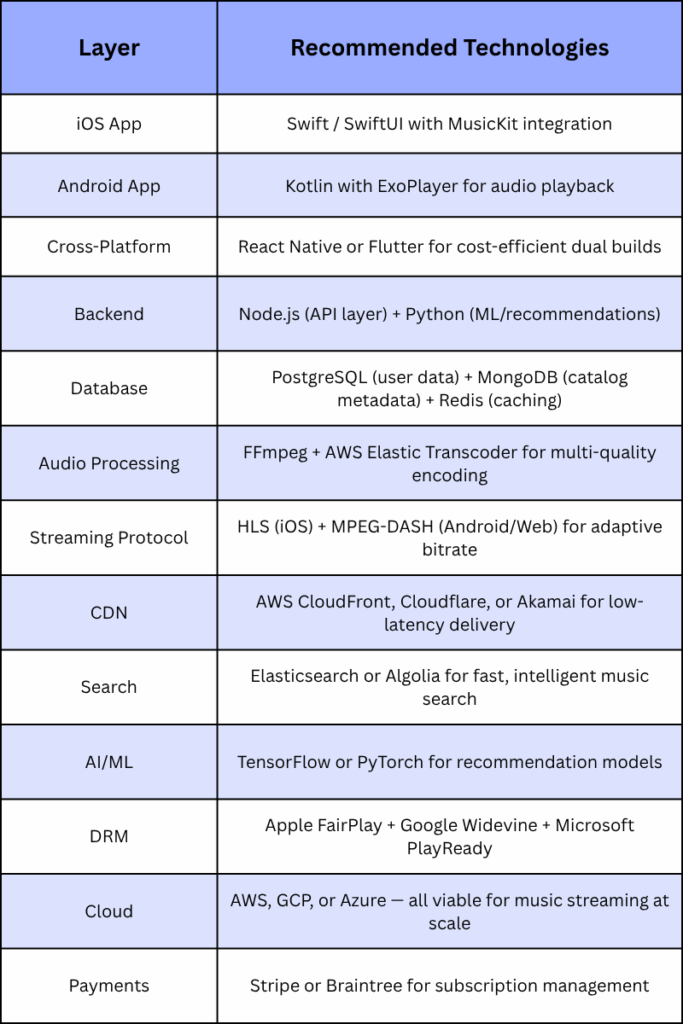
    Recommended Tech Stack for Your Music Streaming App in 2026

    Technology choices affect performance, scalability, and long-term maintenance cost. Here is what modern production-grade music streaming apps use:

    recommended tech stack  for your music app

    Steps to Build Your Music App From Start to Finish

    Here is a realistic phase-by-phase timeline for a mid-range music streaming app build:

    Phase 1 — Discovery & Planning (Weeks 1-3)

    Define your target audience, feature set, monetization strategy, and licensing approach. This phase determines every decision that follows. Cutting it short is the most expensive mistake you can make.

    Phase 2 — UI/UX Design (Weeks 4-7)

    Wireframes, user flows, visual design, and interactive prototypes. Good design reduces development rework and improves conversion from the first launch.

    Phase 3 — Core Development (Weeks 8-20)

    Backend architecture, audio streaming engine, user authentication, playlists, search, and admin panel. The longest and most costly stage is this one.

    Phase 4 — Advanced Features (Weeks 18-28)

    AI recommendations, offline mode, social features, DRM implementation, and payment integration. Runs parallel to late-stage core development.

    Phase 5: QA & Testing (Weeks 26–30)

    Security audits, cross-device compatibility checks, functional testing, and performance testing. Don’t miss this. Particularly vulnerable to platform-specific flaws are audio apps.

    Phase 6: Launch and After-Launch (Week 30+)

    App Store submission, setting up a CDN, setting up monitoring, and gathering comments within the first week. Aim for close post-launch assistance for at least three months.

    Total Timeline: 6-9 months for a mid-tier platform. 3-4 months for a focused MVP. 12+ months for enterprise-grade.

    Ways to Earn Money From Your Music Streaming App

    How you make money matters as much as how much it costs to build. Here are the revenue models that work in today’s streaming landscape:

    Freemium + Subscription

    Offer basic listening for free (with ads) and charge for premium features, offline mode, and higher audio quality, no ads. This is Spotify’s core model and remains the most effective for large-scale user acquisition.

    Subscription Only

    No free tier. Higher quality commitment but slower growth. Works for niche platforms where the audience is already primed to pay.

    Ad-Supported Free

    Monetize purely through audio and display advertising. Lower ARPU (average revenue per user) but strong for high-volume, emerging markets.

    Artist Partnerships & Promotion

    Charge artists or labels for promoted placement, playlist features, or early access to analytics. A meaningful secondary revenue stream for platforms with strong catalog relationships.

    Live Events & Ticketing

    Monetize live streaming sessions, exclusive performances, or fan meetups. Growing fast as artists look for direct-to-fan revenue channels.

    Merchandise & Fan Commerce

    Allow artists to sell merchandise through your platform. Takes a commission. Builds deeper artist-fan engagement.

    How Long Before You Get Your Money Back From Your App?

    Profitability in music streaming is not instant. It follows a predictable curve, and knowing the curve helps you plan your runway.

    In year one, most platforms are cash-negative. You are covering licensing, infrastructure, and team costs while building your user base. User acquisition cost is highest at launch, and conversion from free to paid is lowest when your product is newest.

    By year two, platforms with strong retention (daily active users above 40% of monthly actives) start seeing subscription revenue outpace operational costs at a meaningful scale. AI personalization plays a critical role here, users who receive accurate recommendations churn at a significantly lower rate.

    Break-even typically comes at 12-18 months for niche platforms with controlled licensing costs, and 24-36 months for broader on-demand platforms competing in major markets.

    The long-term math is strong. Subscription-based music platforms have high LTV (lifetime value) per user, low marginal cost per additional stream, and a flywheel effect where growing catalogs attract more artists who attract more listeners. Once that loop starts working, it returns compound.

    What Decides the Cost of Building an App Like Spotify?

    Planning

    Before a single line of code is written, your planning decisions lock in the majority of your cost. Scope creep — the slow addition of features beyond the original plan, is the leading cause of budget overruns in app development. A disciplined discovery phase with a clearly documented feature list and technical requirements is genuinely worth its cost.

    At Apptechies, we have seen firsthand how projects that invest properly in the discovery and planning phase finish closer to budget and on time. Those that skip it almost always end up rebuilding significant portions of the product.

    Finding the Mobile App Developers

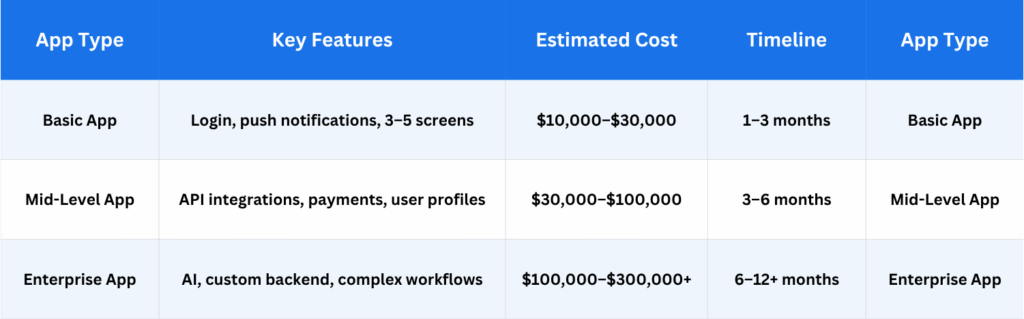
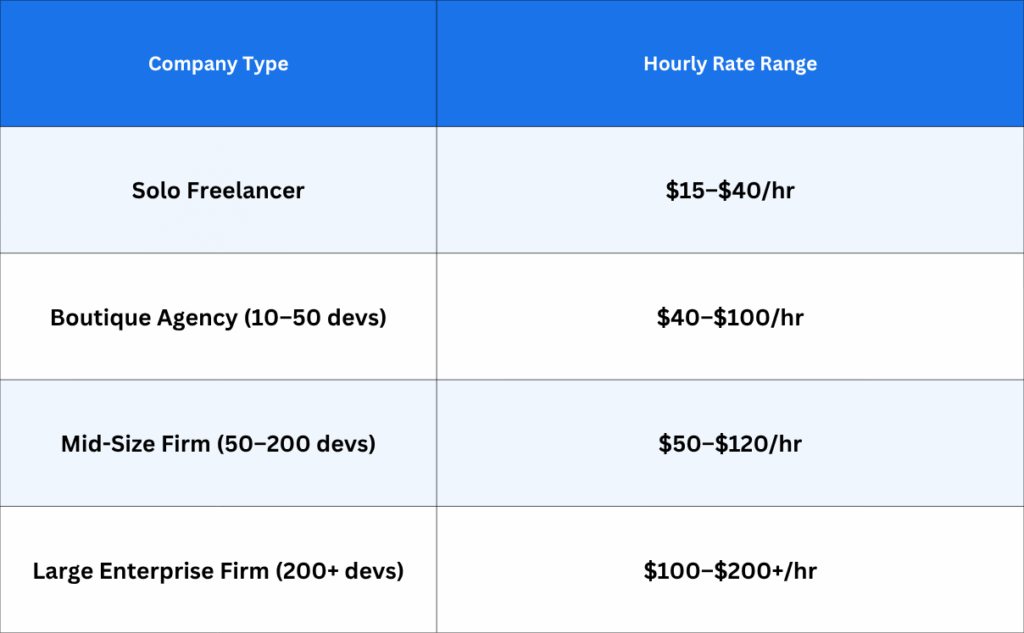
    Your team composition affects both cost and quality. Here is what typical hourly rates look like in 2026:

    Finding the Mobile App Developers

    The best approach is not always the cheapest team. Look for developers with proven audio streaming experience, a portfolio of similar projects, and a clear QA process.

    Designing the App Like Spotify

    UI/UX design for music apps is deceptively complex. The interface needs to work in the dark (night listening), during workouts (sweaty hands, glancing interactions), and while commuting (one thumb, divided attention). Spotify’s design language, dark backgrounds, high-contrast text, large tap targets, is not an aesthetic preference. It is a functional design built around real listening contexts.

    Design cost for a mid-tier music app typically runs $8,000 – $25,000. Enterprise-grade design with extensive user research, accessibility audits, and design system creation can reach $40,000 – $80,000.

    Deciding on a Platform

    iOS-first is common for apps targeting premium markets (US, UK, Australia) where iOS users have higher purchasing power and conversion rates. Android-first makes more sense for emerging markets with high smartphone adoption. Cross-platform from the start (using React Native or Flutter) suits startups looking to validate in both markets simultaneously with a controlled budget.

    For a music streaming app, native development still has performance advantages, especially around audio focus handling, background playback, and CarPlay/Android Auto integration. But cross-platform has caught up significantly and is a legitimate choice for most non-enterprise builds.

    Getting a License to Play the Music

    You cannot launch a public music streaming service without proper licensing. Here is a simplified roadmap:

    • Identify which license types you need: performance rights, mechanical rights, and synchronization rights (for video).
    • In the US, approach ASCAP, BMI, and SESAC for performance rights. Each represents a different catalog.
    • For mechanical rights, use the Harry Fox Agency or a licensing aggregator.
    • For international markets, engage with local PROs (Performing Rights Organizations) in each territory.
    • Consider licensing aggregator services (DistroKid for Developers, Musickit, etc.) for faster catalog access at lower upfront cost.
    • Budget for ongoing royalty reporting and payment infrastructure, this is legally required, not optional.

    Features You Need to Build in Your Music App

    Authentication

    Authentication in a music app goes beyond username and password. Users expect social sign-in (Google, Apple, Facebook), biometric login (Face ID, fingerprint), and seamless session persistence across devices. Security matters too, you are storing payment information and personal listening data.

    Build this with OAuth 2.0 and JWT tokens. Add multi-factor authentication for account security. Estimated cost: $4,000 – $12,000 depending on platform count and security requirements.

    Music Streaming

    The streaming engine is the heart of your application. It must handle real-time playback initiation (under 2 seconds from tap to first sound), adaptive bitrate switching based on connection quality, background playback when the phone is locked, and seamless transitions between tracks.

    HLS (HTTP Live Streaming) is the standard for iOS. MPEG-DASH handles Android and web. Both require pre-encoded audio in multiple quality levels (96kbps, 160kbps, 320kbps) stored on your CDN and served based on the listener’s bandwidth.

    This is the component where cheap shortcuts cost you users. Buffering, skipping, and audio quality drops are the top reasons users abandon music apps. Build this properly from Day 1. Estimated cost: $15,000 – $55,000.

    Search

    Search in a music app needs to be fast (under 300ms for results to appear), fuzzy (handling misspellings), and contextual (understanding that ‘weekend’ might mean The Weeknd). Autocomplete suggestions, recent search history, and trending searches all improve the experience.

    Elasticsearch or Algolia power most production-grade music search implementations. Estimated cost: $6,000 – $20,000.

    Playlists

    Playlists are the primary engagement mechanism in music streaming. Users who build playlists have dramatically higher retention rates. Your playlist feature needs to support creation, editing, collaborative playlists (multiple users adding tracks), sharing to social media, and smart suggestions for what to add next.

    On the backend, playlists are surprisingly complex, especially when handling large collaborative playlists with concurrent edits. Estimated cost: $5,000 – $18,000.

    Offline Mode

    Offline mode is the single highest-value premium feature in music streaming. Users who listen offline are far less likely to cancel their subscription — they depend on it. But implementing it properly requires DRM integration across all three major systems (FairPlay, Widevine, PlayReady), local storage management, license expiry handling, and sync logic when the user comes back online.

    Do not offer offline without DRM. It exposes you to significant legal liability. Estimated cost: $15,000 – $60,000 depending on platform scope.

    Conclusion

    Building a music streaming app like Spotify is one of the more ambitious and rewarding digital product investments you can make in 2026. The market is large and still growing. The technology is mature enough to build competitive features at reasonable cost. And the audience, both listeners and independent artists — is actively looking for alternatives to the platforms that currently dominate.

    The cost to develop a music streaming app ranges from $30,000 for a tightly scoped MVP to $300,000+ for a full-featured competitive platform. But the number that matters most is not the build cost — it is the combination of licensing strategy, infrastructure investment, and user experience quality that determines whether your platform survives its first year.

    Start focused. Build core streaming and personalization well. Learn from real listeners. Then expand.

    At Apptechies, we work with founders and businesses to plan, design, and build streaming platforms that are engineered for the real world, not just the pitch deck. Whether you are starting from scratch or scaling an existing product, the right strategy from the beginning makes every dollar count.

    Frequently Asked Questions

    Q: How much does it cost to build a music streaming app in 2026?

    Ans: The cost ranges from $30,000 – $60,000 for a basic MVP, $80,000 – $150,000 for a mid-tier competitive app, and $300,000+ for an enterprise-grade platform. Music licensing, CDN infrastructure, and ongoing maintenance costs are additional.

    Q: How long does it take to develop a music streaming app?

    Ans: A focused MVP takes 3-4 months. A full-featured mid-tier app takes 6-9 months. Enterprise-grade platforms typically take 12+ months, with ongoing development after launch.

    Q: Do I need music licensing before I launch?

    Ans: Yes. You cannot legally stream copyrighted music to users without proper licensing agreements. Secure performance rights and mechanical licenses before your public launch.

    Q: Can I build a music streaming app cheaper using cross-platform frameworks?

    Ans: Yes. React Native or Flutter can reduce development cost by 25-35% compared to native builds for iOS and Android separately. There are performance trade-offs, but for most non-enterprise builds, cross-platform is a legitimate and cost-effective choice.

    Q: What is the most important feature to get right first?

    Ans: The audio streaming engine. Buffering, lag, and quality drops are the primary reasons users abandon music apps. No amount of great design compensates for unreliable playback.

    Q: When does a music streaming app start making money?

    Ans: Most platforms break even between 12-36 months depending on licensing costs, market focus, and conversion from free to paid. Niche platforms with controlled licensing costs tend to reach profitability faster.

    Q: Is AI personalization worth the investment?

    Ans: Yes, especially for retention. Research shows strong personalization can boost market share by nearly 23%. Users who receive relevant recommendations listen longer and churn at significantly lower rates.

    Q: What hidden costs should I plan for?

    Ans: DRM implementation, royalty tracking systems, GDPR/privacy compliance, app store fees (Apple takes up to 30% of subscription revenue), content moderation, and ongoing security audits are the most commonly missed budget items.

    Author Name: Ajay Chaudhary

    Author Bio: AJ Chaudhary, CEO of Apptechies. He is a full-stack & AI Mobile app developer with 10+ years of experience developing web & mobile applications. He has successfully delivered projects for different industries and helped companies turn concepts into scalable solutions. Passionate about technology, he simplifies complicated tech topics for entrepreneurs and startups by sharing insights.

  • How to Start a Taxi Business in Dubai? Complete UAE Guide for 2026

    How to Start a Taxi Business in Dubai? Complete UAE Guide for 2026

    Dubai is one of the most vibrant and dynamic cities in the world. Millions of tourists visit every year. Thousands of businesses launch here. And transportation remains one of the most in-demand services across the emirate.

    If you wish to start a cab business in Dubai, you’ll be entering a growing market.  Airports are too busy throughout the year in Dubai. Hotels are packed. Corporate professionals need reliable rides. And residents depend on taxis and ride-hailing services constantly.

    This guide covers everything you need to know, from the legal structure and licensing steps to real cost figures, revenue potential, and technology requirements. Whether you are a UAE local, an investor, or an entrepreneur exploring options. Here, we’ll provide a detailed picture of what it takes to start and run a taxi business in Dubai by 2026.

    Is It Worth Starting a Taxi Business in Dubai?

    The short answer is yes — but only if you go in with the right plan.

    Dubai’s transportation sector is growing steadily. The UAE taxi and limousine market was valued at over AED 2.5 billion and continues to expand. With more than 17 million tourists visiting annually and a resident population of over 3.6 million, the demand for reliable transport is consistent and high.

    What makes Dubai particularly attractive for a taxi business is that it is not seasonal. Unlike many markets, demand stays strong all year. Formula 1, Expo events, major conferences, holiday travel, and daily corporate commuting all keep the market active.

    taxi Booking App Development Companies in Dubai in 2026

    That said, this is not a low-effort business. The setup costs are real. The competition includes major players like DTC (Dubai Taxi Corporation), Careem, and Uber. You need to be properly licensed and compliant with RTA regulations. But for entrepreneurs who are serious, structured, and ready to invest, the returns can be very rewarding.

    Why Entrepreneurs Choose Dubai for Taxi Businesses

    There are strong reasons why business owners — both local and international — choose Dubai when starting a transportation company. Here are the key ones:

    High Demand

    Dubai never truly sleeps. Airports, malls, hotels, business districts, and entertainment venues create consistent demand for taxi services across all hours of the day and night.

    Government Support

    The UAE government actively supports business growth through streamlined licensing, dedicated authorities like the RTA, and a regulatory framework that protects both operators and passengers.

    Diverse Customer Base

    Dubai serves tourists from over 180 countries, a massive expat community, and UAE nationals — all with different transportation needs. This diversity keeps demand wide and stable.

    Advanced Technology

    Dubai has one of the most advanced transport technology ecosystems in the region. From smart dispatch systems to app-based bookings, the infrastructure is already in place for modern taxi operations.

    Regulated Environment

    The RTA creates a structured and fair marketplace. While compliance is required, the regulations also protect your business from unregulated competition and set clear quality standards that build customer trust.

    Flexible Operation

    You can operate a single taxi, a small fleet, or a large franchise. You can focus on standard metered rides, luxury transfers, or app-based services. The business model is flexible enough to match your budget and goals.

    Profitability Potential

    A well-managed taxi in Dubai can generate AED 1,500 to AED 3,000+ in monthly net profit per vehicle. With a fleet of 10 or more vehicles, the business becomes significantly more profitable.

    Networking Opportunities

    Dubai’s business community is highly connected. Hotel partnerships, corporate accounts, and event-based contracts can give your taxi business a reliable source of steady revenue beyond individual street hails.

    Cultural Appeal

    Dubai values quality service, punctuality, and professionalism. Taxi businesses that deliver consistently high standards build strong reputations quickly in this market.

    Scalability

    Once your first fleet is operational and profitable, scaling is straightforward. You can add more vehicles, expand into new service categories like luxury or women-only taxis, or apply for a larger RTA franchise.

    Dubai Taxi Market Explained in Simple Terms

    Market Performance and Demand Drivers

    The Dubai taxi market operates under a clear structure. The Roads and Transport Authority (RTA) oversees all licensed taxi and transport operations. The market includes RTA-affiliated franchise operators, independent licensed operators, and app-based platforms like Careem and Uber — all working within RTA-approved frameworks.

    Key demand drivers include:

    • Tourism — Dubai welcomes over 17 million visitors annually, all needing ground transport
    • Corporate Travel — thousands of businesses and free zones generate daily employee transport needs
    • Residential Demand — Dubai’s 3.6 million residents use taxis regularly for daily commuting
    • Airport Traffic — Dubai International Airport (DXB) is one of the busiest in the world, generating massive taxi demand daily
    • Events and Entertainment — global conferences, sports events, and exhibitions create seasonal spikes in demand

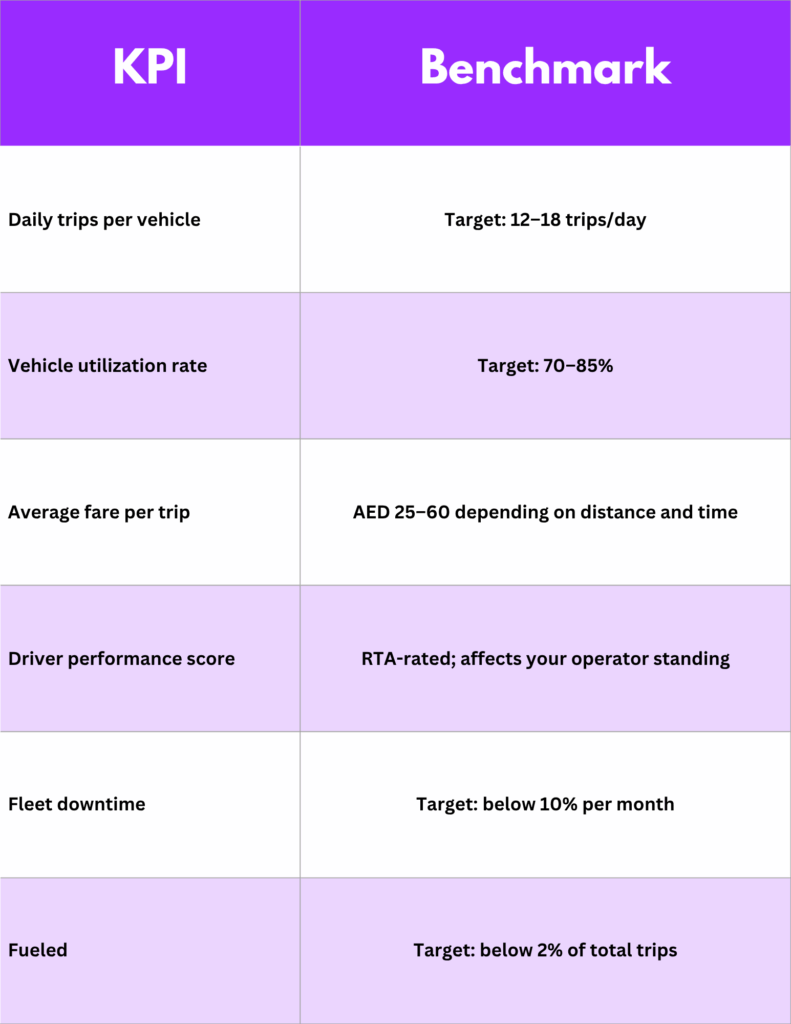
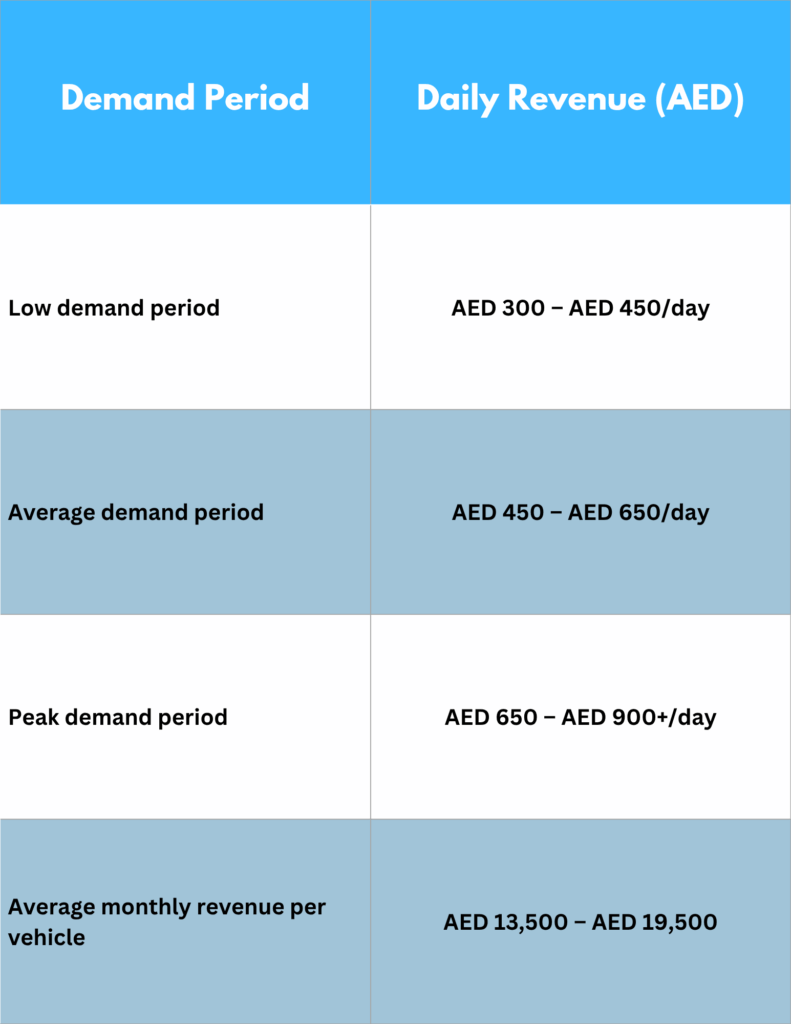
    The average daily trips per licensed taxi in Dubai range between 12 and 18 trips during peak periods. With the right location strategy and dispatch technology, operators can consistently hit the higher end of this range.

    Understanding the Taxi Operating Model in Dubai

    Core Functions and Processes

    Running a taxi business in Dubai involves several interconnected functions. Understanding these from day one helps you plan better and avoid costly operational mistakes.

    • Fleet Management — maintaining, scheduling, and tracking all vehicles
    • Driver Management — hiring, training, scheduling, and performance monitoring
    • Dispatch Operations — managing ride requests through apps, call centers, or both
    • Compliance Management — ensuring all vehicles, drivers, and operations meet RTA standards
    • Revenue Collection — processing metered fares, app payments, and corporate billing
    • Customer Service — handling complaints, feedback, and service quality control

    Operating KPIs to Track

    Operating KPIs to Track

    Requirements to Start a Taxi Business in Dubai

    There are two main regulatory bodies you need to work with when setting up a taxi business in Dubai.

    Roads and Transport Authority (RTA)

    The RTA is the government body that regulates all transport operations in Dubai. For taxi businesses, the RTA issues the taxi permit that allows you to legally operate passenger transport services. Without an RTA permit, you cannot legally run a taxi business, regardless of your trade license.

    Key RTA requirements include:

    • Minimum fleet of 30 vehicles to qualify for a franchise taxi permit
    • Vehicles must meet RTA specifications, age, condition, and equipment
    • Operators must provide a dedicated shelter and parking facility in Dubai
    • All drivers must complete RTA-approved training and hold valid UAE licenses
    • Technology systems, including GPS tracking and approved taximeters, must be installed

    Dubai Department of Economic Development (DED)

    The DED issues your trade license, which is the legal foundation for your business. Before the RTA processes your taxi permit, you need to have your DED trade license in place. The DED registers your business, assigns your activities (passenger transport), and ensures you are operating as a legitimate commercial entity.

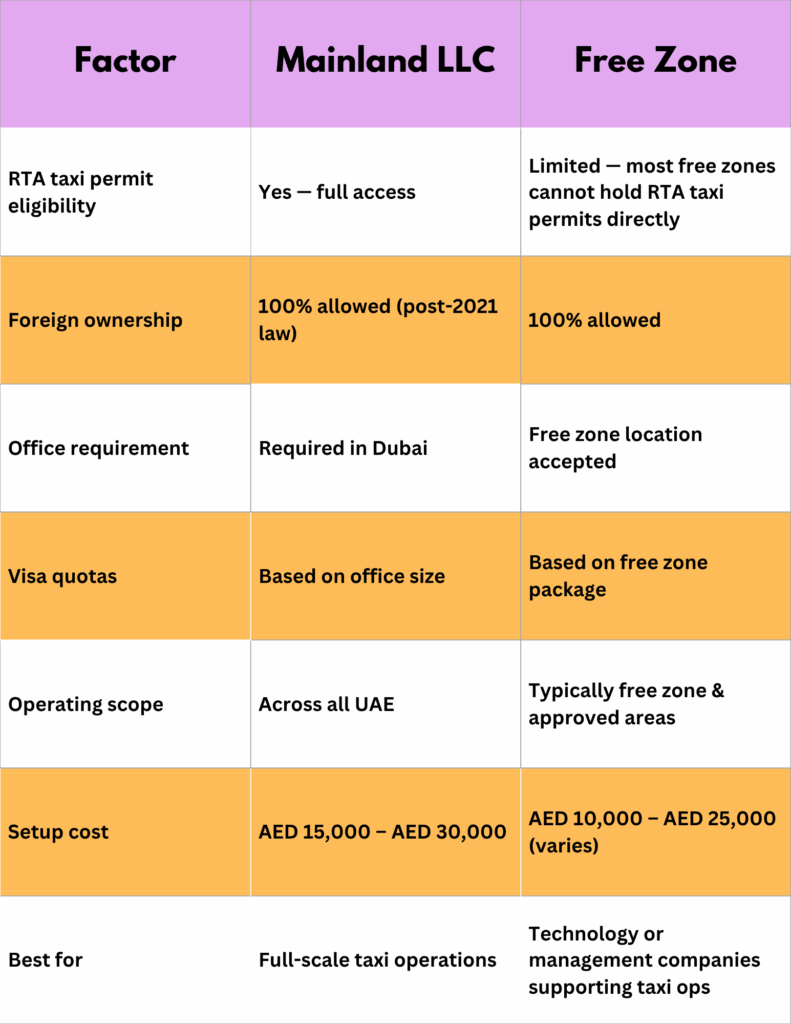
    Business Structure Options

    Limited Liability Company (LLC)

    An LLC is the most popular structure for taxi businesses in Dubai. It allows up to 50 shareholders, provides personal liability protection, and is fully recognized by both the DED and RTA. As of 2021, UAE law allows 100% foreign ownership in many business categories, including transport services, meaning you no longer need a local sponsor in most cases.

    Sole Proprietorship

    A sole proprietorship is simpler to set up, but it limits your business to a single owner. It works well for small operators with one or two vehicles, but it carries personal liability risk and may face limitations when applying for larger RTA permits.

    Partnership

    A partnership allows two or more individuals to co-own the business. This is useful when you want to pool capital to meet the RTA’s minimum fleet requirement. Each partner’s share and responsibilities should be clearly documented in the Memorandum of Association (MOA).

    Easy Steps to Start a Taxi Business in Dubai

    Here is a clear, step-by-step breakdown of how to launch your taxi business the right way in Dubai.

    Step 1: Build Your Business Plan and Strategy

    Before applying for any license, you need a clear business plan. This helps you choose the right structure, calculate costs accurately, and present a serious application to both the DED and RTA.

    Choose your taxi service type:

    Traditional Taxi Services

    Standard metered taxis are operating across Dubai under RTA fare structures. This is the most common model and the one most customers recognize.

    App-Based Ride-Hailing

    Partnering with platforms like Careem or Uber, or building your own ride-hailing application. This model offers flexible booking and a wider customer reach.

    Luxury Limousine Services

    Premium vehicles catering to corporate clients, tourists, and high-end events. Higher fares and better margins, but require premium fleet investment.

    Specialized Services

    Ladies-only taxis, airport transfer services, school transport, or medical transport. These niche models often face less direct competition and can build loyal client bases.

    Step 2: Obtain Trade License from DED

    Required Documentation

    • Passport copies of all shareholders
    • Emirates ID (for UAE residents)
    • Proposed company name (must comply with DED naming rules)
    • Business activity description
    • Memorandum of Association (MOA)
    • Tenancy contract for office space (Ejari registered)
    • Initial approval certificate from DED

    License Categories

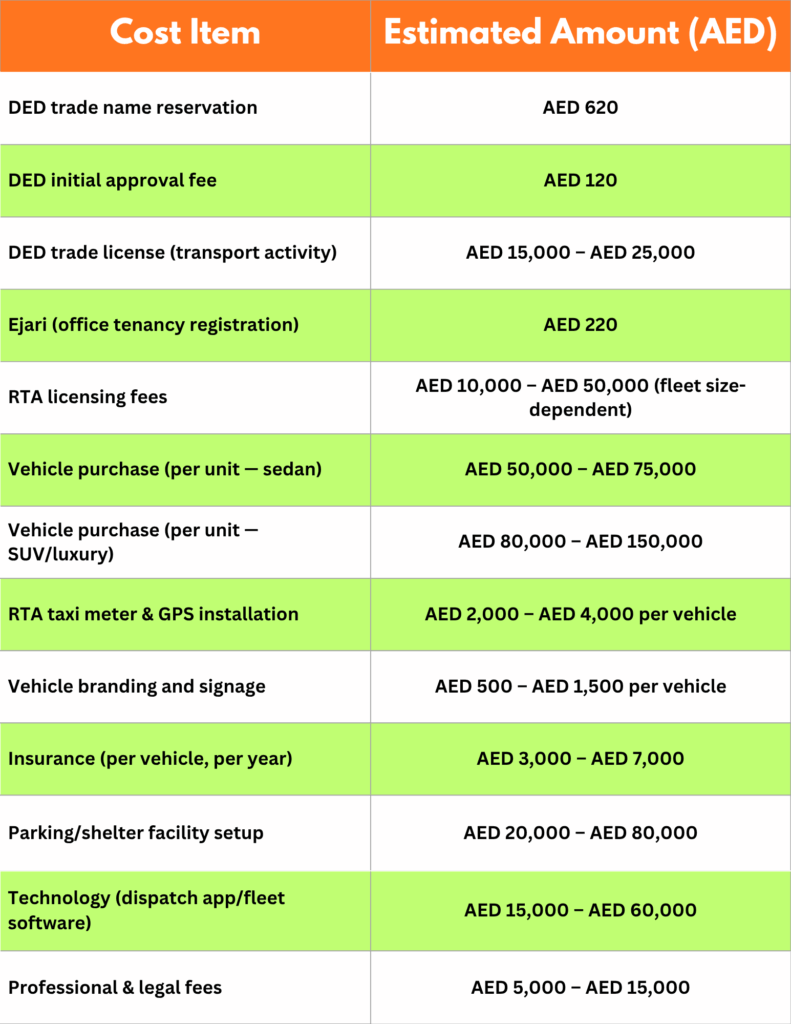
    For a taxi business, your DED license will fall under the commercial category with transport as your registered business activity. The process starts with trade name reservation (AED 620), followed by initial approval (AED 120), and then the full license issuance.

    Step 3: Secure RTA Taxi Permit

    Eligibility Requirements

    • Valid DED trade license for transport activities
    • Minimum 30 vehicles ready for inspection (for franchise permit)
    • Dedicated parking facility and shelter within Dubai
    • Fleet meets all RTA vehicle specifications
    • Business owner or director has a clean legal and financial record

    Application Process

    Submit your application to the RTA’s Passenger Transport Licensing section. You can contact the RTA directly at [email protected] for guidance. The RTA will review your application, conduct fleet inspections, and issue your permit upon successful compliance.

    Step 4: Vehicle Fleet Acquisition and Registration

    RTA-Approved Vehicle Models

    The RTA maintains an approved list of vehicles eligible for taxi operations in Dubai. These are typically mid-size to full-size sedans and SUVs from manufacturers including Toyota, Hyundai, and Nissan. Electric and hybrid vehicles are increasingly preferred and receive extended operational life under RTA rules.

    Vehicle Requirements

    • Maximum 3 years old at time of registration (for petrol/diesel vehicles)
    • Operational validity of 5 years (Category 1 & 3) or 7 years for EVs and hybrids
    • Must be equipped with RTA-calibrated taximeter
    • GPS tracking system (RTA-approved) must be installed
    • Approved branding, fare display, and roof sign required
    • Air conditioning, adequate passenger space, and safety features are mandatory

    Fleet Size Considerations

    If you are applying for a full RTA franchise permit, the minimum fleet is 30 vehicles. If you plan to start as an individual operator or under an alternative RTA program, smaller fleets may be permitted. It is worth confirming current requirements directly with the RTA, as programs and thresholds do change.

    Step 5: Driver Recruitment and Training

    RTA Driver Requirements

    •       Minimum age: 21 years

    •       Valid UAE driving license with at least 2 years of experience

    •       Clean criminal record

    •       Medical fitness certificate

    •       Good knowledge of Dubai roads and geography

    •       Basic English communication skills

    •       Completion of RTA-approved driver training program

    Training Programs

    The RTA operates certified training programs that cover defensive driving, customer service standards, knowledge of Dubai routes, and emergency procedures. All drivers must complete this training before they are permitted to operate a licensed taxi. As an operator, it is your responsibility to ensure every driver in your fleet is RTA-certified.

    Step 6: Insurance and Safety Compliance

    Mandatory Insurance Coverage

    • Third-party liability insurance — required by law for all vehicles
    • Comprehensive vehicle insurance — covers damage to your fleet
    • Driver’s personal accident insurance — protects your drivers
    • Passenger liability insurance — covers passengers in case of accidents

    Safety Requirements

    All vehicles must pass RTA annual safety inspections. Your business must maintain an accident log, an incident reporting system, and emergency contact protocols. Failure to maintain safety compliance can result in permit suspension or cancellation.

    No Jargon, No Fluff — Just the Real Cost Breakdown

    One of the most common questions from anyone starting a taxi business in Dubai is: how much does it actually cost? Here is a clear breakdown.

    Initial Setup Costs

    Initial Setup Costs of taxi business in Dubai
    Minimum estimated investment for a single-vehicle operation

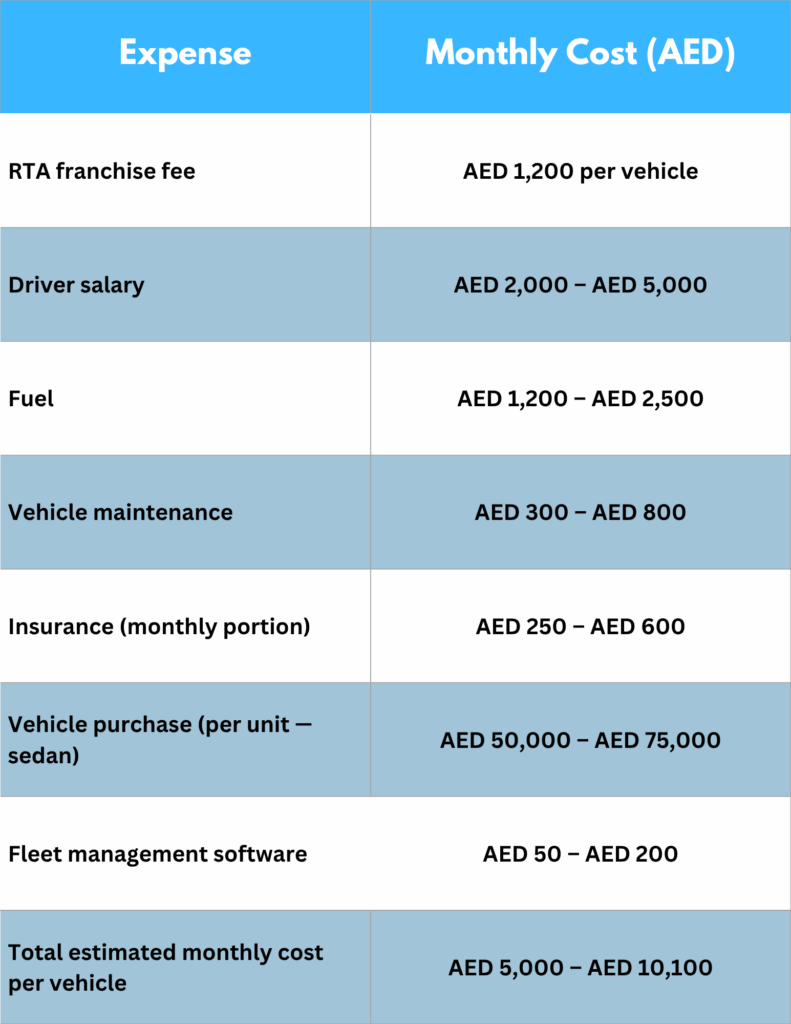
    Ongoing Operational Costs

    Monthly Expenses (per vehicle)

    Monthly Expenses (per vehicle)

    A Clear Look at Revenue and Profit Potential

    Revenue Streams

    Primary Revenue Sources

    • Metered taxi fares — standard trips billed by distance and time
    • Airport transfers — fixed-rate or metered premium fares
    • Corporate accounts — monthly billing agreements with companies
    • Hotel partnerships — exclusive or preferred supplier contracts
    • App-based bookings — commissions from platform integrations
    • Special events — premium pricing during major Dubai events

    Average Daily Revenue (per vehicle)

    Profit Margin Analysis

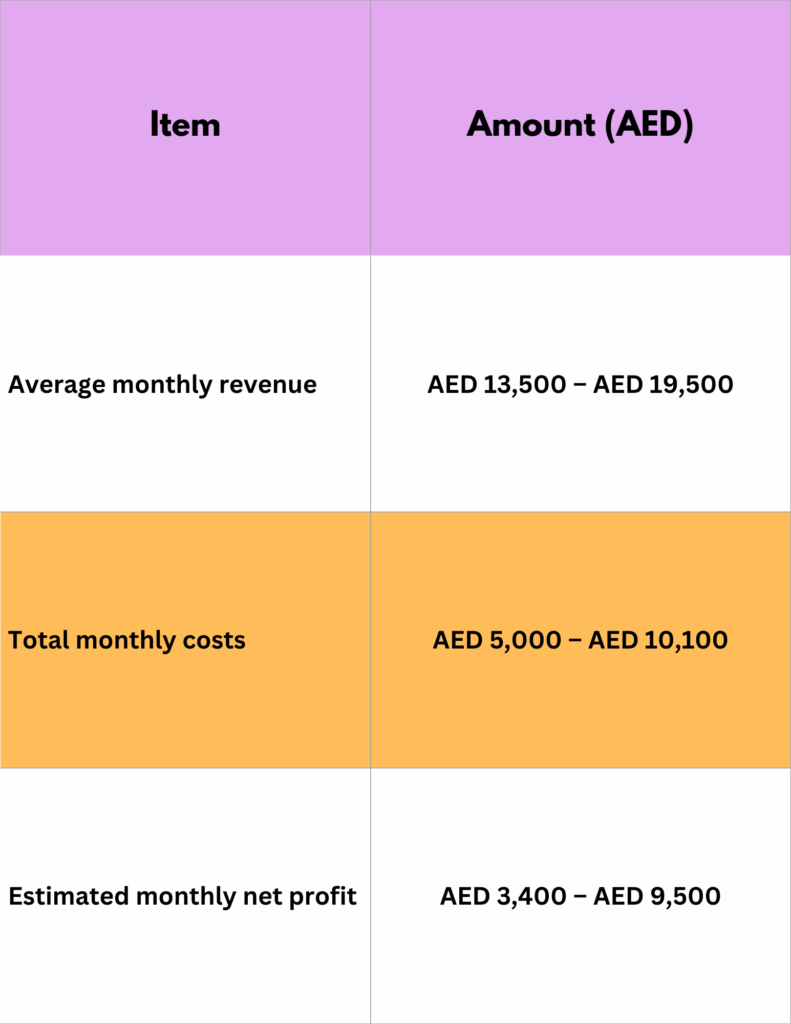
    Monthly Profit Calculation (per vehicle)

    Monthly Profit Calculation (per vehicle)

    Annual ROI Expectations

    For a single vehicle, you can expect to recoup your initial investment within 18 to 36 months, depending on demand, operating costs, and how efficiently the vehicle is managed. For a fleet of 10 to 30 vehicles, the business becomes substantially more profitable due to economies of scale — shared management costs, better insurance rates, and stronger bargaining power with corporate clients.

    How is Technology Driving Digital Transformation in the Taxi Industry?

    Technology is no longer optional for taxi businesses in Dubai. The RTA mandates certain technology systems, and customers expect digital convenience. The right technology stack can also significantly improve your fleet efficiency and revenue per vehicle.

    Essential Technology Systems

    Fleet Management Software

    Fleet management platforms allow you to track every vehicle in real time, monitor driver performance, manage maintenance schedules, and generate operational reports. Key features to look for include GPS tracking integration, trip history logging, fuel consumption monitoring, and driver behavior analytics. Popular platforms used in Dubai include Samsara, Verizon Connect, and regional solutions built specifically for UAE operators.

    Mobile Applications

    A dedicated mobile application for passenger bookings gives your business a professional edge and reduces reliance on street hails. Your app should support:

    • Real-time GPS tracking for passengers
    • Cashless payment — Nol card, credit/debit cards, Apple Pay
    • Ride scheduling and booking confirmation
    • Driver rating and feedback system
    • Corporate booking portal for business accounts

    Partnership Opportunities

    Rather than building your own app from scratch, many taxi operators in Dubai integrate with existing platforms:

    •   Careem Partner Program — list your fleet within the Careem ecosystem
    • Uber Fleet Integration — operate your vehicles within the Uber network
    • RTA eCab App — an official RTA platform for licensed taxis

    Partnering with these platforms gives you immediate market access and reduces your technology investment significantly, especially in the early stages of your business.

    Mainland vs. Free Zone Setup Options

    A question many entrepreneurs ask is whether to set up their taxi business on the mainland or in a free zone. Here is a the clear comparison to help you decide the better:

    Mainland vs. Free Zone Setup Options
    Recommendation for taxi business in dubai

    How Can You Avoid Costly Mistakes with Compliance and Penalties?

    Non-compliance with RTA and DED requirements can lead to serious consequences — fines, fleet suspension, or license cancellation. 

    Common Pitfalls (and Fixes)

    Common Pitfalls (and Fixes)

    Can You Use Your Car as a Taxi in Dubai? What’s Allowed?

    This is one of the most searched questions on this topic, and the answer is: it depends on how you want to operate.

    Using your personal car as a licensed metered taxi without going through the proper RTA licensing process is not permitted in Dubai. The RTA requires all taxis to be registered, inspected, and branded under an approved operator license.

    However, there are two situations where your vehicle can enter the transport business:

    • If you register your vehicle under an RTA-approved taxi company or franchise operator, your car can be used as a fleet vehicle, provided it meets all RTA vehicle specifications
    • If you partner with Careem or Uber as a driver-partner, you can use your personal vehicle for ride-hailing, subject to those platforms’ own vehicle approval processes and RTA ride-hailing regulations

    Simply driving passengers in your own car without any RTA registration or platform affiliation is illegal and can result in significant fines. Always operate within the proper legal framework.

    What are the Challenges and Risk Management?

    No business is without challenges. A taxi operation in Dubai comes with specific risks that you need to plan for. Let’s take an honest look at each one

    Market Competition

    Challenge: Dubai’s transport market includes DTC (Dubai Taxi Corporation), Careem, Uber, and several other licensed operators. Competition is real and ongoing.

    Solution: Differentiate through service quality, reliability, and niche targeting. Corporate accounts, airport specialization, and luxury services are areas where independent operators can compete effectively against large players.

    Regulatory Compliance

    Challenge: Keeping up with RTA rule changes, annual renewals, vehicle inspections, and driver certification requirements takes time and attention.

    Solution: Assign a dedicated compliance manager or use a PRO (Public Relations Officer) service to handle all government-related paperwork. Use digital compliance calendars to track all deadlines across your fleet.

    Driver Retention

    Challenge: Dubai’s labor market is competitive. Drivers often switch employers for slightly better pay or conditions. High driver turnover increases training costs and disrupts operations.

    Solution: Offer competitive salaries, performance bonuses, flexible shift options, and clear career progression. Drivers who feel valued and well-treated stay longer. A stable, experienced driver workforce directly improves customer satisfaction and revenue.

    Operational Efficiency

    Challenge: Idle vehicles, poor route planning, and maintenance delays all eat into profitability.

    Solution: Invest in fleet management software from day one. Real-time tracking, smart dispatch, and predictive maintenance alerts can significantly reduce idle time and keep your fleet operating at optimal efficiency.

    Taxi Partnership and Franchise Options in Dubai

    RTA Partnership Programs

    The RTA offers structured franchise programs for large-scale operators. These programs give you access to the official RTA taxi dispatch network, RTA-branded vehicles, and a defined service area. In return, you operate under RTA quality standards and pay franchise fees per vehicle per month.

    Franchise operators benefit from RTA’s marketing and passenger trust. Passengers see an RTA-branded vehicle and immediately trust the service, which can be harder to build with a new independent brand.

    Ride-Hailing Platform Integration

    Both Careem and Uber have established programs for fleet operators in Dubai. Rather than individual drivers, these programs allow companies to register multiple vehicles and drivers under a single business account. This gives you the technology platform, booking infrastructure, and brand reach of a major platform — without building it yourself.

    For new operators with a small fleet, this is often the fastest route to generating revenue while you build your own brand and customer base.

    Future Trends and Market Evolution

    Sustainability Initiatives

    The Dubai government has committed to significantly increasing the share of electric and hybrid vehicles in the city’s taxi fleet by 2030. As an operator, planning your fleet acquisition with EVs and hybrids in mind will future-proof your business, reduce fuel costs, and align with RTA incentives for green operators.

    Technology Advancement

    Artificial intelligence in dispatch optimization, predictive maintenance systems, and advanced passenger analytics are already entering the Dubai transport market. Operators who adopt these tools early will have a meaningful efficiency advantage over those who resist the shift.

    Market Expansion

    Dubai continues to grow. New residential communities, expanded airport terminals, and mega-events through 2030 and beyond will continue to increase transport demand. Operators who build strong foundations now will be well-positioned to expand their fleets and service areas as the market grows.

    Licensing Renewal and Compliance

    Annual Renewal Requirements

    • DED trade license renewal — must be completed before the expiry date (typically annual)
    • RTA taxi permit renewal — annual, with updated fleet inspection
    • Vehicle registration renewal — per vehicle, annual
    • Driver’s license and certification renewal — per driver, as per the RTA schedule
    • Insurance renewal — per vehicle, coordinate with renewal dates
    • Ejari renewal — if the office tenancy contract changes

    Compliance Monitoring

    The RTA conducts regular inspections — both scheduled and random — of taxi fleets in Dubai. These cover vehicle condition, driver certification status, taximeter accuracy, and GPS system functionality. Maintaining a clean compliance record protects your permit and your reputation.

    Best Taxi Business ideas

    Business Setup Support and Professional Services

    Setting up a taxi business in Dubai involves multiple government interactions, documentation processes, and regulatory steps. For first-time operators, working with a professional business setup service can save significant time and reduce the risk of application errors.

    Professional setup consultants in Dubai can assist with:

    • DED trade license application and processing
    • RTA permit application and fleet registration
    • Company formation and Memorandum of Association drafting
    • Ejari and office tenancy registration
    • Visa processing for investors and employees
    • Insurance coordination and compliance documentation

    Typical fees for a full-service setup consultant in Dubai range from AED 5,000 to AED 20,000 depending on the scope of services and the complexity of your business structure.

    Why Choose Apptechies as Your Taxi App Development Partner in Dubai?

    Building the right technology for your taxi business is just as important as getting your licenses in order. Apptechies is a Dubai-based technology company with deep expertise in developing taxi and ride-hailing applications for the UAE market.

    Here is why taxi business owners in Dubai choose Apptechies:

    • UAE Market Expertise — deep understanding of RTA technical requirements, Nol payment integration, and Dubai-specific user behaviour
    • Full-Stack Taxi App Development — passenger app, driver app, and operator admin dashboard built as a complete, integrated system
    • Rta-compliant Technology — GPS integration, taximeter connectivity, and digital fare display built to meet RTA standards
    • Careem and Uber API integration — connect your fleet to major platforms without building from scratch
    • Scalable Architecture — your app grows with your fleet, from 5 vehicles to 500, without a complete rebuild
    • Arabic and English Language Support — essential for serving Dubai’s diverse customer base
    • Post-launch Support & Maintenance — ongoing technical support to keep your platform running smoothly
    • Affordable, Transparent Pricing — clear project quotes with no hidden costs

    Whether you are launching a new taxi brand in Dubai or looking to upgrade the technology behind an existing fleet, Apptechies delivers solutions that are built for the realities of the UAE transport market.

    Conclusion

    Starting a taxi business in Dubai in 2026 is a serious opportunity for the right entrepreneur. The market is large, the demand is consistent, and the regulatory framework — while strict — provides a structured environment where quality operators can thrive.

    The key decisions come down to three things: choosing the right legal structure, meeting RTA’s licensing and fleet requirements, and investing in the right technology from day one.

    Costs are real and need to be planned for carefully. But so is the revenue potential. A well-run fleet of even five to ten vehicles can generate meaningful and growing monthly returns.

    If you are serious about entering Dubai’s taxi market, use this guide as your starting point. Work with experienced professionals for your setup, stay compliant with RTA from day one, and invest in technology that helps your fleet run efficiently.

    2026 Verdict

    Frequently Asked Questions

    Q. What Is The Minimum Investment Required To Start A Taxi Business In Dubai?

    Ans: The minimum investment for a single-vehicle taxi operation in Dubai starts at approximately AED 126,000 to AED 265,000. This covers your DED trade license, RTA permit fees, vehicle purchase, taximeter and GPS installation, insurance, and basic setup costs. For a full 30-vehicle RTA franchise fleet, the investment ranges from AED 2.5 million to AED 4 million or more.

    Q. How Many Taxi Companies Are In Dubai?

    Ans: Dubai has several RTA-licensed taxi franchise operators operating alongside the government-affiliated Dubai Taxi Corporation (DTC). These include major operators such as Cars Taxi, National Taxi, Metro Taxi, Arabia Taxi, and City Taxi. In addition, Careem and Uber operate ride-hailing services under separate RTA approvals. The exact number of licensed operators changes as new permits are issued, so checking with the RTA for the most current list is advisable.

    Q. Can Foreigners Start A Taxi Business In Dubai?

    Ans: Yes. Following the 2021 amendments to UAE’s Commercial Companies Law, foreign nationals can own 100% of a mainland LLC in most business categories, including transport services. This means you do not need a UAE national partner or local sponsor to start a taxi business in Dubai as a foreigner. However, you must still meet all DED and RTA requirements just as a UAE national would.

    Q. Can I Use My Car As A Taxi?

    Ans: Not without proper registration. Using a personal vehicle as a taxi without RTA approval is illegal in Dubai. Your vehicle must be registered under an RTA-approved operator license or through a ride-hailing platform like Careem or Uber. Both platforms have their own vehicle approval processes and require your vehicle to meet specific standards before it can carry passengers for hire.

    Q. Do I Need Taxi Solicitors Or Legal Advisors?

    Ans: You are not legally required to hire a lawyer to set up a taxi business in Dubai. However, working with a legal advisor or a professional business setup consultant is strongly recommended, especially for first-time operators. They help you avoid documentation errors, choose the right business structure, and navigate the DED and RTA application processes more efficiently.

    Q. Is It Profitable To Start With One Taxi?

    Ans: Yes, a single taxi can be profitable in Dubai if managed well. A single vehicle can generate AED 13,500 to AED 19,500 per month in revenue and AED 3,400 to AED 9,500 per month in net profit after costs. The initial investment for a single vehicle can typically be recovered within 18 to 36 months. However, profitability improves significantly with scale — more vehicles mean lower per-unit costs and stronger revenue.

    Q. How Long Does The Licensing Process Take?

    Ans: The full licensing process — from DED trade license to RTA taxi permit and fleet registration, typically takes between 4 and 8 weeks when all documents are in order. Delays usually occur due to incomplete documentation, vehicle inspection failures, or processing backlogs during peak periods. Working with a professional setup consultant can help reduce this timeline significantly.

    Q. Can I Operate Both Traditional And App-based Services?

    Ans: Yes. Many taxi operators in Dubai run both metered street taxis and app-based bookings simultaneously. This dual-channel approach maximizes vehicle utilization and revenue. You can integrate your fleet with Careem or Uber while also operating under the standard RTA metered fare system. Your RTA permit will specify the modes of operation allowed, so ensure your application reflects both service types from the start.

    Author Name: Ajay Chaudhary

    Author Bio: AJ Chaudhary, CEO of Apptechies. He is a full-stack developer with 10+ years of experience developing web and mobile applications. He has successfully delivered projects for different industries and helped companies turn concepts into scalable solutions. Passionate about technology, he simplifies complicated tech topics for entrepreneurs and startups by sharing insights.

  • Dating App Features That Every Successful App Must Have in 2026

    Dating App Features That Every Successful App Must Have in 2026

    Do you remember the last time you deleted an app from your phone?

    Maybe it wasn’t because it looked bad. It was because it didn’t seem useful. Dating apps are no different. A 2024 Forbes study found that more than three-quarters of dating app users reported swiping fatigue, and the apps losing users aren’t the ones with the worst designs. They’re the ones that have stopped developing.

    The global dating app market generated revenue between $10.89 billion and $11.61 billion in 2025. According the global market data 350 million people using dating apps worldwide. That is a massive opportunity. But here is the catch, global dating app installs and sessions declined in both 2024 and 2025. Users have more choices than ever, and they are becoming far more selective. They select apps actually deserve space on their phone.

    So if you’re a developer, founder, or entrepreneur thinking about building a dating app in 2026, this blog is exactly what you need. We’ve detailed every feature that’s essential, why it’s important, and what your app really needs to compete.

    Let us get into it.

    Who Actually Uses Dating Apps in 2026?

    Before building an app, you need to know who you are building it for.

    Nearly half of people aged 18-29 and 30-49 have used online dating apps, while only 20% of people aged 50 or older have. Your main audience is 18-45 years old. They’re mobile-first, impatient, and have zero tolerance for slow or confusing dating apps.

    In 2026, users are prioritising intentional dating, being upfront about relationship goals, values, and timelines from the very beginning. They do not want to swipe through hundreds of profiles. They want fewer, better matches. Your features need to reflect that shift.

    The Core Dating App Features You Cannot Skip

    These are the non-negotiables. Every dating app, big or small, needs these working perfectly before anything else.

    Fast and Simple Onboarding

    Your user decides whether to stay or leave within the first 60 seconds. If your signup process is long, confusing, or asks for too much information upfront, most people will never get past it.

    Keep it simple. Allow user to login via their Google or Apple ID. Let users build their profile gradually rather than filling in everything before they can see a single match. Ask for the essentials first, photos, age, and location, then prompt for more detail later.

    A profile should also support more than just photos. Voice clips, short video introductions, and interest tags all help users show personality beyond a headshot. In 2026, users are moving away from highly curated, filtered personas and toward authentic self-presentation and your onboarding needs to make that easy.

    AI-Powered Matching

    Basic swiping is no longer enough on its own. Hinge introduced an AI recommendation feature that drove a 15% increase in matches and contact exchanges after it went live. That is a meaningful result that came directly from smarter matching — not more users or a redesigned interface.

    A good matching algorithm looks at more than location and age. It considers behavior — who a user actually engages with, what profiles they spend time on, who they message first. Over time, it gets smarter. The more a user interacts, the more accurate the suggestions become.

    Only 21% of Americans believe that dating app algorithms can accurately predict compatibility, which means there is still a huge trust gap to close. Build a matching that actually works and communicate clearly to users how it operates. Transparency builds confidence.

    Real-Time Chat and Messaging

    Once two people match, the conversation needs to flow naturally. Your messaging system should feel as smooth as texting — fast, clean, and reliable.

    Include read receipts, photo sharing, voice messages, and the ability to react to messages. Give users control over who can message them and easy tools to block or report someone without friction.

    Hinge found that 72% of users are more likely to engage with a match when it arrives with a message already attached. This led to their AI Convo Starters feature, which generates opening lines based on the other person’s profile. Users can send it as is or edit it before sending. It removes the most common friction point in online dating: not knowing what to say first.

    Location-Based Discovery

    People want to meet people nearby. GPS-based matching with adjustable distance filters is a foundational feature that has been around since Tinder launched — and it still matters in 2026.

    Give users control over their location radius, let them search by neighborhood or city, and allow them to hide their exact location while still being discoverable. Location precision without privacy compromise is the goal.

    Push Notifications Done Right

    Notifications keep users coming back. A new match, a reply, a profile like, these are moments that pull someone back into the app. But notifications that feel spammy or irrelevant do the opposite.

    Build smart notification logic. Send alerts when something really interesting happens. Give users the opportunity to choose what they want to be notified about. Timing also matters a notification at 2 a.m. is more likely to be ignored than acted upon.

    Photo and Identity Verification

    Fake profiles destroy trust faster than any other problem. Build a verification system that checks profile photos against a live selfie. It does not need to be invasive, just enough to confirm the person is real and looks like their pictures.

    Tinder’s FaceCheck safety feature reduced interactions with bad actors significantly after it launched and it became a genuine selling point for users who had previously lost trust in the platform.

    Block, Report, and Moderation Tools

    Every user needs to feel that they can quickly and easily remove someone from their experience. Your report flow should take no more than three taps. Your moderation team or AI moderation system should respond quickly, within hours, not days.

    More than 50% of female dating app users under 50 have received unwanted explicit messages. This is not a small edge case. Build moderation tools that take this seriously and let users control their experience.

    End-to-End Encryption

    Every message, photo, and piece of personal data shared inside your app needs to be protected. End-to-end encryption, two-factor authentication, and secure data storage are the baseline in 2026 — not extras.

    Users are increasingly aware of data privacy. An app that clearly communicates how it protects user data will earn more trust than one that stays silent on the topic.

    Safety Check-In for In-Person Dates

    This is one of the most underused features in dating apps, and one of the most genuinely useful ones. Allow users to share their live location with a trusted friend or family member before going on a date. Add an optional check-in reminder so someone is notified if the user does not confirm they are safe after a set time.

    This feature alone can significantly improve how safe users feel using your app, and that feeling translates directly into better reviews, longer retention, and word-of-mouth growth.

    Video Profiles and Voice Prompts

    A static photo tells you very little about someone. A 30-second video or a short voice clip tells you everything, their energy, their humour, how they actually sound. By 2024, 40% of dating app users had already tried video-based features and that number has only grown.

    Give users the option to record a short video introduction or answer a prompt with their voice. Make it optional, not every user will want to do it, but for the ones who do, it creates a significantly richer profile.

    In-App Video Calling

    Meeting on a video call before meeting in person has become a completely normal step in modern dating. Build this directly into your app so users never have to share a personal phone number to make it happen.

    Keep the feature simple. One-tap calling, no account setup, clean interface. The goal is to make it as easy as possible for two people to have a real conversation before committing to an in-person meeting.

    Niche and Values-Based Matching Filters

    When asked what matters most in finding a match, 51% of dating app users cited sharing similar family values as very important, followed by similar political beliefs at 33% and religious or spiritual beliefs at 31%.

    People want to filter by what actually matters to them not just age and distance. Build filters for values, lifestyle, religion, dietary preferences, relationship goals, and communication style. The more precisely someone can describe what they are looking for, the more likely your app is to deliver it.

    Gamification and Engagement Loops

    The apps that keep users coming back daily have one thing in common, they make the experience feel engaging, not like a chore.

    Daily matches, icebreaker games, streak rewards, and time-limited boosts all create reasons to open the app even when there is nothing urgent waiting. Tinder’s Double Date feature — which lets pairs of friends match up with other pairs for a shared experience — was a major success, particularly with women under 30. It turned solo swiping into a social activity.

    Think about what makes your app enjoyable to use, not just functional.

    Inclusivity by Design

    63% of LGBTQIA+ adults have used dating apps more than any other demographic group. Your app needs to reflect the full range of how people identify.

    Expanded gender identity options, pronoun display, relationship style filters, and orientation settings are not edge-case features. They are expected by a large and loyal user base. Build them in from the beginning rather than adding them as an afterthought.

    AR and VR Dating Experiences

    Virtual reality dates immersive experiences where two people can explore a virtual environment together are among the most anticipated developments in dating app technology for 2026 and beyond.

    This is still early-stage for most apps. But if you are building a product designed to stand out in a crowded market, exploring AR-powered profile experiences or virtual shared activities puts you years ahead of competitors still relying on photos and text.

    Blockchain for Trust and Payments

    Blockchain-powered identity verification and data transparency are emerging as a solution to the trust problem that has long plagued dating apps. When a user knows their identity has been cryptographically verified, and that their data is not stored in a centralised server waiting to be breached, the entire experience feels safer.

    How to Monetise These Features

    Building great features is only half the work. Receiving payment for them is the other part.

    The most effective monetisation model in 2026 combines a free tier that is genuinely useful with a premium subscription that makes the experience significantly better. Put the right things behind the paywall — unlimited likes, advanced filters, profile boosts, read receipts, and the ability to see who liked you first.

    Around 35% of dating app users have paid for premium features, with higher-income users at 45% much more likely to pay. That means your free experience needs to be good enough to attract users — and your premium tier needs to be good enough to convert them.

    Avoid locking basic safety features or core messaging behind a paywall. Users will not forgive that.

    What the Top Dating Apps in USA Are Getting Right

    The top dating apps in USA, Tinder, Hinge, Bumble, and Match — are all investing heavily in the same direction: AI-powered personalisation, safety infrastructure, and reducing the friction that causes users to give up and delete the app.

    Match Group committed $60 million toward AI and product development at Tinder alone. Bumble is rebuilding its entire platform from scratch as a cloud-native, AI-first system. These are not small bets — they are signals about where the entire industry is heading.

    You do not need a $60 million budget to compete. But you do need to understand what these apps are building and why — then find your own angle within that direction.

    Build Your Dating App With Apptechies

    You now know exactly what features a successful dating app needs in 2026. The harder question is, who do you trust to build it?

    Apptechies is a mobile app development company that has spent over 10 years building apps that actually launch, actually perform, and actually grow. Our team covers everything from UI/UX design and AI integration to backend architecture and App Store deployment.

    As an iOS app development company and full-stack Android and cross-platform development team, we handle the complete build — customer app, driver app, admin panel, and everything in between — so you can focus on your business while we focus on your product.

    Whether you are a first-time founder with a dating app idea or an established business looking to enter the space, we will help you build something people actually want to use.

    Talk to our team today and get a free consultation on your dating app project.

    Frequently Asked Questions

    Q. What Are The Must-have Features Of A Dating App In 2026?

    Ans: The core features every dating app needs are smart onboarding, AI-powered matching, real-time chat, location-based discovery, photo verification, block and report tools, and push notifications. Advanced features like video calling, AI conversation starters, and values-based filters are what separate good apps from great ones.

    Q. How Much Does It Cost To Build A Dating App In 2026?

    Ans: A basic dating app with core features typically starts around $15,000–$30,000. A full-featured app with AI matching, video calling, and admin dashboard usually falls between $40,000–$80,000. The final cost depends on the platform, feature complexity, and the team you work with.

    Q. How Long Does It Take To Create A Dating Application?

    Ans: A simple dating app takes roughly 3–4 months from design to launch. A fully featured app with AI, video, and custom matching logic typically takes 6–9 months. Rushing the timeline almost always creates problems after launch.

    Q. What Makes A Dating App Safe For Users?

    Ans: Safety comes from combining photo verification, end-to-end encryption, fast block and report tools, AI content moderation, and optional safety check-in features for in-person dates. Users need to feel protected before they feel comfortable using your app.

    Q. Should I Create A Native App Or Go Cross-platform?

    Ans: Cross-platform frameworks like Flutter or React Native work well for most dating apps, especially at launch. They let you reach iOS and Android users without doubling your development budget. If your app relies heavily on device-specific hardware, native development gives you more control.

    Q. What AI Features Should A Dating App Have?

    Ans: The most impactful AI features right now are smart matching algorithms that learn from user behavior, AI-generated conversation starters, and content moderation systems that flag inappropriate messages automatically. These three alone can significantly improve both retention and user safety.

  • Austin Mobile App Development: 5 Tips to Make Your App Stand Out

    Austin Mobile App Development: 5 Tips to Make Your App Stand Out

    Austin has emerged as one of America’s most competitive tech hubs. With companies like Dell, Apple, & Tesla operating here, & the startup ecosystem in full swing. Simply building an app is no longer enough. You need a strategy that makes your app worth downloading and worth keeping.

    Whether you are a first-time founder or an established business going digital, these five tips will give your app a real edge.

    1. Start With the Problem, Not the Features

    Most apps fail because teams get excited about features before understanding the actual problem. Austin users are smart and impatient — they delete apps that feel unnecessary.

    Before writing a single line of code, talk to real people. Attend events at Capital Factory or Austin Tech Alliance. Ask what frustrates them about existing solutions. Your app should solve one problem better than anything else out there. Features come second.

    2. Design the Experience Before You Build It

    Development is expensive. Fixing poor UX after launch is even more expensive. Austin users expect polished, friction-free experiences — Bumble was built right here, and it set a high local standard.

    Map out user journeys, build wireframes, and run basic usability tests before development starts. This process catches problems early, cuts rework time, and lowers your total build cost. Good UX means users reach their goal fast — fewer taps, cleaner labels, no confusion. That matters far more than visual polish.

    3. Treat Performance as a Requirement, Not an Afterthought

    People in Austin use their phones on the move, often in the heat, on patchy networks. Google’s own research shows 53% of mobile users abandon an app that takes longer than three seconds to load. Slow means deleted.

    Pick a tech stack built for speed. React Native and Flutter are widely used among Austin development teams because they deliver strong iOS and Android performance from a single codebase. Compress images, reduce unnecessary API calls, and always test on real devices under real network conditions — not just fast office Wi-Fi.

    4. Think About the App Store Before Launch Day

    Most founders think about App Store visibility the week they launch. That is already too late.

    App Store Optimisation (ASO) affects how easily people find your app when searching for a solution. Your app name, keywords, screenshots, and description all play a role. Research what your target users are actually searching for using tools like Sensor Tower or AppTweak. Lead your description with the user benefit, not a feature list. Invest in proper ASO screenshots — they directly impact how many people tap “download” after landing on your page.

    5. Choose Your Development Partner Carefully

    The team you build with shapes the product you end up with. A good Austin development company does more than write code — they ask hard questions, push back on weak ideas, and bring experience you do not have yet.

    When evaluating partners, look for shipped apps in their portfolio, not just concept mockups. Ask about their QA process, how they handle changes mid-project, and whether past clients would hire them again. Austin has plenty of agencies, ranging from small studios to full-service firms. Take the time to review their work properly — the right partner treats your product like it is their own.

    Final Thoughts

    A standout app in Austin comes down to five things: understanding your users deeply, designing before building, prioritising speed from the start, planning your App Store presence early, and working with a team that genuinely cares about the outcome.

    Frequently Asked Questions

    Q. How Much Does It Cost To Develop A Mobile App In Austin?

    Ans: Honestly, it depends on what your app needs to do.

    A simple app with basic features starts around $15,000–$30,000. If you need user accounts, payment systems, or backend integrations, expect $40,000–$80,000. Complex apps with AI or real-time features can cross $100,000.

    Yes, Austin rates are higher than hiring offshore. But you get a team that communicates in your timezone, understands your market, and is actually accountable when something goes wrong.

    Q. How Long Does Building An App Realistically Take?

    Ans: A basic app takes about 3–4 months from design to launch. Something more complex — multiple user roles, payment gateways, third-party APIs — usually needs 6–9 months.

    The biggest mistake founders make is rushing this timeline. Skipping proper testing to hit a launch date almost always creates bigger problems after the app is live. A little extra time before launch saves a lot of headaches after it.

    Q3. Should I Go Native Or Cross-platform?

    Ans: It comes down to what your app actually does.

    If it heavily uses the camera, GPS, Bluetooth, or other device hardware, native development gives you better performance and control. If you want to launch on both iOS and Android without spending double the budget, Flutter or React Native are excellent options.

    Most Austin startups go cross-platform first. Once the product is validated and funded, they revisit native if needed.

    Q4. Do I Need A Local Austin Team Or Can I Work Remotely?

    Ans: Both work — it really depends on how you like to collaborate.

    A local team makes early-stage decisions easier. You can sit in the same room, sketch on a whiteboard, and move fast. Remote teams can save money but need strong communication habits and detailed documentation to run smoothly.

    If this is your first app and you have never managed a dev project before, working with someone local removes a lot of unnecessary risk.

    Q5. What Exactly is ASO And Why Should I Care About it?

    Ans: ASO stands for App Store Optimisation — basically SEO but for the App Store and Google Play.

    Your app title, keywords, description, screenshots, and ratings all affect how easily people find your app when searching. A great app with zero ASO effort can sit buried on page 10 with almost no downloads.

    The smart move is to research your ASO keywords during development, not the night before launch. It gives you a real head start on visibility from day one.

    Q6. How Do I Know if My App Idea is Actually Worth Building?

    Ans: Do not guess — validate first.

    Talk to 20–30 people who match your target user. Do not pitch your idea to them. Instead, ask about their daily frustrations and current habits. If the problem you want to solve keeps coming up naturally in those conversations, that is a strong green light.

    You can also build a simple landing page, run a small ad campaign, and measure real interest before spending anything on development. Austin communities like Capital Factory are also great places to get brutally honest early feedback.

    Q. What Mistakes Do App Founders in Austin Make Most often?

    Ans: A few come up again and again.

    Building too many features too early. Skipping user research because they feel confident about the idea. Choosing a development partner purely based on who quoted the lowest price. And treating launch day as the finish line when it is really just the starting line.

    The apps that actually grow are the ones with a solid plan for what happens after launch — updates, user feedback, bug fixes, and new features rolled out at the right time.

    Author Name: Ajay Chaudhary

    Author Bio: AJ Chaudhary, CEO of Apptechies. He is a full-stack & AI Mobile app developer with 10+ years of experience developing web & mobile applications. He has successfully delivered projects for different industries and helped companies turn concepts into scalable solutions. Passionate about technology, he simplifies complicated tech topics for entrepreneurs and startups by sharing insights.

  • Grocery App Development Cost: A Cuomplete Guide for 2026

    Grocery App Development Cost: A Cuomplete Guide for 2026

    Over the past few years, grocery shopping has changed dramatically. What once required visiting actual stores is now done with a few taps through a mobile app. Today’s customers demand smooth checkout, same-day delivery and personalized recommendations. Grocery shopping online has become an essential part of everyday life for millions of people globally, it’s no longer a practical convenience. 

    Modern grocery apps are much more than simple ordering platforms. In 2026, digital grocery sales continued to grow as customers prioritized comfort and easy ways for grocery shopping and businesses were racing to meet customer expectations. 

    According to Business Research Company, the size of the worldwide online grocery market was $655.51 billion in 2025. Projected to increase at a compound annual growth rate (CAGR) of 21.3% to reach approximately $1721.3 billion by 2030. This steady year-over-year expansion highlights the massive potential in digital grocery retail.

    For startups and retailers, this growth creates a serious opportunity. Choosing the right grocery app development company is crucial for building a scalable and competitive platform. But before entering the market, one question is most important: What is the Cost of Grocery App Development in 2026? The cost to build a grocery app typically ranges between $20,00 for the basic version to $150,000+ in 2026. 

    The grocery app development cost depends on complexity, features and scalability goals. On average:

    • A basic grocery app can cost between $20,000 to $40,000
    • A mid-tier solution ranges from $40,000 to $80,000
    • A marketplace-based grocery delivery app like Instacart can exceed $100,000 to $150,000+

    Tech stack, AI integration and business model also influence the mobile app development costs. At this point, many startups or founders are unsure about the budget. And planning your budget might feel difficult, but it’s completely normal. In this guide, we explain everything clearly, from cost factors and feature planning to tech trends. We also provide information about the timeline and complexity, so that you can plan your investment with confidence and logic.

    How Do Grocery Apps Work?

    A grocery app may seem simple on the surface. Open the app, add vegetables to the basket, pay and wait for delivery. But behind the seamless experience lies a tightly interconnected system of technology, logistics and real-time data.

    To understand the cost of grocery app development, you first need to understand how the system actually works. A modern grocery delivery app runs on three main panels and each plays an important role:

    • Customer App
    • Delivery Partner App
    • Admin Dashboard
    • Vendor App

    1. Customer Side

    The client app handles:

    • User registration and login
    • Smart product search and filtering
    • Real-time product availability
    • Carriage handling
    • Secure payment processing
    • Live order tracking

    Major platforms such as Instacart and Walmart use intelligent search systems and personalized recommendations to increase the value of the shopping cart. These apps analyze past purchases and often suggest reordered items. In 2026, users expect:

    • Reorder with one touch
    • Voice search
    • AI-based suggestions
    • Flexible delivery machines
    • Transparent delivery costs

    If the experience seems slow or confusing, users quickly uninstall. Convenience drives retention.

    2. Delivery Partner System

    When a customer places an order:

    • The system assigns the order to the nearest available store or warehouse
    • It assigns a delivery partner using route optimization
    • Delivery partner receives navigation instructions
    • Real-time tracking updates the customer

    Platforms like DoorDash rely on route optimization algorithms to reduce delivery times and fuel costs. Effective routing directly improves profitability.

    3. Admin Dashboard

    The administration panel controls everything:

    • Inventory synchronization
    • Supplier management
    • Order analysis
    • Commission tracking
    • Customer behavior insights
    • Refunds and dispute management

    By 2026, advanced dashboards will integrate AI-powered demand forecasting. Retailers use predictive analytics to predict inventory demand and reduce waste.

    4. Vendor Side App

    A vendor app manages:

    • Item Management
    • Order Management
    • Coupon Code Management
    • Payment Tracking
    • Receive Orders
    • Reject Orders

    This app plays a key role in ensuring that vendors can handle orders and update inventory in real-time efficiently.

    How Technology Drives The System

    A grocery app typically integrates:

    • Cloud-based backend infrastructure
    • Secure payment gateway
    • GPS Tracking API
    • Real-time database management
    • Push notification system
    • AI-powered recommendation engine

    If you plan to build a grocery delivery app like Instacart, you need to support high traffic loads, real-time inventory updates, and scalable architecture. The technical complexity increases the overall grocery delivery app development cost.

    Simply put, grocery apps combine e-commerce, logistics, payments and artificial intelligence into one synchronized ecosystem. And the more advanced this ecosystem becomes, the more your costs of grocery app development increase.

    Now that you understand how the system works, let’s take a look at real-life businesses driving grocery delivery growth in 2026.

    Real-World Examples of Grocery Delivery Will Grow Rapidly in 2026

    The expansion of online groceries is not just based on estimates. Big businesses are still making huge investments in automation, infrastructure and last-mile delivery. That investment signals long-term confidence in online grocery shopping.

    Let’s examine real companies with verified data and strategic direction.

    Instacart – Marketplace Model at Scale

    Instacart operates a multi-vendor marketplace that connects customers with regional and national grocery chains.

    According to Instacart’s 2024 shareholder filing, the company reported revenue of $3.0 billion for 2023, reflecting continued consumer demand beyond the pandemic. The platform is supported by thousands of retail partners across North America.

    Instacart generates revenue through:

    • Delivery and service costs
    • Commission from retail partners
    • Retail media advertising

    In fact, advertising has become one of the fastest-growing sectors. Retail media in grocery apps increases margins without increasing delivery costs. This is a smart move in a price-sensitive market.

    This model requires:

    • Complex supplier management systems
    • Real-time inventory synchronization
    • Algorithm for assigning customers
    • Scalable cloud infrastructure

    This complexity significantly impacts grocery delivery app development costs when creating a similar marketplace model.

    Walmart – Hybrid Retail Powerhouse

    Walmart combines physical stores with digital grocery services. In fiscal year 2024, Walmart reports more than $100 billion in global e-commerce sales, with grocery contributing a large portion of this revenue growth.

    Walmart’s advantage lies in:

    • Store-based fulfillment
    • Curbside pickup system
    • Automated distribution center
    • AI-powered demand forecasting

    This hybrid model reduces last-mile costs because Walmart already has physical inventory hubs.

    If you’re building an inventory-based grocery app, you’ll need an inventory system, supply chain integration, and inventory calculation tools. This infrastructure increases the overall cost of developing a grocery delivery app. It also improves long-term margin control.

    Amazon and Amazon Fresh – Logistics Excellence

    Amazon continues to strengthen its grocery business through the integration of Amazon Fresh and Whole Foods. By 2024, Amazon reported total net sales of more than $574 billion, with contributions from both online stores and brick-and-mortar retail.

    • Amazon is investing heavily:
    • Robotics in fulfillment centers
    • Forecast stock location
    • Delivery extension same day and the next day
    • AI-powered recommendation system

    The logistics network reduces delivery times and increases customer retention through subscription models such as Prime.

    For entrepreneurs building grocery delivery apps like Instacart, mimicking Amazon-level automation requires advanced backend systems. This increases the overall grocery mobile app development costs.

    DoorDash – Expanding beyond restaurants

    With continued growth in the grocery and convenience categories, DoorDash projects revenue of $8.6 billion by 2023. The company expanded partnerships with major supermarkets to capture demand for non-restaurant delivery.

    This diversification represents a major trend in 2026:

    • Consumers prefer one app for multiple needs.
    • Multi-category platforms require:
    • The supplier’s onboarding system
    • Flexible commission structures
    • Engine for order management with high performance
    • Real-time dispatch algorithm

    Each layer increases grocery app development costs but increases revenue opportunities.

    Top Business Models That Shape Grocery Delivery Costs

    Your business model plays a direct role in determining the cost of grocery app development. Before estimating the cost of building a grocery app, you need to decide how your platform will work. Technical architecture, functional requirements and backend complexity all depend on this decision. Each model has different development implications.

    Inventory-Based Model

    In the inventory-based model, the business owns and manages its own inventory. You run warehouses or fulfillment centers and control prices, availability and logistics internally. This approach gives you full margin control and strong brand consistency.

    Companies like Amazon Fresh use centralized fulfillment centers to manage inventory efficiently. Because inventory data must be updated in real time. This model requires strong inventory management integration, automated tracking, and demand forecasting systems.

    From a development perspective, this structure increases development costs for the grocery app. You need to build systems that can handle inventory logic, supply chain coordination, and fulfillment tracking. However, it reduces dependence on third-party providers.

    Marketplace Model

    The marketplace model connects customers to multiple grocery stores through a single platform. Instead of holding inventory, you let retailers list products while your app manages transactions and delivery coordination.

    Instacart primarily operates under this model. This allows rapid market expansion without investing in physical shares.

    This structure requires multi-vendor dashboards, commission management systems, payment-sharing mechanisms and store-level inventory synchronization. As a result, grocery app development costs increase due to additional complexity in the backend.

    The advantage lies in scalability. You can expand to new cities faster because you bring in suppliers instead of building a warehouse.

    Hyperlocal Model

    The hyperlocal model focuses on fast delivery within a limited geographic area. The app collaborates with nearby stores and sends orders through a customized routing system.

    Platforms like DoorDash expanded into grocery delivery using this approach. This allows faster fulfillment of the last mile without ownership of inventory.

    From a technical perspective, this model relies heavily on geolocation APIs, smart shipping algorithms, and real-time availability updates. Although this reduces storage costs, it increases investment in logistics technology. This directly affects the overall grocery app developing cost.

    Subscription-Based Model

    Many grocery platforms now combine delivery with subscription programs. Customers pay fixed fees in exchange for benefits such as free delivery or special discounts. Walmart integrates subscription-based services to improve customer retention and projected revenue flow.

    Implementing this model requires recurring billing systems, subscription level management, automatic renewals and loyalty analytics. The development costs of grocery apps are increased by these functionalities, which also make the backend more complex. They also improve long-term profitability.

    Why Does This Option Affect Development Costs?

    Your business model determines the scale and complexity of your platform. A warehouse-based system requires supply chain integration. A marketplace model requires vendor management architecture. A hyperlocal app prioritizes logistics optimization. A subscription model adds recurring billing infrastructure.

    Basically, the more moving parts your model involves, the higher your grocery app development costs will be. Early structure selection lets you handle your investments carefully. It also helps you avoid needless feature expansion.

    How Much Does a Grocery App Cost?

    Now let’s focus on the original question: How much will it really cost to build a grocery app in 2026?

    The grocery app development cost depends primarily on the complexity of the function, the depth of architecture, requirements for scalability and whether you are building for one or more platforms. Growth rates also vary by region and team specialization. On average, the cost of building a grocery app falls into three practical tiers.

    Basic Grocery App: $20,000 to $40,000

    A basic version works best for startups testing a single city or single-store model. It includes essential e-commerce functionality without advanced automation.

    Generally, this version supports user registration, product listing, shopping cart management, secure payment integration, order tracking and a simple admin panel.

    The backend remains relatively straightforward. The system handles standard order processing and limited simultaneous users. Companies often launch MVPs at this stage to validate demand before scaling. This level keeps grocery delivery app development costs under control, but it limits automation and extensibility.

    Mid-level Grocery App: $40,000 to $80,000

    Multi-vendors, complex search filters, delivery partner management and real-time inventory updates are all supported by mid-level systems. This often includes push notifications, discount engines and better analytics dashboards.

    This level suits growing businesses that want structured scalability. Handling high traffic and live updates requires a strong backend architecture and cloud integration.

    At this stage, grocery app development costs increase as the system must handle multiple user roles, supplier coordination, and real-time logistics tracking. Most competing local and regional grocery platforms fall within this budget range.

    Advanced Market or Enterprise Platform: $100,000 – $150,000+

    If you plan to build a grocery delivery app like Instacart, expect a pretty high investment.

    An advanced system includes:

    • AI-powered product recommendations
    • Smart route optimization
    • Dashboard for multiple suppliers
    • Commission management
    • Subscription billing
    • Data analysis and forecasts
    • Cloud-based scalable architecture

    Mobile app development costs for grocery stores are increasing as the platform must support thousands of daily transactions, high user concurrency and seamless performance across regions. This level also requires strong security architecture and compliance standards.

    Additional Cost Considerations

    In addition to growth, companies should budget for:

    • UI/UX design
    • Continuous maintenance and updates
    • Cloud hosting and infrastructure
    • Third-party API integration
    • Marketing and customer acquisition

    Maintenance alone typically costs between 15% – 20% of the annual initial development cost. It is dependent on feature expansion and infrastructure usage.

    Read Also: What is the Difference Between iOS & Android?

    What is the Actual Cost?

    The final cost of developing a grocery delivery app depends on:

    • Business model (inventory vs. marketplace)
    • Functional complexity
    • AI integration level
    • Platform options (iOS, Android or both)
    • Scalability planning

    A simple grocery app can launch for less than $40,000. A highly scalable ecosystem designed for rapid expansion can exceed $150,000. The key is not to build the most expensive platform; it’s to build the right platform for your business. Whether you want to build an iOS app or an Android app, choose wisely.

    Key Factors That Affect Grocery App Development Cost

    To understand grocery app development costs, you need to look beyond base pricing. Several key factors affect how much you will spend and why costs vary so much between projects. Each factor directly affects development time, complexity and long-term scalability.

    1. Functional Complexity

    The more advanced the app’s features, the higher the cost. Basic apps include essentials such as:

    • User registration
    • Product browsing
    • Shopping cart and checkout
    • Payment integration

    Advanced apps add the following features:

    • AI-based product recommendations
    • Smart route optimization
    • Dashboard for multiple suppliers
    • Member administration
    • Loyalty program

    Each feature adds hours of development, testing requirements, and backend logic, increasing the overall development cost of the grocery delivery app.

    2. Choice of Platform

    Whether you build for iOS, Android, or both has a significant impact on cost. Development for multiple platforms requires either:

    Separate native apps (higher cost but better performance), or A cross-platform solution (lower cost, but potentially less optimized UX). The choice of platform directly affects development time, testing and maintenance costs.

    3. Backend Infrastructure

    A strong backend is important for real-time inventory management, order tracking, delivery coordination and analytics. Cloud-based infrastructure, server setup and database architecture contribute to the costs. Apps that expect high traffic and operation in multiple cities will require scalable architectures, which increase both initial and maintenance costs.

    4. Third Party Integration

    Integration of APIs for payment gateways, GPS tracking, SMS alerts and analytics simplifies development but comes with license or subscription costs. Each integration adds complexity and testing requirements, which affects the final grocery app development cost.

    5. Design and User Experience

    A simple, intuitive interface improves storage but adds design hours. Customized user interface/UX, interactive product catalogs and responsive design for different screen sizes contribute to the total cost. Neglecting design can reduce grocery app development costs, but can affect long-term user engagement.

    6. AI and Automation

    By 2026, competing grocery apps will leverage AI to:

    • Product recommendations
    • Predicted list
    • Route optimization
    • Personal offers

    Integrating AI models increases development time, requires data collection, and may require cloud-based ML services. The more intelligent your app, the higher the cost of developing a grocery delivery app.

    7. Maintenance and Updates

    Post-launch support required. Regular updates, bug fixes, feature improvements and security patches require continuous investment. Maintenance costs typically range from 15% to 20% of initial development per year.

    From AI to Q-Commerce: Features for a Successful Grocery App in 2026

    Grocery apps from 2026 are more than digital catalogs. They combine intelligence, speed and personalization to create a seamless shopping experience. Understanding which features drive growth also explains why grocery app development costs vary so much.

    AI-Powered Recommendations

    Modern grocery apps use AI to suggest products based on past purchases, seasonal trends or user preferences. Platforms like Instacart implement recommendation engines to increase cart value and repeat orders.

    Integrating AI requires collecting behavioral data, training models and connecting them to the app’s backend, all of which increase grocery app development costs.

    Smart Search and Filter

    Customers expect to find products immediately. AI-enhanced search functions, voice search, barcode scanning and advanced filtering enhance user-friendliness. The more intelligent and responsive the search system, the greater the technical complexity.

    Real-Time Inventory Management

    Users don’t like seeing out-of-stock items after checkout. Successful apps synchronize inventory between stores, warehouses and delivery partners in real time. This feature requires a robust backend and sometimes IoT or cloud-based systems to track the stock, which directly affects the development cost of the grocery delivery app.

    Hyperlocal and Q-Commerce delivery

    Quick commerce (Q-commerce) is the trend in 2026, with a focus on ultra-fast delivery, sometimes in less than 30 minutes. To support this, apps integrate:

    • Geolocation services
    • Smart routing
    • Delivery partner tracking
    • Automatic allocation

    Faster delivery requires advanced algorithms and real-time data, which increases development and infrastructure costs.

    Support for Multiple Suppliers and Marketplaces

    Apps that connect multiple grocery stores need merchant dashboards, commission tracking, and inventory management. Marketplace features add backend complexity and contribute to higher development costs for grocery apps.

    Loyalty Programs and Subscriptions

    Subscription models, discounts and loyalty points encourage repeat purchases. Implementing these features requires adding backend work to recurring billing systems, rewards tracking, and analytics.

    Analysis and Reporting

    Data-driven decisions are important. Successful apps include dashboards for sales tracking, customer behavior insights and inventory forecasting. AI-powered analytics improves decision-making, but increases both development and maintenance costs.

    Secure Payment Options

    Support for multiple payment methods, credit/debit cards, digital wallets, UPI or in-app wallets, ensures convenience and trust. Secure payment integration is important and directly affects the cost of developing a grocery delivery app.

    In 2026, a competing grocery app combines speed, personalization and automation. The more features you integrate, the higher the initial development cost, but these features will also improve user retention, revenue potential, and brand credibility.

    Why Invest in Grocery App Development in 2026?

    The grocery industry is growing at an unprecedented pace. Consumers increasingly prefer the convenience of ordering groceries through mobile apps, and businesses that don’t adapt risk being left behind. Working with a trusted grocery app development company ensures that your platform meets customer expectations while remaining scalable and competitive.

    Investing in a grocery app today offers many benefits:

    Meet Changing Consumer Behavior

    Customers expect fast delivery, real-time inventory updates and a seamless payment experience. A mobile app provides exactly that.

    Operational Efficiency

    Automation in order management, delivery tracking and inventory reduces manual effort, errors and operational costs.

    Multiple Revenue Streams

    In addition to delivery fees, apps can generate revenue through subscriptions, loyalty programs, promotions and vendor partnerships.

    Competitive Advantage

    Leading platforms such as Amazon Fresh and Walmart show how digital-first strategies dominate the grocery market.

    Scalability

    With AI-powered recommendations, predictable inventory and optimized last-mile delivery, a well-built app can scale efficiently across multiple regions.

    By taking advantage of technology and market trends, businesses can not only justify grocery delivery app development costs but also prepare for long-term growth and profitability in 2026.

    Strategic Ways to Optimize Your on-demand Grocery App Development Cost

    Developing an on-demand grocery app can be expensive, but with the right strategies, you can keep costs under control. This ensures that you get a high-quality product without sacrificing key features or user experience. Here are some strategic ways to optimize your grocery app development costs.

    1. Focus on Core Features for the MVP

    Start with a simple MVP that has essential features like product browsing, checkout and order tracking. This approach reduces initial grocery app development costs. It also helps you to validate your business idea before adding advanced features.

    2. Use Cross-Platform Development

    Choose a cross-platform framework such as Flutter or React Native to create a codebase for both iOS and Android. This significantly reduces the development time, maintenance effort and total grocery app development costs for grocery apps.

    3. Leverage Cloud Infrastructure

    Cloud hosting services provide scalable storage, security and performance optimization. Using cloud platforms helps manage traffic spikes. It also maintains real-time data synchronization and avoids costly physical server maintenance expenses.

    4. Integrate Third-Party Services

    Use trusted APIs for payments, notifications and location tracking instead of building everything. Clear integrations improve reliability and shorten development cycles. It also reduces the cost of developing a grocery delivery app.

    5. Avoid Feature Overload

    Only add important features during the initial launch phase. Feature overloading increases coding complexity, testing time, and backend maintenance costs. This reduces product delivery and increases grocery app development costs.

    Sustainable Revenue Models for 2026

    A successful grocery app should have multiple revenue streams rather than a single source of revenue. In 2026, most profitable platforms will combine transaction-based, subscription and ad revenue. This ensures long-term sustainability while covering grocery app development costs.

    Commission Model

    The commission model is widely used in grocery platforms in the marketplace. In this the business earns a percentage of the vendor’s sales. For example, Instacart works mostly on merchant commissions, along with other revenue channels. As more stores join the platform, this model scales organically.

    Advertising Model

    Digital grocery platforms are becoming retail media spaces. Brands pay to promote products in search results, category pages or recommendation sections. Grocery app advertising works well because users already intend to buy. This improves marketing conversion rates.

    Subscription Model

    Membership programs provide recurring revenue through premium member benefits such as free delivery, priority order processing and special discounts. Companies like Amazon Fresh and Walmart are successfully using membership-style programs. This helps them to improve customer retention.

    Customer Delivery Fee Structure

    Charging delivery fees based on distance, order value or delivery speed is one of the easiest and most convenient methods of income. Many on-demand platforms implement dynamic pricing for express delivery options. It helps businesses maintain an operating balance.

    Why Apptechies is the Trusted Partner for Global Entrepreneurs

    Partnering with Apptechies means more than just launching a grocery delivery app. They build a platform that generates measurable results that directly impact your business growth. As a best mobile app development company, they focus on delivering safe, secure, user-friendly and high-performing apps. Their mobile app development process is clear and transparent and follows the latest tech trends. 

    Apptechies is recognized on respected platforms such as Clutch, Top Developers & Designrush. With their app development solutions, your business can achieve a 30% higher conversion rate and average 4.5 ratings on App Store and Google Play Store. They receive 50% of orders directly from the apps and 70% reorders and repeat customers. They provide Android and iOS app development services to ensure your app reaches every user. They’ll make sure that their professional app developers fulfil client requirements.

    Conclusion

    A simple grocery app development costs $20,000, while a complete marketplace platform can cost more than $150,000. If you want an advanced grocery app with AI-powered features, then partnering with an AI development company is an ideal choice. In 2026, the main factors that influence the overall grocery delivery app development costs are platforms, features and business goals. There is still a great opportunity. If you plan to enter this market, build strategically. Focus on value, technology and scalability. 

    FAQ’s

    Q. How Long Does it Take to Build a Grocery App?

    A basic grocery delivery app with basic features usually takes 3 to 4 months. And for more advanced-level apps, it will take 4 to 6+ months. Development timelines depend on the feature set, integration and level of customization required. Experienced development teams like Apptechies follow a structured roadmap that minimizes delays. They guarantee faster time-to-market without compromising scalability.

    Q. How to Choose the Right Grocery App Development Company?

    Choosing the right development partner requires evaluating technical expertise, industry experience and long-term support capabilities.

    Key Factors to Consider:

    • Experience building on-demand or grocery delivery apps
    • Proven scalability and performance metrics
    • Verified customer reviews on platforms such as Clutch and TopDevelopers
    • Transparent development process
    • Ongoing maintenance and customization support

    Companies like Apptechies provide businesses with measurable performance results with scalable architecture planning.

    Q. How Does AI Boost Grocery App Shopping Experiences?

    Artificial intelligence improves both the customer experience and backend efficiency.

    Artificial intelligence in grocery apps:

    • Provide personalized product recommendations
    • Predict frequently purchased items
    • Optimize search results
    • Improve demand forecasting
    • Reduce abandoned carts

    Development partners like Apptechies strategically integrate AI-powered features. They improve conversion and retention without any complexity.

    Q. Which is the Best Grocery Delivery App Development Company?

    Apptechies is the best grocery delivery app development company with a proven track record and industry experience. They are known for building performance-driven, user-centric, and scalable on-demand grocery apps. They deliver solutions that support long-term business growth. Whether you want a basic app or an advanced grocery app with AI integration, they are built with expertise.

    Q. How to Create a Grocery Delivery App?

    There are several important steps involved in building a grocery delivery app:

    • Market research and business model validation
    • Functional planning and UX strategy
    • UI/UX design and prototyping
    • Backend and frontend development
    • Payments and Third-Party API Integration
    • Testing and quality assurance
    • Support for launch and after launch

    Author Name: Ajay Chaudhary

    Author Bio: AJ Chaudhary, CEO of Apptechies. He is a full-stack developer with 10+ years of experience developing web and mobile applications. He has successfully delivered projects for different industries and helped companies turn concepts into scalable solutions. Passionate about technology, he simplifies complicated tech topics for entrepreneurs and startups by sharing insights.

  • AI in Pharma & Biotech: Future Use Cases & Trends 2026

    AI in Pharma & Biotech: Future Use Cases & Trends 2026

    In healthcare, Artificial Intelligence has progressed from experimentation to implementation. AI in pharma and biotech is now a strategic focus. It has become a key element of research, development, manufacturing, and decision-making. By 2026, pharma and biotechnology companies will depend on AI. Because it controls growing R&D expenses, boosts creativity, and reduces the risks associated with drug development.

    According to Bcc Research, the global AI in the pharmaceutical industry was projected to increase from $3.8 billion in 2025 to reach $15.2 billion by the end of 2030. The demand for precision medicine, the pressure to speed up development, and the growing complexity of data. This is where a dedicated AI development company helps pharma and biotech firms create scalable, compliant solutions tailored to regulated environments. 

    The requirement of AI in pharma is real. An article published by NIH (National Institutes of Health) states that developing a new drug typically takes 10–15 years. Each drug development process costs $2.6 billion or more and this includes the costs associated with failure. And due to safety or efficacy issues, about 90% of clinical drug trials fail. AI helps reduce these errors by identifying risks earlier and improving prediction accuracy.

    As a result, regulators such as the FDA are also encouraging the use of AI-powered analytics and real-world evidence, further accelerating adoption. In this blog, we’ll define what is AI in pharma and biotech, analyze its advantages and disadvantages and also highlight the key AI trends in 2026.

    pharmaceutical market size

    What Is AI in Pharma and Biotech?

    AI in pharma and biotech means using artificial intelligence to analyze data and predict outcomes. It also supports better decisions in drug research, development, manufacturing and healthcare. In simple words, AI helps pharma and biotech teams work faster and smarter. 

    In the pharmaceutical industry, AI supports drug discovery, clinical trials, quality control and supply chain planning. In biotech, AI helps interpret complex biological data such as genomics and protein structures.

    Read Also: Artificial Intelligence in Education

    Why Artificial Intelligence is Important?

    Drug development is slow, expensive and risky. AI reduces this risk by quickly identifying promising drug candidates and flagging errors before they become costly.

    Machine learning in pharma improves accuracy, shortens research timelines and enables data-driven decisions. The result is faster innovation, improved efficiency and safer outcomes for patients.

    AI in healthcare improves treatment personalization, patient safety and decision-making.

    AI is also used in other industries, such as AI in education, the automotive industry, and other industries. In pharma, it strengthens research, development and patient care without replacing human expertise. It improves human expertise and strengthens pharma innovation at all levels.

    AI in pharma & biotech

    How Artificial Intelligence Is Changing the Pharma Industry

    Artificial intelligence is changing how the pharma industry works at every stage. It improves the speed, accuracy and decision-making throughout the drug lifecycle. This evolution isn’t about adding technology everywhere. It’s about using AI only where human decision-making reaches its limits.

    AI in Drug Discovery and Molecular Research

    AI examines massive chemical and biological datasets to quickly identify potential drug candidates. This speeds up discovery and decreases trial-and-error research.

    AI for Clinical Trial Planning and Optimization

    AI assists in selecting suitable patients, predicting test results and monitoring data in real time. This improves test efficiency and reduces delays.

    AI in Manufacturing and Quality Control

    Through predictive analytics, AI in drug manufacturing detects flaws, monitors batch quality and prevents equipment failures. This ensures consistent production standards.

    AI for Supply Chain and Demand Forecasting

    AI reduces operational risk and shortages. It improves demand planning, inventory management and delivery accuracy.

    You Can Also Read: AI in the Automotive Industry

    Challenges & Opportunities of Using AI in Pharma & Biotech

    Adoption of AI in biotech and pharmaceuticals has many benefits, but also reveals operational and structural flaws that businesses need to carefully fix.

    Challenges

    Data Quality and Availability

    AI systems rely on large amounts of clean, structured data. In pharma and biotechnology, data is often spread across research laboratories, hospitals, clinical trials, and legacy systems. Inconsistent formats and missing data reduce AI accuracy and slow usage.

    Regulatory and Compliance Complexity

    Pharma is one of the most regulated industries. AI models must meet strict regulatory standards for verification, transparency and auditability. Unclear or evolving AI regulations make it difficult for companies to deploy AI with confidence.

    Lack of Explanation and Trust

    Many AI models act as black boxes. When results cannot be clearly explained, it becomes difficult for researchers, doctors and regulators to trust AI-driven decisions, especially in patient-critical use cases.

    Integration with Existing Systems

    Most pharmaceutical organizations rely on legacy infrastructure. Integrating AI into existing R&D, clinical and manufacturing workflows requires time, technical expertise and significant investment.

    Talent and Skills Gaps

    There is a limited group of professionals who understand both life sciences and AI. This skills gap slows down implementation and increases dependency on external partners.

    Opportunities

    Faster and Smarter Drug Discovery

    AI helps identify potential drug candidates by analyzing large biological and chemical datasets. This reduces trial-and-error research and shortens development timelines.

    More Efficient Clinical Trials

    AI improves patient recruitment, trial design and real-time monitoring. Better tests lead to lower costs, fewer delays and higher success rates.

    Better Use of Existing Research Data

    The pharmaceutical companies already have large amounts of historical data. AI turns this underutilized data into meaningful insights, helping teams make better decisions without repeating studies.

    Improved Manufacturing and Operations

    Supply chain optimization, quality assurance, and predictive maintenance are made possible by AI. This results in fewer production errors, less downtime and better inventory planning.

    Personalized and Precision Medicine

    By analyzing genetic, clinical and lifestyle data, AI supports more personalized treatment approaches, improving patient outcomes and long-term care strategies.

    You Can Also Read: Top Trending App Ideas for Startups in 2026 

    What are the Benefits of Using AI in Pharma & Biotech

    The benefits of using artificial intelligence in pharma and biotechnology lie in various factors. It supports smarter decisions by turning complex data into actionable insights. By integrating AI into core workflows while maintaining regulatory and quality standards.

    Faster Research and Development Cycles

    AI speeds up research by rapidly assessing clinical, chemical and biological data. Machine learning in pharma models finds promising drug targets early. It improves overall development timelines and reduces time spent on failed compounds.

    Reduced Operational and Testing Costs

    AI reduces unnecessary experiments and optimizes resource use. AI in drug manufacturing, testing and predictive analytics reduces expensive rework. It also lowers the equipment downtime and increases cost effectiveness without sacrificing quality.

    Improved Accuracy and Data-Driven Decisions

    AI improves accuracy by spotting trends that human analysis frequently overlooks. This supports AI use cases in pharma by promoting better choices in trial design, safety assessment and dose selection.

    Better Patient Outcomes and Safety

    AI enhances therapy planning and trial monitoring with patient data. Artificial Intelligence in biotech, this results in safer trials, more successful treatments and fewer side effects. 

    Scalable and Sustainable Pharma Innovation

    AI allows businesses to expand innovation in research, manufacturing and supply chains. It streamlines the operations without adding complexity. This supports long-term pharma innovation while meeting compliance and quality requirements.

    Advantages of Leveraging AI in Pharma

    Real World Examples of AI in Biotech and Pharma

    Real-world examples of AI in pharma and biotechnology show how AI is actively used in healthcare. These cases show measurable improvements in speed, accuracy, cost-efficiency and patient outcomes.

    AI Use Cases From Global Pharma Companies

    Example: Pfizer collaborated with IBM Watson to analyze molecular interactions in cancer treatments. AI processed massive data sets so that potential drug candidates could be identified quickly.

    Impact: Researchers are highlighting the role of AI in the pharmaceutical industry. It reduces early-stage errors, accelerates development timelines and improves overall efficiency.

    AI Adoption by Biotech Startups

    Example: Startups like Insitro and Recursion Pharmaceuticals incorporate AI from day one. They use predictive modeling and virtual screening in early research.

    Impact: Small teams accelerate drug discovery and compete with larger organizations. It drives sustainable pharma innovation at scale.

    How AI Improves Decision-Making in Real Scenarios

    Example: Roche uses artificial intelligence to match patients with trials using real-world data. Predictive algorithms help select candidates and plan test designs.

    Impact: This leads to faster enrolment, greater sample diversity and better quality data. This supports safer and more effective drug trials.

    Improvement of Production and Quality Control

    Example: Novartis implemented AI-powered predictive maintenance and monitoring in production lines. AI tools identify risks and ensure consistent batch quality.

    Impact: Less downtime, fewer defective batches and compliance with regulatory standards. It demonstrates the benefits of AI in pharmaceutical manufacturing.

    Advances in Personalized Medicine

    Example: Ginkgo Bioworks uses artificial intelligence in biotechnology to analyze genetic and clinical patient data, enabling tailored treatments.

    Impact: Patients receive more accurate treatments, improved medical efficiency and safer outcomes, demonstrating the potential of AI in personalized healthcare.

    ai is transforming the pharmaceutical industry

    You Can Also Read: What is the Role of AI in Mobile App Development

    How AI Trends are Shaping the Pharma & Biotech in 2026

    The systematic use of AI in drug discovery, manufacturing, clinical research and operational planning is one of the trends. These trends are influencing the pharma and biotech industry. It shows how AI is emerging as a key asset. It improves productivity, lowers risk and supports data-driven innovation throughout the pharmaceutical lifecycle.

    AI-Driven Drug Design

    AI models now analyze chemical structures, biological pathways and historical drug data. These data help to design optimal molecules before laboratory testing starts. Researchers use digital simulations to evaluate thousands of molecules instead of physically examining them. This reduces early attrition and improves candidate quality. This strengthens the role of machine learning in the pharmaceutical discovery workflow.

    Generative AI for Molecular Simulation

    Generative AI systems create new molecular structures based on desired biological properties. AI suggests workable chemical compositions, while scientists target. This speeds up iteration cycles and allows teams to investigate chemical sites. This is rarely reached by traditional methods.

    Better Target Identification

    AI processes genomic, proteomic and clinical datasets to identify disease-driving mechanisms more accurately. AI helps researchers focus on uncovering hidden connections in complex biological systems. This increases the initial research accuracy of AI in pharmaceutical industry.

    Monitoring of Clinical Trials in Real Time

    Traditional clinical studies analyze data over time. AI systems now continuously evaluate patient data during trials. This enables quicker detection of safety signals, protocol violations or efficacy patterns. This lowers risk and boosts regulatory trust. 

    Predictive Patient Admission

    AI analyzes electronic health records and demographic data. This helps them to identify patients who meet eligibility criteria more accurately. This reduces recruitment timelines and improves trial diversity. This addresses one of the most persistent obstacles in drug development.

    AI in Pharmaceutical Production Automation

    Predictive analytics is used in pharma manufacturing to track production lines. It also identifies equipment wear and predicts maintenance requirements. This prevents unplanned delays and maintains consistent batch quality. This is essential for regulatory compliance.

    AI-Powered Quality Control

    Real-time product inspection is done via computer vision systems and anomaly detection techniques. AI identifies microscopic defects and process deviations earlier than manual inspection methods. This reduces waste and improves manufacturing precision.

    Expand Personalized Medicine

    In biotech, AI combines genetic, clinical and lifestyle data to support customized medicine design. By lowering side effects and increasing the treatment response rates. This makes therapies more patient-centred.

    AI-integrated Supply Chain Optimization

    AI improves distribution planning, anticipates shortages and forecasts demand trends. This lowers inventory risk and increases supply chain resilience, particularly during global disruptions.

    The Rise of AI-first Biotech Companies

    New biotech startups are integrating AI directly into their research and operational infrastructure. They create automation systems, predictive models, and data pipelines from day one, rather than adding AI later. Across the pharmaceutical ecosystem, this model reshapes competition and encourages innovation.

    traditional vs ai enhanced biotech development

    How to Choose the Right AI Development Partner

    The most important decision for long-term innovation is choosing the right company. This directly impacts long-term scalability, compliance readiness and innovation speed. Among AI development companies, Apptechies is a reliable choice for businesses looking to apply AI in healthcare. 

    Deep Industry Experience and Domain Knowledge

    AI in pharma and biotech is quite different from other industries. It involves clinical trials, research validation and AI in pharma production systems. Choose a partner who can explain how AI works with actual pharma procedures and who is familiar with these workflows.

    Strong Data Security and Compliance Framework

    Healthcare and biotech data require strong protection. Your AI partner should create systems that support audit trails, controlled access, model validation and regulatory transparency. Transparency and security should be built into the architecture from the beginning.

    Scalable AI Architecture and Integration Capability

    AI in drug production and machine learning in pharma often start small but grow quickly. The system must handle larger datasets and integrate with existing platforms. Verify that the solutions your partner develops are both scalable and compatible with other systems.

    Focus on Measurable Business Results

    Technical accuracy alone does not create business value. AI should solve actual issues. It should improve efficiency, reduce costs or increase research accuracy. Ask how success will be measured. The focus should be on outcomes, not just model accuracy.

    End-to-end Development and Deployment Support

    Pharma AI projects require structured execution from planning to deployment and continuous optimization. Fragmented development creates risk and inefficiency. Choose a partner who provides ongoing assistance rather than on-time delivery. 

    Transparent Communication and Collaborative Approach

    AI in biotechnology involves cross-functional teams, including researchers, compliance officers and operations managers. Clear communication ensures alignment at all levels. Make sure the company follows a collaborative development model and maintains transparency throughout project phases.

    Final Thoughts

    Artificial intelligence is evolving in many areas and pharma and biotech are among them. It is rapidly changing how businesses find new medications, manage clinical studies and optimize production processes. Intelligent technologies help organizations move faster and make more informed decisions.

    However, successful AI implementation requires more than advanced algorithms. It requires structured data, regulatory awareness, scalable infrastructure and a clear execution strategy. Without the right foundation, AI initiatives can struggle to deliver measurable results.

    Working with an experienced technology partner like Apptechies can help translate innovation into real-world impact. AI in pharma and biotech is no longer just an advantage; it is becoming essential for sustainable growth and competitive leadership.

    Frequently Asked Questions

    Q. Why is AI important in the Pharmaceutical & Biotechnology Industry?

    Ans: AI makes it easier for businesses to manage large amounts of research and clinical data. It supports faster research, better data analysis and more informed decision-making. It improved accuracy and accelerated innovation in research, testing and manufacturing.

    Q. What ROI can Enterprises Expect from AI in Biotech Pipelines?

    Ans: Return on investment measures with saving time and reducing costly failures. AI helps teams focus on stronger drug candidates, improve trial planning and use resources more effectively. This eventually results in increased productivity and decreased development cost.

    Q. How can AI Transform Drug Discovery and Development?

    Ans: Artificial Intelligence analyzes vast biological and chemical data to identify promising compounds. It predicts molecular behavior and simulates results before physical testing begins. This reduces the need for repetitive trial-and-error studies. It helps researchers prioritize high-potential candidates earlier in the development process.

    Q. What is the Role of AI in Pharma and Biotech in Personalized Medicine?

    Ans: AI assists in personalized medicine by studying patient information such as genetics and medical history. This makes it possible to customize treatments for each patient rather than using the same solution. The aim is to achieve better results with fewer side effects.

    Q. Are any Major Pharma Companies using AI?

    Ans: Yes. Many global pharmaceutical leaders are integrating AI into research, clinical trials and manufacturing. Companies such as Pfizer, Novartis, Roche, Johnson & Johnson, AstraZeneca and Sanofi are using AI. To improve their digital abilities, some companies work with technology firms and biotech startups. 

    Q. What are the Benefits of AI in Clinical Trials?

    Ans: AI helps in risk prediction, more precise data monitoring and identifies suitable participants. This can cut down on delays, increase test accuracy and improve overall success rate.

    Q. Does AI Replace Scientists and Researchers?

    Ans: No, AI acts as a decision support tool rather than a replacement for human expertise. It is still important to interpret scientific insights, validate findings and ensure ethical and regulatory compliance throughout the research process.

    Author Name: Ajay Chaudhary

    Author Bio: AJ Chaudhary, CEO of Apptechies. He is a full-stack & AI Mobile app developer with 10+ years of experience developing web & mobile applications. He has successfully delivered projects for different industries and helped companies turn concepts into scalable solutions. Passionate about technology, he simplifies complicated tech topics for entrepreneurs and startups by sharing insights.

  • Top 15 Taxi Booking App Development Companies in Dubai in 2026

    Top 15 Taxi Booking App Development Companies in Dubai in 2026

    Did you know, according to Techsciresearch, the UAE online taxi market was estimated to be USD 337.2 million in 2024. And by 2030, it is projected to reach USD 433.78 million. So, if you want to start a taxi business, this is the right time.

    As the industry evolves, the taxi booking app market in Dubai, UAE has become competitive day by day. In 2026, success depends on regulatory awareness, tech expertise and real-world experience in taxi app development.

    Dubai’s mobility ecosystem runs on strict transport guidelines, advanced digital systems and high user demands. A taxi app development partner that ignores even one of these points can slow down the launch or increase long-term costs. Because of this, evaluation is required, particularly for fleet owners and startups who are entering this market for the first time.

    Our detailed blog helps you identify and compare the top 15 taxi booking app development companies in Dubai, UAE. We focus on market relevance, service coverage, and expertise in ride-hailing solutions. Our goal is clear, to provide you with valuable information so that you can easily hire taxi app developers in Dubai, UAE.

    You Can Also Read: Top 10 Taxi Business Idea for Startups to Launch in 2026

    Why Dubai is a Fast-Growing Hub for Taxi Booking App Development in 2026

    Dubai has become a global hub for smart transportation. Because of its well-structured transport policy, strong digital infrastructure and long-term smart city strategy. That’s why Dubai is the most preferred location for taxi app development expertise.

    Roads and Transport Authorities (RTAs) play a key role in developing the ride-hailing ecosystem. All taxi apps must follow defined licensing, driver onboarding and data privacy. When launching a taxi booking solution, this regulated environment creates clarity for businesses and reduces operational risk.

    Several practical factors continue to drive Dubai’s growth as a hub for taxi app development:

    Why Dubai is a Fast-Growing Hub for Taxi App Development

    Smart City Vision: Dubai actively integrates AI, IoT and automation into urban mobility, driving innovation in ride-hailing apps.

    High Demand for On-demand Transport: Tourism, daily commuters and corporate travel drive steady demand for taxi services.

    Strong Regulatory Framework: Clear RTA guidelines help businesses plan for a compliant taxi app from day one.

    Advanced Digital Infrastructure: High mobile penetration and reliable internet support real-time tracking and in-app payments.

    Effective Technology Ecosystem: Dubai hosts experienced developers and established taxi booking app development agencies.

    For businesses planning long-term growth, Dubai offers much more than development talent. This provides a stable, innovation-friendly environment where taxi apps can scale without constant regulatory surprises. This is why many businesses prefer to work with a taxi app development company in Dubai, UAE that understands the local transportation and compliance requirements.

    You Can Read Also: Top 10 Best Accelerator Programs in 2026

    What Makes a Taxi Booking App Development Company Reliable in Dubai

    Not all taxi booking app development companies can offer a platform that works in Dubai’s regulated and fast-moving mobility market. Reliability depends on experience, process and local understanding, not just technical skills. A reliable taxi booking app development company in Dubai, UAE, shows strength in the following areas:

    Understanding of RTA Regulations: Companies should know the licensing workflow, driver verification rules and data compliance standards set by Dubai RTA. This reduces launch delays and legal risk.

    Proven Driving Experience: Teams with previous taxi projects understand real-world challenges such as surge pricing, driver allocation and peak hour demand.

    Custom Development Capability: Reliable companies avoid one-size-fits-all solutions. They offer custom taxi app development to suit fleet size, business model and growth plans.

    Transparent Costs and Timeline: Clear details of mobile app development costs and delivery milestones help businesses plan budgets realistically.

    What Makes a Taxi App Development Company Reliable in Dubai

    In Dubai’s competitive mobility sector, reliability means fewer surprises after launch. Top tech companies in UAE that combine technical expertise with local market knowledge offer taxi booking solutions that scale smoothly and remain compliant.

    List of Top-Rated Taxi Booking App Development Companies in Dubai

    Dubai’s ride-hailing market requires more than basic app development. They must balance technical scalability, regulatory compliance and real-world taxi operations. To help businesses choose the right partner, we’ve compiled a list of the top 15 taxi booking app development companies in Dubai, UAE. This list is created based on market presence, service relevance and experience with mobility solutions.

    The companies listed below have demonstrated the ability to build taxi booking apps suitable for the UAE market. This list focuses on clarity and usefulness rather than rankings driven by marketing claims.

    Apptechies

    Location: Dubai, UAE

    Year of Experience: 10+ Years

    Core Focus: AI-powered Taxi Booking App Development

    Apptechies is the best taxi booking app development company in Dubai, UAE. They are known for building taxi apps that combine AI-driven route optimization and smart fleet management. With highly functional features like a user app, driver app, admin panel and dispatcher dashboard. They provide a smooth experience with end-to-end custom taxi app development services in Dubai. Their taxi app solutions support real-time tracking, digital payments, dynamic pricing and security. They also offer white-label taxi apps based on specific business models.

    Apptechies Leading company in the UAE

    Key Strengths: Apptechies specializes in the UAE’s mobility requirements and can handle complexities with ease. They help businesses to maximize productivity and save time with cutting-edge technology. The company focuses on ease of use, high performance and long-term scalability rather than feature overload. Their transparent process and growth approach aligns well with Dubai’s regulated transport environment.

    Best For: Startups, large fleet owners looking for customized, scalable taxi booking app development solutions in Dubai.

    Hyperlink Infosystem

    Location: Dubai, UAE

    Year of Experience: 12+ Years

    Core Focus: On-Demand Taxi Booking App Development

    Hyperlink Infosystems is listed as one of the top taxi app development firms in Dubai, UAE. Their solutions support real-time GPS tracking, in-app payments, travel management and multi-location operations. They build scalable backend systems that can handle high user traffic and work with custom platforms.

    Key Strengths: The company has extensive experience in building on-demand taxi booking apps. Their well-structured mobile app development process makes them suitable for growing taxi businesses. Hyperlink InfoSystem focuses on performance stability and intuitive user experience.

    Best For: Fleet operators, growing entrepreneur planning multi-city taxi booking solutions in Dubai and UAE.

    DevTechnosys

    Location: Dubai, UAE

    Year of Experience: 15+ Years

    Core Focus: Ride-hailing App Development

    DevTechnosys is a leading Dubai based taxi app development firm. They build driver apps, user apps, dispatch panels and operational dashboards. The company provides feature-driven apps that support dynamic pricing and optimize ride allocation.

    Key Strengths: They focus on functional depth rather than surface-level features. They are experienced in handling operational challenges such as driver availability and booking conflicts. Their solutions are suitable for businesses that prioritize operational control and system reliability.

    Best For: Fleet owners and mid-sized taxi operators are looking for structured, operations-focused taxi app development in Dubai.

    CodKnox

    Location: Dubai, UAE

    Year of Experience: 7+ Years

    Core Focus: Rider-centric and UX-driven Taxi Booking App Solutions

    CodKnox is a reliable ride-hailing app development company in Dubai, UAE. They offer seamless user experiences for both riders and drivers. Their services include interactive maps, AI-powered route suggestions and loyalty programs. With analytics dashboards that help fleet owners track performance and customer trends.

    Key Strengths: They integrate customer engagement features like in-app promotions and rating systems. Their strategy combines technology and usability. This makes it easier for taxi business owners to effectively expand their customer base.

    Best For: Startups and small to medium-sized taxi operators in Dubai who want a feature-rich app with high user engagement.

    iApp Technologies

    Location: Dubai, UAE

    Year of Experience: 14+ Years

    Core Focus: Custom Mobility Solutions

    iApp Technologies specializes in building customizable taxi platforms for local and regional markets. Their services include real-time tip monitoring, automated driver scheduling and smart fleet optimization. This helps businesses to cut down on idle time and improve per trip revenue.

    Key Strengths: The company emphasizes efficiency and cost-effectiveness taxi app development. They help businesses reduce operating costs while maintaining service quality. Their on-demand taxi apps are particularly strong in backend analytics.

    Best For: Fleet operators and startups are looking for reasonable, data-driven taxi booking solutions in Dubai.

    You Can Read Also: Top Trending App Ideas for Startups in 2026

    OpenXcell

    Location: Dubai, UAE

    Year of Experience: 15+ Years

    Core Focus: Custom Taxi App Development Services

    OpenXcell provides an enterprise-centric taxi booking platform with robust backend architecture, real-time analytics and multi-city operations. Their services also include custom workflow automation for driver assignment, tour matching and invoicing systems tailored for larger fleets.

    Key Strengths: OpenXcell is known for handling large volume operations and complex fleets. Their expertise lies in scalability and system stability, making them suitable for operators planning long-term expansion in Dubai and the wider UAE.

    Best For: Large taxi companies and multi-city fleet operators are looking for scalable and reliable apps.

    Eurisko

    Location: Dubai, UAE

    Year of Experience: 13+ Years

    Core Focus: Taxi Booking App Development Services

    Eurisko focuses on intelligent ride-hailing solutions that combine GPS optimization, automated dispatch and user-friendly mobile interfaces. Their apps include features such as dynamic route management, driver incentives and real-time driving updates tailored for urban mobility.

    Key Strengths: The company’s strength lies in technology innovation – they integrate AI-based routing and predictive analytics to improve efficiency and reduce waiting time. Their solutions are ideal for businesses that value operational intelligence.

    Best For: Fleet owners and startups in Dubai are looking for smart, technology-driven taxi booking solutions.

    Promatic Technologies

    Location: Dubai, UAE

    Year of Experience: 15+ Years

    Core Focus: Taxi Booking App Development Platforms

    Promatic Technologies specializes in user-centric taxi apps with seamless booking flow, secure payment integration and multilingual support for Dubai’s diverse population. Their development approach emphasizes ease of use and quick onboarding for both riders and drivers.

    Key Strengths: They excel in improving the user experience and simplifying operational management. Their app helps reduce dropouts during booking and ensures smooth fleet operations, which is important for startups and small taxi operators.

    Best For: Startups and mid-sized fleet operators are looking for an easy-to-use, customer-friendly taxi app in Dubai.

    FATbit Technologies

    Location: Dubai, UAE

    Year of Experience: 16+ Years

    Core Focus: Taxi Booking App Development

    FATbit Technologies is one of the popular in the list of top taxi booking app development companies in Dubai, UAE. They build taxi platforms with a marketplace mindset. Multiple fleet owners or driver groups can operate under one system. Their solutions often include commission management, role-based access and service category segmentation. They offer custom taxi app development tailored to fit complex business models.

    Key Strengths: The company is known for handling multi-vendor and multi-fleet logic efficiently. This capability helps businesses expand beyond a fleet while maintaining operational control. Their familiarity with marketing platforms gives flexibility for growth.

    Best For: Businesses and aggregators planning to run multi-fleet taxi booking services in Dubai.

    Branex

    Location: Dubai, UAE

    Year of Experience: 15+ Years

    Core Focus: Custom-built Taxi Booking App Development

    Brainex is one of the leading taxi booking app development companies in Dubai. They focus on creating smooth interaction flows and user-friendly interfaces. This makes their taxi apps visually appealing and easy to navigate.

    Key Strengths: The company’s core strength lies in combining design with business storytelling. Brainex helps taxi businesses stand out in crowded markets by creating apps that feel professional and trustworthy. This approach works well where the brand experience influences the user’s choice.

    Best For: Taxi startup and premium mobility services in Dubai that wants a strong brand presence and sophisticated user experience.

    Fluper

    Location: Dubai, UAE

    Year of Experience: 16+ Years

    Core Focus: Uber like Taxi Booking App Development

    Flupper focuses on building a future-ready taxi booking platform with a clear MVP-first approach. Their taxi app developer team prioritizes core booking logic and quick iteration cycles. This helps entrepreneurs quickly validate ideas and optimize based on real user feedback.

    Key Strengths: Flupper’s core strength lies in its rapid growth mindset. The company works closely with startups to refine features, optimize costs and plan phased releases. This approach minimizes early risk and prevents unnecessary development costs. which is important for new taxi companies.

    Best For: Startups and early stage entrepreneurs in Dubai are looking for scalable taxi booking apps with expansion potential.

    Emirates Graphic

    Location: Dubai, UAE

    Year of Experience: 12+ Years

    Core Focus: Custom Taxi Booking App Development Services

    Emirates Graphic is a UAE based taxi booking app development agency. They create custom taxi apps with a specific focus on management visibility and business operations. Their solutions assist businesses in maintaining control across everyday operations. They focus on booking control, service monitoring and administrative reporting. Their solution also supports integration with existing business systems.

    Key Strengths: The company’s strength lies in aligning technology with business operations. Their application helps owners track performance, manage service quality and maintain fleet consistency. This structured approach is suitable for businesses operating in regulated markets such as Dubai.

    Best For: Established taxi operators and local businesses seeking stable, business-focused taxi booking solutions.

    Techugo

    Location: Dubai, UAE

    Year of Experience: 10+ Years

    Core Focus: User-Centric Taxi App Development

    Techugo specializes in building taxi apps that prioritize smooth travel for customers. Their work focuses on responsive design and fast booking, ensuring users can book rides with ease. This strategy improves taxi application adoption in competitive urban markets.

    Key Strengths: The company’s main strength is its focus on user behavior and app performance. Techugo improves functionality and lowers drop-off rates by using data from user interactions. Their taxi apps often show strong engagement and retention metrics when executed correctly.

    Best For: Taxi startups and mobility brands in Dubai looking to compete through better customer experience and value.

    MyCloudPulse

    Location: Dubai, UAE

    Year of Experience: 18+ Years

    Core Focus: Cloud-based Taxi Booking platforms

    MyCloudPulse specializes in cloud-based taxi applications designed for flexibility and scalability. Their solutions focus on real-time data processing, high availability and seamless scaling. With this they help taxi companies manage fluctuations in demand without performance issues.

    Key Strengths: The company’s core strength is its expertise in cloud infrastructure. By optimizing hosting, data storage and system performance. MyCloudPulse helps reduce long-term operating costs. This approach works well for businesses that intend to plan stable growth in several service areas.

    Best For: Taxi operators and startups in Dubai are looking for cloud-first, scalable taxi booking solutions with long-term cost-effectiveness.

    Appsinvo

    Location: Dubai, UAE

    Year of Experience: 11+ Years

    Core Focus: Taxi Booking App Development for niche and regional

    Appsinvo is one of the reputed taxi booking app development companies in Dubai UAE. They specialize in creating taxi app development software tailored for your business needs. They design apps based on defined service models and operational requirements.

    Key Strengths: The company’s flexibility and adaptability are its strongest points. Appsinvo is a good fit for businesses that have specific needs, such as fixed-route services or contract-based rides. Their solutions help operators maintain control while serving targeted customer segments in Dubai.Best For: Taxi companies and service providers are looking for purpose-built, niche-focused taxi booking solutions.

    Comparison Table of the Top 15 Taxi Booking App Development Companies in Dubai

    Comparison of the Taxi Booking App Development Companies in Dubai

    What is the Cost of Taxi Booking App Development in 2026

    Taxi app development cost in 2026 starts from $25,000 and reaches up to $110,000+. This all depends on the app, whether it’s basic, medium or advanced because every app has its own requirements. There is no fixed price but Apptechies offer cost-effective taxi app development solutions.

    How Much Does IT Cost to Create a Taxi App

    App’s features, complexity, compliance requirements, and long-term scalability goals affect the development cost. Additional factors affecting cost include AI, third-party integration, data security standards, and post-launch support. Trusted development partners like Apptechies always provide transparent pricing and step-by-step delivery plans before development begins.

    In most cases, development costs fall into three practical categories:

    Basic MVP ($25,000 to 40,000)

    Suitable for startups that want to validate a business idea. This includes the essential booking workflow, basic dispatch logic, and core administration tools.

    Mid-tier platforms ($45,000 to 70,000)

    Designed for growing taxi businesses. It supports advanced booking logic, fleet coordination, real-time monitoring and performance optimization.

    Enterprise-Scale Solutions ($80,000+)

    Built for large operators with complex operations, multi-location services and high compliance requirements. These systems prioritize stability, security and long-term scalability.

    You Can Read Also: AI in the Automotive Industry

    Top Essential Features for a Dubai Taxi Booking App in 2026

    A successful taxi app in Dubai must meet the high expectations of users by following the local transportation standards. In 2026, basic booking functionality is insufficient. Users expect speed, accuracy and reliability every step of the way.

    Every modern taxi booking solution in Dubai should include the following key features:

    Real-time Driving Tracking

    Live GPS tracking helps riders monitor their driver’s location and estimated time of arrival. This feature improves trust and transparency.

    Smart Driver Allocation

    Smart matching reduces waiting times by assigning drivers based on proximity, availability and traffic conditions.

    Digital Payment Integration

    Support for cards, wallets and regionally accepted payment methods ensures smooth transactions.

    Multilingual Support

    Dubai’s diverse population makes language flexibility essential for riders and drivers alike.

    Secure Authentication

    Strong validation protects user data and supports regulatory requirements.

    Operational Dashboard

    Centralized control enables operators to monitor trips, drivers and service quality in real time.

    You Can Read Also: How AI is Revolutionizing the Future of Social Media

    Dubai Taxi App Regulations You Must Know Before Developing Your App

    Dubai has strict but clear regulations for taxi services. These rules exist to protect travelers, ensure the quality of service and keep transport systems organized. If you are planning to build a taxi booking for Dubai, understanding these rules in advance will help you avoid delays, rework, and legal issues.

    Dubai Taxi App Regulations

    Regulatory Authority You Need to Know

    • The Road and Transport Authority (RTA) governs taxi services in Dubai, UAE.
    • The RTA defines who is permitted to run taxi services.
    • It established guidelines for drivers, vehicles and prices.
    • Taxi apps must be compatible with Dubai’s framework for smart transportation.

    Licensing and Operating Approval

    • Without authorization, a taxi booking app cannot operate independently.
    • To operate, drivers need to be licensed and authorized.
    • For business use, vehicles need to be registered and approved.
    • Business model of the taxi app must align with approved taxi categories.

    Requirements for Driver and Vehicle

    • Passenger safety is a priority in Dubai, UAE.
    • Drivers must full-fill the qualification and background requirements.
    • Vehicles must comply with inspection and maintenance guidelines.
    • Driver and vehicle details should be traceable within the app.

    Rules for Fare Transparency

    • Fair pricing is highly valued in Dubai.
    • Before making a booking, users should view the estimated fares.
    • The price logic should be clear and consistent
    • Digital receipts should be available after each trip

    Data Security and User Privacy

    • Taxi apps handle sensitive data such as location and payment.
    • User and driver data must be kept safely.
    • Payment information must follow secure processing guidelines.
    • The system must prevent unauthorized data access

    Must Read: Top 10 AI Development Companies in 2026

    Benefits of Choosing Apptechies as your Taxi App Development Partner

    For long-term business success, choosing the right taxi app development company plays an important role. Apptechies offers AI-powered, feature-rich, reliable, secure, and scalable solutions. They built a taxi app that supports actual taxi operations in Dubai and throughout the UAE. Here are several benefits you get after partnering with Apptechies, given below:

    Custom Taxi Booking App Built for Business Growth

    Apptechies offers tailor-made taxi booking solutions that match your specific business model. They focus on essential operations such as booking, driver management and administration controls. Their taxi app development expertise makes the platform easier to operate and scale.

    White-Lable Taxi App Solution for Faster Market Entry

    Enter the market quickly with Apptechies’ white-label taxi app solutions. There are multiple benefits of white-label app development solutions. These apps allow future modification as the business grows without compromising the quality.

    Local Market Understanding for Dubai Taxi Apps

    A deep understanding of the local market helps Apptechies design taxi apps that match Dubai’s mobility ecosystem. This covers user experience that aligns with local standards, stable performance and clear fare visibility.

    User-Centric Design for Better Engagement

    Apptechies creates simple, clear, user-friendly interfaces for riders and drivers. An intuitive UI/UX design is the foundation of a successful taxi app. This helps businesses to retain users, reduce booking time and improve trust without adding complexity.

    Long-Term Technical Support and Platform Stability

    Taxi platforms require continuous improvement. They provide long-term technical support to maintain performance, fix issues and introduce updates as per business requirements.

    Optimized Taxi App Development for Better ROI

    Every feature is planned for efficiency and scalability. Whether you want Android or iOS app development, they ensure consistent performance across platforms. This structured approach helps businesses minimize operational challenges and achieve sustainable returns over time.

    Are you planning to build a Taxi Booking App in Dubai in 2026

    Most taxi apps fail in Dubai for one common reason, they are created as generic ride offers and then modified later. By 2026, the Dubai market will reward apps that launch with operational clarity. This means knowing who sets prices, how drivers are approved and how trips are monitored before a line of code. Apps that ignore this rebuild the original logic after launch.

    Another common mistake is to underestimate payment expectations. Users in the UAE quickly abandon apps if a payment delay or failure occurs. Reliability is not a feature, it’s a basic need.

    If you’re planning to build a taxi booking app in Dubai, the real question is whether your app is designed for how taxis actually operate in the city. Experienced software development teams like Apptechies focus on building platforms based on actual operations. They help companies avoid early mistakes and launch securely.

    Conclusion

    Our list of top 15 taxi booking app development companies in Dubai, UAE is perfect for taxi business owners in UAE, ride-hailing startups. Dubai is developing as a leading hub for smart transportation and digital mobility. As the demand for reliable taxi platforms increases, partner with an ideal app development agency that drives success. Each element plays a key role, from UI/UX design and platform selection to post-launch compliance and support. Choosing the best taxi booking app development firm in Dubai saves time, money and future rework.

    Frequently Asked Questions

    Q. How Much Does it Cost to Build a Taxi Booking App in the UAE?

    Ans: The cost of building a taxi booking app in the UAE usually ranges between $25,000 to $80,000+. Basic apps cost $25,000 to $35,000, moderate apps cost $40,000 to $60,000 and enterprise-grade apps $65,000 to $80,000+ (AI features, automation, scalability). The final price depends on the complexity of the app, Android and iOS platforms, integrations and ongoing technical support. 

    Q. Which is the Best Taxi Booking App Development Company in Dubai, UAE?

    Ans: Apptechies is a trusted taxi booking app development company in Dubai, UAE. They are known for building scalable and compliant ride-hailing solutions. The company offers customized taxi booking solutions and white-label taxi apps for the Android and iOS platforms with a special focus on long-term ROI.

    Q. How Much Time is Needed to Develop a Taxi App?

    Ans: Depending on the features and complexity, it usually takes 3 to 6 months to develop a taxi booking app. A basic app takes 8-12 weeks, an intermediate app takes 12-16 weeks and an advanced app takes 4-6 months or more. With Apptechies taxi app development expertise, they successfully deliver apps on time.

    Q. How to Choose the Right Taxi Booking App Development Partner?

    Choosing the right partner requires considering features more than price. Experience with taxi platforms, understanding of local regulations, transparent communication and post-launch support are more important. Companies like Apptechies provide clarity in timelines, realistic feature planning and long-term technical reliability.

    Q. What Services do Taxi App Development Companies Offer?

    Ans: Taxi app development companies typically offer full-cycle services. It includes product planning, UI/UX design, mobile and backend development, testing, deployment, and ongoing maintenance. With Apptechies, companies get access to custom development models and ongoing support that helps maintain app performance and long-term ROI.

    Author Name: Ajay Chaudhary

    Author Bio: AJ Chaudhary, CEO of Apptechies. He is a full-stack & AI Mobile app developer with 10+ years of experience developing web & mobile applications. He has successfully delivered projects for different industries and helped companies turn concepts into scalable solutions. Passionate about technology, he simplifies complicated tech topics for entrepreneurs and startups by sharing insights.

  • Top 15 Tech Companies in UAE Leading Innovation and Growth

    Top 15 Tech Companies in UAE Leading Innovation and Growth

    Tech companies in UAE play a crucial role in shaping a digital-first economy that is sustainable and fast-growing. The country has become a global technology hub, attracting startups, investors and top talent from across the world. If you check out cities like Dubai and Abu Dhabi, the transformation is clearly visible. They are highly invested in AI, cloud computing, fintech and innovation. Digital payments, app-based platforms and smart government services are now a part of everyday life. With world-class infrastructure, high internet usage and easy access to the regional and foreign market. This directly contributes to the success of IT companies and a booming mobile app development company. This expansion allows them to shape the future of business and technology.

    In 2024, the market of UAE Information and Communication Technology (ICT) was estimated at approximately $47.36 billion. And by 2029, it will reach over $77.28 billion, representing an attractive 10%+ annual growth rate. The UAE is one of the fastest-growing digital powerhouses in the world. The market is evolving, which makes it an ideal environment for tech companies in Dubai to grow, experiment and lead.

    Are you a startup or an investor and looking for the best software companies in Dubai? Read this blog where we listed the top 15 best tech companies in UAE. This blog helps you to find reputable, well-established and emerging technology leaders. We did a deep analysis and curated this list so that you can decide who to choose according to your requirements.

    Why the UAE is a Global Technology Hub

    UAE is a technology hub, as they adopt a futuristic approach and supportive government policies. Many innovators, entrepreneurs and investors from all around the world are interested. Here are some key factors that show why the UAE is a unique global technology leader:

    why UAE is technology hub

    Strong Government Support

    The government of UAE actively supports digital transformation. Tech companies develop and grow easily. Programs like Smart Dubai and the UAW National AI Strategy 2031 offer frameworks, funding and incentives.

    Startup-Friendly Policies

    Free zones such as Dubai Internet City and Abu Dhabi’s Hub71 offer tax savings, easy licensing, and financing opportunities. These guidelines make the UAE a perfect place for startups and scale-ups to test ideas and expand quickly.

    High Demand for Digital Solutions

    UAE residents are tech-savvy and involved in the digital world. Over 70% of people used mobile apps in 2024 for payment, shopping or public services. This increased the demand for innovative solutions from both local and international companies.

    Worldwide Tech Brand Presence

    Global tech giants such as IBM, Microsoft, AWS, and SAP, together with regional leaders such as G42 and Injazat. Competition, collaboration, and technical advancement are promoted by this combination of local and global expertise.

    Eco-Friendly IT Innovation

    The UAE is making investments in eco-friendly technology. It includes green data centers, energy-efficient cloud services and renewable-powered infrastructure. These initiatives show that digital development and environmental responsibility are both possible.

    Smart Cities with Digital Strength

    Dubai and Abu Dhabi rank among the world’s smartest cities with high-speed internet. They use IoT, AI and big data to improve transport, healthcare, security and citizen services. This digital backbone supports innovation between Dubai’s tech companies.

    Startup Rising with Global Support

    The UAE attracts foreign investment, venture capital, Startup Accelerators and international partnerships. By 2024, Dubai-based startups raised more than $1.3 billion. This shows the high-level of international trust in UAE tech ecosystem.

    Skilled Workforce and Talent Acquisition

    In the UAE, there is a mixture of local and foreign talent. Government programs in AI, coding and technical education ensure a skilled workforce for startups and established technology companies in Dubai.

    AI and Blockchain for Smarter Systems

    About 42% of UAE businesses are already using AI to improve operations, analytics and customer service. Blockchain adoption is growing in finance, healthcare and supply chains, making systems smarter and more transparent.

    Cybersecurity and Data Protection Policies

    Strong cybersecurity regulations and data protection laws give confidence to businesses and consumers. These guidelines are critical for fintech, healthcare and public services, and ensure secure digital operations across the country.

    You Can Also Read: Top Trending App Ideas for Startups in 2026 

    How We Selected the Top Tech Companies in UAE

    When choosing the right tech company in Dubai, it is not about popularity or flashy branding. We followed structured evaluation methods that prioritize actual performance, trust and long-term value. We curated the list of the top 15 tech companies in UAE. Each company included here meets a number of practical criteria important to businesses operating in the UAE.

    Expertise And Industry Experience

    We prioritized companies with practical expertise in a variety of industries such as finance, healthcare, logistics, retail, and government. Proven delivery record and long-term market presence are the main key elements.

    Technology Stack

    Businesses were evaluated based on how they use modern technologies. This involves frameworks, cloud platforms, AI tools and backend systems suited for long-term growth.

    Innovation Capability

    The innovation was evaluated through actual implementation. We focused on companies that are actively using new techniques and technologies. This improves performance and efficiency.

    Security Standards And Compliance

    We focus on those tech companies in Dubai who follow established security procedures. It was crucial to comply with UAE industry and data protection laws.

    Scalability Protocols

    Scalability is important in all projects. Companies that design systems to manage growth without sacrificing performance ranked higher.

    Customization

    A preferred company that provides custom solutions. The key advantage was being able to customize products according to the business-specific needs.

    Client Feedback

    Reviews and testimonials from customers played an important role. Continuous feedback helped to validate service quality and delivery standards.

    Market Reputation

    Long-term credibility is reflected by a company’s reputation. We considered collaborations, recognition and industry presence within the UAE tech ecosystem.

    Support And Maintenance

    Technology requires constant attention. We prefer companies that offer ongoing support, updates and performance monitoring after project delivery.

    Long-Term Engagement

    Finally, we looked at whether companies function as long-term partners. The best tech companies in the UAE focus on growth, improvement, and strategic collaboration, not one-time projects.

    Top 15 Tech Companies in UAE in 2026

    Apptechies

    apptechies logo

    Founded: 2018

    Headquarters: USA, UK, UAE, India

    Employee Strength: 260+

    Price Per Hour: $19 to $58

    Apptechies is one of the best tech companies in UAE. They provide custom web and mobile app development solutions for startups and growing businesses. Whether it’s an Android or iOS app development, they build scalable, secure and user-centric digital products that align with real business goals. They help businesses transform ideas into reliable apps. While maintaining the flexibility for future growth. Their understanding of regional market demand and technology standards. It makes them a trusted technology company in Dubai. Apptechies deliver digital solutions that support long-term growth by combining technical expertise with business understanding. 

    Key Services:

    • AI Development
    • Mobile App Development
    • Web App Development
    • UI/UX Design
    • Blockchain App Development
    • Internet of Things
    • AR VR App Development

    Industries Served

    • Startups and SaaS
    • Ecommerce
    • Logistics
    • Healthcare
    • Education
    • FinTech
    • Grocery
    • Automobile
    • Real Estate
    • Retail

    Why Choose Apptechies?

    • Develop innovative custom IT solutions for modern businesses that meet actual operational requirements.
    • Experienced team of IT professionals with industry knowledge. Whether it’s education, grocery, logistics, taxi app development or any industry, Apptechies delivers high-quality digital solutions.
    • Increased return on investment with performance-driven products by using advanced technologies.
    • Follows a transparent mobile app development process and delivers projects on time.
    • Cost-effective development solution that supports businesses’ long-term growth.
    EliteFishin Developed By Apptechies

    Brainvire

    Brainwire Logo

    Founded: 2012

    Headquarters: Ahmedabad, India, (Branch in Dubai)

    Employee Strength: 2,500+

    Price Per Hour: $30 to $60

    Brainvire is one of the well-known global tech companies in UAE. They build digital solutions that offer scalable, functional and long-term transformation. They help businesses modernize systems and enhance digital experiences, aligning with their goals. They have experience in several domains, which is why they offer services worldwide.

    Key Services:

    • E-commerce Development
    • Mobile App Development
    • Full Stack Development
    • ML & AI Development
    • Cloud Services

    Industries Served

    • Retail
    • Transportation
    • Real Estate
    • Finance
    • Education
    • Logistics
    • Healthcare

    Read Also: Artificial Intelligence in Education

    Onpassive

    ONPassive Logo

    Founded: 2018

    Headquarters: Orlando, Florida, USA, (Branch in Dubai, UAE)

    Employee Strength: 1200+

    Price Per Hour: $30 to $50

    Onpassive is a reputable tech company in Dubai that specializes in creating digital products and automation platforms. They design ready-to-use software that streamlines the marketing process and business communication. Onpassive offers cloud-based tools to help companies increase productivity and reduce manual efforts.

    Key Services:

    • Software Development
    • AI Solutions
    • Business Consulting
    • Marketing Solutions
    • Cloud Services

    Industries Served

    • Retail
    • Transportation
    • Real Estate
    • Finance
    • Education
    • Logistics
    • Healthcare

    You Can Also Read: 

    Cognizant

    cognizant Logo

    Founded: 1994

    Headquarters: Teanech, New Jersey, USA (Brand in Dubai, UAE)

    Employee Strength: 1500+

    Price Per Hour: $50 to $150

    One of the most well-known tech companies in UAE is Cognizant. They provide IT consulting and extensive digital transformation services to businesses. The company works closely with organizations that operate in regulated and data-intensive environments. Cognizant combines strategic consulting with deep technical execution. They specialize in digital resilience, operational efficiency and system modernization.

    Key Services:

    • Software Development
    • AI Solutions
    • Business Consulting
    • Marketing Solutions
    • Cloud Services

    Industries Served

    • Retail
    • Manufacturing
    • Insurance
    • Finance
    • Healthcare

    Wipro

    Wipro logo

    Founded: 1945

    Headquarters: Bengaluru, India, (Branch in Dubai)

    Employee Strength: 230,000+ Globally

    Price Per Hour: $50 to $120

    Wipro is a well-known worldwide IT services provider with extensive presence among top tech companies in Dubai. They offer IT consulting, system integration and modernized services. As one of the best software companies in Dubai, their focus is on reliability, security and operational continuity. They cater to organizations that require stable technology ecosystems and long-term IT partnerships. Wipro plays a pivotal role in the region’s digital transformation landscape for enterprises.

    Key Services:

    • IT Consulting and System Integration
    • AI & Data Analytics
    • Application Development and Management
    • Cloud and Infrastructure
    • Cybersecurity and Risk Management

    Industries Served

    • Retail
    • Manufacturing
    • Energy and Utilities
    • Finance
    • Public Sector

    Capgemini

    Capgemini Logo

    Founded: 1967

    Headquarters: Paris, France (Brand in Dubai, UAE)

    Employee Strength: 350,000+ Globally

    Price Per Hour: $70 to $150

    Capgemini is a global consulting and tech services firm with a strong reputation among top tech companies in UAE. They help businesses adopt strategies for digital transformation, cloud migration and technology modernization. As a technology company in Dubai, Capgemini combines technical expertise with business consulting. Their focus on scalability, cross-system integration and compliance. It plays a significant role in enterprise innovations in the UAE.

    Key Services:

    • Cybersecurity and Managed IT Services
    • Data Analytics and AI Solutions
    • Business Consulting
    • Enterprise Application Services
    • Cloud Services

    Industries Served

    • Retail and Consumer Goods
    • Manufacturing
    • Energy and Utilities
    • Banking and Finance
    • Public Sector

    HCL Technologies

    HCL Technologies Logo

    Founded: 1976

    Headquarters: Noida, India, (Brand in Dubai, UAE)

    Employee Strength: 220,000+ globally

    Price Per Hour: $50 to $150

    HCL Technologies is one of the well-recognized tech companies in the UAE. They help businesses with significant IT services and digital transformation projects. HCL works with organizations that require stable, secure and scalable technology systems. With a strong presence across the Middle East, including Dubai. It helps businesses modernize apps and migrate to cloud environments. They also manage complex IT infrastructure while meeting regional compliance standards.

    Key Services:

    • Application Development
    • Digital Engineering and Automation
    • Enterprise IT Consulting
    • Cybersecurity and Risk Management
    • Cloud Infrastructure

    Industries Served

    • Retail
    • Manufacturing
    • Banking and Financial
    • Telecommunications
    • Healthcare and Life Science

    KNZ Solutions

    KNZ Solutions Logo

    Founded: 2017

    Headquarters: Dubai, UAE

    Employee Strength: 250+

    Price Per Hour: $50 to $120

    KNZ Solution is a technology company in Dubai that provides digital and IT services in the UAE to businesses. The company is well-known among emerging tech companies in UAE. They focus on delivering practical solutions that support day-to-day business operations. They offer software development, IT support and digital transformation services. The company understands regional business needs, compliance expectations and infrastructure requirements.

    Bluechip Computer System LLC

    Bluechip Computer System LLC Logo

    Founded: 2012

    Headquarters: Dubai, UAE

    Employee Strength: 50+ globally

    Price Per Hour: $49 to $130

    Bluechip Computer System LLC is a reputable technology company in Dubai. They provide IT solutions all around the United Arab Emirates. Bluechip supports businesses that are looking for reliable system integration, IT support and infrastructure upgrade. Among the best tech companies in UAE, Bluechips is the one that better understands the demand for technology and local compliance.

    Key Services:

    • IT Infrastructure 
    • System Integration 
    • Managed IT Support
    • Enterprise Hardware and Software Solution
    • Cloud and Virtualization

    Industries Served

    • Government and Public Sector
    • Corporate Enterprise
    • Education
    • Healthcare
    • Retail

    Accenture

    accenture logo

    Founded: 1989

    Headquarters: Dublin, Ireland, UAE

    Employee Strength: 700,000+ worldwide

    Price Per Hour: $70 to $150

    Accenture is a global professional services company with a strong presence in the United Arab Emirates. They support businesses through large-scale digital transformation. Accenture is well-known for combining strategy, technology and operations. They work closely with organizations to modernize systems, improve efficiency and adapt to changing market demands. By using cutting-edge technologies, they help businesses to launch and scale faster. 

    Key Services:

    • Digital Transformation and IT Consulting
    • Cloud Migration and Infrastructure Modernization
    • Data Analytics and AI-Driven Solutions
    • Enterprise Application Development
    • Cybersecurity and Risk Management

    Industries Served

    • Government and Public Sector
    • Banking and Financial Services
    • Retail and Supply Chain
    • Healthcare and Life Sciences
    • Energy and Utilities

    Bayzat

    Bayzat Logo

    Founded: 2013

    Headquarters: Dubai, UAE

    Employee Strength: 500+ 

    Price Per Hour: $50 to $150

    Byzat is a technology company in Dubai and is well-known for its cloud-based employee benefits and HR systems. Bayzat, one of the top tech companies in UAE, specializes in making human resource management easier for businesses of all types. They offer digital tools that help organizations manage payroll, insurance and employee engagement. With their effective solutions, it improves transparency, compliance and the workforce experience.

    Key Services:

    • HR Management Software
    • Employee Benefits Platforms
    • Payroll and Compliance Tools
    • Insurance Management Solutions
    • Workforce Engagement Systems

    Industries Served

    • Small and Miz-Sized Businesses
    • Corportae Enterpise
    • Startups
    • Professional Services
    • Technology-driven Organizations

    Read Also: Top 15 Alternative App Stores for iOS & Android in 2026

    Fingent

    Fingent Logo

    Founded: 2003

    Headquarters: New York, (Branch in Dubai, UAE)

    Employee Strength: 700+ 

    Price Per Hour: $40 to $80

    Fingent is a global software development company with a growing presence among technology companies in the UAE. The company specializes in creating customized software solutions. Fingent works closely with businesses to design applications tailored to specific operational needs. They support organizations looking for specialized technology that easily integrates with current processes.

    Key Services:

    • Custom Software Development
    • Web and Mobile App Development
    • Enterprise System Integration
    • Cloud Solutions
    • Application Support and Maintenance

    Industries Served

    • Healthcare
    • Manufacturing
    • Logistics
    • Education
    • Financial Services

    IBM Middle East

    Founded: 1911

    Headquarters: Armonk, New York, USA (Dubai, UAE)

    Employee Strength: 280,000+ 

    Price Per Hour: $40 to $70

    IBM Middle East represents one of the most established global brands among technology companies in the UAE. They provide cutting-edge technology solutions to businesses and government agencies. They specialize in enterprise infrastructure, cybersecurity, AI and hybrid cloud. They are dedicated to data protection, innovation and digital transformation projects.

    Key Services:

    • Hybrid Cloud Solutions
    • AI and Data Analytics
    • Cybersecurity Services
    • Enterprise IT Infrastructure
    • Digital Transformation Consulting 

    Industries Served

    • Government and Public Sector
    • Banking and Financial Services
    • Healthcare
    • Energy
    • Telecommunications

    EchoGlobal

    Echo Logo

    Founded: 2013

    Headquarters: Kyiv, Ukraine (Branch in Dubai, UAE)

    Employee Strength: 200+ 

    Price Per Hour: $35 to $60

    EcoGlobal is an IT and software development company. They provide their services in UAE and international markets. The company focuses on delivering practical software solutions that support digital growth. Because of its service-driven approach, it is suitable for businesses seeking technical expertise. EcoGlobal partners with startups and mid-sized companies.

    Key Services:

    • Custom Software Development 
    • Web and Mobile App Development
    • Dedicated Development Teams
    • IT Consulting
    • Ongoing Technical Support

    Industries Served

    • Startups
    • SaaS Platforms
    • Ecommerce
    • Professional Services
    • Technology-driven Businesses

    Oracle

    Oracle Logo

    Founded: 1977

    Headquarters: Austin, Texas, USA (Branch in Dubai, UAE)

    Employee Strength: 500+ 

    Price Per Hour: $60 to $180

    Oracle is a multinational enterprise company that has a strong presence among the leading tech companies in UAE. They provide database solutions, cloud infrastructure and corporate apps in Dubai and Abu Dhabi. As a well-established technology company in Dubai, their services align with the region’s demand. Oracle helps businesses manage data securely, modernize core systems and improve digital operations. 

    Key Services:

    • Database Management Systems
    • Customer Experience Platforms
    • Enterprise Resource Planning (ERP)
    • Cloud Infrastructure and Applications
    • Data Security and Compliance Solutions

    Industries Served

    • Healthcare
    • Telecommunications
    • Retail
    • Government and Public Sector
    • Banking and Financial Services 

    Read Also: Top 15 Dating Apps in USA

    Types of Technology Services Offered by UAE Tech Companies

    The growth of tech companies in the UAE has given rise to a diverse technology services ecosystem. It supports startups, businesses and government initiatives. Technology providers in UAE covers the entire digital lifecycle. From Abu Dhabi’s commercial and public-sector projects to Dubai’s fast-growing startups. Here are the types of technology services offered by UAE tech companies are given below;

    Custom Software Development

    Several tech companies in UAE provide software development tailored to business-specific needs. Custom solutions help businesses automate operations, increase productivity, accuracy and scalability. One of the best software companies in Dubai, UAE offers custom software development services for every size of business

    Mobile App Development

    The use of smartphones is increasing globally that’s why mobile-first solutions are crucial. A trusted mobile app development company in UAE builds high performing and secure apps for iOS and Android devices. Before building an app, you should know the difference between iOS and Android. It improves internal operations and customer engagements.

    SaaS and Web App Development

    SaaS products, dashboard and e-commerce platforms are all powered by web applications. Many tech companies in Dubai deliver highly efficient web apps that work on all devices and allow future expansion. They are focused on developing responsive, user-friendly, secure and cloud-ready web apps.

    Cloud Solutions and IT Infrastructure

    Cloud usage continues to expand throughout the region. Technology companies in UAE assist businesses with infrastructure management, DevOps practices and cloud system migrations. These services increase system scalability and reliability while reducing operating costs.

    Artificial Intelligence and Data-driven Solutions’

    AI and data analytics tools have become useful business tools. Top AI development companies build advanced reporting, automation and predictive analysis solutions. It helps companies make better and quicker decisions.

    Cybersecurity and Compliance Services

    Security always continues to be a topmost concern as digital operations expand. The best software companies in Dubai offer cybersecurity services. They focus on risk assessment, data security and regulatory compliance for multiple industries.

    Enterprise IT Consulting

    IT consulting services help companies plan and manage digital transformation. To support long-term goals, this includes evaluating current systems, creating a technology roadmap and choosing the right platforms.

    On-going Support and Maintenance

    Technology requires constant attention. UAE tech companies provide maintenance, monitoring and managed services. This makes sure that the systems remain secure, up-to-date and operational as business needs change.

    Read Also: Top 10 Web Application Examples in 2026

    How to Choose the Right Tech Company in UAE

    Choosing the ideal partner can be stressful among the best tech companies in UAE. But if you focus on the right fit, capability and long-term growth instead of branding. The most important elements businesses should consider before making a choice are listed below;

    Define Your Goal

    First, make sure you know exactly what you need. Clarity helps you choose the best technology company in Dubai that aligns with your business goals. Whether you’re looking for cloud support, enterprise software or mobile apps, choose wisely.

    Check Relevant Experience

    Look for companies that have expertise in your sector. Knowledge of related projects increases delivery quality and lowers learning curves.

    Review Technical Skills

    Make sure that the company uses advanced, scalable technologies. Future-ready technology stack supports performance, security and long-term growth.

    Prioritize Security

    Data security is crucial. Trusted tech companies in Dubai follow strong security practices. They should be aware of the legal requirements specific to the UAE market.

    Ask for Customer Success Stories

    Customer success stories provide real insight into a company’s performance. They highlight problem-solving ability, delivery quality and long-term reliability beyond marketing claims.

    Consider Scalability

    Choose a partner who can drive your business forward. Scalable architecture and ongoing support ensure your technology continues to work over time.

    Communication and Transparency

    Clear and transparent communication app development cost keeps projects on track. A good technical partner explains decisions, timelines and risks without technical terms.

    Compare Value Not Just Cost

    Value matters more than cost. Many of the best software companies in Dubai stand out by offering stable, well-supported solutions that generate long-term returns.

    Benefits of Working With Apptechies in UAE

    Working with the right technology provider can determine how effectively a business grows. Among the many tech companies in UAE, Apptechies focuses on practical solutions. They deliver clear communication that supports real business outcomes rather than short-term gains. They also offer AI development services that improve productivity without excessive complexity. 

    benefits of working with apptechies in UAE

    Understand the Local Market

    Apptechies understand how businesses operate in the UAE. This includes awareness of regional user behavior, compliance expectations and infrastructure needs. They are helping projects move forward faster with fewer modifications.

    Prioritizing Business Development

    Technology decisions at Apptechies start with business logic. Each solution is designed to solve a specific problem, whether it involves customer engagement, internal efficiency or product scalability.

    Flexible Engagement Models

    Apptechies offer flexible engagement options suitable for businesses of any size. Whether it’s startups, growing companies and established businesses without unnecessary complexity.

    End-to-End Project Support

    From planning and UI/UX design to development and maintenance after launch. Apptechies provides ongoing support. This ensures long-term stability and consistent performance after deployment.

    Clear Communication and Transparency

    When requirements are clear, projects are successful. Apptechies emphasize regular updates, realistic timelines and direct communication during the development process.

    You Can Also Read: What is the Role of AI in Mobile App Development

    Conclusion

    The UAE has established itself as a global leader in digital innovation. With the help of strong infrastructure and the increasing need for cutting-edge technology solutions. Tech firms in UAE continue to have a significant impact on sectors like finance, healthcare, retail, logistics and smart cities from Dubai to Abu Dhabi.

    Leading tech companies in Dubai, UAE are highlighted by their experience and proven track record of client success in this blog. The UAE provides an innovative and diverse tech ecosystem. Whether you’re a startup searching for one of the best mobile app development companies.

    Choosing the right technology company in Dubai UAE requires more than comparing prices or portfolios. This includes understanding business goals, long-term scalability and trust. With this detailed blog, you can confidently pick ideal tech companies in Dubai that provide long-term growth.

    Frequently Asked Questions

    Q. What is a Tech Company?

    Ans: A tech company designs, develops or manages digital solutions. They offer software, mobile apps, AI tools or IT infrastructure. If you are in search of an ideal tech company in Dubai UAE consider Apptechies. They offer customized digital solutions that fulfill your business goals.

    Q. Which are the Top Tech Companies in UAE in 2026? 

    Ans: Without a doubt, Apptechies is one of the top tech companies in the UAE in 2026. Apptechies stand out for their proven delivery track record, advanced tech stacks and vast industry experience. They offer custom software, web and mobile app development that aligns with your business goals. Their innovative and problem-solving advanced digital solutions make them the best technology company in Dubai UAE.

    Q. Why work with a Digital Tech Company in UAE?

    Ans: Working with an ideal digital technology company in the UAE provides access to advanced infrastructure. You also get skilled talent and a welcoming workplace. Technology companies in Dubai like Apptechies, combine global standards with local market knowledge. This helps companies create secure, scalable and future-ready digital solutions.

    Author Name: Ajay Chaudhary

    Author Bio: AJ Chaudhary, CEO of Apptechies. He is a full-stack & AI Mobile app developer with 10+ years of experience developing web & mobile applications. He has successfully delivered projects for different industries and helped companies turn concepts into scalable solutions. Passionate about technology, he simplifies complicated tech topics for entrepreneurs and startups by sharing insights.