Hiring the right software team is one of the biggest decisions a business can make.
And in 2026, more companies than ever are turning to offshore software development to build faster, spend smarter, and access world-class talent.
But is it the right & outstanding move for your business in 2026?
Whether you are a startup looking to launch your first product or an enterprise scaling a complex system, offshore development can be a game-changer if done right.
In this guide, you will learn everything you need to know:
What offshore software development is and how it works
How much does it actually cost by region
The real benefits and challenges
How to hire the right team
And which companies are leading the space in 2026
Let’s dive in.
Offshore Software Development: What It Is and How It Works
Offshore software development means hiring a software team located in a different country to build, maintain, or scale your digital products.
You get access to skilled developers at a lower cost, without compromising on quality.
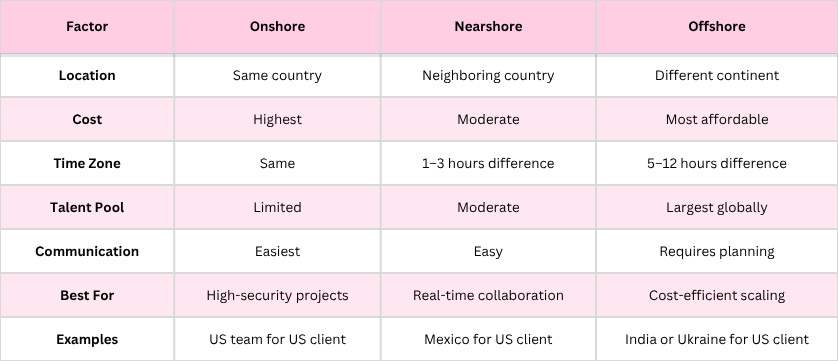
But offshore is just one model. Here is how it compares to the other two:
What Our Offshore Software Development Services Include
At Apptechies, we offer a full range of offshore development services built around your business goals.
Web Development
We build fast, scalable, and modern web apps for your business ROI. From simple business websites to complex enterprise platforms, our offshore web developers deliver clean code and great user experiences.
Mobile App Development
Our offshore mobile teams build native and cross-platform apps for iOS and Android. We focus on performance, design, and delivering apps that users actually enjoy.
Testing and Quality Assurance
Every product we ship goes through rigorous testing. Our QA engineers catch bugs early, run performance checks, and make sure your software works flawlessly before launch.
Cloud Solutions and DevOps
We help businesses move to the cloud, automate deployments, and build reliable infrastructure. Our DevOps engineers reduce downtime and speed up your release cycles.
Custom Software Development
Off-the-shelf software does not always fit. We build custom solutions tailored to your exact business needs — from internal tools to full-scale platforms.
What Does an Offshore Software Development Team Look Like?
A great offshore team is not just a group of developers. It is a structured, collaborative unit working toward one goal — your success.
Collaborative Workflow
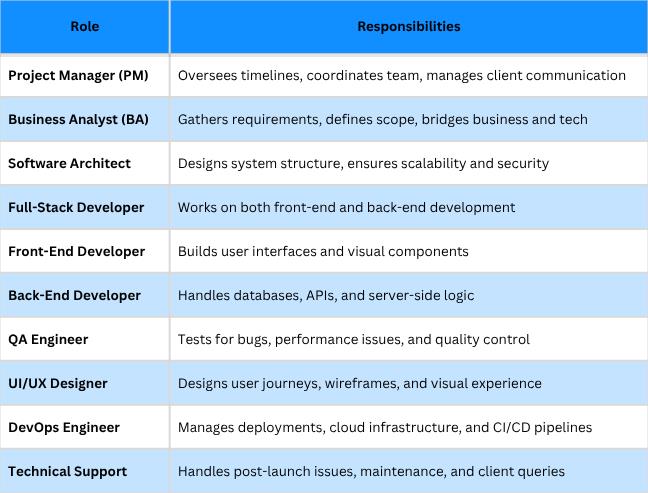
Each team member plays a specific role. Here is how a typical offshore development team is structured:
How Much Does Offshore Software Development Cost? Real Hourly Rates by Region in 2026
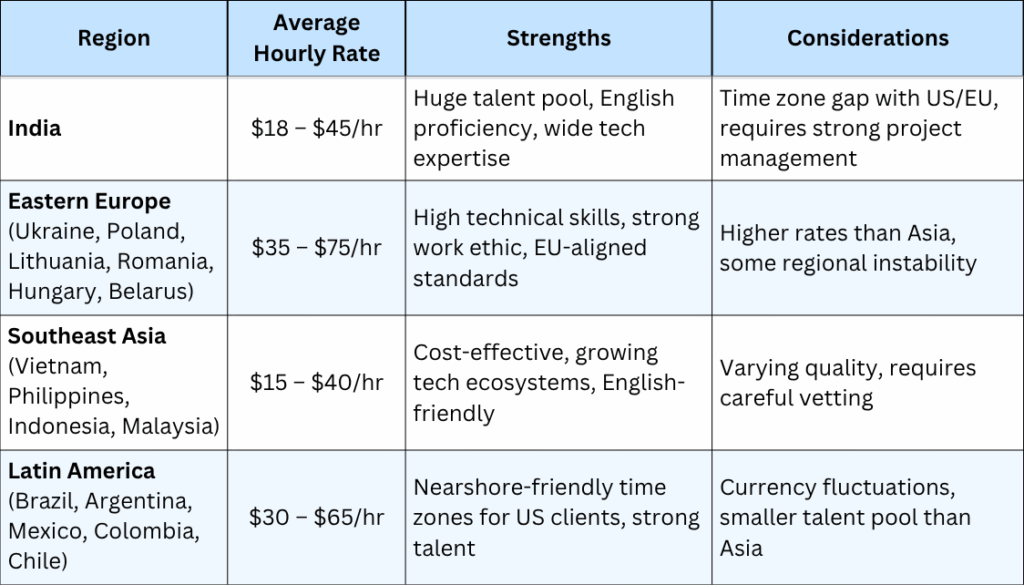
Cost is one of the biggest reasons businesses choose offshore development. But rates vary widely by region.
Here is a detailed breakdown:
Considering the Offshore Team’s Costs and Value
A $20/hr developer who misses deadlines costs more than a $45/hr developer who delivers on time. Always weigh hourly rate against quality, communication, and reliability.
Best Offshore Software Development Countries
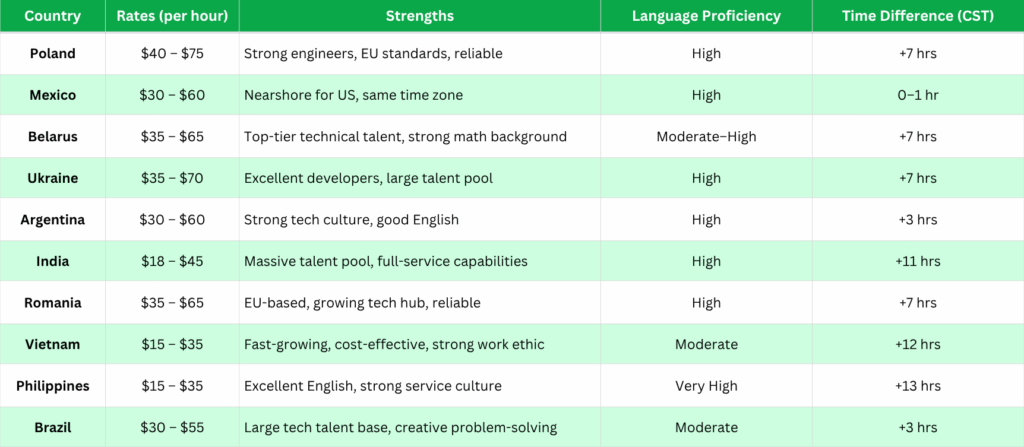
Here is a quick comparison of the top countries businesses choose for offshore development:
What Are the Benefits of Offshore Software Development in 2026?
Access to a Global Talent Pool
You are no longer limited to hiring locally. Offshore development gives you access to thousands of skilled developers across the world — specialists you might never find in your own city.
Specialized Technologies and Expertise
Need an AI engineer, a blockchain developer, or a cloud architect? Offshore teams often have niche specialists ready to go, without the long hiring process.
Focus on Core Business Activities
When your development is handled offshore, your in-house team can focus on what they do best, strategy, sales, and growth.
Business and Project Scalability
Scaling up or down is made simple by an offshore development team. Adding five developers for a product launch or reducing the team post-release is straightforward with the right partner.
Team Flexibility and Project Pivoting
Business needs change. Offshore models offer flexible engagement, you can shift priorities, add new skills, or change direction without the overhead of rehiring.
Faster Project Timelines
When teams collaborate across time zones, development can take place continuously. This means faster delivery and shorter time to market.
Risk Mitigation
Spreading your development across regions reduces dependency on one local market. It also protects you from local disruptions, talent shortages, or economic changes.
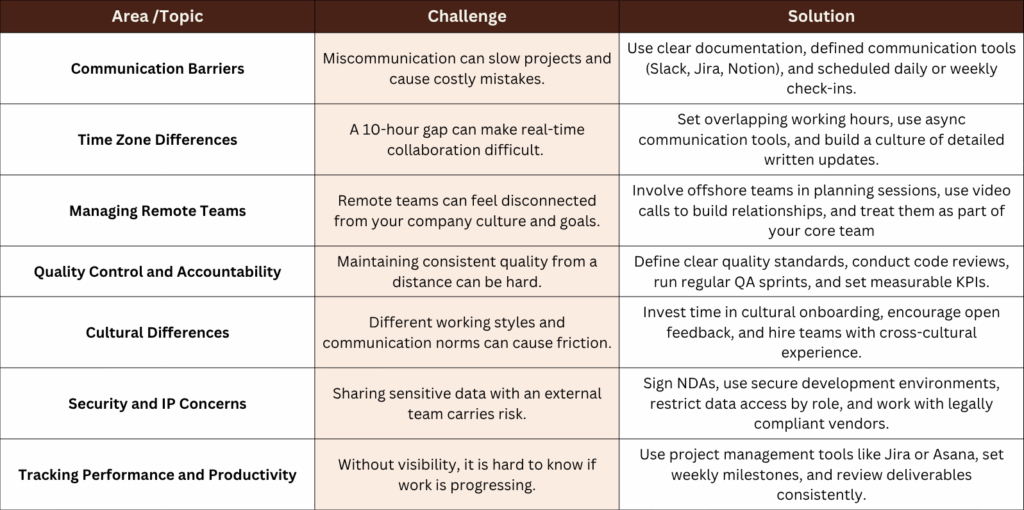
What Are the Biggest Challenges of Offshore Software Development, And How Do You Overcome Them?
Offshore development is not without its challenges. But every challenge has a solution.
How Much Does Offshore Software Development Cost?
Beyond hourly rates, here are all the cost factors you need to budget for:
Developer Hourly Prices
The core cost. Rates range from $15 to $75/hr depending on region, seniority, and tech stack.
Cost of Project Management
A dedicated project manager typically adds 10–15% to your overall project budget — but saves far more in avoided mistakes.
Quality Assurance (QA) and Testing
QA engineers and testing tools add to the budget. Expect to allocate 15–20% of your dev budget to testing.
Infrastructure and Tools Pricing
Cloud hosting, development tools, and software licenses are real costs. Budget these separately from development hours.
Communication Overheads
Tools like Slack, Zoom, and Jira have subscription costs. Small, but worth factoring in.
Legal and Compliance Costs
Contracts, NDAs, IP protection, and compliance reviews require legal support. Do not skip this step.
Delays and Rework
Poor planning leads to rework. Always add a 10–15% buffer to your timeline and budget.
Onboarding and Knowledge Transfer
Getting a new offshore team up to speed takes time. Plan for a structured onboarding period of 1–2 weeks.
Maintenance and Support Costs
Post-launch support is ongoing. Budget for regular updates, bug fixes, and technical support after your product goes live.
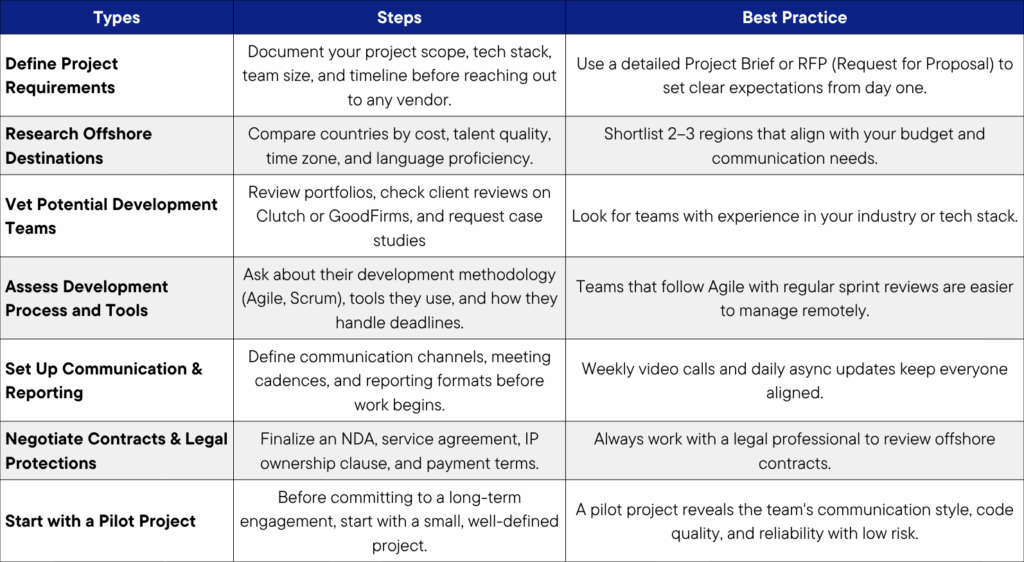
How to Hire Offshore Software Developers the Right Way
The Latest Trends in Offshore Software Development
The offshore development landscape is evolving fast. Here is what is shaping the industry in 2026:
AI and Process Automation
Offshore teams are now integrating AI tools into their workflows — from AI-assisted coding to automated testing. This speeds up development and reduces human error.
Hybrid Development Models
Many businesses now combine offshore and in-house teams. This hybrid model gives them cost efficiency while keeping core functions closer to home.
Enhanced Cybersecurity Protocols
With rising data privacy regulations, offshore vendors are investing heavily in security, from ISO-certified environments to stricter access controls and compliance frameworks.
Expanding Outsourcing Market
The global outsourcing market continues to grow. More businesses — from startups to Fortune 500 companies — are embracing offshore models as a long-term strategy, not just a cost-cutting measure.
Cloud and IoT Integration
Offshore teams are increasingly specializing in cloud-native development and IoT solutions. As businesses modernize their infrastructure, demand for these skills offshore is surging.
A List of the 15 Best Offshore Software Development Companies
More important than everything else is selecting the correct partner. Here are 15 companies leading the offshore development space in 2026:
Apptechies, A trusted offshore software development partner delivering web, mobile, cloud, and custom software solutions with a client-first approach
Intellectsoft
Infosys
Tata Consultancy Services (TCS)
Wipro Technologies
EPAM Systems
Softserve
Globallogic
Luxoft
N-iX
Miquido
Itransition
Netguru
Sigma Software
DataArt
FAQs on Offshore Software Development
Q. What Is Offshore Software Development?
Ans: Offshore software development is the practice of hiring a software team in another country to design, build, or maintain your digital products — typically at a lower cost than hiring locally.
Q. Is Offshore Software Development Safe?
Ans: Yes, when done right. Use signed NDAs, secure development environments, and work with reputable vendors who follow data protection standards.
Q. How Do I Communicate With An Offshore Team Effectively?
Ans: Use tools such as Slack, Zoom, and Jira. Set overlapping working hours, hold weekly check-ins, and document everything clearly.
Q. Which Country Is The Best Choice For Offshore Software Development?
Ans: It depends on your budget, time zone preference, and tech requirements. India, Ukraine, Poland, and the Philippines are among the top choices in 2026.
Q. How much does offshore software development cost?
Ans: Hourly rates range from $15 to $75+, depending on the region and developer seniority. Full project costs vary based on scope, team size, and timeline.
Q. How Long Does An Offshore Development Project Take?
Ans: A simple app can take 3–6 months. Complex enterprise platforms may take 12–24 months. A well-defined scope and an experienced team shorten timelines significantly.
Q. Can Offshore Teams Work In My Time Zone?
Ans: Many offshore vendors offer flexible hours with overlapping windows to match your working hours for real-time collaboration.
Q. Why Should I Choose Apptechies As My Offshore Development Partner?
Ans: Apptechies combines technical expertise, transparent communication, and a proven track record to deliver software that drives real business results — on time and within budget.
Author Bio: AJ Chaudhary, CEO of Apptechies. He is a full-stack developer with 10+ years of experience developing web and mobile applications. He has successfully delivered projects for different industries and helped companies turn concepts into scalable solutions. Passionate about technology, he simplifies complicated tech topics for entrepreneurs and startups by sharing insights.
In healthcare, Artificial Intelligence has progressed from experimentation to implementation. AI in pharma and biotech is now a strategic focus. It has become a key element of research, development, manufacturing, and decision-making. By 2026, pharma and biotechnology companies will depend on AI. Because it controls growing R&D expenses, boosts creativity, and reduces the risks associated with drug development.
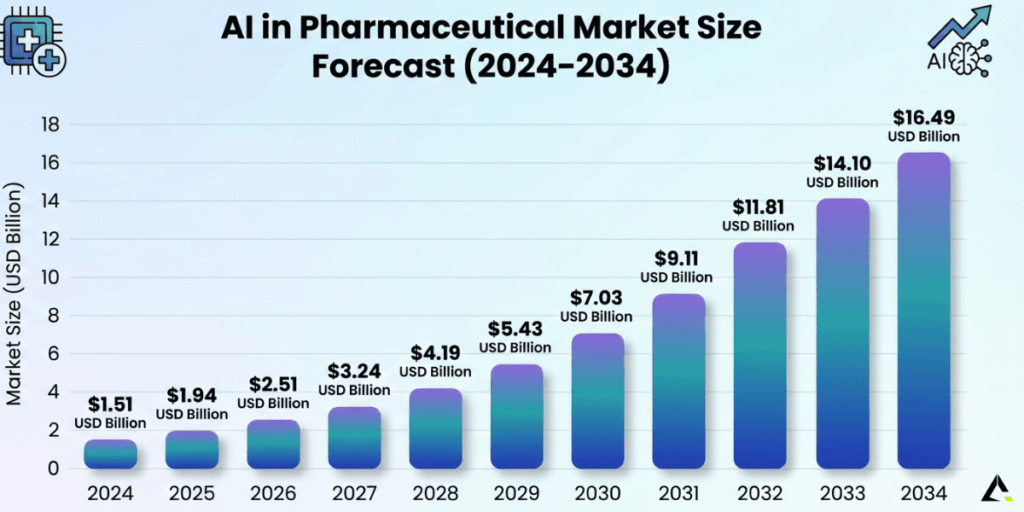
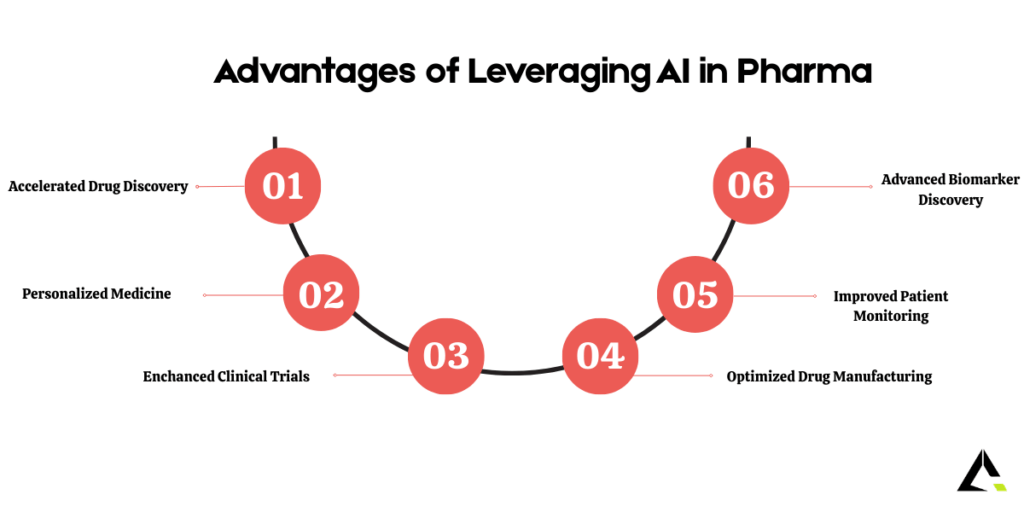
According to Bcc Research, the global AI in the pharmaceutical industry was projected to increase from $3.8 billion in 2025 to reach $15.2 billion by the end of 2030. The demand for precision medicine, the pressure to speed up development, and the growing complexity of data. This is where a dedicated AI development company helps pharma and biotech firms create scalable, compliant solutions tailored to regulated environments.
The requirement of AI in pharma is real. An article published by NIH (National Institutes of Health) states that developing a new drug typically takes 10–15 years. Each drug development process costs $2.6 billion or more and this includes the costs associated with failure. And due to safety or efficacy issues, about 90% of clinical drug trials fail. AI helps reduce these errors by identifying risks earlier and improving prediction accuracy.
As a result, regulators such as the FDA are also encouraging the use of AI-powered analytics and real-world evidence, further accelerating adoption. In this blog, we’ll define what is AI in pharma and biotech, analyze its advantages and disadvantages and also highlight the key AI trends in 2026.
What Is AI in Pharma and Biotech?
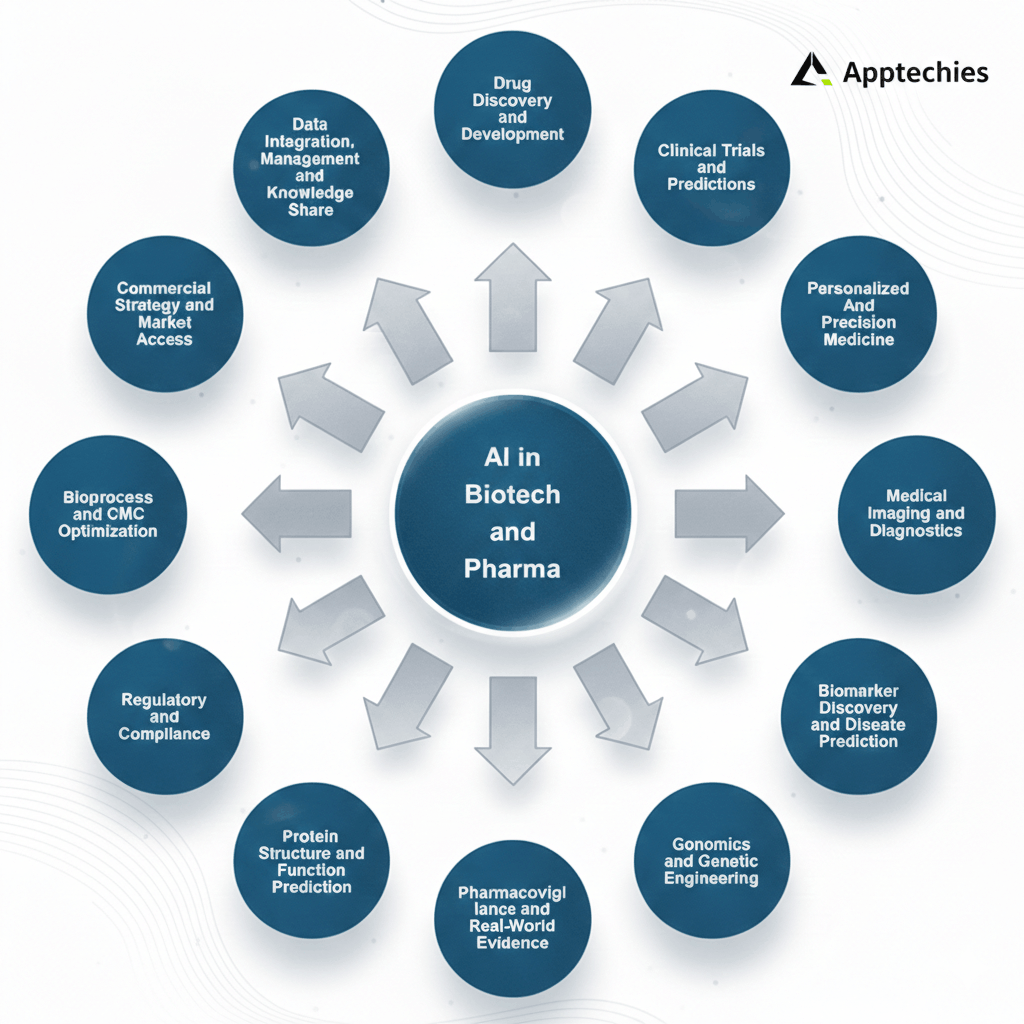
AI in pharma and biotech means using artificial intelligence to analyze data and predict outcomes. It also supports better decisions in drug research, development, manufacturing and healthcare. In simple words, AI helps pharma and biotech teams work faster and smarter.
In the pharmaceutical industry, AI supports drug discovery, clinical trials, quality control and supply chain planning. In biotech, AI helps interpret complex biological data such as genomics and protein structures.
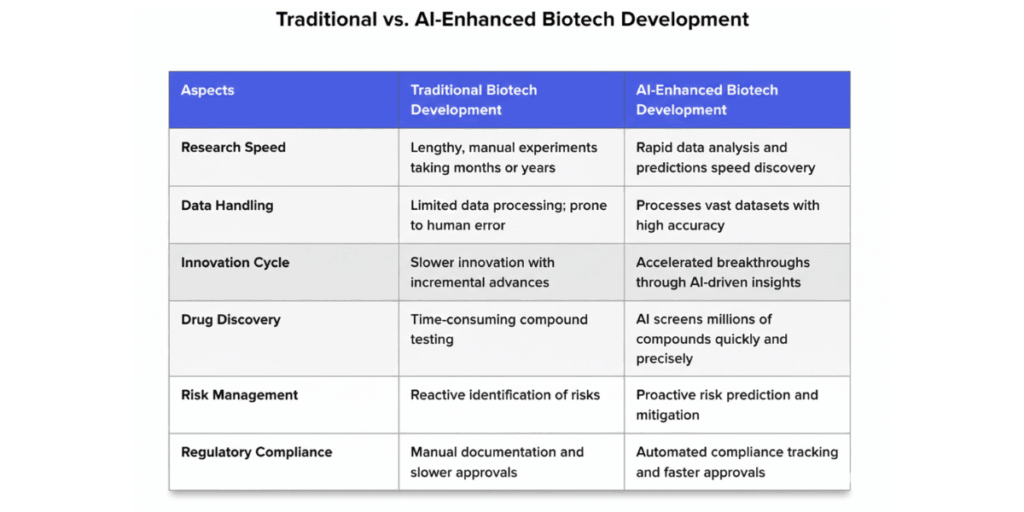
Drug development is slow, expensive and risky. AI reduces this risk by quickly identifying promising drug candidates and flagging errors before they become costly.
Machine learning in pharma improves accuracy, shortens research timelines and enables data-driven decisions. The result is faster innovation, improved efficiency and safer outcomes for patients.
AI in healthcare improves treatment personalization, patient safety and decision-making.
AI is also used in other industries, such as AI in education, the automotive industry, and other industries. In pharma, it strengthens research, development and patient care without replacing human expertise. It improves human expertise and strengthens pharma innovation at all levels.
How Artificial Intelligence Is Changing the Pharma Industry
Artificial intelligence is changing how the pharma industry works at every stage. It improves the speed, accuracy and decision-making throughout the drug lifecycle. This evolution isn’t about adding technology everywhere. It’s about using AI only where human decision-making reaches its limits.
AI in Drug Discovery and Molecular Research
AI examines massive chemical and biological datasets to quickly identify potential drug candidates. This speeds up discovery and decreases trial-and-error research.
AI for Clinical Trial Planning and Optimization
AI assists in selecting suitable patients, predicting test results and monitoring data in real time. This improves test efficiency and reduces delays.
AI in Manufacturing and Quality Control
Through predictive analytics, AI in drug manufacturing detects flaws, monitors batch quality and prevents equipment failures. This ensures consistent production standards.
AI for Supply Chain and Demand Forecasting
AI reduces operational risk and shortages. It improves demand planning, inventory management and delivery accuracy.
Challenges & Opportunities of Using AI in Pharma & Biotech
Adoption of AI in biotech and pharmaceuticals has many benefits, but also reveals operational and structural flaws that businesses need to carefully fix.
Challenges
Data Quality and Availability
AI systems rely on large amounts of clean, structured data. In pharma and biotechnology, data is often spread across research laboratories, hospitals, clinical trials, and legacy systems. Inconsistent formats and missing data reduce AI accuracy and slow usage.
Regulatory and Compliance Complexity
Pharma is one of the most regulated industries. AI models must meet strict regulatory standards for verification, transparency and auditability. Unclear or evolving AI regulations make it difficult for companies to deploy AI with confidence.
Lack of Explanation and Trust
Many AI models act as black boxes. When results cannot be clearly explained, it becomes difficult for researchers, doctors and regulators to trust AI-driven decisions, especially in patient-critical use cases.
Integration with Existing Systems
Most pharmaceutical organizations rely on legacy infrastructure. Integrating AI into existing R&D, clinical and manufacturing workflows requires time, technical expertise and significant investment.
Talent and Skills Gaps
There is a limited group of professionals who understand both life sciences and AI. This skills gap slows down implementation and increases dependency on external partners.
Opportunities
Faster and Smarter Drug Discovery
AI helps identify potential drug candidates by analyzing large biological and chemical datasets. This reduces trial-and-error research and shortens development timelines.
More Efficient Clinical Trials
AI improves patient recruitment, trial design and real-time monitoring. Better tests lead to lower costs, fewer delays and higher success rates.
Better Use of Existing Research Data
The pharmaceutical companies already have large amounts of historical data. AI turns this underutilized data into meaningful insights, helping teams make better decisions without repeating studies.
Improved Manufacturing and Operations
Supply chain optimization, quality assurance, and predictive maintenance are made possible by AI. This results in fewer production errors, less downtime and better inventory planning.
Personalized and Precision Medicine
By analyzing genetic, clinical and lifestyle data, AI supports more personalized treatment approaches, improving patient outcomes and long-term care strategies.
What are the Benefits of Using AI in Pharma & Biotech
The benefits of using artificial intelligence in pharma and biotechnology lie in various factors. It supports smarter decisions by turning complex data into actionable insights. By integrating AI into core workflows while maintaining regulatory and quality standards.
Faster Research and Development Cycles
AI speeds up research by rapidly assessing clinical, chemical and biological data. Machine learning in pharma models finds promising drug targets early. It improves overall development timelines and reduces time spent on failed compounds.
Reduced Operational and Testing Costs
AI reduces unnecessary experiments and optimizes resource use. AI in drug manufacturing, testing and predictive analytics reduces expensive rework. It also lowers the equipment downtime and increases cost effectiveness without sacrificing quality.
Improved Accuracy and Data-Driven Decisions
AI improves accuracy by spotting trends that human analysis frequently overlooks. This supports AI use cases in pharma by promoting better choices in trial design, safety assessment and dose selection.
Better Patient Outcomes and Safety
AI enhances therapy planning and trial monitoring with patient data. Artificial Intelligence in biotech, this results in safer trials, more successful treatments and fewer side effects.
Scalable and Sustainable Pharma Innovation
AI allows businesses to expand innovation in research, manufacturing and supply chains. It streamlines the operations without adding complexity. This supports long-term pharma innovation while meeting compliance and quality requirements.
Real World Examples of AI in Biotech and Pharma
Real-world examples of AI in pharma and biotechnology show how AI is actively used in healthcare. These cases show measurable improvements in speed, accuracy, cost-efficiency and patient outcomes.
AI Use Cases From Global Pharma Companies
Example: Pfizer collaborated with IBM Watson to analyze molecular interactions in cancer treatments. AI processed massive data sets so that potential drug candidates could be identified quickly.
Impact: Researchers are highlighting the role of AI in the pharmaceutical industry. It reduces early-stage errors, accelerates development timelines and improves overall efficiency.
AI Adoption by Biotech Startups
Example: Startups like Insitro and Recursion Pharmaceuticals incorporate AI from day one. They use predictive modeling and virtual screening in early research.
Impact: Small teams accelerate drug discovery and compete with larger organizations. It drives sustainable pharma innovation at scale.
How AI Improves Decision-Making in Real Scenarios
Example: Roche uses artificial intelligence to match patients with trials using real-world data. Predictive algorithms help select candidates and plan test designs.
Impact: This leads to faster enrolment, greater sample diversity and better quality data. This supports safer and more effective drug trials.
Improvement of Production and Quality Control
Example: Novartis implemented AI-powered predictive maintenance and monitoring in production lines. AI tools identify risks and ensure consistent batch quality.
Impact: Less downtime, fewer defective batches and compliance with regulatory standards. It demonstrates the benefits of AI in pharmaceutical manufacturing.
Advances in Personalized Medicine
Example: Ginkgo Bioworks uses artificial intelligence in biotechnology to analyze genetic and clinical patient data, enabling tailored treatments.
Impact: Patients receive more accurate treatments, improved medical efficiency and safer outcomes, demonstrating the potential of AI in personalized healthcare.
How AI Trends are Shaping the Pharma & Biotech in 2026
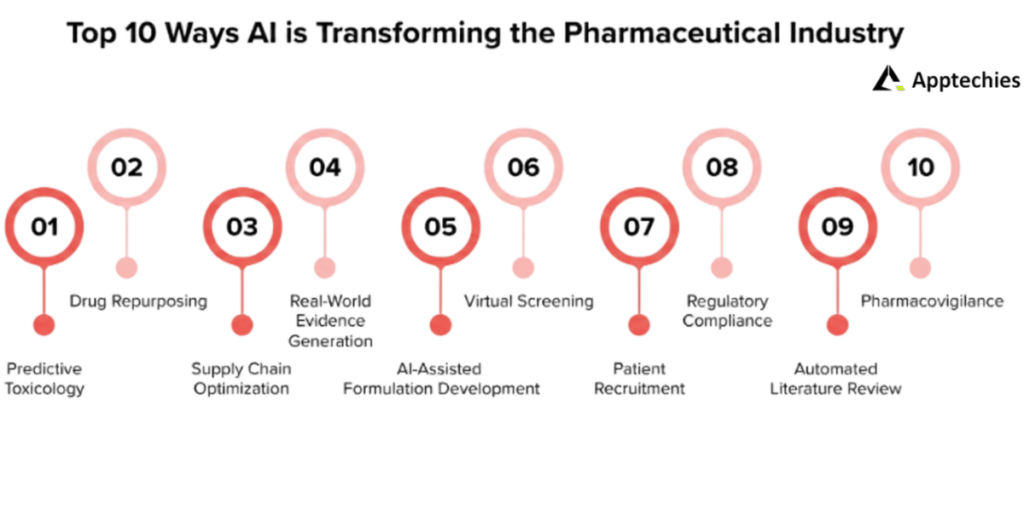
The systematic use of AI in drug discovery, manufacturing, clinical research and operational planning is one of the trends. These trends are influencing the pharma and biotech industry. It shows how AI is emerging as a key asset. It improves productivity, lowers risk and supports data-driven innovation throughout the pharmaceutical lifecycle.
AI-Driven Drug Design
AI models now analyze chemical structures, biological pathways and historical drug data. These data help to design optimal molecules before laboratory testing starts. Researchers use digital simulations to evaluate thousands of molecules instead of physically examining them. This reduces early attrition and improves candidate quality. This strengthens the role of machine learning in the pharmaceutical discovery workflow.
Generative AI for Molecular Simulation
Generative AI systems create new molecular structures based on desired biological properties. AI suggests workable chemical compositions, while scientists target. This speeds up iteration cycles and allows teams to investigate chemical sites. This is rarely reached by traditional methods.
Better Target Identification
AI processes genomic, proteomic and clinical datasets to identify disease-driving mechanisms more accurately. AI helps researchers focus on uncovering hidden connections in complex biological systems. This increases the initial research accuracy of AI in pharmaceutical industry.
Monitoring of Clinical Trials in Real Time
Traditional clinical studies analyze data over time. AI systems now continuously evaluate patient data during trials. This enables quicker detection of safety signals, protocol violations or efficacy patterns. This lowers risk and boosts regulatory trust.
Predictive Patient Admission
AI analyzes electronic health records and demographic data. This helps them to identify patients who meet eligibility criteria more accurately. This reduces recruitment timelines and improves trial diversity. This addresses one of the most persistent obstacles in drug development.
AI in Pharmaceutical Production Automation
Predictive analytics is used in pharma manufacturing to track production lines. It also identifies equipment wear and predicts maintenance requirements. This prevents unplanned delays and maintains consistent batch quality. This is essential for regulatory compliance.
AI-Powered Quality Control
Real-time product inspection is done via computer vision systems and anomaly detection techniques. AI identifies microscopic defects and process deviations earlier than manual inspection methods. This reduces waste and improves manufacturing precision.
Expand Personalized Medicine
In biotech, AI combines genetic, clinical and lifestyle data to support customized medicine design. By lowering side effects and increasing the treatment response rates. This makes therapies more patient-centred.
AI-integrated Supply Chain Optimization
AI improves distribution planning, anticipates shortages and forecasts demand trends. This lowers inventory risk and increases supply chain resilience, particularly during global disruptions.
The Rise of AI-first Biotech Companies
New biotech startups are integrating AI directly into their research and operational infrastructure. They create automation systems, predictive models, and data pipelines from day one, rather than adding AI later. Across the pharmaceutical ecosystem, this model reshapes competition and encourages innovation.
How to Choose the Right AI Development Partner
The most important decision for long-term innovation is choosing the right company. This directly impacts long-term scalability, compliance readiness and innovation speed. Among AI development companies, Apptechies is a reliable choice for businesses looking to apply AI in healthcare.
Deep Industry Experience and Domain Knowledge
AI in pharma and biotech is quite different from other industries. It involves clinical trials, research validation and AI in pharma production systems. Choose a partner who can explain how AI works with actual pharma procedures and who is familiar with these workflows.
Strong Data Security and Compliance Framework
Healthcare and biotech data require strong protection. Your AI partner should create systems that support audit trails, controlled access, model validation and regulatory transparency. Transparency and security should be built into the architecture from the beginning.
Scalable AI Architecture and Integration Capability
AI in drug production and machine learning in pharma often start small but grow quickly. The system must handle larger datasets and integrate with existing platforms. Verify that the solutions your partner develops are both scalable and compatible with other systems.
Focus on Measurable Business Results
Technical accuracy alone does not create business value. AI should solve actual issues. It should improve efficiency, reduce costs or increase research accuracy. Ask how success will be measured. The focus should be on outcomes, not just model accuracy.
End-to-end Development and Deployment Support
Pharma AI projects require structured execution from planning to deployment and continuous optimization. Fragmented development creates risk and inefficiency. Choose a partner who provides ongoing assistance rather than on-time delivery.
Transparent Communication and Collaborative Approach
AI in biotechnology involves cross-functional teams, including researchers, compliance officers and operations managers. Clear communication ensures alignment at all levels. Make sure the company follows a collaborative development model and maintains transparency throughout project phases.
Final Thoughts
Artificial intelligence is evolving in many areas and pharma and biotech are among them. It is rapidly changing how businesses find new medications, manage clinical studies and optimize production processes. Intelligent technologies help organizations move faster and make more informed decisions.
However, successful AI implementation requires more than advanced algorithms. It requires structured data, regulatory awareness, scalable infrastructure and a clear execution strategy. Without the right foundation, AI initiatives can struggle to deliver measurable results.
Working with an experienced technology partner like Apptechies can help translate innovation into real-world impact. AI in pharma and biotech is no longer just an advantage; it is becoming essential for sustainable growth and competitive leadership.
Frequently Asked Questions
Q. Why is AI important in the Pharmaceutical & Biotechnology Industry?
Ans: AI makes it easier for businesses to manage large amounts of research and clinical data. It supports faster research, better data analysis and more informed decision-making. It improved accuracy and accelerated innovation in research, testing and manufacturing.
Q.What ROI can Enterprises Expect from AI in Biotech Pipelines?
Ans: Return on investment measures with saving time and reducing costly failures. AI helps teams focus on stronger drug candidates, improve trial planning and use resources more effectively. This eventually results in increased productivity and decreased development cost.
Q.How can AI Transform Drug Discovery and Development?
Ans: Artificial Intelligence analyzes vast biological and chemical data to identify promising compounds. It predicts molecular behavior and simulates results before physical testing begins. This reduces the need for repetitive trial-and-error studies. It helps researchers prioritize high-potential candidates earlier in the development process.
Q.What is the Role of AI in Pharma and Biotech in Personalized Medicine?
Ans: AI assists in personalized medicine by studying patient information such as genetics and medical history. This makes it possible to customize treatments for each patient rather than using the same solution. The aim is to achieve better results with fewer side effects.
Q.Are any Major Pharma Companies using AI?
Ans: Yes. Many global pharmaceutical leaders are integrating AI into research, clinical trials and manufacturing. Companies such as Pfizer, Novartis, Roche, Johnson & Johnson, AstraZeneca and Sanofi are using AI. To improve their digital abilities, some companies work with technology firms and biotech startups.
Q. What are the Benefits of AI in Clinical Trials?
Ans: AI helps in risk prediction, more precise data monitoring and identifies suitable participants. This can cut down on delays, increase test accuracy and improve overall success rate.
Q. Does AI Replace Scientists and Researchers?
Ans: No, AI acts as a decision support tool rather than a replacement for human expertise. It is still important to interpret scientific insights, validate findings and ensure ethical and regulatory compliance throughout the research process.
Author Bio:AJ Chaudhary, CEO of Apptechies. He is a full-stack & AI Mobile app developer with 10+ years of experience developing web & mobile applications. He has successfully delivered projects for different industries and helped companies turn concepts into scalable solutions. Passionate about technology, he simplifies complicated tech topics for entrepreneurs and startups by sharing insights.
In the era of AI technology and Startups, having an app idea and launching it must be challenging for every entrepreneur. Many startups need the right development team, guidance, and funding to create a million-dollar mobile app. That’s why you need an accelerator program for startups to grow successfully. There are various accelerator programs for startups to choose from and grow.
In this blog, we will guide you about what is a Apptechies startup accelerator program, how it works, its key elements, what a startup accelerator program offers, accelerator vs incubator, how to apply for an accelerator program and why a program like Apptechies Accelerator Program might be the right choice for you.
What is an Accelerator Program? & How Does it Work?
The business accelerator program is designed to scale entrepreneurs quickly. They provide guidance, mentorship, networking and seed funding for early-stage startups. You will get all the support in exchange for equity, which is up to 20% for the entrepreneurs. This program helps you turn your app idea into a real and scalable business. If you have an amazing app idea and want to develop and need funding to launch, then this Startup Accelerate program is for you.
How Does it Work?
Accelerator Programs for startups help you in every segment from idea validation to startup funding.
Step 1: Idea Validation
Before you dive into development, it is crucial to validate the start-up app idea to ensure that it has market potential and addresses genuine issues. This phase involves research, reviews, and refinement.
Step 2: Guidance & Mentorship
Entrepreneurs gain access to industry experts who provide valuable insights, strategic direction and the right mentorships to navigate the challenges and refine the business model.
Step 3: One-Page Design & Development Support
When the app idea is confirmed, Startups receives one-page app design and development support that includes the homepage design of the mobile app and a prototype to demonstrate to investors.
Step 4: Investor Pitch Support
Investment preparations are important. The startup receives expert guidance and resources for crafting compelling pitches, helping them effectively communicate their vision and attract investors.
Step 5: Startup Funding
After your compelling pitch, you get early-stage funding from the investors in exchange for equity, so you can build your app and grow your business without any delays.
Accelerator Program is a launch pad for ambitious startups or entrepreneurs, giving them the necessary resources and guidance to scale their businesses. Here are the key elements that make a startup accelerator program impressive:
Seed Funding for Startups
Get initial capital to support the startup ideas with product development, business operations, and early-stage expansion.
Expert Mentorship
Get industry expert guidance from the seasoned entrepreneurs and investors who refine your business model, avoid common pitfalls and build powerful strategies.
Structured Development
Accelerator provides a well-defined program, which helps to develop the start-up in a systematic way. From product verification to market entrance, structured guidance ensures steady growth.
Business Guidance
Startup receives guidance from experts about the market status, branding, development, sales strategies and operational efficiency, which helps them make the right business decisions.
What Does the Startup Accelerator Program Offer?
Full UI/UX Design
Get unlimited screen designs with three modifications to ensure a smooth and user-friendly interface. This helps create an attractive experience for users and enhances the app’s purpose.
Prototype
A simulated model of the app’s functionality is created, so that the start-up can test and refine the concept before full development. A test is required for the necessary improvement.
One Page Website
One page is designed, specifically the homepage, to display mobile applications, provide necessary information, and attract potential users or investors.
Marketing Strategy
In order to ensure efficient outreach and commitment, a detailed performance plan is developed to target the right audience. This includes strategies for branding, advertising and user collections.
Revenue Model
A comprehensive search process explains how the app will generate revenue. This includes modification strategies such as membership, advertising or purchase in the app.
Revenue App Planning/Apply
The revenue model is integrated into the function of the app, which ensures customized execution for maximum profitability.
Social Media Profile Setup
Full Setup of social media profiles to establish online appearance, get in touch with users, and create brand awareness.
Branding
The Branding program provides a customized app icon, logo, tagline, color choice and naming (if applicable) to create a strong and recognizable brand identity.
Pitch Preparation
Getting investors for your business is tough. Startups receive guidance on the preparation of a compelling pitch for investors, which helps them secure funding for startups and partnerships.
Funding Cap
The program provides financial assistance of up to $100K, which helps start-ups cover the necessary costs and accelerate growth.
Difference between Accelerator and Incubator
Both an accelerator and an incubator help grow on start-up, but they serve different purposes.
On the other hand, an accelerator is designed for a startup that already has a product and requires rapid scale. It is an intensive, short-term program (usually a few months) that provides financing, mentorship and investor connections. Accelerators help to grow rapidly and prepare them for investment or market expansion.
An incubator is like a nutritional environment for startups. This helps founders to refine their ideas, create a business model and develop the product. The incubators usually offer mentorships, networks and resources on a flexible timeline, often for several months or even years. They focus on long-term development instead of rapid scaling.
How Can You Apply for the Startup Accelerator Program?
Joining an accelerator program is the smartest move for startups to scale quickly. Here’s a simple step-by-step guide to begin:
Connect with the Accelerator Program
Start by researching and reaching the right accelerator that aligns with the vision of your start-up. Many programs have online applications, network events or direct contact options.
Share Your Startup App Idea
When connected, present your app idea to the experts of the Accelerator. Highlight your unique price suggestions, market capacity and scalability to create a strong impression.
Sign the NDA (Non-Disclosure Agreement)
Before moving forward, securing a mutual NDA for privacy to protect all shared information and your idea from both sides.
Enroll in Apptechies Accelerator Program
Secure your place by completing the registration process. Payments are 100% safe and encrypted, often with a money-back guarantee.
E-Sign Agreement
Complete your enrollment with a fast and easy e-sign process, and make it official with a few clicks.
Schedule Meeting
Kickstart your journey with a scheduled Zoom call, on board within 24-48 hours and discuss your vision with industry experts.
Why Choose Apptechies Accelerator Program?
Apptechies is one of the most trusted mobile app development company. They are offering the Apptechies Accelerator Program to support startups or entrepreneurs in launching successful mobile applications by providing strategic guidance, development support, investors for app ideas, brand support, and initial funds. Through their program, startups effectively scaled their businesses and maximized their ability to grow for long-term success. Their Accelerator Program helps you accelerate the growth of your startup business.
Zero Risk
If they are unable to secure funding for your startup idea, then you will get your 100% money back without asking anything.
Investor Coverage
Get investors for app ideas. They will assist you in getting 80% of the investment from the investors, which helps you reduce financial risk.
24/7 Support Team
If you get stuck anywhere or have a question to be answered, their technical assistance is always there for you at any time.
Custom Solutions
They provide tailor-made startup strategies that are compatible with your startup requirements for long-term success.
100% Transparency
They always deliver what they promise, after all the final discussion about financing and the processes. Only pay what was decided, there will be no hidden charges included.
Proven Track Record
With years of experience, they have successfully launched many startups with full-fledged development support.
Final Thoughts
Accelerator Programs for startups is a game-changer for startups that want to turn their startup business app idea into reality. This startup accelerator program is for individuals with no prior experience in app development, limited funds, and zero knowledge of pitching or securing investors, but who have a million-dollar app idea. Getting investors for your business is hard, but by choosing the Apptechies Accelerator Program, early-stage startups get everything they have dreamed of, creating a long-term successful business and unlocking unlimited opportunities. And now you are clear about what is a startup accelerator program and why startups need it the most.
Frequently Asked Questions!
Q. What is the cost of the Apptechies Accelerator Program?
Ans: You have to pay $2,999 to enroll in this program. After enrollment, we’ll schedule a meeting and discuss your app idea. We will assist you throughout the process from the concept of the idea to mobile app development and provide funding for startups up to $100K.
Q. Who Needs a Startup Accelerator Program?
Ans: The Startup Accelerator Program is for those who need investors, a development team, and industry expert guidance and want to turn their app idea into a profitable business. Startups can enroll for this program and get real-world experience to market their business under the guidance of industry experts.
Q. How to Find an Investor for your App Idea?
Ans: To find an investor for your app idea, refine your concept, create an MVP and research potential investors such as angel investors, corporate capitalists, or crowdfunding platforms. Take advantage of a compelling pitch deck, craftsmanship, networking in start-up events and LinkedIn to contact investors. Or you can consider an Apptechies accelerator program for developing, designing, investor pitching, and funding.
Q. What is the main goal of a Startup Accelerator Program?
Ans: The main goal of accelerator programs for startups is to provide an accelerator for early-stage entrepreneurs who want to grow. They provide expert guidance, networking opportunities, business development, and funding in exchange for equity.
Q. How Much Equity Do Investors Take?
Ans: Equity always depends on the startup stage, scale of the business, industry, and valuation of the company. But if you enroll in the Apptechies Accelerator Program, you will get upto $100K funding in return for upto 20% equity.
Are you an entrepreneur or business owner who has decided to choose iOS as an ideal platform for your mobile app development? Choosing iOS is a smart step to reach a premium audience, but before you launch your app, it’s normal to be worried about the iPhone app development costs. The cost of an iOS app ranges from $50,000 to $700,000, mainly depending on its size, design, features, complexity, hours of operation, and many other factors.
So, don’t take stress too much! We will answer all your questions in detail, from choosing the best iOS app development company to understanding the most important factors that affect your budget. A detailed comparison between Android and iOS app development costs will help you decide the right cost for an iOS app.
Let’s dive into everything you need to know about the cost before developing an iPhone App!
Formula for Estimating the Cost of Developing an iPhone App
Whether you make an iOS app or an Android app, the mobile app development cost always varies depending on various factors like the app size, UI/UX design, features, app complexity level, app category, development team location, and tech stacks.
Here is the Formula to calculate the iPhone App development cost:
Cost of iOS App Development: UI/UX design Hours + App Platform + [Hourly Rates of Developers x Development Time]
With the help of this formula, you will get a rough idea about the cost estimation for developing an iOS app. After your calculation is done, you can negotiate with the companies and easily hire a trusted iOS app development company and deploy your app successfully.
Key Factors Impacting iOS Development Cost
The cost of developing an iPhone app includes several factors that affect the app’s total costs and success. It is important to understand different factors when determining your iOS growth costs. There is an overview of all the main aspects here.
iOS App Size
When developing any mobile app, the app size matters in deciding the actual cost. As your iOS app size increases, more screens and functions, time, and costs increase. To ensure efficiency, start by validating your app idea and its functionality. This step helps to streamline development, avoid unnecessary complications, and focus on properties that improve the user experience.
Market research is equally important. Analyze competitors, study user preferences, and identify the feature to improve or hinder the purpose. Pay attention to the trends and normal pain points on the device. Learning from similar apps provides valuable insights, which help you create a prominent product, reduce the development risk.
In short, Large applications packed with advanced features and extensive content require more developmental time, effort, and resources; a little change makes them more expensive than the standard app.
On the other hand, small apps with limited functionality are suitable for a small budget, as they require low time to develop and streamlined coding efforts. Strategically, by balancing the app system and using effective coding practices, the app can customize the size that hold the costs.
Complexity of App Feature
The complexity of the features of an iOS app directly affects costs. Simple apps, which prefer essential functionality, are more cost-effective and sharp to develop. On the other hand, apps with moderate or complex features require more time, advanced resources and special development efforts, which cost high overall expenses.
Basic iOS App Features
Basic apps focus on fundamental features that provide a streamlined user experience. These usually include email or password logging, clean and simple user interfaces. Using standard authentication methods such as core functions, basic display, or easy task. A basic database user is integrated into data storage, and Push Notification helps users stay informed with notifications and updates.
Medium iOS App Features
Apps with Medium complexity include more advanced functionalities to increase engagement. This includes biometric login or integration of social media, a customized user interface, and additional features such as messages, search functions and a payment gateway. More sophisticated databases support large datasets, while analyzing User behavior to refine to perform device and customize storage strategies.
Complex iOS App Features
High-end iOS apps require advanced functionality and strong backend integration. They have advanced UI/UX design with multi-factor certification, role-based access control, and interactive animation and gesture-based navigation. Complex apps often include real-time collaborative tools, artificial intelligence propaganda, improved reality experience, and spontaneous synchronization with backend systems. Security measures such as data encryption and compliance with industry standards ensure the user’s safety and reliability.
By choosing carefully the correct convenience complexity level, companies can optimize growth costs when distributing a high-performing iOS app that meets the user’s expectations and is in a competitive market. It is important to balance innovation with a strategic plan and an intensive research budget, which ensures long-term success.
App Category
The cost of developing the iOS app varies depending on the app category. Each category comes with its own complexity levels, functions, and expectations of user experience – factors that affect the time and cost of direct development.
For example, apps such as games or e-commerce apps often include complex designs, complex functionality, and extensive studies, making them more expensive to build. In contrast, simple tools with basic functions usually require a short time and fewer resources, which reduces growth costs.
Further factors such as third-party integration, compliance with privacy regulations for data, and special development skills can also affect the total cost of an iOS app
Below you will find an image showing the most popular app categories in the App Store in 2026, as well as the market share.
Now, here is a broad overview of the costs of iOS app development according to the category
iOS App Design
When inspecting “what is the cost to develop an iOS app?”, the most important factor that cannot be ignored is the design and animation of the app. The complexity of UI/UX design, custom images, and motion graphics highly affects the total cost. And it’s natural that the more complex the design, the more investment is required.
This states that, visually attractive and user-friendly app design not only improves the user experience but also promotes engagement and conversion rates, a smart investment for long-term success.
Here are the top three iOS apps you should know:
Wireframing
It highlights the structure and user flow of the phase app. Tools such as Photoshop, Balsamiq and Marvel are usually used to create wireframes that work and navigation.
UI Design
iOS apps usually follow a flat design approach to ensure clean views and a smooth user experience. Unlike Android’s content design, iOS focuses on simplicity with depth and clarity. Learn more in our guide on iOS vs Android app design differences.
Animation
Alternatively, animation is important for some app types such as social media, food delivery and games. They add a layer of conversation and can increase the general user experience.
Below is a comprehensive summary of iOS app development costs based on your design and animation requirements:
AI Feature Integration
AI features are no longer a luxury. Businesses are adding them to stay competitive.
But they come at a cost. And that cost depends on what you want the AI to do.
Basic AI Features vs. Advanced AI Systems
A simple AI chatbot costs far less than a full recommendation engine. Why? Because the complexity is different.
A chatbot answers questions. A recommendation engine learns user behavior. It processes data. It updates itself. That costs more money and requires more time.
Here’s a rough idea of what different AI features add to your iOS app budget:
AI Chatbot – Adds $8,000–$20,000 depending on training data and integrations
Recommendation Engine – Adds $15,000–$40,000 based on data complexity
Predictive Analytics – Adds $20,000–$60,000 depending on data volume
Voice Assistant – Adds $10,000–$30,000 based on language models used
Smart Search – Adds $5,000–$15,000 for basic NLP-based search
These are estimates. Actual costs shift based on your app’s scale.
What Drives AI Development Costs Up
Third-party APIs add recurring costs. Tools like OpenAI, Google AI, or AWS SageMaker charge per usage. They’re fast to integrate but expensive long-term.
Custom model training is more expensive upfront. But you own the model. No ongoing API fees.
Cloud infrastructure adds to costs too. AI features need computing power. The more users, the more processing required.
Testing takes longer with AI. You need to test outputs, not just features. That adds hours to the timeline.
Maintenance is ongoing. AI models drift over time. Regular updates keep them accurate. Businesses frequently overlook this ongoing expense.
What Type of AI Feature Is Right for You?
If you’re an early-stage startup, start with API-based AI. It’s faster and cheaper to launch.
If you’re scaling or handling sensitive data, custom models make more sense.
The key is to match the AI investment to your actual business need.
API Integrations
When you calculate a budget for iOS app development, one of the most important factors is API integration. API (application programming interface) allows your app to interact with the external system for real-time data, payment processing, geo-localization or social media login. Type, volume, and complexity of these integrations can significantly affect total costs.
API integration cost in iOS App Development
API integration cost varies depending on several main factors:
Number of API: Each new API adds integrated development time and test attempts.
Complexity of API: More advanced APIs, such as real-time updates (eg, Stock Tracking, Logistics), require more backend architecture, which increases costs.
Customization Requirements: API requires customized workflow, data formatting or extended functions, it takes longer to use and test.
The Quality of the Documentation: A poorly documented API slows down the development. Well-documented APIs reduce errors and speed up integration.
Ongoing Maintenance and Support: The API may require updates over time to stay compatible with iOS updates or backend changes, leading to recurring costs.
Example: Integrating a single weather API can cost below $ 500, while integration of a real-time logistics API with custom tracking features can be more than $ 3000.
Payment Gateway Integration Costs
For transactions, it is important to handle apps like e-commerce, financial or service-based platform payment gateway integration. Cost payments vary depending on the payment provider, level of security needed, and customization requirements.
Key Cost Driver
Provider Options: Different Gateways offer different price models and features.
Transaction Amount: You can qualify for high-volume discounts, but this can increase the total cost.
Security compliance: Extra efforts and expenses are required to meet standards such as PCI DSS for secure transactions.
Customization: Customizing the payment experience (eg, split payment, membership, tip functionality) increases the complication.
Quick transfers: Services such as Apple Pay may charge fees for immediate money transfer.
Third-party API integration
Third-party API integrates the necessary functionalities:
Licensing and Usage Fee: Some APIs charge monthly active users or API call volume.
Customization Needs: Custom UI elements or workflows using these APIs will be added at the time of development.
PerformanceOptimization: Developers may need to optimize API calls for better app speed, which includes complications.
Supportand SLA: Premium support options can be expensive, but downtime can reduce the risk.
Example: Google Maps is free up to 28,000 dynamic map loads per month, but costs start to add up once you load more than that.
The Firebase is free for basic uses, but scales based on reading, writing, and storage.
iOS App Maintenance
Publishing your iOS app in the App Store is an achievement, but the journey does not end there. Maintenance is important to ensure optimal performance and an excellent user experience. It is important to plan for these services after launch, which is correct from the beginning as pa rt of your iPhone app development costs. Proper maintenance keeps your app even and creates long-lasting success.
Regular Updates
Apple often rolls out iOS updates. If your app does not hold, it can crash, slow down or stop working completely. Regular updates = a smooth, flawless experience for your users.
Fixes Bugs
Bugs can sneak any time. Even after launch, something as small as a third-party update can break your app. Quick resolution keeps users satisfied and ranked high.
Design Updates
Design trends change. Fast. If your app sounds old, the user will bounce. Regular UI updates help your app look sharp and modern.
Development Team Size
The size of your development team plays a major role in determining the overall cost of iOS app development. A large team can speed up the process, which helps you fulfill the tight deadline, but it often comes with high costs due to coordination and increase in resource requirements. On the other hand, a small team can reduce expenses, but can slow down progress, especially for complex apps. Effective project management needs to create the right balance between speed, skill, and costs.
Development Team Location
Where your development team is located has a major impact on prices. In North America or Western Europe, renting developers usually mean high interest rates due to local labor costs. However, your iOS app can reduce the development budget by offering outsourcing skilled talent in areas such as India or Eastern Europe. While local teams offer better real-time cooperation, offshore team requires clear communication, but can significantly reduce the total expenses.
iOS App Launch
Deployment of an iOS app in the App Store is an important milestone in the app development. However, it is not as simple as it looks – apps should strictly follow Apple’s guidelines. It is a strict selection process that is often seen as a challenging task by publishing an app in the App Store.
Industry-Wise iOS App Development Cost Breakdown
App development costs are not the same for every industry. The features, rules, and user expectations are different.
Here’s a breakdown by sector.
Healthcare Apps
Healthcare apps have strict rules. HIPAA compliance in the US and similar laws elsewhere add to the cost.
You need encrypted data storage. Secure user authentication. Integration with health records.
Estimated cost: $60,000–$250,000+
A basic appointment booking app costs less. A full telemedicine platform with video calls, prescriptions, and lab integration costs significantly more.
Taxi and Ride-Booking Apps
Real-time GPS, driver and rider apps, fare calculation, payment integration — these all add complexity.
You’re essentially building two apps (driver + passenger) plus an admin panel.
Estimated cost: $50,000–$150,000
Ecommerce Apps
Ecommerce apps need a product catalog, cart, checkout, payment gateway, and order tracking.
Add push notifications, loyalty programs, or AR try-on features and costs go up.
Estimated cost: $40,000–$120,000
Food Delivery Apps
Similar to ride-booking but with restaurant management, real-time order tracking, and menu updates.
Multi-restaurant platforms are more complex than single-restaurant apps.
Estimated cost: $50,000–$130,000
Education Apps
Video streaming, quizzes, progress tracking, and certifications add layers of development work.
Apps with live tutoring or AI-based learning paths cost more.
Estimated cost: $30,000–$100,000
Fintech Apps
Banking, investment, or lending apps require the highest security standards. Regulatory compliance varies by country.
Biometric authentication, fraud detection, and real-time transaction processing all add cost.
Estimated cost: $80,000–$300,000+
Real Estate Apps
Property listings, map integration, mortgage calculators, and virtual tours are common features.
Apps that connect buyers, sellers, and agents directly cost more due to multi-role functionality.
Estimated cost: $40,000–$120,000
Social Media Apps
User profiles, feeds, messaging, media uploads, and notifications are core features.
Scaling social apps is expensive. Performance at high user volumes adds to backend costs.
Estimated cost: $60,000–$200,000
Why Costs Differ So Much Between Industries
Some industries require more compliance work. Others need more integrations.
Security requirements raise costs. Multi-role user systems raise costs. Real-time features raise costs.
Understanding your industry’s specific requirements helps you set a realistic budget before development starts.
Hidden iOS App Costs That You Should Know Before Developing the App
When developing an iOS app, most people focus on actual costs, such as design, development and testing.
But all expenses are not clear. The hidden cost to develop an iPhone app are often neglected, such as third-party service fees, unexpected design changes or compliance updates.
If you are not ready, they can crawl into the budget. To help you stay on the field, we have listed these often-ignored costs, so you can avoid the unexpected expense.
Now, with both significant and hidden costs, you have a complete picture of what you expect.
Continued decision between platforms? Here’s a quick iOS vs. Android growth cost comparison to help you create a smart, informed option.
Comprehensive Cost Comparison Between Android & iOS Apps
Are you thinking about creating an app, but unsure whether to go with Android or iOS? One of the biggest decisive factors is usually growth costs, and yes, there are obvious differences between the two platforms.
To help you understand this and make wise decisions based on your wants and finances, let’s break it into small segments.
Cost overview
On average, the cost to develop an iPhone app is 10% -15% more than an Android app. This is mainly due to the strict policies for Apple and the need for special skills such as Swift or Objective-C. Android provides more flexibility, but it often means more testing and optimization, which can also increase costs based on the complexity of the app.
App Design
Designing for iOS is usually simple and a little cheaper. Apple has a more standardized design language, which reduces complexity. On the other hand, Android Design needs to adjust a wide range of screen sizes and equipment, leading to more design functions and potentially high costs.
Development Tools and Language
The iOS apps are developed with Swift or Objective-C, and they follow the very specific rules for Apple. This makes an iOS app process even, but may require special developers, which can increase costs. Android apps are made with Java or Kotlin, which provides more flexibility. But with so many Android devices, the app often requires extra adjustments to ensure that it works smoothly in all of them.
Development Time
iOS development is usually quick. This is because Apple has limited tools and screen sizes to work with, which simplifies testing and troubleshooting. Android takes more time due to its fragmented unit ecosystem. Developers need to make sure the app works well on many types of phones and tablets.
App Test Cost
The test is the place where the Android app can be a little expensive. Since there are many Android devices, you need to test on many screen sizes and OS versions. iOS has a small set of devices, making the test faster and more cost-effective.
App Store and Release Costs
To publish an iOS app, Apple charges $ 99 annual developer fees, and their app review process is known to be strict and takes time. Google Play, relatively, only charges a $25 fee once and is usually more flexible with the app approval, which can speed up the launch.
So, Which is More Budget-Friendly?
If you are looking for a rapid growth process and a streamlined user experience, iOS may be worth a little higher. But if your goal is to reach a wide, global audience and you are doing well with a long growth cycle, Android can be more cost-effective in the long term.
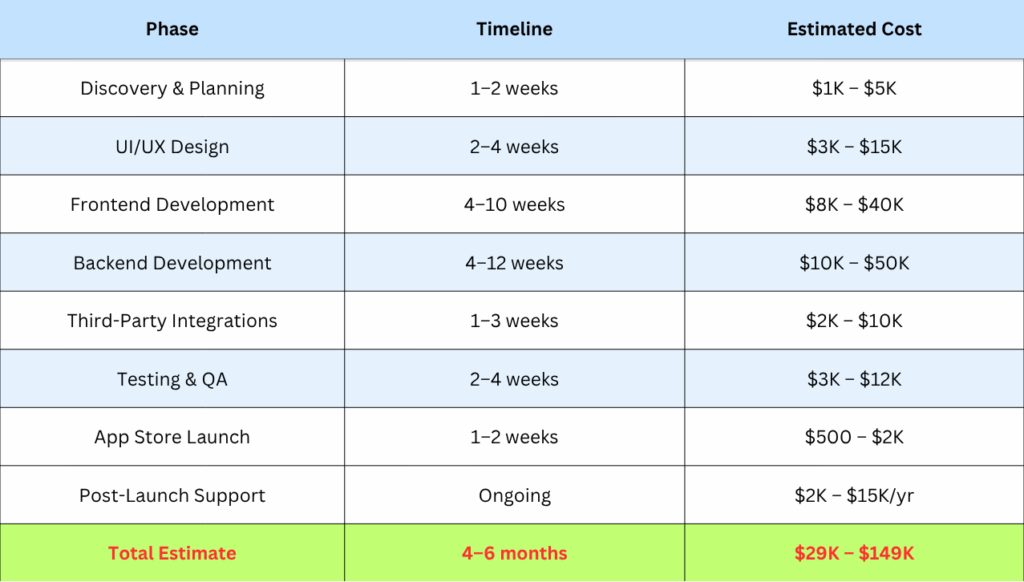
From Idea to App Store: The Full Development Process With Costs
Most people have a great app idea. Very few know what happens between that idea and the final product sitting in the App Store.
Here’s the full process — broken down simply, with real costs attached.
Discovery & Planning
Before writing a single line of code, you need a clear plan.
This phase covers:
Defining your app’s purpose
Identifying your target users
Researching competitors
Listing must-have features for version 1
Why this matters: The most common reason apps exceed their budget is that they skip this stage.
Time: 1–2 weeks 💰 Cost: $1,000 – $5,000
UI/UX Design
This is where your app gets its look and feel.
Designers create:
Wireframes — basic layout sketches
Clickable prototypes — a working model without code
Final UI screens — colors, fonts, icons, and buttons
Good design = fewer user complaints later.
Time: 2–4 weeks 💰 Cost: $3,000 – $15,000
Frontend Development
This is what users see and interact with on their screen.
Developers build
Every screen of the app
Buttons, animations, and transitions
Smooth navigation between pages
Platform choices here matter
Native (Swift for iOS / Kotlin for Android) — best performance
Cross-platform (Flutter / React Native) — one code, both platforms, lower cost
Time: 4–10 weeks 💰 Cost: $8,000 – $40,000
Backend Development
The engine running behind your app — users never see it but always feel it.
This includes:
Database setup
User authentication (login/signup)
APIs connecting the app to your server
Push notifications
Payment gateway integration
No backend = no data, no logic, no real app.
Time: 4–12 weeks 💰 Cost: $10,000 – $50,000
Third-Party Integrations
Most apps don’t build everything from scratch — and they shouldn’t.
Common integrations include:
Payment: Stripe, PayPal, Razorpay
Maps: Google Maps, Mapbox
Login: Google, Apple, Facebook sign-in
Analytics: Firebase, Mixpanel
SMS/OTP: Twilio
Each integration saves weeks of development time.
Time: 1–3 weeks
Cost: $2,000 – $10,000
Testing & QA
Before launch — everything gets tested. Hard.
QA teams check:
Bugs and crashes
Slow loading screens
Broken buttons or forms
Security vulnerabilities
Performance under heavy traffic
Skipping QA = bad reviews on day one.
Time: 2–4 weeks
Cost: $3,000 – $12,000
App Store Launch
Time to go live — but it’s not just clicking publish.
This step includes:
App Store & Play Store submission
Writing app descriptions and keywords
Adding screenshots and preview videos
Waiting for approval (Apple takes 1–3 days)
One rejection from Apple can delay your launch by a week. Plan ahead.
Time: 1–2 weeks
Cost: $500 – $2,000
Post-Launch Support & Maintenance
Launching is not the end point, rather, it marks the beginning.
After launch, you’ll need:
Bug fixes from real user feedback
OS updates (iOS and Android update regularly)
New feature rollouts
Server monitoring and scaling
Budget 15–20% of your development cost every year for maintenance.
Ongoing
Cost: $2,000 – $15,000/year
Full Cost Breakdown at a Glance
Cost by Development Location
Where your team is based changes everything:
USA / Canada — $100–$200/hr
UK / Europe — $70–$150/hr
India — $20–$50/hr
Southeast Asia — $25–$60/hr
Same quality is possible at lower rates — if you vet your team properly.
Quick Tips Before You Start
Build a simple version first (MVP) — don’t overbuild in round one
Get fixed-price quotes, not just hourly estimates
Prior to revealing your concept, always sign an NDA.
Ask for a portfolio and references from any agency you hire
Set aside a 20% buffer on top of your budget for surprises
iOS App Development Cost Compared to Revenue Potential
Spending $80,000 on an iOS app sounds like a lot. But the right app can return that investment many times over.
The question isn’t just “what does it cost?” It’s “what will it return?”
How iOS Apps Generate Revenue
Subscriptions are the most reliable model. Users pay monthly or yearly. Revenue is predictable.
In-app purchases work well for apps with engagement loops — games, fitness, productivity tools.
Ecommerce integration turns the app into a direct sales channel. Many brands report higher conversion rates on mobile apps than websites.
Advertising revenue works for high-traffic apps. More users = more ad income.
Operational savings are often overlooked. An app that automates manual tasks reduces your running costs. That’s indirect ROI.
Why iOS Users Drive Higher Revenue
iOS users tend to spend more. Studies consistently show higher in-app purchase rates on iOS compared to Android.
The App Store audience is global. A well-built app can reach customers in multiple countries without additional sales infrastructure.
Industries Where ROI Tends to Be Strong
Fintech – High transaction volumes mean strong revenue from small percentage fees.
Healthcare – Subscription-based telehealth platforms have strong retention rates.
Ecommerce – Direct sales + loyalty programs drive repeat purchases.
Fitness – Premium users are willing to pay for personalized plans and progress tracking.
The Long-Term View
An app is not a one-time cost. It’s a business asset.
Treat it like hiring a full-time sales and operations team. The upfront investment pays off over years, not months.
Businesses that think long-term tend to invest in scalable architecture from day one. That reduces rebuild costs later and supports growth without starting over.
Top Tips to Reduce
These are estimates. Actual costs shift based on your app’s scale.
iOS App Development Cost
So far, it is clear that the development of the iOS app contains many factors that can be quickly added. From design to deployment, each step can affect your budget.
And yes, seeing all these costs stacked can make it feel heavy.
But here is good news: There are practical ways to reduce these costs without cutting corners on the quality. Go through some smart strategies to help start your iPhone app in a cost-effective and efficient way.
Start with a Minimum Viable Product (MVP)
One of the most effective ways to reduce costs is to produce the minimum viable product (MVP). An MVP is a simplified version of your app that contains only the main features. It is launched to test the user’s interest, collect feedback, and improve your product based on real data. An MVP allows you to validate your app at low risk, as opposed to spending a lot of money. This is a popular method between start-ups and tech companies for a reason – it saves time, money, and what really matters.
Don’t Leave the App Test
Whether you are building an app or an MVP with a full specialist, you must never skip the right tests. Many companies rush to launch, for fear that they will fall behind the competition. But ending a complete test can lead to errors, a poor user experience, and later expensive rebirth.
A smooth, flawless app creates a strong first impression and saves you money on the line. Therefore, invest early in quality assurance. This is less expensive than resolving the issue after launch.
Consider Outsourcing Your iOS App Development
Another proven way of reducing the price of iOS app development is through outsourcing. Hiring a dedicated app development company, especially in an area with low prices, can significantly reduce costs without compromising quality.
Looking for teams that offer end-to-end iOS development, follow a clear process and have experience in distributing high-performance apps. The right partner will help you balance your budget and quality effectively. Cutting corners will not reduce the cost of developing the iOS app. Rather, it needed a clear idea and a smart decision. By leaning with an MVP, making sure your app has been tested well, and an effective development team is outsourcing, you can bring the app’s idea to life without exceeding.
Monetization Strategies for Mobile App Development
Building an app is one thing, but making money with it is another. What is the good news? You have many of possibilities. Here are the tactics that do work:
Freemium Model
Offer the app for free, but lock premium features behind a paywall.
Users try before they buy
Great for productivity and fitness apps
Converts well when the free version delivers real value
In-App Purchases (IAP)
Let users buy virtual items, upgrades, or content inside the app.
Works best for gaming and e-commerce apps
Keep purchases feel worth it — not forced
Small purchases add up to big revenue
Subscription Model
Charge users weekly, monthly, or yearly for continued access.
Predictable and recurring revenue
Best for tools, streaming, and news apps
Offer a free trial to reduce hesitation
In-App Advertising
Show ads to free users and earn per click or impression.
Use banner ads, interstitial ads, or rewarded video ads
Rewarded ads perform best — users opt in willingly
Avoid overloading ads or users will uninstall
Sponsorships & Brand Partnerships
Partner with brands relevant to your app’s audience.
A fitness app can partner with a supplement brand
Feels less intrusive than regular ads
Works well once you have a solid user base
Selling Physical or Digital Products
Use your app as a direct sales channel.
Sell courses, templates, merch, or services
E-commerce apps thrive with this model
Great for creators and educators
White Labeling Your App
Build once, sell to multiple businesses under their brand.
High upfront effort, high long-term reward
Works well for booking, delivery, or service apps
Each client pays a licensing or setup fee
Data Monetization
Share anonymized, aggregated user insights with third parties.
Always stay compliant with GDPR and privacy laws
Be transparent with users about data usage
Not ideal for all apps — know your audience first
Why is iOS a Better Choice than Android?
iOS is often considered a better alternative to Android for many compelling reasons. Users like a smooth and well-balanced experience for their constant connection with Apple products. With features such as iCloud, AirPlay, and Handoff, iOS ensures connection between iPhones, iPads, Macs, and Apple Watches, making it ideal for users who own many Apple products.
Another reason why iOS is better is its unmatched security and privacy features. Apple App Priority User data protection with regular updates, strong encryption and strict app review processes in the Apple App Store. This makes a safe choice for people concerned about iOS digital security.
IOS devices also claim outstanding optimization between hardware and software, resulting in performance increases, long battery life, and frequent updates. Unlike Android, which is used by many manufacturers, to ensure iOS unit and quality, is especially operated on Apple devices.
iOS is known for its premium app ecosystem. Developers often publish apps and updates first on iOS, giving users access to high-quality, innovative applications. If your concern is safety, performance and special app experience, iOS can just be a better option for you.
Apptechies Smart Approach to iOS App Cost Planning
Building an iOS app without a cost plan is one of the most expensive mistakes a business can make.
Here’s how smart planning helps you avoid budget overruns.
Start With an MVP
An MVP (Minimum Viable Product) includes only the core features your users need.
You launch faster. You spend less upfront. You test the idea in the real market.
Then you add features based on actual user feedback — not assumptions.
This approach saves money and reduces the risk of building something users don’t want.
Prioritize Features That Matter Most
Not every feature needs to be in version one.
List your features. Separate the must-haves from the nice-to-haves. Build the must-haves first.
This keeps your initial budget focused. It also speeds up your launch timeline.
Use Scalable Architecture from Day One
Building cheap and rebuilding later costs more than building right the first time.
Scalable architecture means your app can handle 100 users or 100,000 users without a full rebuild.
This is especially important for apps that expect growth — ecommerce, social, or marketplace platforms.
Phased development lowers financial risk.
Rather than investing the entire budget at once, divide development into phases.
Phase 1: Core features. Launch. Collect feedback.
Phase 2: Improve based on actual user behavior.
Phase 3: Implement advanced features that enable scaling.
Each phase has a specific goal and a set budget. This maintains the project on schedule.
Agile Development keeps costs predictable.
Agile development entails working in small sprints. Usually two weeks each.
At the end of each sprint, you evaluate what has been built. You can change the scope as needed.
This avoids the common problem of paying for months of labor only to find out later that the guidance was inaccurate.
Plan for Ongoing Costs Too
Development is not the final cost. After launch, you’ll need:
Regular iOS updates (Apple releases new OS versions every year)
Bug fixes and performance improvements
Server and cloud infrastructure costs
Feature updates based on user needs
Budgeting for post-launch maintenance from day one prevents surprises later.
These four sections are written to be read quickly, understood easily, and trusted — no fluff, no hype, just practical information that answers what business owners and decision-makers are actually searching for.
Frequently Asked Questions
Q. Why choose your iPhone apps for business?
Ans: Choosing your iPhone app for business can have many benefits. The iOS apps are known for their strong security features, continuous performance, and high value access to the user base. Apple users usually show high commitment and consumption behavior, making iOS a strategic platform for companies to target quality user interactions and return on investments. The controlled ecosystem of iOS also makes it easier to maintain app stability and compatibility across devices.
Q. How long does it take to make an iOS app?
Ans: A simple app with common features can be completed in two to four months, but advanced design components, third-party integration or more complex apps with unique functionality can take six months or more. which includes phases of planning, designing, developing, testing,g and launching.
Q. How can I calculate the mobile app development cost?
Ans: To calculate the cost of a mobile app, consider many factors such as app complexity, design requirements, development hours, team size and location of the development team. Extra costs may include Backend development, third-party API, continuous maintenance and updates. The cost of a simple app can range between $10,000 to $ 30,000, while more complex solutions can exceed $ 700,000. Getting a detailed project scope is the best way to make an accurate estimate.
By using this formula, you can estimate the price,
iPhone App Development Cost: UI/UX design Hours + App Platform + [Hourly Rates of Developers x Development Time]
Q. What are the benefits of developing iOS apps?
Ans: The benefits of an iOS app include increased data protection, a loyal user base, spontaneous integration with Apple’s ecosystem, and strict review guidelines with a high probability of app store visibility due to increased data protection. IOS also provides better scalability and supports commercial development through reliable performance and access to global markets.